

- Authors

- Name
- Ahmad
- Role
- Senior Marketing Manager, Islamic education • DeenUp
بِسْمِ اللهِ الرَّحْمٰنِ الرَّحِيْمِ
In the name of God, the Most Gracious, the Most Merciful.

Quick answer
What is the most powerful dua to cure sickness in Islam?
The most consistently narrated prophetic dua for curing sickness is from Sahih al-Bukhari: Allahumma Rabb an-Nas, adhib al-ba's, ishfi — asking Allah as Lord of mankind to remove harm and grant healing. It is authenticated and meant to be recited over the sick.

When sickness arrives — whether it is your own body or someone you love — the Muslim instinct is to turn to Allah first. Not as a last resort after every other option runs dry, but as the primary act, the first acknowledgment that healing belongs only to the One who created the body in the first place.
Islam does not treat dua as wishful thinking. It treats it as a direct conversation with Al-Shafi — the Healer — one of Allah's established names. The Quran and authentic hadith give us specific words to use, a prophetic pattern to follow, and a theological grounding that transforms the act of asking into an act of worship.
What Is the Dua to Cure Sickness in Islam?
The primary Islamic dua to cure sickness is the prophetic supplication from Sahih al-Bukhari: "Allahumma Rabb an-Nas, adhib al-ba's, ishfi, Anta ash-Shafi, la shifa'a illa shifa'uk, shifa'an la yughadiru saqama" — "O Allah, Lord of mankind, remove the harm, heal, for You are the Healer. There is no cure except Your cure — a cure that leaves no illness behind." This is the foundation of Islamic healing supplication, documented across multiple authentic narrations.
The Core Healing Dua from the Sunnah
The Prophet (peace be upon him) would place his right hand on a sick person and say:
اللَّهُمَّ رَبَّ النَّاسِ أَذْهِبِ الْبَأْسَ اشْفِ أَنْتَ الشَّافِي لَا شِفَاءَ إِلَّا شِفَاؤُكَ شِفَاءً لَا يُغَادِرُ سَقَمًا
Allahumma Rabb an-Nas, adhib al-ba's, ishfi, Anta ash-Shafi, la shifa'a illa shifa'uk, shifa'an la yughadiru saqama
"O Allah, Lord of mankind, remove the harm, heal — for You are the Healer. There is no cure except Your cure, a cure that leaves no illness behind." — (Sahih al-Bukhari 5743)
Every phrase is deliberate. Rabb an-Nas — Lord of all people — grounds the appeal in the recognition that Allah governs every human body, every cell, every system. Ash-Shafi is one of Allah's names; invoking it is not just a description — it is a call to that divine attribute specifically. The closing line — "a cure that leaves no illness behind" — asks for completeness, not partial relief.
This dua can be said for another person while gently placing your right hand on the area of pain. It can also be said for yourself when you are ill.
What the Quran Teaches About Sickness and Healing
The Quran frames healing in two ways: Allah as the sole source of all cures, and the Quran itself as a healing force for believers.
Ibrahim's words in Surah Ash-Shu'ara capture the first point in six Arabic words:
وَإِذَا مَرِضْتُ فَهُوَ يَشْفِينِ
Wa idha maridtu fa-huwa yashfin
"And when I am ill, it is He who cures me." — (Surah Ash-Shu'ara, 26:80)
This is a statement of tawakkul — complete reliance on Allah. Ibrahim does not say "I get better" or "medicine cures me." He attributes the cure directly to Allah, which is the theological foundation behind every healing dua.
Surah Al-Isra adds another dimension:
وَنُنَزِّلُ مِنَ الْقُرْآنِ مَا هُوَ شِفَاءٌ وَرَحْمَةٌ لِّلْمُؤْمِنِينَ
"And We send down of the Quran that which is healing and mercy for the believers." — (Surah Al-Isra, 17:82)
Scholars understand this as pointing to both the spiritual healing the Quran provides and, through specific recitation practices like ruqyah, its connection to physical wellbeing as well.
The Dua of Prophet Ayyub: Seeking Cure in Long Illness
Ayyub (peace be upon him) is the Quranic model for seeking healing during prolonged suffering. He was afflicted for years with severe illness, yet he turned to Allah with extraordinary restraint and trust. His recorded dua is among the shortest in the Quran — and one of the most profound:
رَبِّ إِنِّي مَسَّنِيَ الضُّرُّ وَأَنتَ أَرْحَمُ الرَّاحِمِينَ
Rabbi inni massaniya ad-durru wa anta arhamu ar-rahimin
"My Lord, indeed adversity has touched me, and you are the Most Merciful of the merciful." — (Surah Al-Anbiya, 21:83)
He does not demand a cure. He does not set a timeline. He simply names his reality to the One who already knows it, and appeals to Ar-Rahim — the Most Merciful. Allah's response was immediate: "So We responded to him and removed what afflicted him of adversity." (21:84) The dua of Ayyub is worth memorizing and returning to during any long or recurring illness.
Healing Duas at a Glance
| Dua | When to Recite | Source |
|---|---|---|
| Allahumma Rabb an-Nas... (shifa dua) | When visiting the sick; for yourself when ill | Sahih al-Bukhari 5743 |
| Rabbi inni massaniya... (Ayyub's dua) | During prolonged or severe illness | Surah Al-Anbiya, 21:83 |
| Wa idha maridtu fa-huwa yashfin | As a reflection on complete reliance on Allah | Surah Ash-Shu'ara, 26:80 |
| Surah Al-Fatiha (7 verses) | Recited as ruqyah over the sick person | Sahih al-Bukhari 5736 |
| La ba'sa, tahurun insha'Allah | Said at the bedside of an ill person | Sahih al-Bukhari 3616 |
Surah Al-Fatiha as a Healing Recitation
One of the most documented prophetic healing practices involves the opening chapter of the Quran. In an authentic narration (Sahih al-Bukhari 5736), a companion treated a tribal leader who was gravely ill by reciting Surah Al-Fatiha over him. The man recovered, and the Prophet (peace be upon him) confirmed the companion's action, saying: "How did you know it was a ruqyah?"
Scholars have since established that Surah Al-Fatiha holds a particular status in Islamic healing practice. When recited with genuine intention and belief in Allah's power to cure, it becomes an act of worship that calls on the Most Merciful, Most Compassionate, Master of the Day of Judgment — the attributes invoked directly in its opening verses.
Do you feel your duas are unanswered?
Have you read the dua properly? Learn authentic duas, understand their meanings, and call upon Allah with greater confidence through DeenUp.
Take the Dua Quiz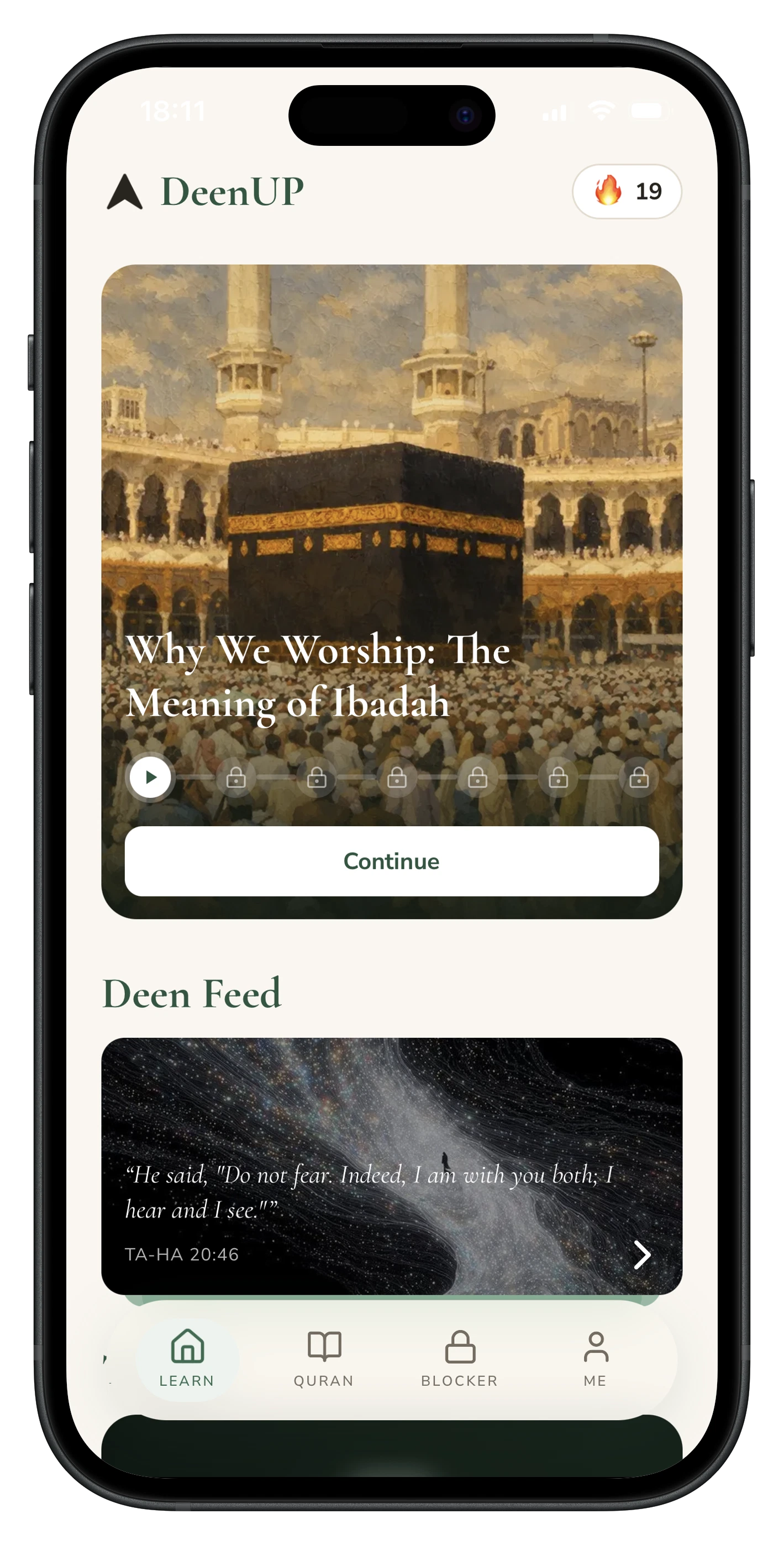
Making Healing Dua a Daily Practice
The most effective use of dua to cure sickness is not waiting until a crisis arrives. The prophetic tradition encourages regular supplication for health as part of daily adhkar, so that when illness comes, the habit of dua is already strong.
A few practical approaches:
- Morning and evening adhkar: Include a brief supplication for the health of your family alongside your regular morning and evening dhikr. The companions asked Allah for health (al-afiyah) as one of the greatest gifts, alongside forgiveness.
- Before sleep: Recite the shifa dua with your hand on your chest, asking Allah to protect your body through the night and restore any imbalance.
- When illness actually arrives: Combine the prophetic supplication with consistent medical care. The Prophet (peace be upon him) said: "Make use of medical treatment, for Allah has not made a disease without appointing a remedy for it." (Abu Dawud 3855). Dua and medicine are partners in Islamic healing practice, not alternatives.
- For others: When someone you know is unwell, say the shifa dua for them by name. Even a brief dua said sincerely for an absent person carries weight in the tradition of du'a al-ghayb.
The goal is not to have a single emergency dua memorized for worst-case scenarios. The goal is to live in a relationship with Al-Shafi where turning to Him in illness feels natural — because you turn to Him before illness too.
For more specific duas in related situations, see our guides on dua for healing, dua for health recovery, and the most powerful dua for shifa. You may also find the dua for sick person helpful when visiting someone who is unwell.
Do you feel your duas are unanswered?
Have you read the dua properly? Learn authentic duas, understand their meanings, and call upon Allah with greater confidence through DeenUp.
Take the Dua QuizFrequently Asked Questions
What is the most powerful dua to cure sickness in Islam?
The most consistently narrated prophetic dua for curing sickness is from Sahih al-Bukhari: Allahumma Rabb an-Nas, adhib al-ba's, ishfi — asking Allah as Lord of mankind to remove harm and grant healing. It is authenticated and meant to be recited over the sick.
Which Quran verse is specifically about healing and curing illness?
Surah Al-Anbiya 21:83 records the dua of Prophet Ayyub during years of severe illness: "Indeed, adversity has touched me, and you are the Most Merciful of the merciful." Allah answered and cured him, making this verse a model for seeking healing through supplication.
Can reciting dua replace medical treatment in Islam?
Islamic scholarship teaches that dua and medicine work together. The Prophet said "Make use of medical treatment, for Allah has not made a disease without appointing a remedy for it" (Abu Dawud 3855). Seek both: dua is a spiritual act, and seeking medical care is also encouraged in the Sunnah.
What did Prophet Ayyub recite when he was sick for years?
Prophet Ayyub's dua in Surah Al-Anbiya (21:83) is: 'Rabbi inni massaniya ad-durru wa anta arham ur-rahimin' — 'My Lord, indeed adversity has touched me, and you are the Most Merciful of the merciful.' Allah answered and removed his suffering, a sign of how dua penetrates hardship.
How many times should I repeat a dua for healing?
Some narrations show the Prophet reciting the healing dua seven times over the sick person. Scholars consider seven a recommended number in prophetic healing practice, but there is no fixed minimum. Sincerity and continuity matter more than any specific count.
What surah should I recite for shifa?
Surah Al-Fatiha holds a special status for shifa. The companions used it as a healing recitation and the Prophet confirmed its power. Surah Al-Isra 17:82 also confirms: "We send down of the Quran that which is healing and mercy for the believers." Regular Quran recitation is itself a spiritual cure.
Can I make dua to cure sickness on behalf of someone else?
Yes. The prophetic shifa dua can be said for another person while placing your right hand on them, or from a distance with them in your heart. The companion's prayer for others is documented in multiple authentic narrations. Dua for a sick person while absent is called du'a al-ghayb and is highly encouraged.