

- Authors

- Name
- Ahmad
- Role
- Senior Marketing Manager, Islamic education • DeenUp
بِسْمِ اللهِ الرَّحْمٰنِ الرَّحِيْمِ
In the name of God, the Most Gracious, the Most Merciful.
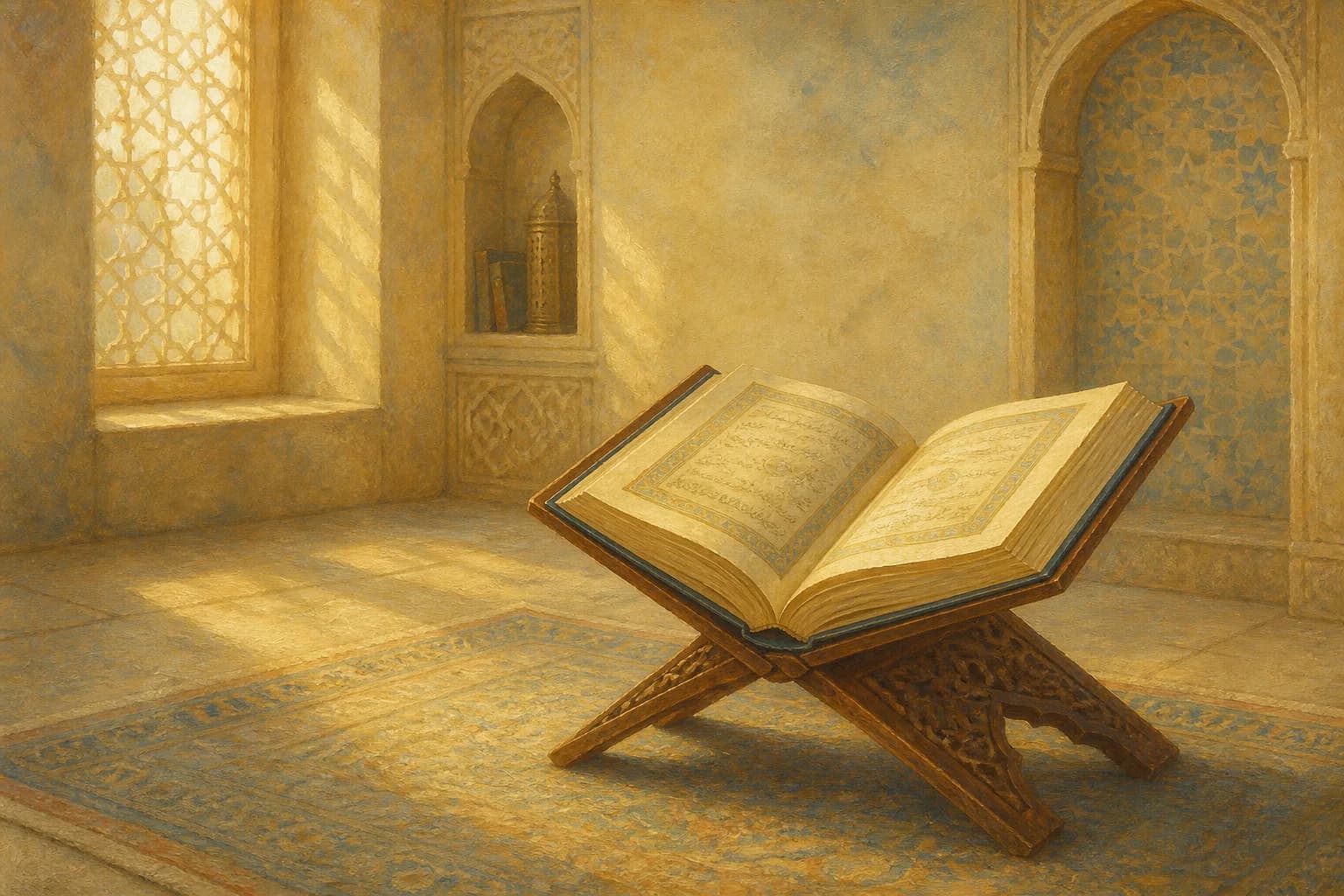

Some Quran verses appear everywhere in Muslim life — on the walls of mosques, in the first thing a mother teaches her child, on the lips of every worshipper. There is a reason for that. The Prophet Muhammad ﷺ specifically highlighted certain ayat for their power, their protection, and their ability to anchor the heart in Allah's remembrance.
Whether you are a new Muslim building your knowledge or a lifelong believer wanting to revisit the verses that matter most, this guide walks through the famous Quran verses that have shaped Islamic practice for over 1,400 years.
What Are the Most Famous Quran Verses?
The most famous Quran verses are those the Prophet ﷺ explicitly praised and taught with specific daily uses: Ayatul Kursi (Al-Baqarah 2:255), the entire Surah Al-Fatiha (1:1-7), Al-Baqarah 2:286, Surah Al-Ikhlas (112), and the three Quls. These ayat appear in every Muslim home because authentic hadith in Sahih al-Bukhari and Sahih Muslim connect them to prayer, protection, and proximity to Allah.
Ayatul Kursi — The Throne Verse
What makes Ayatul Kursi the greatest verse?
The Messenger of Allah ﷺ was asked which verse in the Quran is greatest. He said: "Allah — there is no deity except Him, the Ever-Living, the Sustainer of existence" (Sahih Muslim 810). That is the opening of Ayatul Kursi.
اللَّهُ لَا إِلَٰهَ إِلَّا هُوَ الْحَيُّ الْقَيُّومُ
"Allah — there is no deity except Him, the Ever-Living, the Sustainer of existence." — (Surah Al-Baqarah, 2:255)
Reciting it after every obligatory prayer draws a worshipper closer to Paradise, with only death standing between them and it (Sahih al-Bukhari 5010). Reciting it before sleep places a guardian over the believer until morning (Sahih al-Bukhari 3275).
Ayatul Kursi describes nine attributes of Allah in a single verse — His uniqueness, His eternal living nature, His sustaining of all creation, His knowledge, His throne encompassing the heavens and earth, and His perfect preservation of everything. No single verse in the Quran packs more theological content.
For a deep exploration of this verse, see the full breakdown in the Ayatul Kursi meaning and benefits guide.
Surah Al-Fatiha — The Opening
Why is Al-Fatiha called the "seven oft-repeated verses"?
Surah Al-Fatiha is recited in every unit of every prayer — a minimum of 17 times a day in the obligatory prayers alone. Allah described it as "the seven oft-repeated verses and the great Quran" (Al-Hijr, 15:87). The Prophet ﷺ said there is no prayer for the one who does not recite Al-Fatiha (Sahih al-Bukhari 756).
The surah is a complete conversation between the servant and the Lord. Allah responds to each verse the believer recites, as recorded in Sahih Muslim 395. It combines praise, acknowledgement of sovereignty, and a sincere request for guidance — making it the most perfect prayer ever composed.
For a complete explanation of every verse, see the Surah Al-Fatiha complete guide.
Al-Baqarah 2:286 — The Verse of Relief
لَا يُكَلِّفُ اللَّهُ نَفْسًا إِلَّا وُسْعَهَا
"Allah does not burden a soul beyond that it can bear." — (Surah Al-Baqarah, 2:286)
This verse was revealed when the Companions feared they would be held accountable for thoughts that crossed their minds. When they expressed this worry to the Prophet ﷺ, Allah revealed this ayah as mercy (Sahih Muslim 125). It closes Surah Al-Baqarah with a comprehensive dua that the Companions memorized entirely.
Reading Surah Al-Baqarah in full — and especially its last two verses (2:285-286) — protects a person for the night, as the Prophet ﷺ taught (Sahih al-Bukhari 5051). These closing verses contain one of the most comprehensive duas in the entire Quran:
رَبَّنَا لَا تُؤَاخِذْنَا إِن نَّسِينَا أَوْ أَخْطَأْنَا
"Our Lord, do not impose blame upon us if we have forgotten or erred." — (Surah Al-Baqarah, 2:286)
The Three Quls — Daily Protection
The three short surahs at the end of the Quran — Al-Ikhlas (112), Al-Falaq (113), and An-Nas (114) — are called the Muawwidhatayn (the two seeekings of refuge) and Al-Ikhlas. Together they form one of the Prophet's ﷺ most consistent daily practices.
The Prophet ﷺ would recite these three surahs after each obligatory prayer and three times each morning and evening for protection (Sunan Abu Dawud 5082, Sunan At-Tirmidhi 3399).
Al-Ikhlas alone equals one-third of the Quran in reward (Sahih al-Bukhari 5013):
قُلْ هُوَ اللَّهُ أَحَدٌ
"Say: He is Allah, the One." — (Surah Al-Ikhlas, 112:1)
A Reference Table: Most Famous Quran Verses at a Glance
| Verse | Reference | When Recited | Key Virtue |
|---|---|---|---|
| Surah Al-Fatiha | 1:1-7 | Every rakat of salah | Required for valid prayer |
| Ayatul Kursi | 2:255 | After every fard salah, before sleep | Greatest verse; paradise & protection |
| Last two verses of Al-Baqarah | 2:285-286 | Evening recitation | Suffices the one who recites them at night |
| Surah Al-Ikhlas | 112:1-4 | Morning/evening adhkar, after salah | Equals one-third of the Quran |
| Surah Al-Falaq | 113:1-5 | Morning/evening adhkar, before sleep | Protection from creation's harm |
| Surah An-Nas | 114:1-6 | Morning/evening adhkar, before sleep | Protection from whispers of Shaytan |
| Al-Baqarah 2:286 | 2:286 | Dua in hardship | Reminder of Allah's mercy and limit of trials |
| Ar-Rahman 55:13 | 55:13 (×31) | Reflection on Allah's gifts | Most repeated verse in the Quran |
Why These Verses Matter for Modern Muslims
The famous Quran verses are not museum pieces. They are living words designed to anchor daily life. Neuroscience now confirms what Islam has always taught: regular verbal repetition of meaningful text reduces stress hormones and refocuses attention. The Prophet ﷺ built a system of adhkar — remembrances — that functions exactly this way.
When a Muslim recites Ayatul Kursi after Fajr, they are not merely fulfilling a ritual. They are consciously placing their day under divine oversight before it begins. When they recite the three Quls before sleep, they are not following custom — they are following the Prophet ﷺ's personal practice for protection.
DeenBack's resource on building a daily Quran routine shows how even five minutes of intentional recitation each morning transforms a Muslim's relationship with the Quran over weeks. And from Demi Manifest's perspective, consistent Quran reading habits become a form of mindful intention-setting that shapes the entire day.
How to Build These Verses Into Your Daily Life
The goal is not to know about these famous verses but to internalize them. Here is a practical ladder:
Week 1 — Fatiha fluency. If you are already praying, you recite Al-Fatiha daily. This week, focus on understanding what each verse means. Read the translation slowly before your first salah of the day.
Week 2 — Ayatul Kursi daily. Add the recitation after every obligatory prayer. It takes about 30 seconds. Within a week it will become muscle memory.
Week 3 — The three Quls morning and evening. Recite Al-Ikhlas, Al-Falaq, and An-Nas three times each when you wake up and before you sleep. This is the full prophetic morning and evening practice.
Week 4 — Al-Baqarah 2:285-286 at night. Add these two verses to your pre-sleep routine. They protect you through the night and contain a complete dua for forgiveness and ease.
This four-week plan mirrors what the benefits of reading Quran daily article describes — starting small, building consistency, and letting the Quran integrate naturally into daily rhythm.
Want the Qur'an to feel easier to understand?
Read with clear contextual insights, revisit the verses that matter to you, and build a steady daily Qur'an habit with DeenUp.
Take the Qur'an Quiz
Signs You Are Growing in Your Connection to These Verses
Growth with famous Quran verses shows up in small, concrete ways:
- You notice Ayatul Kursi arising naturally in your mind during moments of anxiety or fear.
- Al-Fatiha stops feeling automatic and begins feeling like a real conversation with Allah.
- You find yourself reaching for Al-Baqarah 2:286 when facing a difficulty you cannot control.
- You begin to sense the difference in your mornings when you recite the three Quls versus when you skip them.
These are signs that the words have moved from the tongue to the heart — which is the entire purpose of the Quran's continuous recitation throughout Islamic history.
For further reading on building this connection, explore the how to memorize Quran guide and the beautiful Quran verses collection for continued discovery.
Common Questions About Famous Quran Verses
Are there online resources for learning these verses?
Yes. The powerful ayat of Quran guide covers many significant verses with transliteration and pronunciation notes. Yaqeen Institute also publishes scholarly reflections on key Quranic passages at yaqeeninstitute.org.
Do I need to understand Arabic to benefit from reciting these verses?
No — recitation in Arabic carries its own reward regardless of comprehension. However, understanding what you recite deepens khushoo (presence of heart) in prayer. Learning the translation of Al-Fatiha and Ayatul Kursi is a minimal, high-impact investment. The Quran word by word translation guide is a practical starting point.
How often should I recite these famous verses?
The Prophet ﷺ built most of these into daily salah and morning/evening adhkar, making them effectively daily. Ayatul Kursi is recommended after every obligatory prayer. The three Quls are recommended morning, evening, and before sleep. Sunnah guidance on these recitations is found at sunnah.com.
Want the Qur'an to feel easier to understand?
Read with clear contextual insights, revisit the verses that matter to you, and build a steady daily Qur'an habit with DeenUp.
Take the Qur'an QuizFrequently Asked Questions
What is the most famous verse in the Quran?
Ayatul Kursi (Surah Al-Baqarah, 2:255) is widely considered the most famous single verse in the Quran. The Prophet Muhammad ﷺ taught that it is the greatest verse in the Book of Allah, as recorded in Sahih Muslim 810. It describes Allah's eternal sovereignty over all creation.
What is the most recited verse in the Quran?
Surah Al-Fatiha (1:1-7) is the most recited passage in the Quran. Every Muslim recites it in every unit of prayer — at least 17 times daily in the five obligatory prayers alone. It is called "the seven oft-repeated verses" (Al-Hijr, 15:87) and is required for every rakat of salah.
Which Quran verse gives the most comfort?
Al-Baqarah 2:286 — "Allah does not burden a soul beyond that it can bear" — is among the most comforting verses in the Quran. Scholars note it was revealed as a mercy to the believers after they feared they would be held accountable for passing thoughts. It is a cornerstone of Islamic hope and resilience.
What verse should a Muslim memorize first?
A Muslim should first memorize Surah Al-Fatiha, as it is required for every unit of prayer. After that, scholars recommend Ayatul Kursi (2:255) for its daily protection benefits, then the three Quls — Al-Ikhlas, Al-Falaq, and An-Nas — which the Prophet ﷺ recited every morning and evening.
How many verses are in the Quran?
The Quran contains 6,236 verses (ayat) across 114 chapters (surahs). Scholars differ slightly on the exact count because of different conventions for counting certain partial verses, but 6,236 is the most widely accepted figure. Every verse was revealed to the Prophet Muhammad ﷺ over approximately 23 years.
Can I read famous Quran verses without wudu?
According to the majority view among classical scholars, reciting Quran verses from memory does not require wudu (ritual purity). However, physically touching a printed Mushaf (Quran) requires wudu. A digital Quran on a phone is a matter of scholarly difference, with many scholars allowing it without wudu.
Why do these famous verses appear so often in daily life?
These famous Quran verses appear constantly in Islamic practice because the Prophet Muhammad ﷺ specifically taught their virtues and recommended reciting them at particular times — upon waking, before sleeping, in prayer, or during hardship. Their repeated mention in authentic hadith cemented their place in Muslim daily life.