

- Authors

- Name
- Ahmad
- Role
- Senior Marketing Manager, Islamic education • DeenUp
بِسْمِ اللهِ الرَّحْمٰنِ الرَّحِيْمِ
In the name of God, the Most Gracious, the Most Merciful.
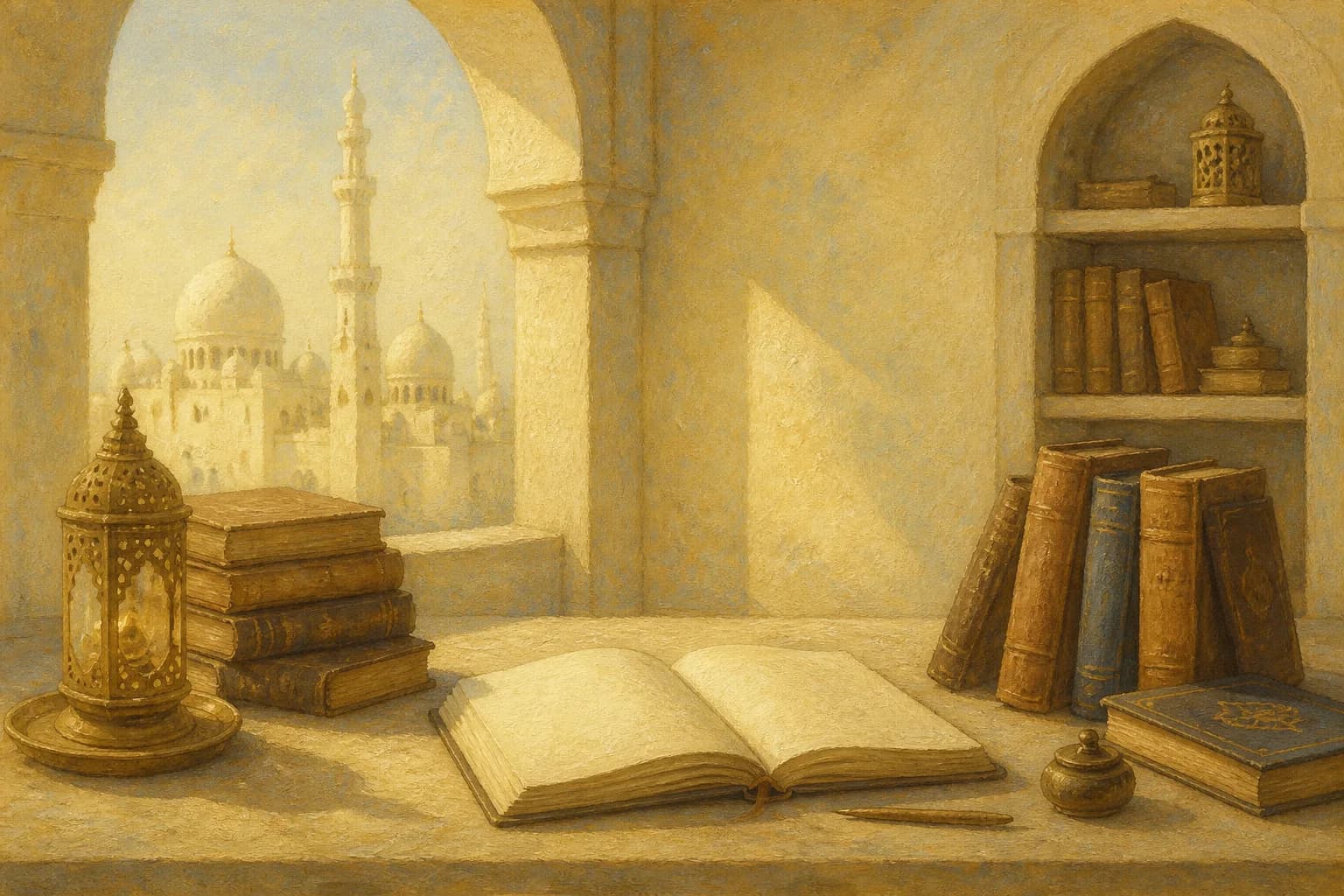

Islam is a living, practiced religion — not simply a set of historical beliefs. Nearly 1.9 billion Muslims across every country and language actively practice its obligations, recite its scripture in Arabic, and structure their days around its prayers. Yet many of Islam's most remarkable religious facts remain little known, even among lifelong Muslims who practice without ever pausing to appreciate the depth of what they do.
These are not just trivia. Understanding these facts about Islam as a religion deepens your appreciation of the practices you already perform and strengthens the intention — the niyyah — behind every act of worship.
What Are the Core Religious Facts About Islam?
Islam is a complete monotheistic religion with five foundational pillars of worship, a preserved scripture of 114 chapters and 6,236 verses, and a community of 1.9 billion believers who face one direction in prayer five times daily. Founded through the final prophet Muhammad ﷺ in 7th-century Arabia, Islam teaches that submission to Allah alone — tawheed (توحيد) — is the path to genuine peace in this life and success in the next.
The Five Pillars Are the Architecture of Muslim Worship
The Five Pillars of Islam (Arkan al-Islam — أركان الإسلام) are not suggestions or recommendations. They are obligatory acts of worship that give a Muslim life its structure and rhythm.
| Pillar | Arabic | What It Requires |
|---|---|---|
| Shahada | الشهادة | Declaring: "There is no god but Allah, and Muhammad is His messenger" |
| Salah | الصلاة | Five daily prayers at set times, facing the Kaaba in Mecca |
| Zakat | الزكاة | Giving 2.5% of accumulated wealth annually to those in need |
| Sawm | الصوم | Fasting from dawn to sunset throughout the month of Ramadan |
| Hajj | الحج | Pilgrimage to Mecca once in a lifetime, for those physically and financially able |
These five pillars were summarized by the Prophet ﷺ in the famous Hadith of Jibril, recorded in Sahih Muslim 8, when Angel Jibril appeared and asked the Prophet to define Islam. Together, they cover the inner (faith), the bodily (prayer, fasting), the financial (zakat), and the communal (hajj) dimensions of worship.
Explore the full guide to the Five Pillars of Islam for the Quranic evidence behind each pillar.
The Quran Has 114 Surahs — And Has Never Changed
The Quran (al-Qur'an al-Karim — القرآن الكريم) is the literal word of Allah, revealed to the Prophet Muhammad ﷺ over approximately 23 years (610–632 CE). It contains exactly 114 surahs (chapters) and 6,236 ayahs (verses), arranged not chronologically but roughly by length — from the longest (Surah Al-Baqarah, 286 verses) to the shortest (Surah Al-Kawthar, 3 verses).
What makes the Quran religiously remarkable is its preservation:
- Millions of Muslims — called huffaz (حفاظ) — have memorized the entire Quran word for word since the time of the Prophet ﷺ.
- It is recited in its original Arabic in every Muslim's daily prayer, worldwide.
- The text has remained unchanged for over 1,400 years.
Allah guaranteed this preservation Himself: "Indeed, it is We who sent down the Qur'an and indeed, We will be its guardian" (Surah Al-Hijr, 15:9).
Reading the Quran with understanding — not just recitation — transforms daily practice. The guide to benefits of reading Quran daily explores how consistent Quranic engagement shapes character and deepens faith.
Muslims Pray Five Times Daily — All Facing One Direction
Every day, without exception, Muslims perform salah (صلاة) — the ritual prayer — five times. The prayers are tied to specific times of day, anchored by the position of the sun:
- Fajr — before dawn
- Dhuhr — after midday
- Asr — late afternoon
- Maghrib — just after sunset
- Isha — at night
Each prayer involves standing, bowing, and prostrating — specific movements called raka'at — while reciting verses from the Quran. The key fact about salah is that every Muslim worldwide faces the same direction: the Kaaba (al-Ka'bah — الكعبة) in Mecca, Saudi Arabia. This shared qibla (قبلة) creates a visual image of unity — billions of people bowing in concentric circles toward one point.
The Prophet Muhammad ﷺ said: "The first thing a person will be held accountable for on the Day of Judgment is salah. If it is sound, the rest of his deeds are sound; if it is corrupt, the rest of his deeds are corrupt" (al-Tabarani, graded hasan).
Still searching for a clear Islamic answer?
Explore sourced answers rooted in the Quran, authentic hadith, and respected scholarship—without getting lost in conflicting search results.
Take the Islam Quiz
Zakat Is Both Worship and Social System
Zakat (الزكاة) is one of Islam's most elegant religious obligations. It is simultaneously an act of worship and a redistribution mechanism that has no direct equivalent in secular economics.
The religious logic: everything belongs to Allah. Wealth in a Muslim's hands is a trust (amanah), not permanent ownership. Zakat purifies that wealth by returning a portion — 2.5% of savings held above the nisab threshold (equivalent to approximately 85 grams of gold in value) for one full lunar year — to eight categories of recipients specified in the Quran (Surah Al-Tawbah, 9:60).
The word zakat itself means purification and growth in Arabic. It appears in the Quran 32 times alongside salah, emphasizing that regular prayer and regular charity are inseparable pillars of the faith.
For Muslims tracking their religious obligations, understanding when and how much zakat is due is an important annual exercise. The guide to giving zakat in Islam covers nisab calculations and eligible recipients.
The Meaning of "Islam" Is Rooted in Peace and Submission
A religious fact that surprises many: the word Islam (إسلام) and the Arabic word for peace, salam (سلام), share the same root: sin-lam-mim (س-ل-م). This root carries the meaning of wholeness, safety, and peace.
Islam means "submission to the will of Allah." A Muslim (مسلم) is "one who submits." When Muslims greet each other:
اَلسَّلَامُ عَلَيْكُمْ وَرَحْمَةُ اللَّهِ وَبَرَكَاتُهُ
As-salamu alaykum wa rahmatullahi wa barakatuh
"Peace be upon you, and the mercy of Allah, and His blessings."
This greeting is not just a formality — it is a prayer for the other person. The connection between Islam and peace reflects the religion's central promise: that sincere submission to Allah brings inner peace, relational harmony, and a life of purpose.
The DeenBack guide to seeking Islamic knowledge explores how understanding these foundations deepens practice. For a broader reflection on how Islamic values create meaning, Demi Manifest on Islamic purpose is worth reading.
Seeking Knowledge Is a Religious Duty in Islam
One of the most remarkable religious facts about Islam is that learning itself is a form of worship. The Prophet Muhammad ﷺ said:
"Seeking knowledge is an obligation upon every Muslim."
— (Ibn Majah 224, graded sahih)
This hadith does not limit knowledge to religious topics alone. Islamic scholars understood it to include medicine, mathematics, astronomy, and every field of human inquiry — because all knowledge ultimately leads back to the Creator. This principle drove the Islamic Golden Age and continues to shape Muslim intellectual life today.
For those new to the faith or deepening their practice, understanding why Islam places such weight on knowledge changes how you approach every aspect of religion — from prayer to fasting to community life.
Explore the importance of seeking knowledge in Islam and start with the foundations at Islam basics.
Signs of Deepening Religious Understanding
Learning these facts is not the destination — it is the beginning. For each fact, there is a corresponding practice:
- Knowing the Five Pillars → strengthening the one you find hardest
- Knowing the Quran has 114 surahs → committing to reading one surah a day
- Knowing salah means facing Mecca → praying with full awareness of that global community
- Knowing zakat is 2.5% → calculating and giving yours this year
- Knowing Islam means submission → asking: "Where am I holding back in my submission to Allah?"
Religion is not a set of facts to memorize — it is a way of life to embody. The facts make the practices meaningful; the practices make the faith real.
Still searching for a clear Islamic answer?
Explore sourced answers rooted in the Quran, authentic hadith, and respected scholarship—without getting lost in conflicting search results.
Take the Islam QuizFrequently Asked Questions
What are the Five Pillars of Islam?
The Five Pillars of Islam are Shahada (declaration of faith), Salah (five daily prayers), Zakat (2.5% annual charity on savings), Sawm (fasting during Ramadan), and Hajj (pilgrimage to Mecca once in a lifetime). These five acts of worship form the structural backbone of every Muslim's religious life and are grounded in Sahih Muslim 8.
How many surahs are in the Quran?
The Quran contains 114 surahs (chapters) and 6,236 verses (ayahs). It was revealed to the Prophet Muhammad over 23 years, from 610 to 632 CE, in Arabic. The Quran has been continuously memorized word for word by millions of Muslims — called huffaz — since the time of the Prophet, making it one of the best-preserved texts in history.
What does the word Islam mean?
Islam comes from the Arabic root s-l-m, which means submission and peace. Islam means 'submission to the will of Allah.' The same root gives the greeting As-salamu alaykum (peace be upon you). A Muslim is literally 'one who submits.' This connection between submission to Allah and inner peace is central to the religion's identity.
How many times a day do Muslims pray?
Muslims pray five times daily: Fajr (before dawn), Dhuhr (midday), Asr (afternoon), Maghrib (after sunset), and Isha (night). Each prayer takes 5 to 15 minutes. Muslims face the direction of the Kaaba in Mecca — called the qibla — during prayer. The Prophet Muhammad described salah as the pillar of the religion (Sunan al-Tirmidhi 2616).
What is zakat in Islam?
Zakat is the third pillar of Islam — obligatory charity given annually. The standard rate is 2.5% of accumulated savings and wealth held for one lunar year above the nisab (minimum threshold, roughly 85 grams of gold in value). Zakat is mentioned 32 times in the Quran alongside salah, emphasizing that prayer and charity are inseparable acts of worship.
Is the Quran in Arabic only?
The Quran was revealed in Arabic and is recited in Arabic in every Muslim daily prayer, regardless of the pray-er nationality or mother tongue. This preserves the exact words of Allah as revealed to the Prophet Muhammad. Translations of the Quran exist in over 100 languages, but they are considered interpretations, not the Quran itself.
What makes Islam different from other religions?
Islam is distinguished by its complete and preserved scripture in its original language, its universal brotherhood that transcends ethnicity, its structured five-times-daily prayer, and its emphasis on both faith and action. Islam teaches that submission to Allah alone — tawheed — brings peace, clarity, and a structured, purposeful life oriented around worship and ethical conduct.