

- Authors

- Name
- Ahmad
- Role
- Senior Marketing Manager, Islamic education • DeenUp
بِسْمِ اللهِ الرَّحْمٰنِ الرَّحِيْمِ
In the name of God, the Most Gracious, the Most Merciful.
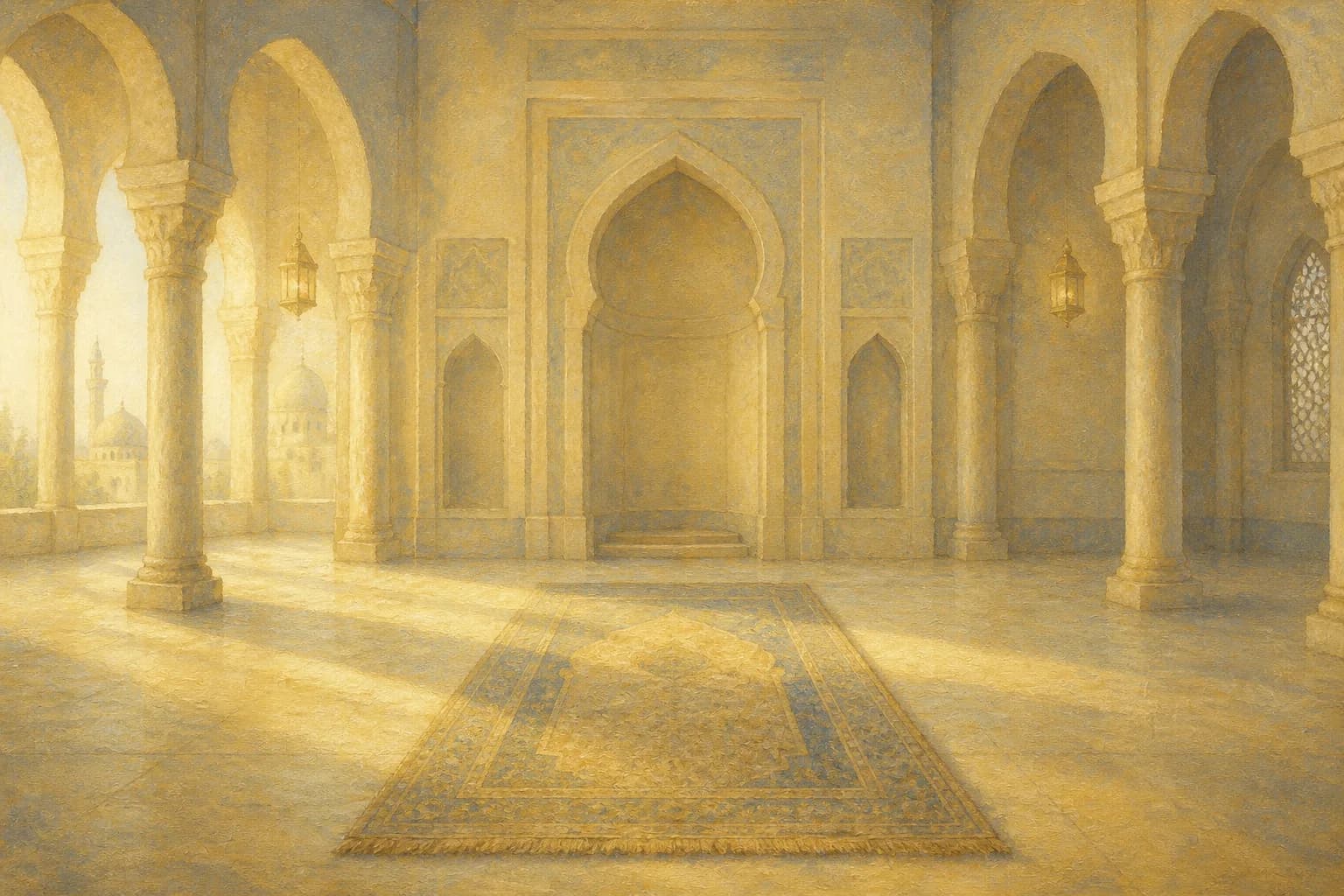

Decision-making is one of the most anxiety-producing experiences in a Muslim's life. Whether you are weighing a marriage proposal, a job offer, a move to a new city, or a major financial commitment, the uncertainty can feel paralyzing. Islam gives us a profound gift for exactly these moments: salat al-istikhara (صَلَاةُ الاسْتِخَارَة) — the prayer of seeking guidance.
What makes istikhara so powerful is not that it produces a guaranteed sign or dream. It is an act of complete surrender: you bring your limited knowledge to the One whose knowledge has no limits, and you ask Him to take over. The Prophet ﷺ considered this prayer so important that he taught it to his companions the same way he taught them the Quran.
How Do You Make the Istikhara Prayer?
To make the istikhara prayer, perform 2 voluntary rakahs outside the obligatory prayers — reciting Surah Al-Kafirun (109) in the first and Surah Al-Ikhlas (112) in the second — then recite the complete istikhara dua after the final salam. The dua is authentically narrated in Sahih al-Bukhari 1166 from Jabir ibn Abdullah, who said the Prophet ﷺ taught it to the companions just as he taught them surahs of the Quran.
Why Did the Prophet Teach Istikhara Like the Quran?
Jabir ibn Abdullah reported:
"The Prophet ﷺ used to teach us al-istikhara in all matters just as he used to teach us surahs from the Quran." — (Sahih al-Bukhari 1166)
This comparison is striking. Al-istikhara was not reserved for rare crises — it was part of the core spiritual toolkit every Muslim was meant to carry through daily life. It reflects a foundational principle in the Quran:
"...it may be that you dislike a thing which is good for you and that you like a thing which is bad for you. Allah knows but you do not know." — (Surah Al-Baqarah, 2:216)
That verse is the theological heart of istikhara. Our knowledge of outcomes is always partial. Allah's is complete. The prayer is an honest acknowledgment of that difference, and a request for His knowledge to guide what our own cannot reach.
How to Make Istikhara Prayer: Step by Step
Step 1 — Form Your Intention
Before beginning, hold the specific matter clearly in your mind. You do not need to verbalize the intention aloud — the heart's sincerity (niyyah) is what matters. You intend: "I am praying 2 rakahs of voluntary prayer for istikhara."
Step 2 — Perform 2 Rakahs of Voluntary Prayer
Pray exactly as you would any 2-rakah voluntary prayer. Ensure you are in a state of wudu, facing the qiblah, and not praying during one of the forbidden times.
- First rakah: After Al-Fatihah, recite Surah Al-Kafirun (Surah 109)
- Second rakah: After Al-Fatihah, recite Surah Al-Ikhlas (Surah 112)
These specific surahs are the recommendation of many scholars; any surah is acceptable if these are not yet memorized. Complete the prayer with the tashahhud and the final salam.
Step 3 — Recite the Istikhara Dua
Immediately after the salam, recite the istikhara supplication. When the dua mentions "this matter" (hadhal-amr), think of or say your specific concern:
اللَّهُمَّ إِنِّي أَسْتَخِيرُكَ بِعِلْمِكَ وَأَسْتَقْدِرُكَ بِقُدْرَتِكَ وَأَسْأَلُكَ مِنْ فَضْلِكَ الْعَظِيمِ، فَإِنَّكَ تَقْدِرُ وَلَا أَقْدِرُ، وَتَعْلَمُ وَلَا أَعْلَمُ، وَأَنْتَ عَلَّامُ الْغُيُوبِ. اللَّهُمَّ إِنْ كُنْتَ تَعْلَمُ أَنَّ هَذَا الأَمْرَ خَيْرٌ لِي فِي دِينِي وَمَعَاشِي وَعَاقِبَةِ أَمْرِي فَاقْدُرْهُ لِي وَيَسِّرْهُ لِي ثُمَّ بَارِكْ لِي فِيهِ. وَإِنْ كُنْتَ تَعْلَمُ أَنَّ هَذَا الأَمْرَ شَرٌّ لِي فِي دِينِي وَمَعَاشِي وَعَاقِبَةِ أَمْرِي فَاصْرِفْهُ عَنِّي وَاصْرِفْنِي عَنْهُ، وَاقْدُرْ لِي الْخَيْرَ حَيْثُ كَانَ ثُمَّ أَرْضِنِي بِهِ
Allahumma inni astakhiruka bi'ilmika, wa astaqdiruka bi-qudratika, wa as'aluka min fadlika al-'azim. Fa-innaka taqdiru wala aqdiru, wa ta'lamu wala a'lamu, wa anta 'allam ul-ghuyub. Allahumma in kunta ta'lamu anna hadhal-amra khayrun li fi dini wa ma'ashi wa 'aqibati amri, faqdirhu li wa yassirhu li thumma barik li fihi. Wa in kunta ta'lamu anna hadhal-amra sharrun li fi dini wa ma'ashi wa 'aqibati amri, fasrifhu 'anni wasrifni 'anhu, waqdur lil-khayra haythu kana thumma ardini bihi.
"O Allah, I seek Your guidance by virtue of Your knowledge, and I seek ability by virtue of Your power, and I ask You from Your immense bounty. For You are able and I am not, You know and I do not know, and You are the Knower of all things unseen. O Allah, if You know this matter is good for me in my religion, my livelihood, and the outcome of my affairs, then decree it for me, make it easy for me, and bless me in it. And if You know that this matter is bad for me in my religion, my livelihood, and the outcome of my affairs, then turn it away from me and turn me away from it, and decree what is good for me wherever it may be, then make me pleased with it." — (Sahih al-Bukhari 1166)
Step 4 — Proceed and Trust
After the dua, move forward with your life. Gather advice through shura (consultation), research your options carefully, and make the best decision available to you. The guidance of istikhara comes through what Allah makes easy or difficult in the days that follow — not through a required dream.
Istikhara at a Glance:
| Step | Action | Key Point |
|---|---|---|
| 1 | Form intention | Hold the specific matter in mind |
| 2 | Pray 2 rakahs | Al-Kafirun then Al-Ikhlas recommended |
| 3 | Recite the dua | Full Arabic text after salam |
| 4 | Name the matter | Think of it at "this matter" in the dua |
| 5 | Proceed | Trust what Allah makes easy |
How to Make Istikhara Part of Your Life
Many Muslims delay istikhara because they feel they need to have memorized the Arabic dua perfectly, or because they are not sure of the right time. Neither barrier is as significant as it feels.
Print or save the dua. The Prophet ﷺ gave no stipulation that the dua must be recited from memory. Read it sincerely from a text. Sincerity in the heart is what makes supplication meaningful — not flawless recitation from memory on the first attempt.
Link it to Isha prayer. The easiest habit is to add the 2 istikhara rakahs immediately after Isha on a night when a decision is pressing. You are already in wudu, already in a prayerful frame of mind. This makes the practice feel natural rather than exceptional.
Use consultation alongside it. The Prophet ﷺ himself practiced shura — seeking counsel from the Companions before decisions. Istikhara is not a shortcut around deliberation. It is the spiritual foundation that makes deliberation meaningful: you think carefully, you seek advice, and you place the outcome in Allah's hands.
For a complete guide to effective supplication, our article on how to make dua properly covers the conditions and etiquette that make every dua more focused. And if you want to understand the full salah before performing the istikhara rakahs, how to pray Salah is the complete step-by-step guide.
The DeenBack blog has a useful companion piece on building a morning dua routine — especially helpful if you want to combine istikhara with broader daily supplications. And for a grounding exploration of tawakkul — the trust that istikhara ultimately expresses — the Demi Manifest piece on tawakkul in daily life connects the theology directly to everyday Muslim practice.
Still struggling to perform salah properly?
Learn each prayer step by step, understand what you are saying, and build a consistent salah habit with clear, scholar-approved lessons in DeenUp.
Take the Salah Quiz
What Happens After Istikhara? Reading the Signs
One of the most common misconceptions about istikhara is that you must wait for a clear dream or a strong internal feeling before acting. This idea is not supported by the authentic hadith.
The Prophet ﷺ's instruction was: perform the prayer, make the dua, then proceed. Scholars such as Ibn al-Qayyim explained that the sign of istikhara is found in what Allah makes easy. If the path forward becomes clear and doors open, that is a sign of ease. If obstacles accumulate and things fall apart, that is a sign of redirection.
Signs to watch for:
- What becomes unexpectedly easy after the dua
- What closes without your effort
- The condition of your heart when you imagine each option
The tawakkul (trust in Allah) at the heart of istikhara means you do not chase signs anxiously. You act, watch, and remain willing to accept whatever Allah decrees. For a deeper exploration of building this trust into daily life, our guide on what is tawakkul in Islam unpacks the concept thoroughly.
Common Mistakes When Making Istikhara
Waiting indefinitely for a dream. The istikhara narration in Sahih al-Bukhari does not mention dreams. Waiting for one before acting often leads to inaction and unnecessary anxiety.
Praying istikhara for haram matters. Istikhara is for decisions between two permissible options. If one option is clearly forbidden, there is nothing to seek guidance about — the answer is already given.
Combining it with the obligatory prayer. The 2 rakahs must be voluntary and stand-alone. You cannot substitute the Fajr sunnah or any obligatory prayer for the istikhara rakahs.
Using a shortened or unofficial dua text. Only the dua narrated in Sahih al-Bukhari 1166 carries prophetic authority. Stick to the full text. Our guide on dua for istikhara has the complete verified text with transliteration.
Closing: Placing Your Decisions in Better Hands
The Prophet ﷺ gave us istikhara as an act of genuine tawakkul. When you pray those 2 rakahs and recite the supplication, you are not asking Allah to remove uncertainty from your life. You are acknowledging that His knowledge encompasses what yours cannot, and you are asking Him to arrange what is good — even if it differs from what you currently want.
That willingness to be redirected is itself a form of spiritual growth. Istikhara teaches us not only how to make decisions, but how to trust the One who has already seen their outcomes.
If you want daily reminders of duas, Quranic verses, and Islamic practices to support this kind of connected life, DeenUp brings them together in one place.
Still struggling to perform salah properly?
Learn each prayer step by step, understand what you are saying, and build a consistent salah habit with clear, scholar-approved lessons in DeenUp.
Take the Salah QuizFrequently Asked Questions
What is the istikhara prayer in Islam?
The istikhara prayer is a voluntary 2-rakah prayer followed by a specific supplication, taught by the Prophet ︐ in Sahih al-Bukhari 1166. Muslims perform it when facing an important decision, seeking Allah's guidance between two permissible options.
How many rakahs is the istikhara prayer?
Istikhara consists of 2 rakahs of voluntary prayer outside the obligatory five prayers. After the 2 rakahs and the final salam, the worshipper recites the istikhara dua. These rakahs must be stand-alone, not combined with any obligatory or regular sunnah prayer.
When should I perform istikhara?
Perform istikhara when facing a significant decision between two permissible options — such as a marriage prospect, a job offer, or a major life change. Do not perform it for matters that are obligatory, clearly forbidden, or already decided by Islamic law.
What times are forbidden for istikhara prayer?
Istikhara should not be performed during three forbidden prayer times: after Asr until sunset, from sunrise until roughly 15 minutes after, and when the sun is directly overhead at midday. After Isha is most recommended by many scholars for its quiet and focus.
What do I do after performing istikhara?
After istikhara, proceed with your decision and trust that what unfolds carries Allah's guidance. You do not need to wait for a dream. Use consultation and careful reasoning, make the best decision you can, then trust Allah's decree in the outcome.
Can I repeat istikhara for the same matter?
Yes, scholars permit repeating istikhara for the same decision if you remain uncertain. Some recommend up to seven repetitions. After each prayer, move forward with trust rather than waiting for a specific sign, feeling, or dream before acting on your decision.
Does istikhara have to be done at night?
Istikhara does not need to be performed at night, though after Isha is often recommended for its quiet and focus. It may be prayed at any valid prayer time, except the three makruh times — after Asr until sunset, after Fajr until sunrise, and at solar noon.