

- Authors

- Name
- Ahmad
- Role
- Senior Marketing Manager, Islamic education • DeenUp
بِسْمِ اللهِ الرَّحْمٰنِ الرَّحِيْمِ
In the name of God, the Most Gracious, the Most Merciful.
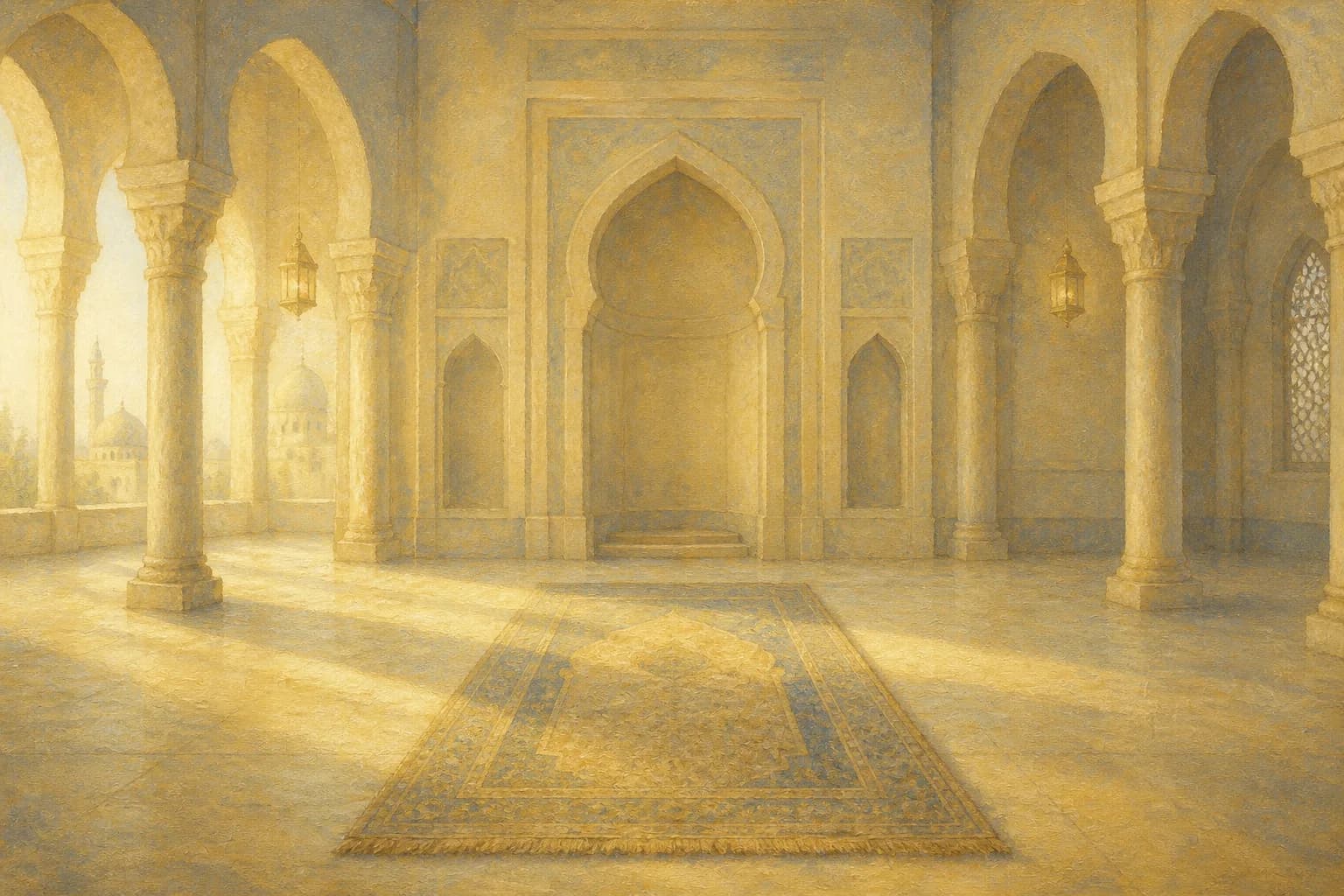

When a significant decision looms — a job offer, a marriage proposal, a move to a new city — it can feel impossible to know which path is right. The Prophet Muhammad ﷺ gave us an extraordinary tool for exactly these moments: Salat al-Istikhara, the prayer of seeking the best choice. Unlike decision frameworks or pro-and-con lists, Istikhara is an act of worship that hands the outcome to the One who already knows it.
How Do You Perform the Istikhara Prayer?
Salat al-Istikhara consists of 2 voluntary (sunnah) rakahs followed by a specific dua recorded in Sahih al-Bukhari (7390). After completing the tasleem at the end of the prayer, you recite the Istikhara dua while naming your specific matter. The prayer can be offered at any valid time except the three forbidden periods, and it may be repeated multiple times until you feel a sense of guidance.
What Is Salat al-Istikhara?
Istikhara (استخارة) comes from the Arabic root khayr, meaning goodness. The word means "to seek the better choice" — to ask Allah to steer you toward what is good and away from what is harmful.
The Prophet ﷺ taught this prayer as a gift for every significant decision. Jabir ibn Abdullah (رضي الله عنه) narrated:
"The Prophet ﷺ used to teach us the Istikhara for all our affairs just as he used to teach us a surah of the Quran." — (Sahih al-Bukhari 7390)
The comparison to Quran teaching is striking. This was not a casual recommendation — it was considered essential knowledge for a Muslim's life.
Step-by-Step Guide to Performing Istikhara
Step 1: Make wudu
Istikhara is a formal prayer (salah), so you must be in a state of ritual purification first. If you need to make wudu, do so before beginning. Without valid wudu, the prayer is not accepted.
Step 2: Form your intention (niyyah)
Hold the intention in your heart that you are performing 2 rakahs of sunnah prayer for Istikhara, specifically for the matter you are deciding. You do not need to verbalize this aloud — the intention in the heart is sufficient.
Step 3: Pray 2 rakahs
Perform the 2 rakahs exactly as you would any voluntary prayer. There is no special method of standing, bowing, or prostrating different from regular salah. Recite Surah Al-Fatihah in both rakahs; after it, you may recite any surah. Some scholars recommend Surah Al-Kafirun (109) in the first rakah and Surah Al-Ikhlas (112) in the second, though this is not obligatory.
Step 4: Complete the tasleem
After the final tashahhud, make the tasleem ("as-salamu alaykum wa rahmatullah") to both sides, completing the prayer.
Step 5: Recite the Istikhara dua
While still facing the qiblah, raise your hands and recite the Istikhara dua. At the word "hadha al-amr" (this matter), name your specific decision in your heart or aloud:
اللَّهُمَّ إِنِّي أَسْتَخِيرُكَ بِعِلْمِكَ، وَأَسْتَقْدِرُكَ بِقُدْرَتِكَ، وَأَسْأَلُكَ مِنْ فَضْلِكَ الْعَظِيمِ، فَإِنَّكَ تَقْدِرُ وَلاَ أَقْدِرُ، وَتَعْلَمُ وَلاَ أَعْلَمُ، وَأَنْتَ عَلاَّمُ الْغُيُوبِ. اللَّهُمَّ إِنْ كُنْتَ تَعْلَمُ أَنَّ هَذَا الأَمْرَ خَيْرٌ لِي فِي دِينِي وَمَعَاشِي وَعَاقِبَةِ أَمْرِي فَاقْدُرْهُ لِي وَيَسِّرْهُ لِي ثُمَّ بَارِكْ لِي فِيهِ، وَإِنْ كُنْتَ تَعْلَمُ أَنَّ هَذَا الأَمْرَ شَرٌّ لِي فِي دِينِي وَمَعَاشِي وَعَاقِبَةِ أَمْرِي فَاصْرِفْهُ عَنِّي وَاصْرِفْنِي عَنْهُ وَاقْدُرْ لِي الْخَيْرَ حَيْثُ كَانَ ثُمَّ أَرْضِنِي بِهِ
Allahumma inni astakhiruka bi-'ilmika, wa astaqdiruka bi-qudratika, wa as'aluka min fadlika al-'azim, fa innaka taqdiru wa la aqdiru, wa ta'lamu wa la a'lamu, wa anta 'allamu al-ghuyub. Allahumma in kunta ta'lamu anna hadha al-amra khayrun li fi dini wa ma'ashi wa 'aqibati amri, fa aqdurhu li wa yassirhu li thumma barik li fihi, wa in kunta ta'lamu anna hadha al-amra sharrun li fi dini wa ma'ashi wa 'aqibati amri, fasrifhu 'anni wasrifni 'anhu, wa aqdur li al-khayra haythu kana thumma ardini bihi.
"O Allah, I seek Your guidance by virtue of Your knowledge, and I seek ability by virtue of Your power, and I ask You of Your great bounty. You have power; I have none. And You know; I know not. You are the Knower of hidden things. O Allah, if in Your knowledge this matter is good for me in my religion, my livelihood, and the end of my affair, then decree it for me and facilitate it for me, then bless me in it. And if in Your knowledge this matter is bad for me in my religion, my livelihood, and the end of my affair, then turn it away from me and turn me away from it, and decree for me what is good wherever it may be, and make me pleased with it." — (Sahih al-Bukhari 7390)
Quick-Reference: Istikhara at a Glance
| Step | What to Do | Notes |
|---|---|---|
| 1. Wudu | Make full ritual purification | Required — prayer is invalid without it |
| 2. Niyyah | Intend 2 sunnah rakahs for Istikhara | Silent intention in the heart suffices |
| 3. 2 Rakahs | Standard voluntary prayer | Any surah after Al-Fatihah; no special requirement |
| 4. Tasleem | Complete the prayer normally | Same as any salah |
| 5. Dua | Recite the full Istikhara dua | Name your specific matter at "hadha al-amr" |
| 6. Proceed | Move forward after reflection | Look for ease or difficulty as guidance |
When Can You Pray Istikhara?
You may perform Istikhara at any time that voluntary prayers are permitted. Three windows are forbidden for any nafl (voluntary) salah:
- From after Fajr until the sun has fully risen (approximately 20 minutes after sunrise)
- When the sun is at its zenith (directly overhead at midday)
- From the start of the Asr time until after Maghrib (according to some scholars, only from the sun turning pale until it sets)
Outside these windows, Istikhara is completely open. Many scholars recommend the last third of the night, when du'a is most readily accepted. But praying it after Isha, after Dhuhr, or at any other valid time is perfectly correct.
Still struggling to perform salah properly?
Learn each prayer step by step, understand what you are saying, and build a consistent salah habit with clear, scholar-approved lessons in DeenUp.
Take the Salah Quiz
How to Know If Istikhara Is Answered
One of the most common misconceptions about Istikhara is that you must wait for a dream. In reality, scholars teach that the sign of Istikhara is:
- Ease and facilitation: Doors open naturally, the matter proceeds smoothly — this is generally a sign of good (khayr).
- Difficulty and obstruction: Circumstances block the path, things fall apart despite effort — this is generally a sign that the matter is not right for you.
Ibn Al-Qayyim (رحمه الله) wrote that after Istikhara, the Muslim should "lean toward what the heart feels inclined to after the prayer." A dream is a bonus, not a requirement. You proceed with your best judgment and trust that what Allah facilitates is what is best.
For more on the dua text itself and its meaning, see our full guide on the Istikhara dua in Arabic and the complete Salat al-Istikhara dua with English translation.
Common Mistakes When Performing Istikhara
Mistake 1: Reciting the dua before the prayer The Istikhara dua is recited after the tasleem, not during the prayer or before it. Reciting it inside the prayer is incorrect.
Mistake 2: Treating it as a last resort Some Muslims only turn to Istikhara when completely stuck. The Prophet ﷺ taught it for all matters — beginning to end of a decision process, not just at the point of desperation.
Mistake 3: Expecting a dramatic sign The heart's inclination after sincere supplication is itself the guidance. Waiting for a vivid dream and acting paralyzed in the meantime misses the point.
Mistake 4: Only praying once You can — and sometimes should — repeat Istikhara multiple times. If you still feel unsettled after the first time, pray it again the next night. Many scholars mention repeating it up to seven times.
For a comparison of how this prayer relates to other voluntary prayers, our post on fajr prayer benefits covers the broad spiritual value of maintaining sunnah prayers in daily life.
Istikhara for Marriage
Istikhara for marriage is one of the most common uses of this prayer, and it works exactly the same way as for any other decision. You pray the 2 rakahs, recite the dua, and in your heart (or aloud) you name the specific person and the intention of marriage.
The key point scholars emphasize: Istikhara for marriage should come after you have done your due diligence — met the person (in permissible ways), consulted family, checked compatibility, and done the practical research Islam expects of you. Istikhara is not a substitute for judgment; it is asking Allah to seal and bless the judgment you have already exercised.
Building Tawakkul Through Istikhara
Istikhara is ultimately an act of tawakkul — complete reliance on Allah. It means saying: "I have done what I can; now I hand the steering wheel back to You."
This is exactly the Quranic instruction: "And consult them in affairs. Then when you have decided, put your trust in Allah. Certainly, Allah loves those who put their trust in Him." (Surah Al-Imran, 3:159)
The consultation precedes the decision; the tawakkul follows it. Istikhara sits at that hinge point.
A Feed Worth Scrolling
Swipe through short, scholar-approved Islamic lessons instead of mindless doom-scrolling.
Learn Through Play
Bite-sized lessons, quizzes, levels, and daily streaks make growing your Deen a habit.
Scholar-Approved
Every lesson is rooted in the Quran and authentic Sunnah and reviewed by qualified scholars.
Still struggling to perform salah properly?
Learn each prayer step by step, understand what you are saying, and build a consistent salah habit with clear, scholar-approved lessons in DeenUp.
Take the Salah QuizFrequently Asked Questions
See the FAQ section above for answers to the most common questions about Istikhara.
For a deeper look at the spiritual dimension of seeking guidance, explore DeenBack's guide to trusting Allah in daily decisions and Demi Manifest's piece on building intentional Islamic daily routines. The complete Istikhara hadith is available on sunnah.com. The Quranic verse on tawakkul referenced above appears in full at quran.com/3/159.
Frequently Asked Questions
How many rakahs is the Istikhara prayer?
The Istikhara prayer consists of 2 rakahs. These are sunnah rakahs, performed just like any regular 2-rakat voluntary prayer. After completing the 2 rakahs and the tasleem, you recite the Istikhara dua, substituting the Arabic phrase for "this matter" with your specific decision.
When is the best time to pray Istikhara?
Istikhara can be performed at any valid prayer time, but scholars recommend praying it at night — particularly in the last third of the night, like Tahajjud — when the heart is quieter and the connection to Allah is stronger. Avoid the three forbidden times: at sunrise, directly at midday, and at sunset.
Do I have to wait for a dream after Istikhara?
No, you do not have to wait for a dream after Istikhara. This is a common misconception. The sign of Istikhara being answered is most often a feeling of ease or difficulty toward the matter — circumstances opening up or closing off. If the matter proceeds smoothly, that is generally a sign of goodness.
Can I repeat Istikhara multiple times?
Yes, scholars agree you can repeat Istikhara multiple times for the same matter, particularly if you do not feel a clear sense of direction after the first time. There is no fixed limit. Many scholars recommend repeating up to seven times, though some say to continue until you feel settled.
What surah should I recite in Istikhara prayer?
There is no specific surah required for the Istikhara prayer. You recite Surah Al-Fatihah in both rakahs, as you would in any prayer, and any surah after it. Some scholars recommend Surah Al-Kafirun in the first rakah and Surah Al-Ikhlas in the second, though this is not obligatory.
Do I need to be in a state of wudu for Istikhara?
Yes, Istikhara is a formal salah, so you must be in a valid state of wudu (ritual purification) before performing it. If you do not have wudu, make it first. The prayer is invalid without purification, just as with any other salah.
Should I tell anyone about my Istikhara?
Scholars generally advise keeping your Istikhara private, especially the decision you are seeking guidance about. Sharing it widely before a conclusion can invite unsolicited opinions that cloud your own judgment. Consulting a trusted advisor separately is fine, but the Istikhara itself is between you and Allah.