

- Authors

- Name
- Ahmad
- Role
- Senior Marketing Manager, Islamic education • DeenUp
بِسْمِ اللهِ الرَّحْمٰنِ الرَّحِيْمِ
In the name of God, the Most Gracious, the Most Merciful.
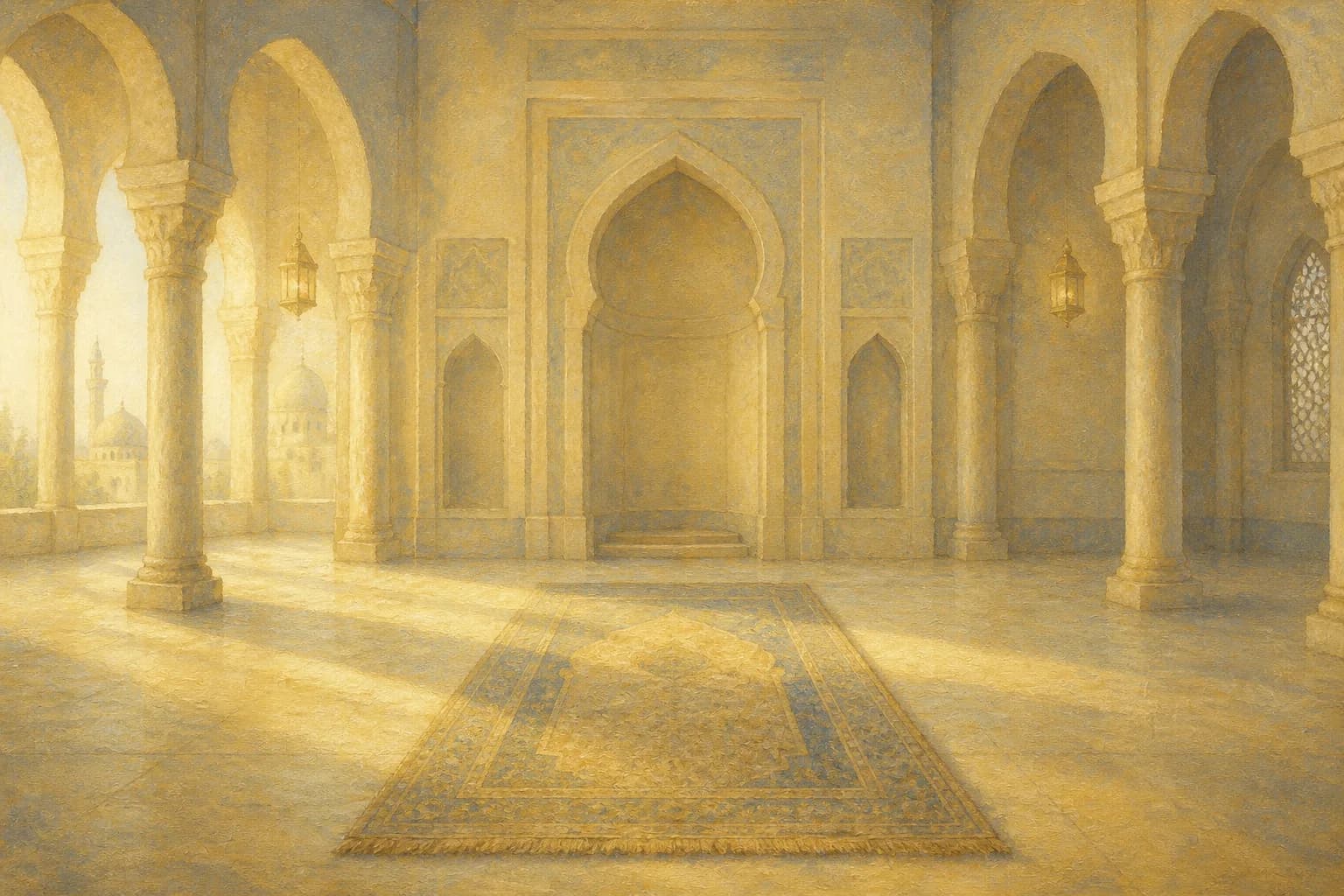

The Prayer That Defines Your Day
Fajr is the hardest prayer to pray and the most rewarding to keep. Before the world demands anything of you — before your phone, your schedule, and your obligations pull in every direction — you stand before Allah in the stillness of early morning. That moment sets the tone for everything that follows.
The Quran names Fajr specifically among the prayers, calling it الصلاة الفجر and noting its unique character: "Establish prayer at the decline of the sun until the darkness of the night and [also] the Quran of dawn. Indeed, the recitation of dawn is ever witnessed." (Surah Al-Isra, 17:78) The "witnessing" refers to the angels of the night and day both being present at Fajr time — a detail that gives this prayer a quality unlike any other.
This guide covers every step: wudu, the two sunnah rakahs, the two fard rakahs, what to recite in each position, and what to do in the blessed time that follows.
How Do You Pray Fajr Prayer?
Fajr prayer consists of 4 rakahs total: 2 sunnah muakkadah rakahs prayed quietly before the obligatory portion, then 2 fard rakahs prayed aloud. You begin with wudu, face the qiblah, make your intention, and perform each rakah with its standing, bowing, prostrations, and sitting positions. The fard portion is completed with the final tasleem — turning your head right then left and saying "Assalamu Alaikum wa Rahmatullah."
Why Fajr Carries Such Weight in Islamic Practice
The virtue of Fajr is stated precisely in hadith. The Prophet ﷺ said about the 2 sunnah rakahs alone: "The two rakahs of Fajr are better than the world and everything in it." (Sahih Muslim, 725) He never abandoned these two rakahs even while traveling — one of the strongest signals in Islamic tradition that a practice carries exceptional weight.
The fard prayer itself earns the promise: "Whoever prays the two cool prayers — Fajr and Asr — will enter Paradise." (Sahih al-Bukhari, 574) The "two cool prayers" are described this way because of the lower temperatures at those times, but the hadith encompasses the whole spiritual weight of praying when most people are asleep or distracted.
For a deeper look at the spiritual rewards attached to this prayer, the benefits of Fajr prayer covers the evidence in detail.
Fajr Prayer Structure at a Glance
| Part | Rakahs | Recitation | Required? |
|---|---|---|---|
| Before Fajr sunnah | 2 | Quiet | Sunnah muakkadah (strongly emphasized) |
| Fajr fard | 2 | Aloud | Fard (obligatory) |
| Morning adhkar | — | Quiet | Sunnah |
| Total rakahs | 4 | — | — |
Step-by-Step Guide to Praying Fajr
Step 1: Check the Fajr Time and Make Wudu
Fajr time begins at true dawn — the appearance of horizontal white light along the horizon — and ends at sunrise. Use a reliable prayer time app or your local masjid schedule to know your exact window. Once the time enters, make wudu.
The Prophet ﷺ said: "There is no prayer without purification." (Sahih Muslim, 224) After wudu, recite the post-wudu supplication:
أَشْهَدُ أَن لَّا إِلَٰهَ إِلَّا ٱللَّٰهُ وَأَشْهَدُ أَنَّ مُحَمَّدًا عَبْدُهُ وَرَسُولُهُ
Ashhadu an la ilaha illa Allah, wa ashhadu anna Muhammadan abduhu wa rasuluh
"I bear witness that there is no god but Allah, and I bear witness that Muhammad is His servant and messenger."
Step 2: Face the Qiblah and Make Your Intention
Stand on your prayer mat facing the direction of the Kaabah in Mecca — the قبلة (qiblah). The intention (نية — niyyah) is made in your heart: you are intending to pray the sunnah or fard rakahs of Fajr for the sake of Allah. No verbal formula is required by the majority of scholars.
Step 3: Pray the 2 Sunnah Rakahs (Quietly)
Begin the sunnah rakahs by raising your hands to your earlobes and saying تكبيرة الإحرام (takbirat al-ihram): "Allahu Akbar." Then:
Rakah 1 — Standing: Recite Surah Al-Fatihah, then a short surah. For the first sunnah rakah, many scholars recommend reciting Surah Al-Kafirun (Surah 109) after Al-Fatihah — and Surah Al-Ikhlas (Surah 112) in the second. These are the sunnah choices narrated from the Prophet ﷺ.
Bowing (ruku): Say "Subhana Rabbiyal Adheem" three times.
Standing after bowing: Say "Sami Allahu liman hamidah, Rabbana lakal hamd."
First prostration (sujood): Say "Subhana Rabbiyal Ala" three times.
Sitting between prostrations: Say "Rabbighfirli."
Second prostration: Repeat "Subhana Rabbiyal Ala" three times.
Rakah 2: Rise and repeat. After the second rakah, sit for the tashahhud:
التَّحِيَّاتُ لِلَّهِ وَالصَّلَوَاتُ وَالطَّيِّبَاتُ...
At-tahiyyatu lillahi was-salawatu wat-tayyibat...
Complete the sitting fully, including salawat (prayers upon the Prophet), then end with tasleem (turning right and left saying "Assalamu Alaikum wa Rahmatullah").
Step 4: Pray the 2 Fard Rakahs (Aloud)
After completing the sunnah, begin the obligatory Fajr rakahs with a new takbirat al-ihram. The fard rakahs follow the same structure as the sunnah rakahs, with one key difference: the recitation is aloud. Recite Surah Al-Fatihah and any surah from the Quran you have memorized audibly.
If you are praying alone, "aloud" means clearly audible to yourself — you do not need to project. In congregation, the imam recites aloud and the followers listen.
After Rakah 2, sit for the full tashahud and salawat, then make the tasleem to both sides to complete the prayer.
Step 5: Recite the Morning Adhkar
Do not rush away after the tasleem. The time immediately after Fajr until sunrise is among the most blessed moments in the Islamic day. Remain seated and recite the morning adhkar: Ayatul Kursi, the three Quls (Al-Ikhlas, Al-Falaq, An-Nas recited three times each), Subhanallah 33 times, Alhamdulillah 33 times, Allahu Akbar 33 times, and the morning supplication.
Still struggling to perform salah properly?
Learn each prayer step by step, understand what you are saying, and build a consistent salah habit with clear, scholar-approved lessons in DeenUp.
Take the Salah Quiz
Building a Consistent Fajr Habit
Praying Fajr consistently is a known challenge — the body resists waking before dawn, and the mind can find reasons to delay. Three approaches help:
Set a non-negotiable alarm the night before. Place your alarm — or phone — across the room so waking requires physical movement. The walk to silence the alarm is often enough to break the sleep inertia. Our dedicated guide on how to wake up for Fajr covers practical strategies for making this habit stick.
Prepare your prayer space before sleeping. A prayer mat already laid out, facing the qiblah, reduces the number of decisions required before dawn. Fewer barriers between bed and prayer = higher consistency.
Make the post-Fajr time enjoyable. If the minutes after salah feel productive and peaceful — Quran recitation, morning dhikr, a quiet cup of tea — the prayer becomes associated with something you look forward to, not just an obligation to discharge.
The DeenBack morning dua routine guide explores how pairing Fajr with a structured post-prayer routine transforms the whole morning. And Demi Manifest's piece on tawakkul in daily life addresses the deeper posture of reliance on Allah that makes consistent prayer feel less like effort and more like orientation.
For guidance on how to pray salah in its complete form, our step-by-step prayer guide covers all five prayers.
A Feed Worth Scrolling
Swipe through short, scholar-approved Islamic lessons instead of mindless doom-scrolling.
Learn Through Play
Bite-sized lessons, quizzes, levels, and daily streaks make growing your Deen a habit.
Scholar-Approved
Every lesson is rooted in the Quran and authentic Sunnah and reviewed by qualified scholars.
Common Fajr Mistakes to Avoid
Skipping the sunnah rakahs. The 2 sunnah rakahs before Fajr are among the most emphasized in Islamic practice. The Prophet ﷺ never abandoned them. Making them a fixed part of your Fajr routine is a high-reward habit worth protecting.
Rushing through the fard rakahs. Fajr has only 2 fard rakahs — a short prayer. Rushing them loses the khushoo (deep presence) that makes salah spiritually effective. Slow down, recite clearly, and settle into each position.
Praying after sunrise and treating it as fulfilled. Once the sun rises, you have missed the Fajr time window. Pray the qada (makeup) immediately, but do not treat it as equivalent to praying in the correct time. If this happens occasionally, resolve to set better alarms. If it becomes a pattern, address the underlying habit.
Abandoning morning adhkar. The adhkar after Fajr are a distinct sunnah from the prayer itself — they complete the morning of remembrance. Leaving immediately after tasleem means leaving the most blessed window of the day under-used.
Common Questions About Fajr Prayer
Can I combine Fajr with another prayer? No. Fajr cannot be combined with any other prayer in the Hanafi, Maliki, Shafi'i, or Hanbali schools. The permission to combine prayers (jama) applies only to Dhuhr + Asr and Maghrib + Isha.
What if I woke up just as the sun is rising? If sunrise has not yet occurred, make wudu and pray — even a single rakah before sunrise counts as having caught Fajr. If the sun has already risen, perform the qada prayer with both sunnah and fard rakahs as soon as possible.
How do I find the qiblah direction at home? A qiblah compass app on your phone is the simplest solution. You can also check with a local masjid. The general direction from North America is northeast; from Europe it is southeast; from Australia it is northwest.
Closing
Fajr is the prayer the world does not see. There is no audience, no social reward, no convenience — just you and Allah, before the day begins. That is precisely why it carries the weight it does in Islamic tradition.
The Prophet ﷺ described the angels who witness Fajr as carrying report of what they saw back to Allah — and that what they carry is the image of you standing in prayer before dawn. That image is worth protecting, day after day.
Still struggling to perform salah properly?
Learn each prayer step by step, understand what you are saying, and build a consistent salah habit with clear, scholar-approved lessons in DeenUp.
Take the Salah QuizFrequently Asked Questions
How many rakahs is Fajr prayer?
Fajr prayer consists of 4 rakahs in total: 2 sunnah muakkadah rakahs prayed quietly before the obligatory portion, followed by 2 fard rakahs prayed aloud. The 2 fard rakahs are obligatory. The 2 sunnah rakahs are highly emphasized — the Prophet said they are better than the world and everything in it.
What do you recite in Fajr prayer?
In Fajr prayer, you recite Surah Al-Fatihah in each rakah followed by any other surah you know — Al-Kafirun and Al-Ikhlas are commonly recited in the two sunnah rakahs. The fard rakahs are prayed aloud. Between prostrations and in other positions, you recite standard tasbeeh (SubhanAllah, Allahu Akbar) and tashahud in the final sitting.
Can I pray Fajr after sunrise?
If you miss Fajr and the sun has risen, you have missed the obligatory time. You must still pray it as a makeup (qada) as soon as you realize, without further delay. The Prophet ﷺ said: 'Whoever forgets a prayer should pray it when he remembers it.' Missing Fajr is serious, but making it up is required — not optional.
Is the 2-rakah sunnah before Fajr required?
The 2 sunnah rakahs before Fajr are not obligatory, but they are sunnah muakkadah — the most strongly emphasized category of voluntary prayer. The Prophet ﷺ never abandoned them even while traveling. Missing them is not sinful, but praying them regularly carries immense reward and should be a firm part of your Fajr routine.
What is the Fajr prayer time?
Fajr prayer time begins at true dawn — the appearance of a white horizontal light across the horizon (called subh sadiq) — and ends at sunrise. This window varies by location and season. Use a reliable prayer time app or your local masjid schedule. Praying Fajr in its correct time is one of the most spiritually significant acts a Muslim can perform.
Is Fajr prayer recited out loud or silently?
The 2 fard rakahs of Fajr prayer are recited aloud — this is the established sunnah. The 2 sunnah rakahs before the fard are recited quietly. When praying alone at home, you may recite at a low audible volume. In congregation, the imam recites aloud and the followers listen without reciting the surah aloud themselves.
What should I do after Fajr prayer?
After completing Fajr prayer, remain seated and recite the morning adhkar — the prescribed remembrances that the Prophet ﷺ taught for this time. These include Ayatul Kursi, the three Quls (Al-Ikhlas, Al-Falaq, An-Nas), and dhikr phrases. The period between Fajr and sunrise is especially blessed — use it for Quran recitation or quiet reflection.