

- Authors

- Name
- Ahmad
- Role
- Senior Marketing Manager, Islamic education • DeenUp
بِسْمِ اللهِ الرَّحْمٰنِ الرَّحِيْمِ
In the name of God, the Most Gracious, the Most Merciful.

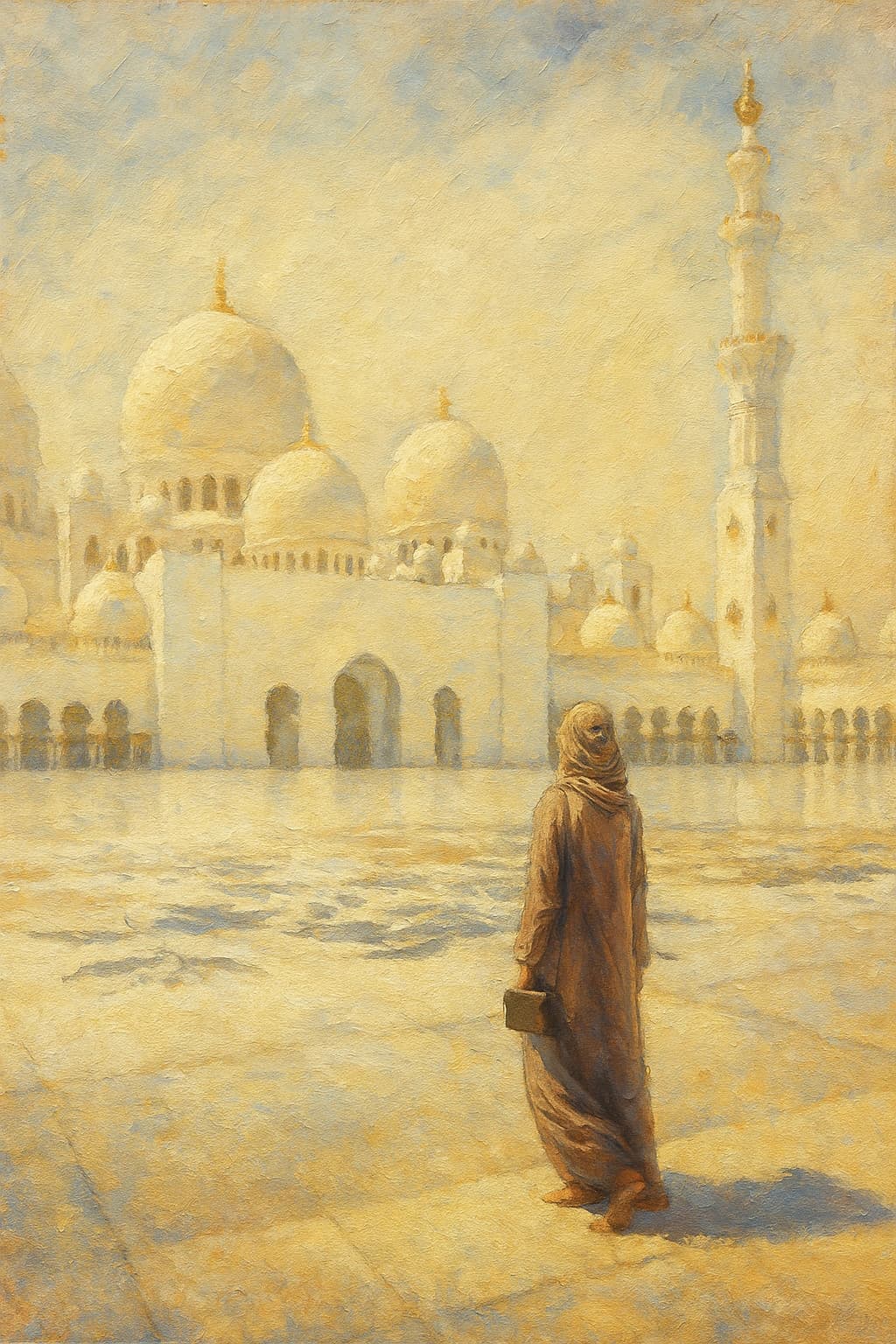
You have declared the shahada — or you are very close to it. The words are clear: there is no god but Allah, and Muhammad ﷺ is His messenger. Something has shifted in your heart, and now comes the question that feels both exciting and overwhelming: what do you actually do now?
Islam is a complete way of life, which means there is a great deal to learn. But a great deal does not need to be learned on day one. This guide focuses on what matters most in your first 30 days — the foundations that everything else builds on.
How Do You Start Being a Muslim?
Starting life as a Muslim means building a daily practice rooted in five pillars, beginning with salah (the five daily prayers). In the first 30 days, the essential priorities are: performing ghusl after the shahada, learning the basics of Fajr prayer (2 rakahs), memorizing Surah Al-Fatiha, connecting with a local mosque, and establishing at least one daily dhikr habit. Everything else in Islam is built on top of this foundation. The Prophet Muhammad ﷺ said: "The first thing the servant will be held accountable for on the Day of Judgment is the five daily prayers" (Sunan al-Tirmidhi 413, graded authentic by Ibn Khuzaymah and others).
What the Quran Says About Beginning This Journey
Allah سبحانه وتعالى does not expect perfection from new believers. The Quran describes the nature of faith as something that grows:
وَٱلَّذِينَ جَاهَدُوا۟ فِينَا لَنَهْدِيَنَّهُمْ سُبُلَنَا
"And those who strive for Our sake — We will surely guide them to Our paths." — (Surah Al-Ankabut, 29:69)
The Arabic word used here is jahadu — from the same root as jihad, which literally means striving or effort. Beginning is itself an act of striving. You do not need to arrive fully formed. The Quran is telling you that sincere effort is enough to unlock guidance.
The Prophet ﷺ also confirmed a remarkable gift for every new Muslim: "Islam erases everything that came before it" (Sahih Muslim 121). Your entire past record is wiped clean on the day you enter the faith. You begin with a completely fresh account.
Week 1: The Foundation
Step 1 — Perform Ghusl (Ritual Bath)
After the shahada, scholars recommend performing ghusl — a complete ritual bath covering the entire body. It is not a strict condition for the shahada to be valid, but it is strongly recommended as a physical and spiritual reset. It follows the practice of several companions of the Prophet ﷺ when they entered Islam.
Step 2 — Learn Wudu (Ritual Ablution)
Before every salah, you need wudu — a specific purification of the hands, face, arms, head, and feet. Learning wudu correctly takes about 15 minutes of practice. It is the same ritual every prayer, every day, so it quickly becomes second nature.
Step 3 — Begin with Fajr Prayer
Fajr — the dawn prayer — has only 2 rakahs (units of prayer) and is the best starting point for new Muslims learning salah. The essential recitations are:
| Part of Prayer | What You Recite |
|---|---|
| Opening Takbeer | Allahu Akbar (Allah is the Greatest) |
| Al-Fatiha | The opening surah of the Quran (7 verses) |
| Short Surah | Any short surah — begin with Surah Al-Ikhlas (3 verses) |
| Ruku (Bowing) | Subhana Rabbiyal Adheem (Glory to my Lord, the Great) |
| Sujood (Prostration) | Subhana Rabbiyal A'la (Glory to my Lord, the Most High) |
| Final Tashahhud | The testimony that Allah is One and Muhammad ﷺ is His Messenger |
For a complete step-by-step walkthrough, see our guide on how to start praying as a new Muslim.
Step 4 — Memorize Surah Al-Fatiha
Surah Al-Fatiha (the Opening) is recited in every rakah of every prayer — which means you will recite it at minimum 17 times a day. It is the most important surah to learn first. Spend 10–15 minutes a day for the first week listening to it and repeating it. By the end of the week, most people have it memorized.
Weeks 2–3: Building the Prayer Habit
Once you are comfortable with Fajr, add one more prayer. The scholars recommend adding prayers in the order that feels most manageable:
- Week 2: Add Maghrib (3 rakahs at sunset — the break-fast time)
- Week 3: Add Isha (4 rakahs at night — before sleep)
- Week 4: Add Dhuhr and Asr (4 rakahs each during the day)
The goal is consistency over completeness. Five imperfect prayers performed daily are better than five perfect prayers performed occasionally.
Still searching for a clear Islamic answer?
Explore sourced answers rooted in the Quran, authentic hadith, and respected scholarship—without getting lost in conflicting search results.
Take the Islam Quiz
Week 2: Essential Daily Duas
Duas — personal supplications — are what connect your internal state to Allah throughout the day. They do not require specific positions or language (unlike salah), which makes them ideal for weaving through every part of your day.
Four duas to learn in week two:
1. Dua before eating:
بِسْمِ اللَّهِ
Bismillah — "In the name of Allah." — (Sahih al-Bukhari 5376)
2. Dua when waking up:
الْحَمْدُ لِلَّهِ الَّذِى أَحْيَانَا بَعْدَ مَا أَمَاتَنَا وَإِلَيْهِ النُّشُورُ
Alhamdulillahil-ladhi ahyana ba'da ma amatana wa ilayhin-nushur — "Praise be to Allah who gave us life after causing us to die, and to Him is the resurrection." — (Sahih al-Bukhari 6324)
3. Dua before sleeping:
اللَّهُمَّ بِاسْمِكَ أَمُوتُ وَأَحْيَا
Allahumma bismika amutu wa ahya — "O Allah, in Your name I die and I live." — (Sahih al-Bukhari 6324)
4. Dua after wudu:
أَشْهَدُ أَنْ لَا إِلَهَ إِلَّا اللهُ وَحْدَهُ لَا شَرِيكَ لَهُ وَأَشْهَدُ أَنَّ مُحَمَّدًا عَبْدُهُ وَرَسُولُهُ
Ash-hadu an la ilaha illallahu wahdahu la sharika lah, wa ash-hadu anna Muhammadan 'abduhu wa rasuluh — "I bear witness that there is no god but Allah alone with no partner, and I bear witness that Muhammad is His servant and messenger." — (Sahih Muslim 234)
Week 3: Opening the Quran
The Quran is the living word of Allah — and reading it, even without full understanding, carries immense reward. The Prophet ﷺ said: "Whoever reads a letter of the Book of Allah earns a good deed, and a good deed is multiplied by ten" (Sunan al-Tirmidhi 2910).
For a new Muslim in week three, the approach is simple:
- Read 5–10 verses of Quran in translation each day, to build familiarity with its message
- Listen to a short surah recited aloud to hear the Arabic sounds
- Use the basics of Islam as a companion guide while you read
You do not need to read in Arabic right away. Reading a trusted translation daily builds an understanding of what you are worshipping and why.
Week 4: Connecting with the Community
Islam is not a solitary practice. The Quran emphasizes the ummah — the global Muslim community — and places collective worship at the center of Islamic life. In week four, the goal is to attend Jumu'ah (Friday prayer):
يَا أَيُّهَا الَّذِينَ آمَنُوا إِذَا نُودِيَ لِلصَّلَاةِ مِن يَوْمِ الْجُمُعَةِ فَاسْعَوْا إِلَىٰ ذِكْرِ اللَّهِ
"O you who have believed, when the call to prayer is made on Friday, then proceed to the remembrance of Allah." — (Surah Al-Jumu'ah, 62:9)
Most mosques are genuinely welcoming to new Muslims at Jumu'ah. Many have specific new Muslim support groups or can connect you with a learning partner. This week, make one visit to your local mosque.
Common Concerns for New Muslims
"I don't feel like I'm doing it right." This is completely normal. Worship is a skill developed over time, not a performance evaluated from day one. The Prophet ﷺ taught that Allah accepts the salah of a believer even when it is imperfect. What matters is sincere intention (niyyah) and consistent effort.
"My family doesn't understand." Navigating family relationships after converting is one of the most common challenges new Muslims face. Islam teaches birr al-walidayn — honoring and being kind to parents regardless of their beliefs. Continue treating your family with respect and patience; your character will speak louder than any argument.
"I am afraid of making mistakes." The concept of tawbah — sincere repentance — is built into Islam precisely because humans make mistakes. Whenever you fall short, turn back to Allah honestly. He says in the Quran: "Say: O My servants who have transgressed against themselves — do not despair of Allah's mercy. Truly Allah forgives all sins" (Surah Az-Zumar, 39:53).
Still searching for a clear Islamic answer?
Explore sourced answers rooted in the Quran, authentic hadith, and respected scholarship—without getting lost in conflicting search results.
Take the Islam QuizStarting to live as a Muslim is not about achieving perfection in month one. It is about laying one stone at a time — prayer, dua, Quran, community — until the structure of your day reflects the values you have chosen. Every sincere step you take, however small, is recorded by the One who sees everything. Begin today.
Frequently Asked Questions
What should I do first after taking the shahada?
After taking the shahada, scholars recommend performing ghusl (a full ritual bath) as a fresh beginning. Then focus on learning the basics of salah (formal prayer), starting with Fajr — the two-rakah dawn prayer. You are not expected to know everything at once. Allah knows you are beginning, and the journey itself is an act of worship. Connect with a local mosque for community support.
How long does it take to learn to pray as a new Muslim?
Most new Muslims can learn the basic movements and recitations of salah within two to four weeks of daily practice. The essential starting point is memorizing Surah Al-Fatiha (seven verses) and one or two additional short surahs. Learning the positions — standing, bowing, prostrating — typically takes a few sessions. The key is consistency: pray the same prayer at the same time each day while you are learning.
Do I need to know Arabic to be a Muslim?
You do not need to be fluent in Arabic to be a Muslim. However, the prescribed parts of the five daily prayers (salah) must be recited in Arabic — primarily Surah Al-Fatiha and the opening takbeer. Personal supplication (dua) can be in any language. The Quran is in Arabic, but reading it in translation is encouraged for understanding. Many Muslims never become fluent in Arabic yet maintain a rich, committed faith.
What is the most important thing to focus on in the first month?
In the first month, the most important thing is establishing the five daily prayers. Prayer is the first thing that will be asked about on the Day of Judgment (Sunan al-Tirmidhi 413). Start with Fajr and build from there. Everything else — learning more Quran, understanding fiqh, fasting, charity — comes after a consistent prayer foundation. Small and steady is better than ambitious and inconsistent.
Can I still sin and be a Muslim?
Yes. All humans sin — this is stated clearly in Islam. The Prophet Muhammad (peace be upon him) said: 'Every son of Adam sins, and the best of those who sin are those who repent' (Sunan al-Tirmidhi 2499). Becoming a Muslim does not mean becoming sinless; it means having a framework for seeking forgiveness, returning to Allah, and striving to improve. Tawbah (sincere repentance) is always available.
What duas should a new Muslim learn first?
The first duas to memorize as a new Muslim are the ones tied to daily actions: the dua before eating (Bismillah), the dua before sleeping, the dua when waking up, and the dua after every wudu (ablution). These attach remembrance of Allah to routines you already have, making worship natural rather than forced. After these, learn the Ayat al-Kursi (Surah Al-Baqarah, 2:255) — a powerful verse for daily protection.
How do I find other Muslims for support?
The local mosque is the most direct path to Muslim community. Friday Jumu'ah prayer is an especially welcoming starting point — most mosques have support networks for new Muslims and may offer structured classes. Online communities and Islamic learning apps can also help bridge the gap if a local mosque is not easily accessible. Seeking out even one or two practicing Muslim friends early makes a significant difference in staying consistent.