

- Authors

- Name
- Ahmad
- Role
- Senior Marketing Manager, Islamic education • DeenUp
بِسْمِ اللهِ الرَّحْمٰنِ الرَّحِيْمِ
In the name of God, the Most Gracious, the Most Merciful.
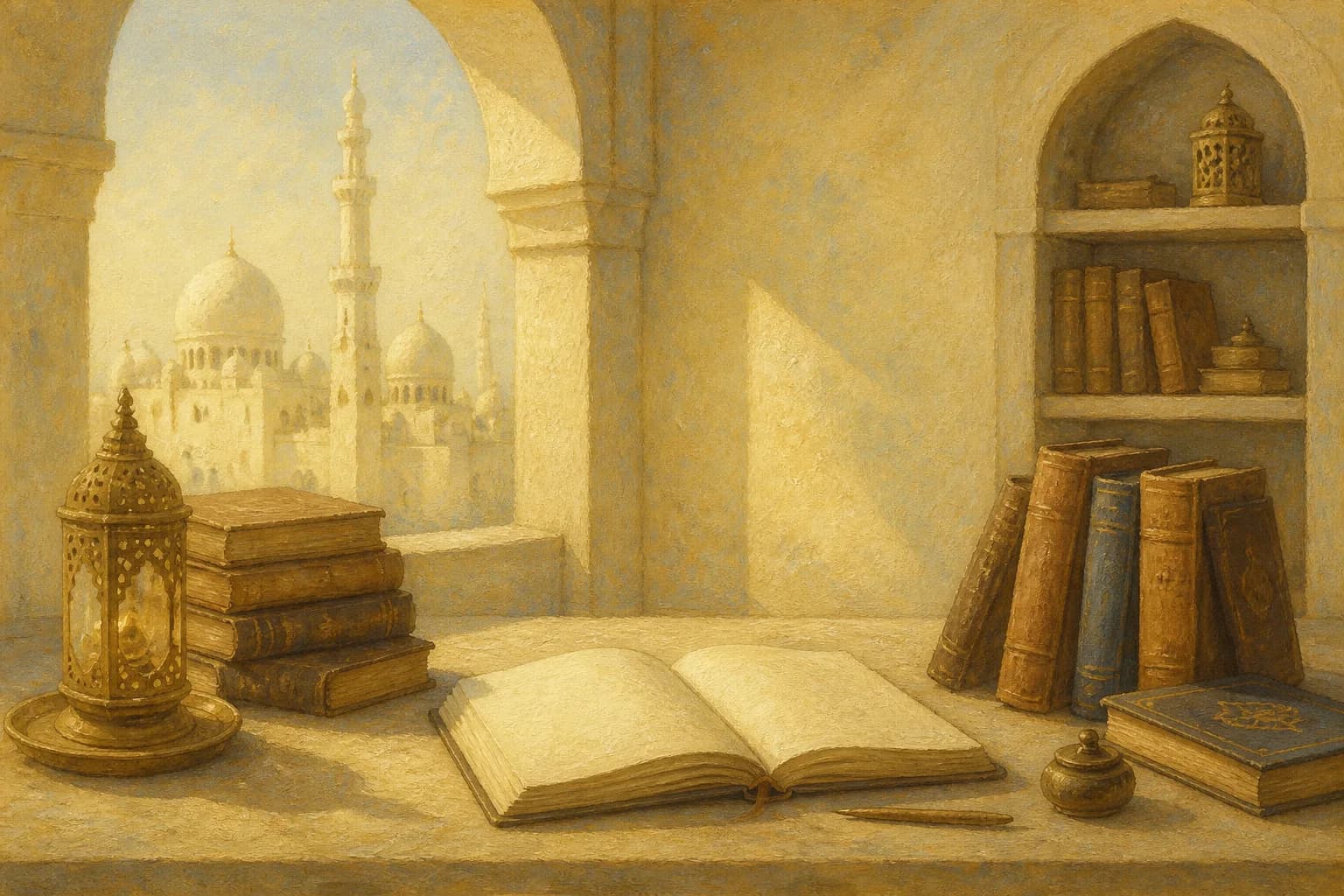

At some point, most Muslims encounter the phrase "Islam is a complete way of life." It is said so often that it can begin to feel like a slogan — something affirmed without being truly understood. But the idea behind it is one of the most distinctive and consequential aspects of what Islam actually is.
For many people raised in secular societies, religion means the things you do at a place of worship on certain days. Islam, from its foundational texts, proposes something different: a deen — a total orientation for human existence, not a department of life but a lens through which all of life is seen and lived.
What Does It Mean That Islam Is a Way of Life?
Islam as a way of life means the Quran and Sunnah provide guidance for every dimension of human existence — not just formal worship, but character, family, commerce, governance, and social conduct. The Arabic word deen (دين) encompasses religion, a system of law, and a path of daily conduct together. The Quran declares, "Indeed, the religion (deen) with Allah is Islam" (Surah Al-Imran, 3:19) — not a ritual system, but a complete framework for being human. This comprehensive scope is what makes Islam distinct from traditions that limit religious observance to certain times and places.
What the Quran Means by "Enter Into Islam Completely"
The Quran instructs believers in direct terms about this totality:
يَا أَيُّهَا الَّذِينَ آمَنُوا ادْخُلُوا فِي السِّلْمِ كَافَّةً
"O you who have believed, enter into Islam completely [and perfectly]." — (Surah Al-Baqarah, 2:208)
The word kaffah (كافة) means entirely — without reservation, without holding parts of your life back from divine guidance. This is not a demand for perfection; it is an invitation to coherence. A life lived with one set of values in the mosque and a different set of values in the office is a divided life. Islam's claim is that the guidance offered is sufficient for the whole of it.
The completion of this worldview was announced at a pivotal moment. On the day of the Farewell Pilgrimage, the following verse was revealed:
الْيَوْمَ أَكْمَلْتُ لَكُمْ دِينَكُمْ وَأَتْمَمْتُ عَلَيْكُمْ نِعْمَتِي
"This day I have perfected for you your religion and completed My favor upon you." — (Surah Al-Ma'idah, 5:3)
"Perfected" is not an accident of translation. The Arabic akmaltu comes from the root for completeness. The deen is sufficient — there is no gap in it that requires supplementing with a different worldview.
The concept of iman — belief — is the inner foundation of this complete life. Without genuine conviction at the level of the heart, the external practices risk becoming empty habit rather than living deen.
Why This Matters for Muslims Today
The modern world tends to organize life into compartments: work, family, leisure, religion. The Islamic worldview does not accept this division — not because it dismisses the reality of different roles and contexts, but because it insists that the same person, with the same values, shows up in all of them.
This has practical consequences. A Muslim who understands their deen as a way of life approaches a business meeting with the same consciousness of Allah that they bring to salah. They know the rules of halal and honest dealing not as external constraints but as expressions of who they are trying to be. They understand that taqwa — God-consciousness — is meant to accompany them through every hour of every day, not just during formal worship.
The challenge for many Muslims living in secular societies is that compartmentalization is culturally reinforced. The path forward is not isolation from society but the practice of bringing Islamic consciousness into each sphere of life — which is exactly what the Prophet Muhammad ﷺ modeled and what the Sunnah describes in granular detail, from how to greet a neighbor to how to conduct a business transaction.
DemiManifest's exploration of faith and historical roots traces how this integrated worldview shaped the development of Islamic civilization — a history that demonstrates what living deen comprehensively actually produces.
How to Apply Islam as a Way of Life Daily
Living Islam as a complete way of life is not achieved all at once. It is built through small, consistent practices across the dimensions of deen. The table below maps those dimensions to their daily expressions:
| Dimension | Core Concept | Daily Expression |
|---|---|---|
| Aqeedah (Belief) | Faith in Allah and the pillars of iman | Morning and evening adhkar; gratitude |
| Ibadah (Worship) | Five daily prayers, fasting, zakat | Consistent salah schedule, daily Quran |
| Akhlaq (Character) | Honesty, patience, generosity, humility | Interactions with family, coworkers, strangers |
| Muamalat (Dealings) | Halal earnings, honest commerce | Business ethics, financial decisions |
| Ilm (Knowledge) | Quran and Sunnah study | Daily reading, listening to scholars |
| Niyyah (Intention) | Dedicating all actions to Allah | Beginning each task with bismillah |
The importance of niyyah cannot be overstated in this framework. The hadith of Umar ibn al-Khattab records the Prophet ﷺ saying: "Actions are but by intentions, and every person will have only what they intended." (Sahih al-Bukhari 1) This single principle transforms ordinary actions — cooking a meal, going to work, raising a child — into acts of worship when done with the right intention.
Practical steps for living Islam more completely:
- Anchor your day with the five prayers. The five pillars of Islam are not the ceiling of Islamic practice; they are the floor. Let each prayer create a pause that reconnects you to purpose.
- Read Quran daily, even a few verses. Regular Quran reading keeps the lens of deen clear.
- Apply Islamic ethics in your work. Honest dealings, fulfilling contracts, avoiding deception — these are ibadah when done consciously for Allah.
- Build halal habits progressively. The guide to building Islamic habits offers practical frameworks for making daily Islamic practice sustainable.
- Learn continuously. The Prophet ﷺ said: "Seeking knowledge is an obligation upon every Muslim." (Sunan Ibn Majah 224) DeenBack's guide to seeking Islamic knowledge outlines how to structure this learning in a busy life.
Still searching for a clear Islamic answer?
Explore sourced answers rooted in the Quran, authentic hadith, and respected scholarship—without getting lost in conflicting search results.
Take the Islam Quiz
Signs That You Are Growing in Living Your Deen
Progress in living Islam as a way of life is often quiet. Some signs worth noticing:
- Your first thought in a difficult moment is Allah — not anxiety, not anger, but tawakkul (trust in Allah).
- You feel the weight of your intention before you act, not only after.
- Honesty costs you something, and you choose it anyway because of what you know about Allah's accounting.
- Small acts — a morning dua, a moment of gratitude, a kind word — feel connected to something larger than habit.
- You begin to see daily life in Islam not as a series of obligations to fulfill, but as a practice of becoming.
The journey of becoming a more complete Muslim is described beautifully across the Quran: not as a destination arrived at, but as a direction walked consistently. How to be a better Muslim offers a companion guide to practical growth across these dimensions.
Resources like Yaqeen Institute and SeekersGuidance provide scholarly depth for Muslims seeking to understand the full scope of deen in the modern world.
Common Questions About Islam as a Way of Life
Does living Islam as a way of life mean following every Islamic ruling perfectly from day one? No scholar teaches that. The Quran and Sunnah are full of guidance about gradual improvement, repentance, and Allah's mercy with human weakness. The direction matters more than the current position. Begin where you are and take consistent steps.
Can non-Muslims live some Islamic values without being Muslim? Many of the ethical principles Islam teaches — honesty, justice, care for the vulnerable, gratitude — are recognized by people of all backgrounds. What is distinctive about deen is that these values are held as divine obligations, rooted in knowledge of Allah, not merely as social preferences.
How does Islamic lifestyle rules and guidelines relate to the broader idea of deen? Those rules are specific expressions of the larger framework. Deen is the worldview; the specific rules are its application across contexts. Understanding the worldview first helps the specific rules make sense as coherent expressions of it, rather than an arbitrary list of restrictions.
Closing
Islam as a way of life is one of the most enriching ideas available to a human being: that there is guidance sufficient for all of it — the grief and the joy, the ordinary Tuesday and the day of reckoning. The Quran is not a weekend text. It is a complete address to what it means to be a person, to live with others, and to stand before Allah.
That is the invitation of deen: not a heavier burden, but a fuller life.
Still searching for a clear Islamic answer?
Explore sourced answers rooted in the Quran, authentic hadith, and respected scholarship—without getting lost in conflicting search results.
Take the Islam QuizFrequently Asked Questions
What does it mean that Islam is a way of life?
Islam as a way of life means that the guidance of the Quran and Sunnah extends to every dimension of human existence — not just formal acts of worship, but also character, family, work, commerce, and social conduct. The Arabic word deen encompasses religion, governance, and a complete code of living, making Islam a total worldview rather than a Sunday practice.
What is the meaning of deen in Islam?
Deen (دين) in Arabic means a way of life, a system of conduct, and a path of obedience. It carries the sense of religion, judgment, and daily practice together. When the Quran says the religion with Allah is Islam (Surah Al-Imran, 3:19), the word deen signals a complete way of orienting one life — not merely a set of rituals performed on certain occasions.
How does Islam guide daily life beyond prayer?
Islam provides guidance for nearly every area of daily life: how to earn and spend money (avoiding riba and being honest in trade), how to treat family members (rights of spouses, parents, and children), how to interact with neighbors and non-Muslims, what to eat and avoid, and how to carry oneself with character. The Prophet Muhammad described the completion of good character as a central purpose of his mission (Muwatta Malik 1614).
Is Islam a religion or a complete way of life?
Islam is both a religion and a complete way of life — the distinction is artificial from an Islamic perspective. The Arabic word deen encompasses both meanings. The Quran describes Islam as the perfected religion (Surah Al-Maida, 5:3) and calls believers to enter into Islam completely (Surah Al-Baqarah, 2:208). This totality is what distinguishes deen from a merely ritual practice.
How do I live Islam as a way of life in a secular society?
Living Islam in a secular society means maintaining Islamic values in every sphere while engaging thoughtfully with the surrounding culture. This includes halal earnings and honest dealings in a non-Islamic economy, maintaining prayer in a workplace with no prayer room, lowering the gaze and guarding relationships in an environment where this is countercultural, and speaking with integrity in every interaction. The goal is consistency, not isolation.
What are the five pillars and how do they shape daily life?
The five pillars — shahada (testimony of faith), salah (five daily prayers), zakat (annual charity), sawm (fasting in Ramadan), and hajj (pilgrimage) — form the structural backbone of Islamic daily life. Salah in particular punctuates every day with five moments of reconnection with Allah. These pillars are not the entirety of Islamic life; they are the foundation on which everything else is built.
What is the difference between Islam as religion and Islam as a way of life?
Framing Islam only as a religion risks reducing it to private rituals — prayer, fasting, pilgrimage — that are separate from public life. Islam as a way of life means those private rituals shape public behavior: the person who prays five times daily approaches business dealings differently, treats employees differently, and responds to conflict differently. Deen is not a compartment; it is a lens applied to all of life.