

- Authors

- Name
- Ahmad
- Role
- Senior Marketing Manager, Islamic education • DeenUp
بِسْمِ اللهِ الرَّحْمٰنِ الرَّحِيْمِ
In the name of God, the Most Gracious, the Most Merciful.
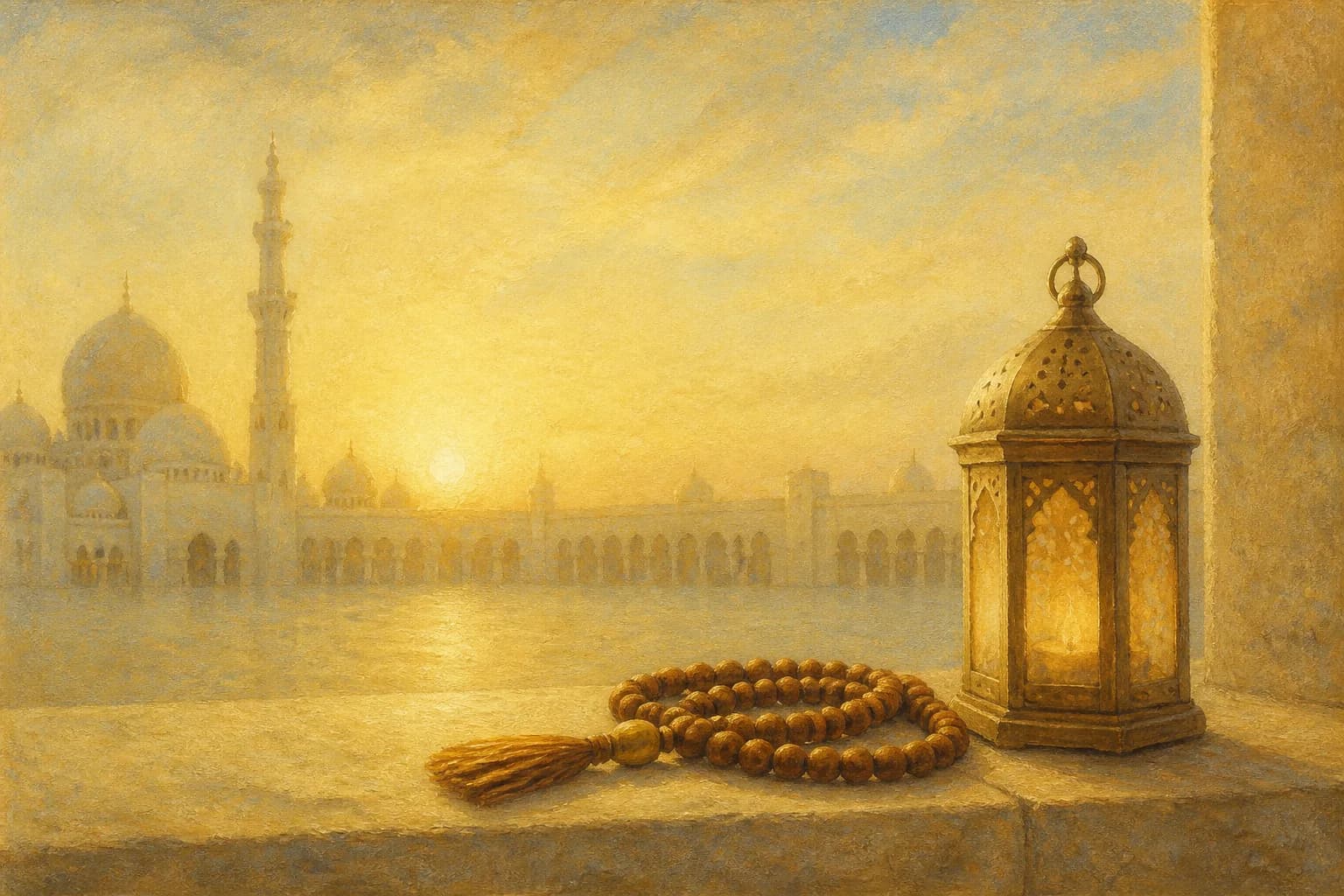

When You Do Not Know Which Way to Go
Some decisions carry a weight that no amount of research, advice, or analysis can fully resolve. You have gathered the information. You have consulted people you trust. You still do not know. Both paths seem valid. Both carry risk. What you want more than anything is clarity you cannot manufacture on your own.
This is precisely the situation the Prophet ﷺ addressed with salat al-istikhara — a two-rakah voluntary prayer followed by a specific dua, taught to the companions as they would be taught a surah of the Quran. It is one of the most practical gifts of the Sunnah: a structured way to bring your uncertainty directly to the One who already knows the answer.
What Is the Istikhara Dua?
The istikhara dua is a Prophetic supplication recorded in Sahih al-Bukhari 1166, narrated by Jabir ibn Abdillah (RA). It is recited directly after two rakahs of voluntary prayer and asks Allah — whose knowledge encompasses what we cannot access — to draw the matter near if it is good, and to remove it if it is not. The dua rests on a single foundational truth: you do not know what Allah knows, so you ask Him to act on knowledge you lack.
The Istikhara Dua in Arabic, Transliteration and English
Jabir ibn Abdillah (RA) reported that the Prophet ﷺ used to teach us al-istikhara in all matters as he would teach us a surah of the Quran. He said: "If any of you is deliberating about a decision, let him pray two rakah other than the obligatory prayer, then say…"
اللَّهُمَّ إِنِّي أَسْتَخِيرُكَ بِعِلْمِكَ، وَأَسْتَقْدِرُكَ بِقُدْرَتِكَ، وَأَسْأَلُكَ مِنْ فَضْلِكَ الْعَظِيمِ، فَإِنَّكَ تَقْدِرُ وَلَا أَقْدِرُ، وَتَعْلَمُ وَلَا أَعْلَمُ، وَأَنْتَ عَلَّامُ الْغُيُوبِ، اللَّهُمَّ إِنْ كُنْتَ تَعْلَمُ أَنَّ هَذَا الْأَمْرَ خَيْرٌ لِي فِي دِينِي وَمَعَاشِي وَعَاقِبَةِ أَمْرِي فَاقْدُرْهُ لِي وَيَسِّرْهُ لِي ثُمَّ بَارِكْ لِي فِيهِ، وَإِنْ كُنْتَ تَعْلَمُ أَنَّ هَذَا الْأَمْرَ شَرٌّ لِي فِي دِينِي وَمَعَاشِي وَعَاقِبَةِ أَمْرِي فَاصْرِفْهُ عَنِّي وَاصْرِفْنِي عَنْهُ، وَاقْدُرْ لِيَ الْخَيْرَ حَيْثُ كَانَ ثُمَّ أَرْضِنِي بِهِ
Allahumma inni astakhiruka bi'ilmika, wa astaqdiruka biqudratika, wa as'aluka min fadlikal-'azim. Fa innaka taqdiru wala aqdiru, wa ta'lamu wala a'lamu, wa anta 'allamul-ghuyub. Allahumma in kunta ta'lamu anna hadhal-amra khayrun li fi dini wa ma'ashi wa 'aqibati amri fa'qurhu li wa yassirhu li thumma barik li fihi. Wa in kunta ta'lamu anna hadhal-amra sharrun li fi dini wa ma'ashi wa 'aqibati amri fasrifhu 'anni wasrifni 'anhu, waqdur liyal-khayra haythu kana thumma ardini bih.
"O Allah, I seek Your guidance by Your knowledge, and I seek ability by Your power, and I ask You of Your great bounty. You have power, I have none. You know, I know not. You are the Knower of hidden things. O Allah, if in Your knowledge this matter is good for me in my religion, my livelihood, and my affairs — then ordain it for me, make it easy for me, and bless it for me. And if in Your knowledge this matter is bad for me in my religion, my livelihood, and my affairs — then turn it away from me, and turn me away from it. And ordain for me the good wherever it may be, and make me pleased with it."
At the point in the dua where you say "this matter" (hadhal-amr), you bring the specific decision to mind — you do not have to say it aloud. The prayer is already aware of what you came with.
What Makes This Dua So Theologically Precise
The istikhara dua is not a general request for blessings. It is built on a specific theological premise: the difference between what you know and what Allah knows.
"You have power, I have none. You know, I know not. You are the Knower of hidden things." This is not rhetorical humility — it is an accurate description of your epistemic situation before a major decision. You can know the visible, the apparent, the present. Allah knows the hidden, the future, the full trajectory of what will unfold.
The Quran names this reality directly: "But perhaps you hate a thing and it is good for you; and perhaps you love a thing and it is bad for you. And Allah knows, while you know not." (Surah Al-Baqarah, 2:216) Istikhara is the practical response to that verse.
The dua asks for three things if the matter is good: to ordain it, to make it easy, and to bless it. It asks for two things if the matter is bad: to turn it away from you, and to turn you away from it. That final phrase matters — because sometimes we are drawn to the wrong thing, and we need Allah to redirect not just events but our own inclinations.
How to Perform Salat Al-Istikhara
Our guide on dua for istikhara covers the full prayer in detail, but the essential structure is straightforward:
- Make wudu and pray two rakahs of voluntary prayer — not during a prohibited time (such as sunrise or sunset).
- In the first rakah, after Al-Fatihah, recite Surah Al-Kafirun. In the second, recite Surah Al-Ikhlas. (This is a recommended practice, not obligatory — any surah is valid.)
- After the second rakah, while still in prayer or immediately after making tasleem, recite the istikhara dua above with the specific matter in mind.
- Then proceed. Do not wait indefinitely. Take the steps available to you and pay attention to what opens and what closes.
A woman who cannot pray due to hayd may recite the dua itself without the prayer portion.
Making Istikhara Part of Your Approach to Decisions
Do you feel your duas are unanswered?
Have you read the dua properly? Learn authentic duas, understand their meanings, and call upon Allah with greater confidence through DeenUp.
Take the Dua Quiz
The istikhara is not magic, and it is not a suspension of your own thinking. The Prophet ﷺ consulted people, took counsel (shura), and gathered information before major decisions. Istikhara comes after that — as the final act of handing over what you cannot control to the One who can.
After istikhara, the sign is typically not a dream or a feeling of sudden certainty. It is usually in how the path opens or closes. What becomes easy was ordained. What becomes blocked was turned away. Understanding tawakkul — genuine reliance on Allah after doing what is within your power — is the companion mindset to istikhara. The two practices belong together: tawakkul is the inner state that makes istikhara meaningful rather than anxious.
It helps to pair istikhara with the longer practice of how to make dua properly — arriving in the dua with presence, with a heart turned toward Allah rather than going through motions. The quality of engagement matters.
The DeenBack team has a useful piece on building a morning dua routine that captures how daily supplication shapes the kind of heart that can approach istikhara with genuine trust. And Demi Manifest explores trusting Allah through hardship — the broader disposition of surrender that istikhara both requires and strengthens.
Related Duas for Guidance and Decision-Making
| Dua | What It Asks For | Source |
|---|---|---|
| Istikhara dua | Divine guidance toward what is good, away from what is harmful | Sahih al-Bukhari 1166 |
| Dua for guidance (Ihdinas-sirat al-mustaqim — اهدنا الصراط المستقيم) | Guidance to the straight path — said in every rakah | Surah Al-Fatihah, 1:6 |
| Dua of Musa (Rabbi inni lima anzalta ilayya min khayrin faqir) | Help and provision in a moment of need and uncertainty | Surah Al-Qasas, 28:24 |
| Dua of Yunus (La ilaha illa Anta subhanaka inni kuntu minal-zalimin) | Relief and rescue in moments of distress | Surah Al-Anbiya, 21:87 |
Our guide on dua for guidance covers these supplications in more depth, with context from the hadith literature on how the Prophet ﷺ and the companions used each one.
Common Questions About the Istikhara Dua
What if I feel no different after istikhara? This is the most common experience. The dua does not produce a dramatic emotional shift. What you are looking for afterward is not a feeling — it is a direction. Which option becomes clearer, easier, more facilitated over the following days? That is the signal. Pay attention to how things unfold, not to how you felt the moment after finishing the prayer.
Can I do istikhara on behalf of someone else? The traditional scholarly position is that istikhara is personal — it is the person facing the decision who should perform it, because the dua is first-person ("for me in my religion, my livelihood, my affairs"). A parent may pray for a child, but the child who is able should also pray istikhara directly.
Is there a specific time to pray istikhara? Istikhara can be performed at any time that is not forbidden for voluntary prayer — avoiding the times just after Fajr until the sun has fully risen, and between Asr and Maghrib. Many scholars recommend praying it at night when the heart is quieter, but there is flexibility. What matters more than timing is the sincerity and presence brought to the dua.
What if both options close after istikhara? When every door seems to close, scholars suggest that Allah may be redirecting you toward something not yet visible. Continue with the supplications for guidance from your daily adhkar. Our guide on dua for guidance offers several authentic supplications suited to this kind of open-ended uncertainty.
Closing
The istikhara dua is one of the most honest acts a Muslim can make. It is the formal acknowledgment of something true: you do not see the full picture. Allah does. You bring the question, and you ask the One with all knowledge to move the matter in the direction that is best for your din, your life, and your future.
After that, you trust the outcome — not with detached resignation, but with active confidence that Allah heard, and will act.
Do you feel your duas are unanswered?
Have you read the dua properly? Learn authentic duas, understand their meanings, and call upon Allah with greater confidence through DeenUp.
Take the Dua QuizFrequently Asked Questions
What is the istikhara dua?
The istikhara dua is a Prophetic supplication from Sahih al-Bukhari 1166, recited after two rakahs of voluntary prayer to seek divine guidance before a significant decision. It asks Allah — who knows what we cannot know — to draw near what is good for us in our religion, livelihood, and future, and to turn away what is harmful.
When should you pray salat al-istikhara?
Salat al-istikhara is recommended before any significant decision where you are genuinely uncertain — a job offer, a marriage prospect, a relocation, a major investment. It is not for things already obligatory in Islam (like praying fajr) or clearly prohibited, but for the legitimate choices where both paths seem valid.
How many times should you repeat istikhara?
There is no fixed limit on how many times istikhara may be repeated. Scholars generally say to pray it once and proceed with whichever option opens up. If genuine uncertainty remains, repeating it is permitted — but istikhara should not become a way of deferring decisions indefinitely out of anxiety.
Does istikhara require a dream to work?
The belief that istikhara must produce a dream is not supported in the hadith. After istikhara, the person should proceed with whichever option becomes easy and facilitated by Allah. A dream may come as a gift, but it is not required. The sign is often in how the path unfolds, not in a vision.
Can you pray istikhara for small decisions?
Istikhara is intended for meaningful decisions where genuine uncertainty exists, not for every small daily choice. The spirit of the practice is for decisions with real consequences — a career, a marriage, a major commitment. For smaller matters, reflecting on Quranic principles and consulting trusted people is sufficient.
How long should you wait after istikhara before deciding?
After praying istikhara, move forward with whichever option becomes available and facilitated, trusting that Allah has heard and will guide the outcome. There is no fixed waiting period. Some scholars recommend giving it a few days before deciding, but the main principle is to proceed in tawakkul — taking steps while entrusting the result to Allah.
Can a woman recite istikhara during her menstrual period?
A woman who cannot pray during her menstrual period cannot perform the two rakah prayer of salat al-istikhara at that time. However, she may recite the istikhara dua itself directly as a supplication to Allah for guidance, without the prayer portion. Scholars consider this a valid alternative when prayer is not permitted.