

- Authors

- Name
- Ahmad
- Role
- Senior Marketing Manager, Islamic education • DeenUp
بِسْمِ اللهِ الرَّحْمٰنِ الرَّحِيْمِ
In the name of God, the Most Gracious, the Most Merciful.
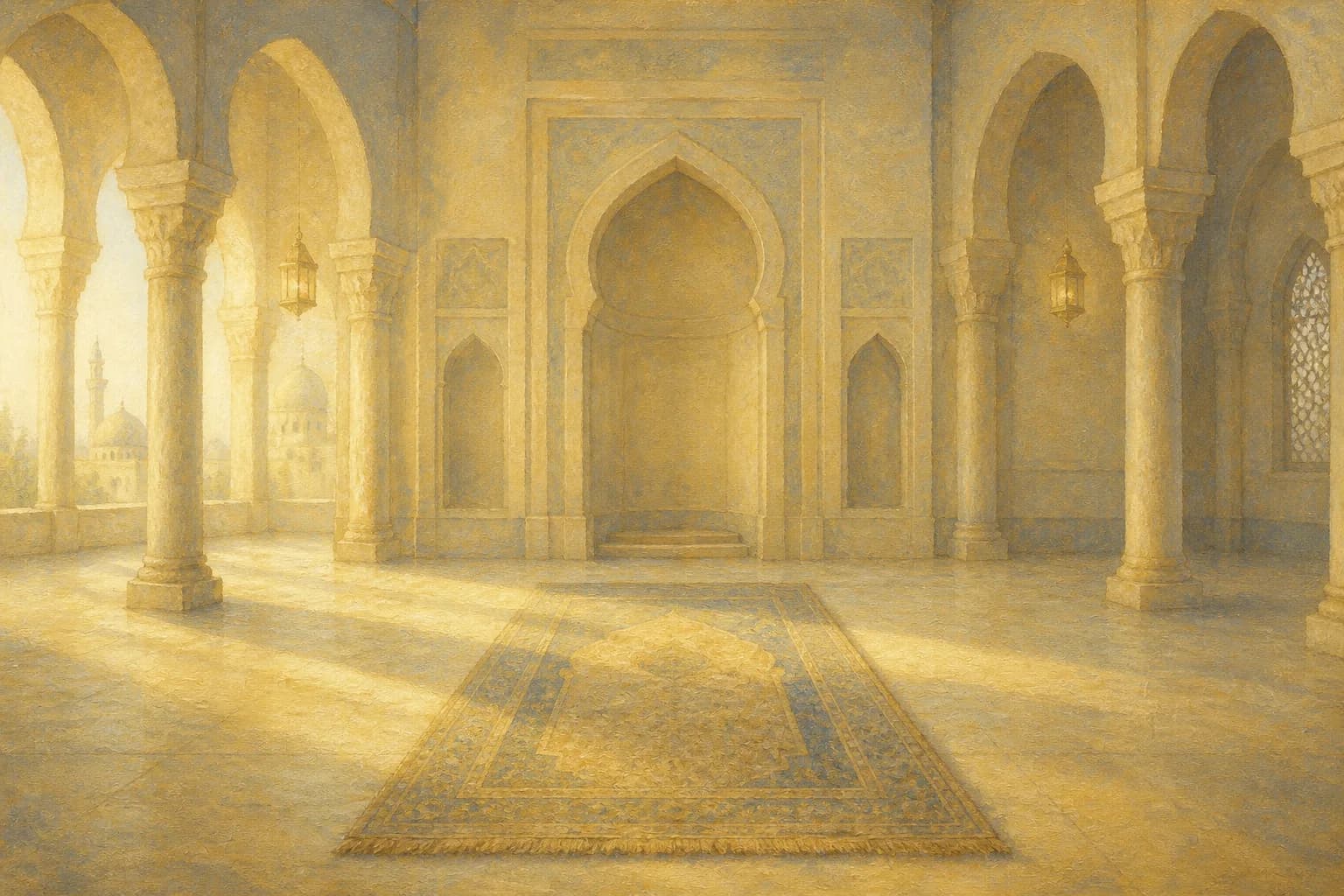

Night falls. The city quiets. Everyone else is asleep — and something in your heart pulls you toward the prayer mat. The Muslim night prayer is one of the most intimate, most powerful acts of worship in Islam. Unlike the five obligatory prayers, night prayer is chosen — which is precisely why it carries such extraordinary weight with Allah SWT.
Whether you are trying to understand Isha salah, establish Witr prayer, or take your first steps toward Tahajjud, this guide covers the complete Muslim night prayer tradition with everything you need to start tonight.
What Is Muslim Night Prayer in Islam?
Muslim night prayer in Islam refers to a family of prayers performed from dusk until just before Fajr: Isha (the fifth obligatory daily prayer), Witr (a strongly recommended sunnah performed after Isha), and Tahajjud or Qiyam al-layl (voluntary night prayers, ideally in the last third of the night). Each has distinct timing, rakah count, and spiritual status. Together, they make the night one of the most blessed windows for worship in the entire Islamic calendar — a direct conversation with Allah SWT during the hours when the world has gone quiet.
Night Prayer in the Quran and Sunnah
Allah SWT addresses the night prayer directly in the Quran (Surah Al-Isra, 17:79), making it one of the most explicitly commanded voluntary acts of worship:
وَمِنَ اللَّيْلِ فَتَهَجَّدْ بِهِ نَافِلَةً لَّكَ عَسَىٰ أَن يَبْعَثَكَ رَبُّكَ مَقَامًا مَّحْمُودًا
"And from [part of] the night, pray with it as additional [worship] for you; it is expected that your Lord will resurrect you to a praised station." — (Surah Al-Isra, 17:79)
The "praised station" (maqam mahmud) is understood by scholars to refer to the highest intercession on the Day of Judgment — a direct connection between night prayer and the ultimate reward.
The Prophet ﷺ reinforced this with a hadith that has captivated Muslims across centuries:
"Our Lord descends every night to the lowest heaven in the last third of the night, saying: Who is calling upon Me, so I may answer him? Who is asking Me, so I may give him? Who is seeking My forgiveness, so I may forgive him?" — (Sahih al-Bukhari 1145, Sahih Muslim 758)
This is the window the night prayer opens. Not metaphorically — literally.
The Three Forms of Muslim Night Prayer
Isha Prayer — The Obligatory Foundation
Isha is the fifth of the five daily prayers and the gateway to the night. It is fard (obligatory) for every Muslim.
Time: From when the red twilight of dusk disappears until the middle of the night, with the time before midnight being preferred.
Rakahs: 4 fard rakahs. Many Muslims add 2 sunnah rakahs and 3 Witr rakahs immediately after, making the full Isha and Witr session 9 rakahs.
Isha anchors the night. Even on the nights when Tahajjud feels too demanding, Isha with Witr is the minimum that keeps the night spiritually alive.
Witr Prayer — The Seal of the Night
Witr (وتر) literally means "odd." It is an odd-numbered prayer — 1, 3, 5, 7, or 9 rakahs — that closes the night's worship.
The Prophet ﷺ was emphatic about it: "Make Witr as your last prayer of the night" (Sahih al-Bukhari 998). He ﷺ never abandoned Witr — not in travel, not in illness — elevating it to the category of wajib (obligatory) in the Hanafi school and sunnah mu'akkadah (strongly emphasized) in the majority view.
The final rakah of Witr includes Qunut — a special supplication recited after ruku', in which you raise your hands and ask Allah for guidance, protection, and forgiveness. This makes Witr an intimate closing conversation with Allah at the end of the night.
Tahajjud — The Prayer of the Devoted
Tahajjud is the night prayer performed after sleeping and waking before Fajr. It is the prayer of the spiritually ambitious — the extra distance traveled toward Allah that no one requires of you.
The Prophet ﷺ prayed Tahajjud until his feet swelled. When asked why, he replied: "Should I not be a grateful slave?" (Sahih al-Bukhari 4836). He typically prayed 8 rakahs in pairs of 2, then closed with 3 Witr rakahs — making 11 rakahs total.
You can begin with just 2 rakahs. The minimum is enough to open the door.
Muslim Night Prayer: Quick Reference Table
| Prayer | Rakahs | Timing | Status |
|---|---|---|---|
| Isha | 4 fard + 2 sunnah | After dusk disappears, before midnight | Obligatory (fard) |
| Witr | 1, 3, 5, 7, or 9 (odd) | After Isha, before Fajr | Wajib (Hanafi) / Emphasized Sunnah |
| Tahajjud | Min. 2, usually 8 in pairs | After sleeping, last third of night | Highly recommended Nafl |
| Qiyam al-layl | Any even number | Any time after Isha | Nafl |
Why Night Prayer Matters for Modern Muslims
Modern life is structured against the night prayer. Late-night screens, social media, and work schedules push bedtimes past midnight — and then the alarm rings before Fajr. The night prayer has never been easy to maintain, but the return has never diminished.
Muslim night prayer builds a quality of connection with Allah that daytime worship, surrounded by the noise of life, rarely produces. In the silence of 3 a.m., the khushoo' (presence of heart) that we struggle to achieve in other prayers comes more naturally.
Many people today seek transformation through journaling, visualization, or manifestation practices — asking for what they want through focused intention. These practices point toward a real human need: the need to bring sincere desire before something greater than yourself. The Muslim who wakes for Tahajjud already knows what that need really is — and who alone can answer it.
The Prophet ﷺ said: "The closest a servant is to his Lord is during the last part of the night. If you can be among those who remember Allah at that hour, be among them." (Tirmidhi 3579, graded hasan)
Still struggling to perform salah properly?
Learn each prayer step by step, understand what you are saying, and build a consistent salah habit with clear, scholar-approved lessons in DeenUp.
Take the Salah Quiz
How to Start Muslim Night Prayer Tonight
Step 1: Establish Isha and Witr First
Do not attempt Tahajjud if Isha and Witr are not consistent. These two are the foundation. Pray all of Isha completely — 4 fard, 2 sunnah, 3 Witr. Make this unbreakable before seeking more.
Step 2: Set an Alarm for the Last Third
Calculate the last third of the night for your location: take the time between Isha and Fajr, divide by three, and set an alarm for the final third. Even waking once a week and praying 2 rakahs of Tahajjud plants a seed.
Step 3: Begin with Just 2 Rakahs
The Prophet ﷺ said: "The night prayer is offered as pairs" (Sahih al-Bukhari 990). Two rakahs of Tahajjud prayed in sincerity outweigh hours of distracted supererogatory worship. Start there.
Step 4: Begin with the Prophetic Opening Dua
The Prophet ﷺ would open Tahajjud with this dua, recorded in Sahih al-Bukhari 1120:
اللَّهُمَّ لَكَ الْحَمْدُ أَنْتَ نُورُ السَّمَوَاتِ وَالأَرْضِ
Allahumma lakal-hamd, anta nurus-samawati wal-ard
"O Allah, to You belongs all praise; You are the light of the heavens and the earth."
Step 5: End with Dua in Sujood
In the prostration of the last rakah, pause. Allah is close. Make your personal duas — for your family, your affairs, your akhirah. The Prophet ﷺ said: "The servant is closest to his Lord when in prostration, so make abundant dua" (Sahih Muslim 482).
Step 6: Protect Your Sleep
Guarding the night prayer long-term requires protecting your sleep. The Prophet ﷺ disliked sleeping after Isha unnecessarily and discouraged late-night socializing that would prevent night worship. Going to bed early is itself a sunnah — it makes waking for the night prayer possible.
For detailed step-by-step guidance, see how to pray Tahajjud and how to pray Witr. For the immense benefits awaiting those who establish night prayer, read about Tahajjud night prayer benefits and Qiyam al-layl benefits.
For practical habit-building around Islamic practices — including connecting night prayer to your daily routine — Deen Back's guide on building spiritual habits offers useful anchoring techniques that apply directly to night prayer.
Signs You Are Growing in Night Prayer
Night prayer is cumulative. The effects do not arrive overnight — they build quietly. Signs that the practice is taking root:
- You begin to feel the absence of night prayer on the nights you miss it — an emptiness that motivates rather than condemns.
- Your Fajr prayer comes with more presence, because the night's worship has prepared your heart.
- Small difficulties during the day lose their weight, because you spent time with Allah in the night.
- You find yourself waking naturally before the alarm — your body learning the rhythm of the night prayer.
This is the transformation that Fajr prayer benefits describes: the entire day shaped by how its first moments began.
For scholarly depth on the spiritual science of night worship, the Yaqeen Institute's research offers rigorous Islamic perspectives on prayer and well-being grounded in authentic sources.
Still struggling to perform salah properly?
Learn each prayer step by step, understand what you are saying, and build a consistent salah habit with clear, scholar-approved lessons in DeenUp.
Take the Salah QuizFrequently Asked Questions
What is the Muslim night prayer called?
The Muslim night prayer encompasses several forms: Isha (the obligatory fifth daily prayer), Witr (an emphasized sunnah prayer after Isha), and Tahajjud or Qiyam al-layl (voluntary prayers in the last third of the night). Each serves a distinct spiritual purpose, and together they form the complete Islamic night worship tradition.
How many rakahs is the Muslim night prayer?
Isha prayer consists of 4 fard rakahs plus 2 sunnah rakahs. Witr prayer is an odd number — usually 1, 3, or 5 rakahs. Tahajjud is performed in pairs of 2 rakahs, with 8 rakahs being the most common practice following the example of the Prophet ﷺ. Total night rakahs can range from 7 to 13 or more.
Is Tahajjud prayer the same as Qiyam al-layl?
Tahajjud and Qiyam al-layl are closely related but technically distinct. Qiyam al-layl means any night standing in prayer after Isha. Tahajjud specifically refers to voluntary prayer performed after sleeping and then waking before Fajr. Both are among the most virtuous voluntary prayers in Islam, especially in the last third of the night.
When is the best time to pray Tahajjud?
The best time for Tahajjud is the last third of the night, before Fajr. This is based on the authentic hadith that Allah SWT descends to the lowest heaven in the last third of the night, saying: Who is calling upon Me, so I may answer? (Sahih al-Bukhari 1145). Praying in this window carries the greatest spiritual reward.
Is Witr prayer obligatory in Islam?
Witr prayer is considered wajib (obligatory) by the Hanafi madhab and an emphasized sunnah (sunnah mu-akkadah) by the majority of scholars. The Prophet ﷺ never abandoned it and said: Make Witr as your last prayer of the night (Sahih al-Bukhari 998). Missing it deliberately is considered a serious neglect of an important act of worship.
Can I pray Tahajjud without sleeping first?
Scholars differ on whether sleeping is a condition for Tahajjud. The majority view holds that Tahajjud ideally follows sleep, which is why it carries special virtue — waking from rest to worship Allah reflects sincere dedication. However, if you have not slept and pray voluntary rakahs late at night, this still counts as Qiyam al-layl with its own reward.
What dua should I recite in night prayer?
The Prophet ﷺ would begin Tahajjud with a beautiful opening dua: Allahumma lakal-hamd, anta nurus-samawati wal-ard — O Allah, to You belongs all praise; You are the light of the heavens and the earth (Sahih al-Bukhari 1120). During sujood (prostration) in any night prayer, increase your personal duas, as the Prophet said the servant is closest to Allah in prostration.