

- Authors

- Name
- Ahmad
- Role
- Senior Marketing Manager, Islamic education • DeenUp
بِسْمِ اللهِ الرَّحْمٰنِ الرَّحِيْمِ
In the name of God, the Most Gracious, the Most Merciful.


Islam is the name of the religion — its beliefs, practices, scripture, and moral code. A Muslim is a person who embraces and follows Islam. In short: Islam = the system; Muslim = the follower.
Key points you need right away:
- Islam refers to submission to Allah expressed through beliefs (aqeedah) and actions (ibadah).
- Muslim refers to an individual or group who declare faith in Allah and follow Islamic teachings.
- Confusing the two can lead to unclear questions and weak communication about faith and practice.
This article will show practical language to use, common misconceptions to avoid, and clear examples from scripture and scholarship so you can speak confidently about the difference.
"إِنَّ الدِّينَ عِندَ اللَّهِ الْإِسْلَامُ"
"Indeed, the religion in the sight of Allah is Islam."
— Quran 3:19
Short explanatory video: What the terms mean and why it matters
This short video explains the difference between Islam (the religion) and Muslim (the follower) with clear examples and common usage.
Clear definitions: Islam, Muslim, and related terms
- Islam: The religion revealed by Allah, including the Quran, prophetic teachings (Sunnah), creeds, and rulings. It describes both belief and practice. For a concise scriptural reminder, see Quran 3:19 (quran.com/3/19).
- Muslim: A person who has accepted Islam by affirming the shahada and who strives to live by its teachings.
- Iman (faith): The inner conviction and belief. Someone can be a Muslim by declaration, and iman is the deeper state that grows through knowledge and practice.
- Deen: Often translated as "way of life" or "religion"; Islam is Allah’s decree and path that constitutes the Deen. See short overview of Islam's basics at What is Islam?.
Practical language to use:
- "Islam teaches..." when referring to doctrine or scripture.
- "Muslims pray..." when referring to people and their actions.
- Avoid saying "a Muslim is Islam" — that blurs a person with the belief system.
External sources that explain these distinctions:
- Quranic framing of religion: Quran 3:19
- Beginner-friendly definition: What is Islam? (Islamicity)
- Concise teaching resources for new learners: Why Islam: About Islam and DeenUp’s Beginner’s Guide to Islamic Deen, which outlines the pillars, terminology, and daily etiquette that underpin this distinction.
- Prefer audio lessons? Subscribe to Islamic Podcasts for English Speakers to hear scholars and community leaders model accurate language.
Common confusions and how to correct them
Using "Muslim" to mean "Islamic"
- Wrong: "That's Muslim culture."
- Better: "That's cultural; it is not necessarily Islamic."
- Why: Many customs are cultural, not religious; distinguish between creed and custom. See guidance on cultural vs. religious practice at Islamicity on who is considered a Muslim.
Saying "Islam says..." for claims without sources
- Wrong: "Islam says this because my family does it."
- Better: "According to the Quran or an authentic hadith..." and then cite the source.
- Why: Islamic rulings require evidence from scripture or reliable scholarship. For scholarly explanation of core practices, see a structured reference such as Britannica's overview of sawm and worship.
Equating political actions of a person or state with Islamic teaching
- Wrong: "Because a leader did X, Islam requires X."
- Better: "We should check the Quran and Sunnah and consult scholars before attributing political acts to Islamic doctrine."
Real examples (hypothetical, clearly marked):
- Hypothetical: A festival practiced in a region might be labeled "Muslim festival" but could be cultural. Ask: Is there evidence in the Quran or Sunnah? Ask a qualified scholar for clarity.
Authoritative references to check claims:
- Sahih collections and hadith indexes: Sunnah hadith references
- Scholarly clarity on modern questions: Islamicity on what the word Islam means
Practical language and phrases for everyday use
If you want to speak clearly and respectfully about faith, use these formulations:
- When describing belief: "Islam teaches belief in one God (Tawhid) and the prophets."
- Reference: basic creed explained in many beginner guides; for a scholarly primer see History.com's overview of Islam.
- When referring to people: "Muslims around the world follow different cultural practices but share core beliefs."
- When correcting misinformation: "That practice is cultural and not prescribed in Islam; let's check the Quran and authentic hadith."
Short script to use in conversation:
- "Islam is the religion; a Muslim is someone who follows it. Some actions are Islamic; others are cultural."
Useful readings to recommend to someone learning the difference:
- Clear scriptural examples: Quran 2:183 on fasting obligations
- Introductory articles on what Islam is: WhyIslam: What is Islam? and DeenUp’s Beginner’s Guide to Islamic Deen
- Articles addressing modern practice vs. tradition: What is Islam? (Islamicity)
- Listening recommendations: Islamic Podcasts for English Speakers for ongoing reminders about how Muslims live the teachings of Islam.
Meet DeenUp: an AI companion rooted in Quranic values
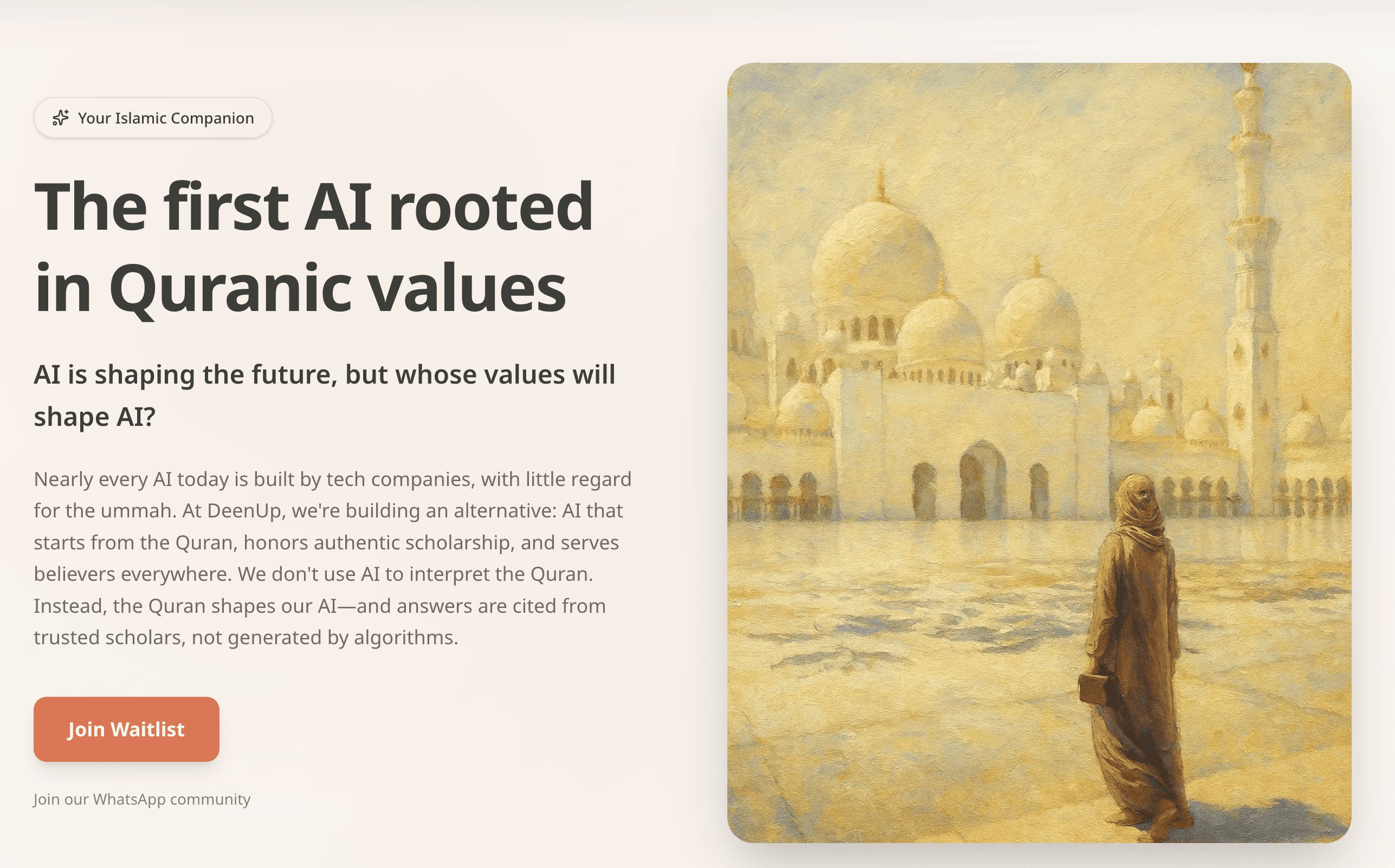
DeenUp is the first AI built from the Quran outward. Almost every AI tool today is created by tech companies with little regard for the ummah, but DeenUp begins with revelation, honors authentic scholarship, and serves believers everywhere. We never use AI to interpret the Quran; instead, the Quran shapes our AI, and every response cites trusted scholars rather than hallucinated opinions.
- Use DeenUp.app to log habits (prayer, dhikr, sadaqah) so you can see how your life as a Muslim reflects the teachings of Islam.
- Ask DeenUpAI nuanced questions such as “How do I explain the shahada to a coworker?” or “What’s the difference between deen and culture?” and receive sourced answers you can share confidently.
- The app’s daily planning tools tie belief to practice: it can recommend relevant DeenUp articles (like this one), surface podcasts from our curated list, or nudge you toward Ramadan guides when your schedule shows fasting days ahead.
Open DeenUp whenever you need a Quran-rooted assistant to bridge the difference between Islam (the deen) and Muslims (the people living it).
How this distinction affects daily religious practice
- Worship vs. identity: Knowing the difference helps you identify what is required (wajib/fard) and what is cultural preference.
- Example: The five daily prayers are Islamic obligations; their times and methods are from the Sunnah and Fiqh.
- See authoritative hadith references for ritual practice: Sunnah hadith collections.
- Interfaith conversations: Using precise terms avoids offense and builds credibility.
- Community work: When planning community programs, label activities clearly (e.g., "Muslim youth program" vs "cultural gathering").
Further reading on practice and principles:
- Scholarly discussions about worship and public practice: Islamicity on who is a Muslim
- Research on spiritual frameworks like fasting: Britannica's overview of sawm
Small comparison table: Islam vs Muslim
| Item | Islam (Religion) | Muslim (Person/People) |
|---|---|---|
| Definition | System of belief and practice revealed by Allah | An individual who accepts and follows Islam |
| Core sources | Quran and Sunnah | Declares shahada; follows Quran & Sunnah |
| Usage in speech | "Islam teaches..." | "Muslims pray..." |
| Changeability | Fixed scripture and revelation | Personal faith can grow or weaken |
| Examples | Prayer, fasting, belief in prophets | A person who prays, fasts, and believes |
When to consult a scholar or reliable source
- If a question involves legal rulings (fiqh), ritual details, or complex theology, consult a qualified scholar or trusted institution.
- Use trusted scholarly resources for clarification rather than social media posts.
- Example resources: Islamicity on what the word Islam means, Britannica on the practice of sawm.
- For Quranic verse context, use a reliable Quran text and tafsir from established scholars; see Quran 3:19 for the general statement about religion (quran.com/3/19).
Authoritative pages worth bookmarking:
- Quranic verse pages: Quran 3:19, Quran 2:183
- Hadith reference: Sahih al-Bukhari collection sample
- Accessible explanations: WhyIslam: What is Islam?, Islamicity overview, Islamicity on who is a Muslim, History.com's overview of Islam
How DeenUp supports this distinction for learners
- DeenUp gives Quranic verses and contextual notes to help learners distinguish text from culture.
- Use daily habit tracking to grow from being a nominal Muslim to practicing with knowledge and sincerity.
- When you have specific fiqh or theological questions, DeenUp directs users to scholarly-cited answers rather than AI-only rulings.
(For detailed theological questions consult an accredited scholar or the relevant institution for your madhhab.)
Conclusion
Islam is the religion — its beliefs, laws, and revealed guidance — while a Muslim is a person who accepts and practices that religion. Keeping these terms distinct helps us communicate clearly, judge practices correctly, and seek appropriate guidance when questions arise. Use scripture and authenticated scholarship as your reference points, avoid equating culture with creed, and consult qualified scholars for legal or theological matters. Clear language and reliable sources will strengthen personal faith and improve conversations about Islam in everyday life.
Frequently Asked Questions
How can I explain to a non-Muslim the basic difference between Islam and a Muslim?
Say simply: Islam is the religion — its teachings, scripture, and practices; a Muslim is a person who follows Islam. Use the Quranic phrasing and a short example: prayer and fasting are parts of Islam; a Muslim performs them. For deeper questions, refer to trusted scholarly sources or your local imam.
What is the meaning of being a Muslim in everyday life?
Being a Muslim means actively following the five pillars, seeking knowledge from the Quran and Sunnah, and trying to live by Islamic values in daily choices. It includes both private acts (prayer, prayer times) and public character (honesty, humility); consult scholars for fiqh details when needed.
When should I use the word 'Islam' versus 'Muslim' in conversation?
Use 'Islam' when you mean the religion, teachings, or scripture, and 'Muslim' when referring to an individual or group of people. For example: 'Islam teaches compassion' vs 'Many Muslims volunteer in their communities.'
Is someone automatically a Muslim if they say the shahada once?
Pronouncing the shahada sincerely is the declaration of faith and marks one's entry into Islam. True Islam requires sincere belief and an effort to follow the teachings; if in doubt about a specific case, consult a knowledgeable and trustworthy scholar.
Can cultural practices be mistaken for Islam when talking about Muslims?
Yes. Cultural practices vary and may be mixed with local customs; they are not automatically Islamic. When determining whether something is part of Islam, check the Quran and authenticated hadith or ask a qualified scholar.
How do I learn the fundamentals of Islam in a reliable way?
Start with the Quran and authentic hadith, and learn from established teachers and institutions. Use trusted resources and verify claims with scholars; consider structured courses or accredited programs for systematic study.