

- Authors

- Name
- Ahmad
- Role
- Senior Marketing Manager, Islamic education • DeenUp
بِسْمِ اللهِ الرَّحْمٰنِ الرَّحِيْمِ
In the name of God, the Most Gracious, the Most Merciful.
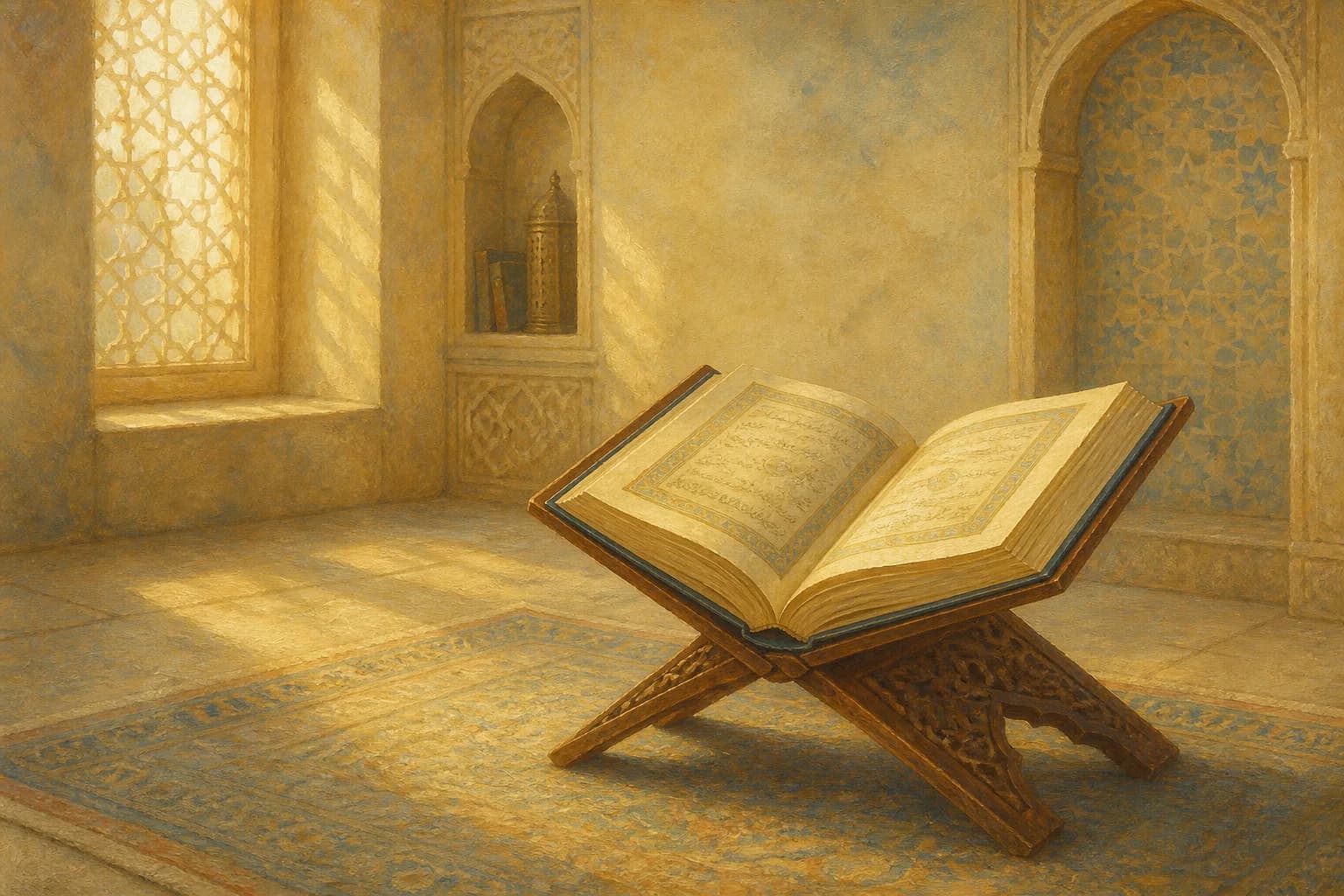

There is a tradition within Islam that reaches back to the very first moments of revelation. When Jibreel brought the first verses of the Quran to the Prophet Muhammad ﷺ in the Cave of Hira, there was no paper, no printing press, no digital archive. The revelation was preserved the way the most sacred things always are — in the human heart.
That tradition of Quran memorization has continued unbroken for over 1,400 years. Today, millions of Muslims around the world have memorized the entire Quran, and the number continues to grow. The title — hafiz — is more than an academic credential. It describes someone who carries Allah's word as a living trust.
What Is Quran Memorization (Hifz)?
Quran memorization, known as hifz (حفظ) in Arabic, is the practice of committing the entire Quran to memory. The word hifz means "to protect" or "to preserve." Someone who completes this achievement is called a hafiz (حافظ, masculine) or hafiza (حافظة, feminine). The Quran contains 114 surahs, 6,236 ayahs, and approximately 77,430 words across 30 juz (parts) — making it the most memorized book in human history, preserved through an unbroken chain of living memory since the time of the Prophet ﷺ.
What Hifz Actually Means in the Islamic Tradition
The concept of hifz goes beyond rote memorization. In Arabic, the root h-f-z (ح-ف-ظ) appears in the Quran itself — it is how Allah describes the protection of revelation: "Indeed, it is We who sent down the reminder, and indeed, it is We who will preserve it." (Surah Al-Hijr, 15:9)
The human hafiz is part of that preservation. Every generation produces new memorizers, creating an unbroken living transmission of the Quran's exact wording, pronunciation, and recitation style — through a formal chain called isnad that can be traced back to the Prophet ﷺ himself.
Allah made this possible by design:
إِنَّا يَسَّرْنَا الْقُرْآنَ لِلذِّكْرِ فَهَلْ مِن مُّدَّكِرٍ
Inna yassarnal Qur'ana lidh-dhikr fa hal min muddakir
"And We have certainly made the Quran easy to remember. Is there anyone who will remember?" — (Surah Al-Qamar, 54:17)
This verse appears four times in the same surah — a repeated divine invitation that scholars interpret as both a statement and a question directed at each believer. For more on how to engage with the Quran as a beginner, see our guide on how to read the Quran for beginners and how to memorize the Quran.
Why Quran Memorization Matters for Every Muslim
The spiritual rewards attached to Quran memorization are among the most detailed in all of hadith literature. The Prophet ﷺ distinguished between different levels of engagement with the Quran, acknowledging that not everyone can reach complete hifz — but teaching that every level of effort carries weight.
The reward of proficiency: "The one who is proficient in the Quran will be with the noble, righteous scribes (angels)." — (Sahih al-Bukhari 4937)
The reward of effort: "The one who recites the Quran and struggles with it, finding it difficult, will have a double reward." — (Sahih Muslim 798)
This hadith is particularly significant for adult learners who find memorization slow or difficult. The struggle itself is not a failure — it is a source of additional reward.
The best of people:
"The best among you are those who learn the Quran and teach it." — (Sahih al-Bukhari 5027)
This hadith defines excellence not by wealth, status, or even scholarship alone, but by this specific relationship with the Quran. Learning and teaching it — in any form, at any level — is the prophetic benchmark for human excellence.
For a deeper understanding of how daily Quran engagement transforms spiritual life, see the benefits of reading Quran daily and the importance of reciting Quran with tajweed. For additional resources on the hifz journey, DeenBack's guide to Quran memorization tips offers practical strategies tested by long-term memorizers.
How to Start and Sustain Quran Memorization
The most common reason people stop before completing hifz is not lack of ability — it is lack of a sustainable system. The traditional approach, refined over centuries in Islamic educational institutions, provides a clear framework.
Step 1: Begin with Juz Amma (the 30th part)
Juz Amma, the final section of the Quran, contains the shortest surahs — many just 3 to 8 verses. These are already memorized by many Muslims from childhood prayer. Starting here builds momentum and gives you verses you can immediately use in salah.
Step 2: Master tajweed pronunciation first
Memorizing incorrect pronunciation creates a habit that is harder to break later. Spend time learning basic tajweed rules — proper letter articulation, elongation (madd), and stopping points — before accelerating your pace. See our guide on how to start learning tajweed.
Step 3: Use the 20-times repetition method
Read a new verse aloud 20 times while looking at the text. Then recite it 10 times without looking. Move to the next verse only after the first is solid. At the end of a session, recite the new verse linked to all previously memorized verses in the same surah.
Step 4: Prioritize daily muraja'ah (revision)
New memorization (hifz jadeed) is only as durable as your revision (muraja'ah). Before adding new material each day, review what you memorized in the previous week. Reciting memorized surahs in your five daily prayers is one of the most natural and effective revision strategies available.
Step 5: Pair memorization with a dua for retention
رَبِّ زِدْنِي عِلْمًا
Rabbi zidni ilma
"O my Lord, increase me in knowledge." — (Surah Ta-Ha, 20:114)
Recite this before each memorization session. For more supplications that support learning and memory, see dua for studying and memorization.
Recommended Starting Surahs for New Memorizers
| Surah | Juz | Verses | Why Start Here |
|---|---|---|---|
| Al-Fatiha | 1 | 7 | Recited in every rakah of prayer |
| Al-Ikhlas | 30 | 4 | One of the shortest; worth one-third of the Quran in reward (Bukhari 5013) |
| Al-Asr | 30 | 3 | Entire worldview in three verses |
| Al-Falaq | 30 | 5 | Protection surah; recited morning and evening |
| An-Nas | 30 | 6 | Paired with Al-Falaq; used daily for protection |
| Al-Kawthar | 30 | 3 | One of the shortest surahs in the Quran |
| Al-Fil | 30 | 5 | Vivid narrative; memorable structure |

Keep learning your deen with short, sourced lessons in DeenUp.
For a broader guide to structuring your Quran learning journey, DemiManifest's practical guide for hifz beginners offers complementary perspective on building a long-term memorization routine.
Signs You Are Making Real Progress in Hifz
Progress in Quran memorization is not only measured by pages. Watch for these signs that your relationship with the Quran is genuinely deepening:
- You begin reaching for memorized verses during salah naturally, without consciously deciding to recite them
- A verse you memorized months ago surfaces with fresh meaning because of a life experience
- You notice yourself wanting to verify the exact wording of a verse before repeating it — because precision has become important to you
- The Arabic sounds begin to feel familiar, even musical, rather than foreign
- Revision sessions that once felt like a chore become a form of dhikr you return to voluntarily
The scholars describe this as the Quran becoming a companion — Al-Quran al-hakim (the wise Quran) responding to where you are in life with exactly the right word.
Common Questions About Quran Memorization
Do I need a teacher for Quran memorization?
Ideally, yes. The traditional method of Quran transmission requires a teacher who has their own verified isnad (chain of transmission). A teacher catches pronunciation errors that a self-learner cannot hear in their own recitation, and the student-teacher relationship mirrors how the Quran has been passed down for 1,400 years. Many online platforms and local masajid offer this. See our guide on how to find a Quran teacher for practical steps.
Can I memorize the Quran without Arabic literacy?
You can begin using transliteration, but long-term success requires learning Arabic script. The Quran contains sounds (makharij, articulation points) that transliteration cannot fully represent. Even basic Arabic reading fluency — recognizing letters and common words — significantly accelerates memorization and makes revision sessions far more efficient. See how to learn Arabic for Quran for a starting point.
What if I forget what I memorized?
The Prophet ﷺ said: "Keep refreshing your knowledge of the Quran, for it escapes from the hearts of men faster than a camel escapes from its tether." (Sahih al-Bukhari 5033). Forgetting is a known challenge, not a personal failure. The remedy is consistent muraja'ah rather than discouragement. Scholars teach that a verse revised one hundred times is far more valuable than ten verses reviewed once.
For verified Quranic text and audio resources to support your memorization, quran.com offers word-by-word audio recitation from multiple renowned reciters. Authentic hadith references on Quran memorization are available at sunnah.com.
Carrying the Quran in Your Heart
The Prophet Muhammad ﷺ once said that a person who has nothing of the Quran in their heart is like a ruined house. The imagery is striking — not a house under construction or in need of repair, but one that has never had what houses are meant to hold.
Quran memorization is one answer to that. But the scholars remind us that hifz without 'amal — memorization without action — does not fulfill the purpose. The Quran was not revealed to be recited correctly but lived: in honesty, in patience, in care for others, in trust in Allah.
Begin where you are. Even one verse, truly memorized and truly lived, is a beginning.
Keep learning your deen with short, sourced lessons in DeenUp.
Frequently Asked Questions
What is Quran memorization called in Arabic?
Quran memorization is called hifz (حفظ) in Arabic, meaning "to protect" or "to preserve." A person who has memorized the entire Quran is called a hafiz (masculine) or hafiza (feminine). The title carries great honor in Muslim communities and is considered one of the most meritorious achievements in Islamic practice, recognized across all schools of thought.
How long does it take to memorize the Quran?
Quran memorization time varies widely. Full-time students in traditional programs typically complete the Quran in 1 to 3 years. Adults memorizing part-time often take 5 to 10 years. The Quran contains 114 surahs, 6,236 ayahs, and approximately 77,430 words across 30 juz. A daily commitment of 1 to 2 pages per day is a sustainable pace for most beginners starting from scratch.
What is the reward for memorizing the Quran?
The Prophet Muhammad said: "The one who is proficient in the Quran will be with the noble, righteous scribes" (Sahih al-Bukhari 4937). On the Day of Judgment, the hafiz is permitted to intercede for ten family members (Abu Dawud 1400). Additionally, scholars note that those who memorized and acted on the Quran will be granted elevated stations in Jannah, with the Quran interceding on their behalf.
Do I need to understand Arabic to memorize the Quran?
You do not need fluent Arabic to begin Quran memorization, but learning basic tajweed rules is essential for correct pronunciation. Many beginners memorize phonetically using transliteration alongside Arabic script. Scholars strongly recommend pairing memorization with translation study so verses connect to your heart and not only to your memory — understanding deepens retention and transforms recitation into genuine reflection.
What is the best way to start memorizing the Quran?
The best way to start Quran memorization is with the short surahs of Juz Amma — the 30th and final section of the Quran. Read a verse aloud 20 to 30 times, then recite it without looking. Link new verses to ones already memorized before moving forward. Daily revision (muraja-ah) is more important than daily additions — protecting what you have memorized is the foundation of lasting hifz.
How do I maintain Quran memorization without forgetting?
Maintaining Quran memorization requires daily muraja'ah (revision). Scholars recommend dividing memorized material into portions and reviewing each section weekly. Reciting memorized surahs in your five daily prayers is one of the most effective methods. The Prophet compared the Quran to a camel that escapes if not held firmly — consistent daily review is the only way to retain what you have memorized (Sahih al-Bukhari 5033).
At what age should children start Quran memorization?
Children between ages 5 and 10 have exceptional memorization capacity, making this the ideal window for Quran memorization. However, Islamic tradition is clear that sincerity and quality matter more than speed. Many accomplished scholars began serious hifz as teenagers or adults. The Prophet encouraged parents to teach the Quran at home from an early age, making it part of family daily life rather than a formal external program alone.