

- Authors

- Name
- Ahmad
- Role
- Senior Marketing Manager, Islamic education • DeenUp
بِسْمِ اللهِ الرَّحْمٰنِ الرَّحِيْمِ
In the name of God, the Most Gracious, the Most Merciful.
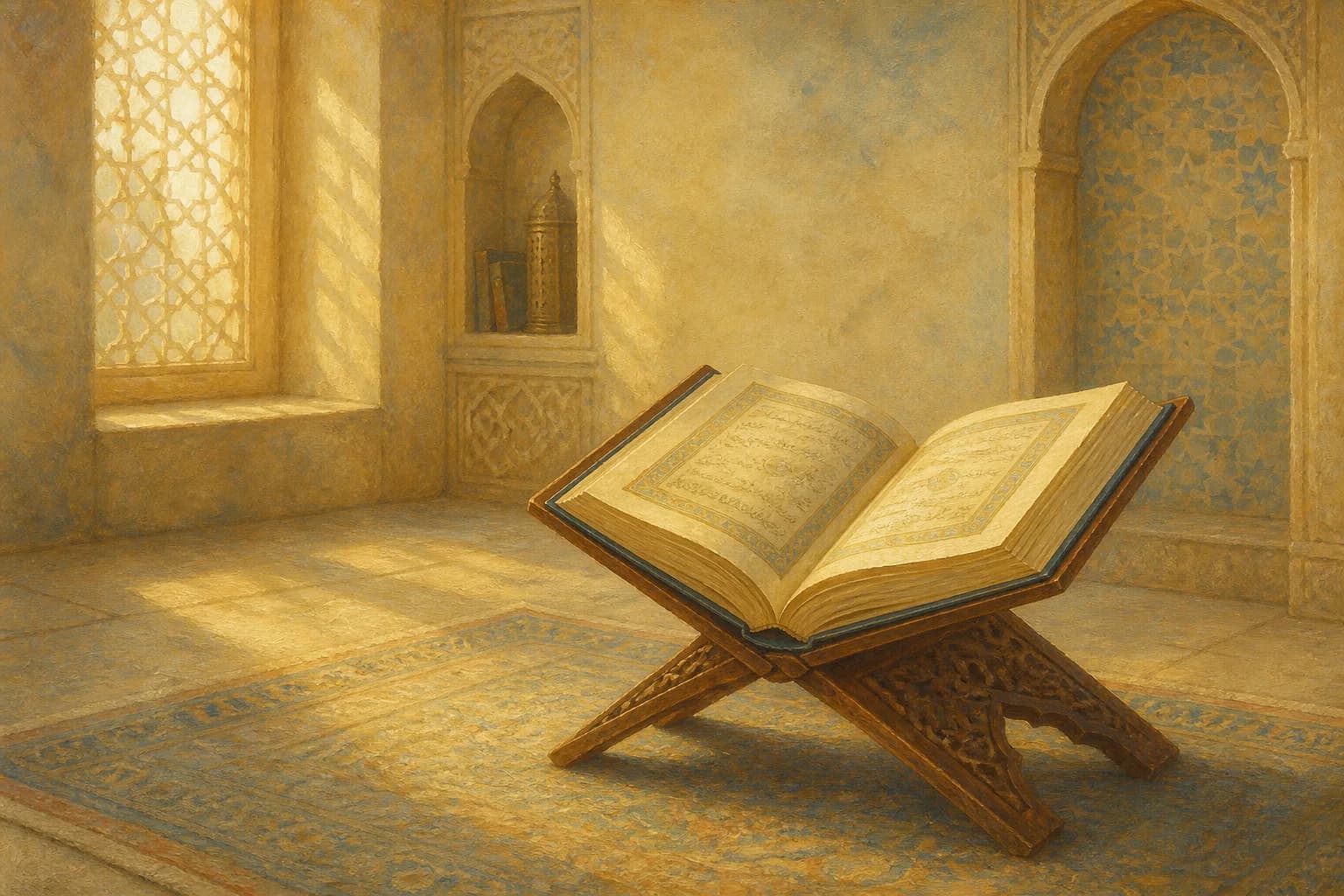

Choosing the right English translation of the Quran is one of the most important decisions a Muslim reader can make. The wrong choice can leave you confused, disconnected, or worse — with a subtly mistaken understanding of what Allah ﷻ actually said.
The Quran's Arabic is inimitable. No translation fully captures it. But a good translation gets you as close as humanly possible — and that closeness changes lives.
Which English Quran Translation Is Most Recommended?
The Sahih International translation is the most widely recommended English Quran for clarity and accuracy among contemporary Muslims. Published in 1997, it uses clear modern English, follows a literal approach where possible, and was reviewed by scholars at Umm al-Qura University in Makkah. For new Muslims, daily readers, and anyone building a Quran habit, it is the most practical starting point today.
What Makes a Good Quran Translation?
Not all translations are equal. When evaluating an English Quran, scholars and teachers typically look for:
- Linguistic accuracy — does it reflect what the Arabic actually says, without inserting interpretation?
- Readability — can an educated English speaker understand it without a dictionary?
- Scholarly grounding — was it reviewed by qualified Islamic scholars?
- Consistency — does it translate the same Arabic word consistently throughout?
- Transparency — does it distinguish between translation and commentary?
The Quran is القرآن الكريم (al-Qurʾān al-Karīm — "the Noble Quran"), a text Allah ﷻ describes as: "Indeed, this Quran guides to that which is most suitable" (Surah Al-Isra, 17:9). Every translation choice is an act of trust — and clarity preserves that trust.
The Most Recommended English Quran Translations
1. Sahih International (1997)
Produced by three American Muslim women, Saheeh International is the go-to modern English translation. Its plain, contemporary language makes meanings immediately accessible. Scholars at the King Fahd Complex for Printing the Holy Quran have endorsed it widely.
Best for: New Muslims, daily Quran readers, people building a habit of reading with meaning.
2. The Clear Quran — Dr. Mustafa Khattab (2016)
Dr. Khattab's translation is written specifically with English-speaking audiences in mind. It is smooth, natural, and reads like literature — not a legal document. Short footnotes help without overwhelming the text.
Best for: Young Muslims, converts, anyone who finds other translations stilted.
3. Abdullah Yusuf Ali (1934)
The most historically influential English Quran, Yusuf Ali's translation uses elevated prose and includes thousands of footnotes with poetic commentary. It remains widely quoted in older scholarship.
Best for: Readers who want rich commentary and historical Islamic context alongside the text.
4. Marmaduke Pickthall (1930)
The first English Quran translation by a believing Muslim native speaker. Pickthall preserved the Arabic rhythm in places but the Victorian English can obscure meaning for modern readers.
Best for: Historical reference and comparing translation choices.
5. M.A.S. Abdel Haleem — Oxford World Classics (2004)
Haleem's translation for Oxford University Press is prized in academic circles for its literary quality and faithfulness to the Arabic. Its natural sentence flow makes longer readings feel effortless.
Best for: Students of Islamic studies, academic readers, and literary-minded Muslims.
Translation Comparison at a Glance
| Translation | Year | Style | Best Audience | Scholarly Review |
|---|---|---|---|---|
| Sahih International | 1997 | Clear, literal modern | New Muslims, daily readers | King Fahd Complex, Umm al-Qura |
| The Clear Quran | 2016 | Flowing, accessible | Young Muslims, converts | Al-Azhar and Western scholars |
| Yusuf Ali | 1934 | Elevated, with footnotes | Scholarly readers | Widely peer-reviewed |
| Pickthall | 1930 | Archaic, rhythmic | Historical reference | Early Islamic community |
| Abdel Haleem | 2004 | Literary, precise | Academic readers | Oxford peer review |
What the Prophet ﷺ Said About the Quran
The motivation to read isn't just intellectual — it is an act of worship. The Prophet Muhammad ﷺ said: "The best of you is he who learns the Quran and teaches it." (Sahih al-Bukhari 5027)
And in another narration: "Read the Quran, for it will come as an intercessor for its reciters on the Day of Resurrection." (Sahih Muslim 804)
The Arabic text carries the full weight of these promises. But understanding it in English unlocks the heart — which is why Allah ﷻ says: "And We have indeed made the Quran easy to understand and remember." (Surah Al-Qamar, 54:17)
How to Use an English Translation Most Effectively
Reading a translation alongside the Arabic gives you the most complete experience. Here is a practical approach:
- Read the Arabic first — even if you don't fully understand it. The recitation is an act of worship.
- Read the English translation of the same passage — let the meaning settle.
- Reflect on one verse — not the whole page. One verse, deeply understood, is better than a chapter skimmed.
- Journal what resonates — writing activates memory.
- Return to the same passage weekly — the Quran opens differently each time.
For deeper understanding, explore quran.com which places translation, transliteration, and tafsir side by side for every verse. It is one of the best free tools available for English-speaking Muslims.
If you are just beginning your Quran journey, the guide on how to read Quran for beginners offers a gentle starting point. And if you want to move beyond translation into the Arabic itself, how to start learning tajweed and learning Arabic for Quran lay out clear steps.

Keep learning your deen with short, sourced lessons in DeenUp.
Should You Own a Physical Quran or Use an App?
Both have a place. A physical Quran carries weight and intentionality that a phone screen sometimes cannot match. Many Muslims keep Sahih International or The Clear Quran on their bookshelf for serious reading and use an app for daily verse reflections.
For daily engagement with meaning, digital tools make consistency easier — especially Quran resources and downloads that put translation and tafsir at your fingertips.
The Prophet ﷺ described بِسْمِ اللَّهِ الرَّحْمَٰنِ الرَّحِيمِ (Bismillāh ir-Rahmān ir-Rahīm — "In the name of Allah, the Most Gracious, the Most Merciful") as the opening that unlocks every good deed. Your Quran reading begins with that phrase, in whatever language helps you feel its weight.
Building a Daily Quran Reading Habit
Consistency matters more than quantity. The Prophet ﷺ said: "The deeds most beloved to Allah are those done regularly, even if they are small." (Sahih al-Bukhari 6465)
Start with just five minutes of Quran reading with English translation after Fajr. The benefits of reading Quran daily go far beyond knowledge — it changes how you think, what you value, and how you respond to difficulty.
For students and those building formal habits, DeenBack's guide on dhikr habits connects Quran reading with a broader practice of daily remembrance. And DemiManifest's reflections on Islamic purpose and clarity explore how sustained Quran engagement shapes life direction.
For academic depth on translation methodology, Yaqeen Institute's research on Quranic studies provides scholarly articles that go beyond which translation to choose and into how the Quran has been approached across generations.
Common Questions About English Quran Translations
Is reading the Quran in English enough?
Reading the translation is enormously valuable for understanding, but Islamic scholars agree it is not a substitute for the Arabic. The reward of recitation (tilawah) applies to the Arabic text. English is for understanding; Arabic is for worship. The ideal practice combines both.
Are all these translations available online for free?
Sahih International, Yusuf Ali, and Pickthall are available free online on quran.com and similar platforms. The Clear Quran and Abdel Haleem are available to purchase in print. The digital versions of most translations can also be found on sunnah.com for cross-referencing hadith alongside Quranic verses.
How often should I update my translation?
If your current translation feels confusing or archaic, it may be time to try a newer one. Many Muslims keep two translations — one literal (Sahih International) and one more flowing (The Clear Quran or Abdel Haleem) — and compare them when they want depth.
Keep learning your deen with short, sourced lessons in DeenUp.
Choosing a recommended English translation of the Quran is not a final destination — it is an opening door. Whatever translation you start with, the goal is the same: to let Allah's words become familiar companions in your daily life. Start there, and the Arabic will call you forward in its own time.
Explore our full Quran resources guide and daily Quran verse reflections to keep that connection alive every single day.
Frequently Asked Questions
What is the most recommended English translation of the Quran?
The Sahih International translation is the most widely recommended English Quran for clarity and accuracy. Published in 1997, it uses modern English and stays close to the Arabic meaning, making it ideal for new Muslims and daily readers. Yusuf Ali's translation is also widely used for its poetic footnotes.
Is the Sahih International Quran translation accurate?
The Sahih International translation is considered highly accurate by most contemporary Islamic scholars. It was produced by three American Muslim women and reviewed by scholars at the King Fahd Complex. It avoids overly poetic language that can distort meaning, making it one of the clearest choices for English readers.
What is the difference between Yusuf Ali and Sahih International?
Yusuf Ali's translation (1934) uses elevated, archaic English and includes extensive scholarly footnotes and poetic commentary. Sahih International (1997) uses clear, modern English with minimal interpretation. Yusuf Ali suits readers who enjoy literary depth; Sahih International suits those who want direct, precise meaning.
Which Quran translation is best for new Muslims?
Sahih International is the best Quran translation for new Muslims because its modern, straightforward English is easy to understand without prior Islamic background. The Clear Quran by Dr. Mustafa Khattab is another excellent option, written specifically for English readers with a natural, flowing style.
Can I read the Quran in English instead of Arabic?
Reading the Quran in English is valuable for understanding, but English translations are interpretations of the meaning, not the Quran itself. The Quran in its original Arabic is what carries the spiritual weight and reward of recitation in salah. Reading both together — Arabic recitation with English reflection — gives the fullest experience.
Is the Pickthall Quran translation still recommended?
Marmaduke Pickthall's translation (1930) was the first by a native English speaker who was also a Muslim scholar. While respected for its faithfulness to the Arabic, its archaic Victorian English makes it harder for modern readers to follow. It remains valuable as a reference but is not the first choice for daily reading today.
Which Quran translation do Islamic scholars recommend most?
Most Islamic scholars recommend Sahih International for everyday English reading due to its accuracy and clarity. For academic study, Abdullah Yusuf Ali remains influential for its commentary. The Abdul Haleem translation (Oxford University Press) is highly regarded in Western academic circles for its literary quality.