

- Authors

- Name
- Ahmad
- Role
- Senior Marketing Manager, Islamic education • DeenUp
بِسْمِ اللهِ الرَّحْمٰنِ الرَّحِيْمِ
In the name of God, the Most Gracious, the Most Merciful.

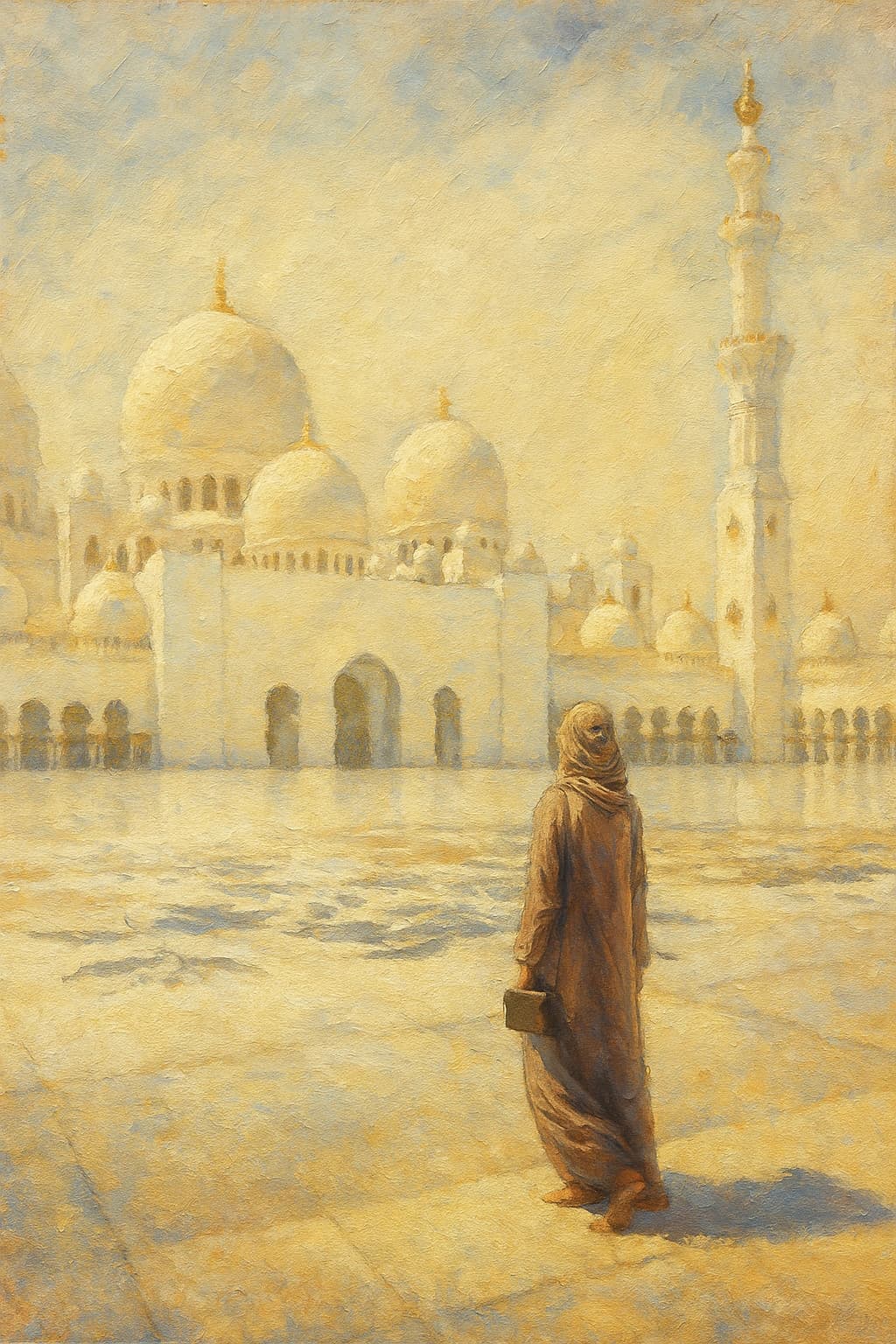
People come to this question from many directions — curious seekers, those who have been studying Islam for months, converts who want to understand what they actually committed to, and born Muslims who want to articulate their faith clearly to others. The question deserves a clear, honest answer rooted in what the Quran and Sunnah actually say.
What Are the Requirements to Be a Muslim?
The single entry requirement into Islam is the Shahada — the declaration of faith: لَا إِلَٰهَ إِلَّا اللَّهُ وَمُحَمَّدٌ رَسُولُ اللَّهِ (Lā ilāha illallāh, Muḥammadun rasūlullāh — "There is no god but Allah, and Muhammad is the Messenger of Allah"). When this declaration is made sincerely, with genuine understanding and belief, a person enters Islam. Allah says in the Quran: "Indeed, the religion in the sight of Allah is Islam" (Surah Ali 'Imran, 3:19). The rest of Islamic practice — prayer, fasting, charity, pilgrimage — follows from this foundation. The Shahada is not merely words; it is a covenant that shapes the entire structure of a Muslim's life.
The Shahada: More Than a Sentence
الشَّهَادَةُ (ash-Shahādah) means "testimony" or "witnessing." It is not a slogan or a formality — it is a statement of what you genuinely believe to be true about the nature of reality and your place within it.
The first part — lā ilāha illallāh — contains both a negation and an affirmation. You negate every false object of worship, loyalty, or ultimate concern, and affirm that Allah alone deserves worship, obedience, and love.
The second part — Muḥammadun rasūlullāh — is inseparable from the first. Accepting Muhammad ﷺ as the Messenger means accepting the Quran as divine revelation and the Prophet's teachings (Sunnah) as authoritative guidance for how to live.
The Prophet ﷺ said: "I have been commanded to fight the people until they testify that there is no god but Allah and that Muhammad is the Messenger of Allah, establish the prayer, and give the zakat" (Sahih al-Bukhari 25). This hadith shows that the Shahada is the gateway — and that it leads directly into practice.
What Are the Seven Conditions of a Valid Shahada?
Classical scholars have identified seven conditions that must be met for the Shahada to count as a genuine entrance into Islam. These are not bureaucratic requirements — they are a description of what sincere belief actually looks like.
| Condition | Arabic Term | What It Means |
|---|---|---|
| Knowledge | al-'Ilm | Understanding that Allah alone is worthy of worship and that Muhammad ﷺ is His Messenger |
| Certainty | al-Yaqīn | No lingering doubt about the truth of the declaration |
| Sincerity | al-Ikhlāṣ | Saying it for Allah's sake, not for social pressure or worldly benefit |
| Truthfulness | al-Ṣidq | The heart confirms what the tongue says; not hypocrisy |
| Love | al-Maḥabbah | Loving Allah, His Messenger ﷺ, and what the Shahada represents |
| Submission | al-Inqiyād | Outward compliance — beginning to live by what the declaration requires |
| Acceptance | al-Qabūl | Embracing all that Islam entails, without mental reservation or rejection |
Ibn Uthayman رحمه الله explained that the absence of any one of these conditions means the Shahada has not truly been made — the words were spoken without the substance. This is relevant not only for new Muslims but for everyone who was raised in the faith: these conditions are worth revisiting throughout a lifetime.
Why This Matters for Modern Muslims
There is a tendency — understandable in a busy world — to reduce Islam to its outward requirements: pray five times, fast Ramadan, pay zakat. These are real obligations. But the Shahada reminds us that Islam begins and ends in the heart.
The concept of al-Maḥabbah (love) as a condition of valid faith has deep implications. The Prophet ﷺ said: "None of you will have faith until he loves me more than his father, his children, and all of mankind" (Sahih al-Bukhari 15). This is not sentiment — it is a description of the orientation that makes a Muslim's practice coherent and sustainable. You pray because you love Allah, not merely because you fear punishment.
For those raised Muslim, returning to the Shahada's conditions can be a powerful act of renewal. For those exploring Islam, understanding these conditions prevents the common mistake of treating conversion as a one-time administrative act. And for anyone reading this who has drifted from practice: the importance of tawbah in Islam offers a path back that begins exactly here — with sincere recommitment to what the Shahada means.
How to Take the Shahada and What Comes Next
Pronouncing the Shahada
The Shahada can be taken at any moment, in any language, by speaking it with sincere belief. In Arabic it is: لَا إِلَٰهَ إِلَّا اللَّهُ وَمُحَمَّدٌ رَسُولُ اللَّهِ
Many people choose to take their Shahada at a mosque before witnesses — not because this is required, but because community support is valuable and the occasion becomes something to mark and remember. Others take it in private. Both are valid.
First Steps After the Shahada
Islam does not expect a new Muslim to master everything at once. The Prophet ﷺ introduced obligations gradually — the Quran was revealed over 23 years, not in a single afternoon. Here is a clear order of priorities:
- Perform ghusl — a full ritual bath, symbolizing a new beginning
- Learn the Shahada in Arabic so you can say it in salah
- Learn how to pray — the five daily prayers are the foundation of Islamic practice. Our detailed guide on how to start praying as a new Muslim walks through every step.
- Learn the basics of what is iman — the six articles of faith that describe what Muslims believe
- Study the five pillars of Islam — Shahada, salah, zakat, sawm, and Hajj
Still searching for a clear Islamic answer?
Explore sourced answers rooted in the Quran, authentic hadith, and respected scholarship—without getting lost in conflicting search results.
Take the Islam Quiz
Learning the Six Articles of Faith
Alongside the five pillars of practice, Islam asks believers to hold six articles of faith — convictions about the nature of reality:
- Belief in Allah (tawheed)
- Belief in the Angels
- Belief in the revealed Books (Quran, Injeel, Torah, Zabur)
- Belief in the Prophets and Messengers
- Belief in the Day of Judgment
- Belief in Divine Decree (qadar) — both good and seemingly difficult
The full explanation of each is covered in what are the six articles of faith. These are not abstract theology — they shape how a Muslim understands everything that happens in their life.
Signs of Progress
Growth in faith does not follow a straight line. But some markers indicate that the Shahada has taken root:
- You find yourself thinking about Allah throughout the day — in gratitude, in difficulty, in the morning and before sleep
- The five prayers feel less like tasks and more like conversations
- You begin caring about the ummah — the global Muslim community — as something you belong to
- You notice your character changing: more patience, more honesty, more concern for others
The Prophet ﷺ described the sweetness of faith (حَلَاوَةُ الْإِيمَان, ḥalāwat al-īmān): "Whoever has three qualities has found the sweetness of faith: that Allah and His Messenger are more beloved to him than anything else; that he loves another only for Allah's sake; and that he hates to return to disbelief as he would hate to be thrown into fire" (Sahih al-Bukhari 16).
This sweetness is the experiential confirmation of a Shahada that was made with its seven conditions intact.
Common Questions About Becoming Muslim
Our full FAQ is in the frontmatter schema above, but some questions come up often enough to address directly.
Does a conversion certificate matter? Legally, in some countries, yes — certain rights (marriage under Islamic law, burial in a Muslim cemetery) may require documentation. Spiritually, no certificate has any standing before Allah. The Shahada between you and your Creator is what counts.
What if I am not ready to practice everything perfectly? No one is, including lifelong Muslims. The Prophet ﷺ said: "Make things easy, do not make them difficult; give glad tidings, do not drive people away" (Sahih al-Bukhari 69). Begin where you are.
What about family and social pressure? Converting to Islam: a complete guide addresses the practical and relational challenges of becoming Muslim in non-Muslim environments, from family conversations to legal considerations. And what is taqwa in Islam offers grounding for those navigating those pressures while trying to maintain their commitment.
The Requirements in One Sentence
Islam requires one thing of you to enter: that you sincerely believe there is no god but Allah and that Muhammad ﷺ is His Messenger, and that you say so. Everything else — the prayers, the fasting, the pilgrimage — flows from that single declaration made with its full seven conditions. The path after it is a lifetime long. You take it one step at a time.
Still searching for a clear Islamic answer?
Explore sourced answers rooted in the Quran, authentic hadith, and respected scholarship—without getting lost in conflicting search results.
Take the Islam QuizFor a thoughtful perspective on what it means to step into Islam consciously rather than by habit, the DeenBack reflection on the universality of Islam is worth reading alongside the primary sources covered here. And for how living the Shahada's commitments shapes daily Muslim life, Demi Manifest's guide to Islamic purpose and clarity explores the inner architecture of a life built on the declaration you just made.
Primary sources: Sahih al-Bukhari 25, Sahih al-Bukhari 15, Sahih al-Bukhari 16, Sahih al-Bukhari 69, Sahih Muslim 121; Quran 3:19 (Surah Ali 'Imran). The seven conditions of the Shahada are drawn from the classical commentary of Imam Ibn Uthayman رحمه الله.
Frequently Asked Questions
What is the minimum requirement to become Muslim?
The minimum requirement to become Muslim is sincerely pronouncing the Shahada — the declaration that there is no god but Allah and that Muhammad is His Messenger. This single statement, spoken with genuine belief and understanding, is the entry point into Islam. No ritual ceremony, witnesses, or formal paperwork is strictly required, though having witnesses is recommended.
What are the seven conditions of a valid Shahada?
Classical scholars identify seven conditions: knowledge (understanding what you are saying), certainty (no doubt), sincerity (not for show), truthfulness (from the heart, not the tongue alone), love (loving Allah and His Messenger ﷺ), submission (outward compliance with what it requires), and acceptance (embracing all that Islam entails without rejection).
Is there a ceremony required to become Muslim?
There is no formal ceremony required to become Muslim in Islamic law. The Shahada can be pronounced alone or before witnesses. Many mosques welcome new Muslims to take their Shahada in congregation because community support helps, but the validity of the conversion does not depend on an audience, a certificate, or any institution's approval.
Do I need to be born Muslim to practice Islam?
No. Islam teaches that every human being is born in a state of fitrah — a natural inclination toward the Divine. Becoming Muslim at any point in life is a return to that original nature, not an entry into something foreign. The Prophet ﷺ welcomed converts from every background; the faith has always been universal.
What should I do immediately after taking my Shahada?
After taking the Shahada, scholars recommend performing ghusl (a full ritual bath), learning the basics of how to pray, and beginning the five daily prayers as soon as practically possible. You are not expected to know everything at once. Starting with the five pillars — the Shahada, salah, zakat, sawm, and Hajj — gives you a clear foundation to build on.
Can previous sins be forgiven when someone becomes Muslim?
Yes. The Prophet ﷺ said that Islam wipes out everything that came before it (Sahih Muslim 121). A new Muslim begins with a clean slate — no previous act, sin, or belief weighs against them from the moment they sincerely embrace Islam. This is one of the most profound spiritual realities of entering the faith.
What is the first obligation after the Shahada?
The first obligation after the Shahada is learning and establishing the five daily prayers (salah). Prayer is the second pillar of Islam and the most frequent act of worship. Scholars describe it as the first thing a person will be asked about on the Day of Judgment, making it the most urgent practical priority after declaring the faith.