

- Authors

- Name
- Ahmad
- Role
- Senior Marketing Manager, Islamic education • DeenUp
بِسْمِ اللهِ الرَّحْمٰنِ الرَّحِيْمِ
In the name of God, the Most Gracious, the Most Merciful.
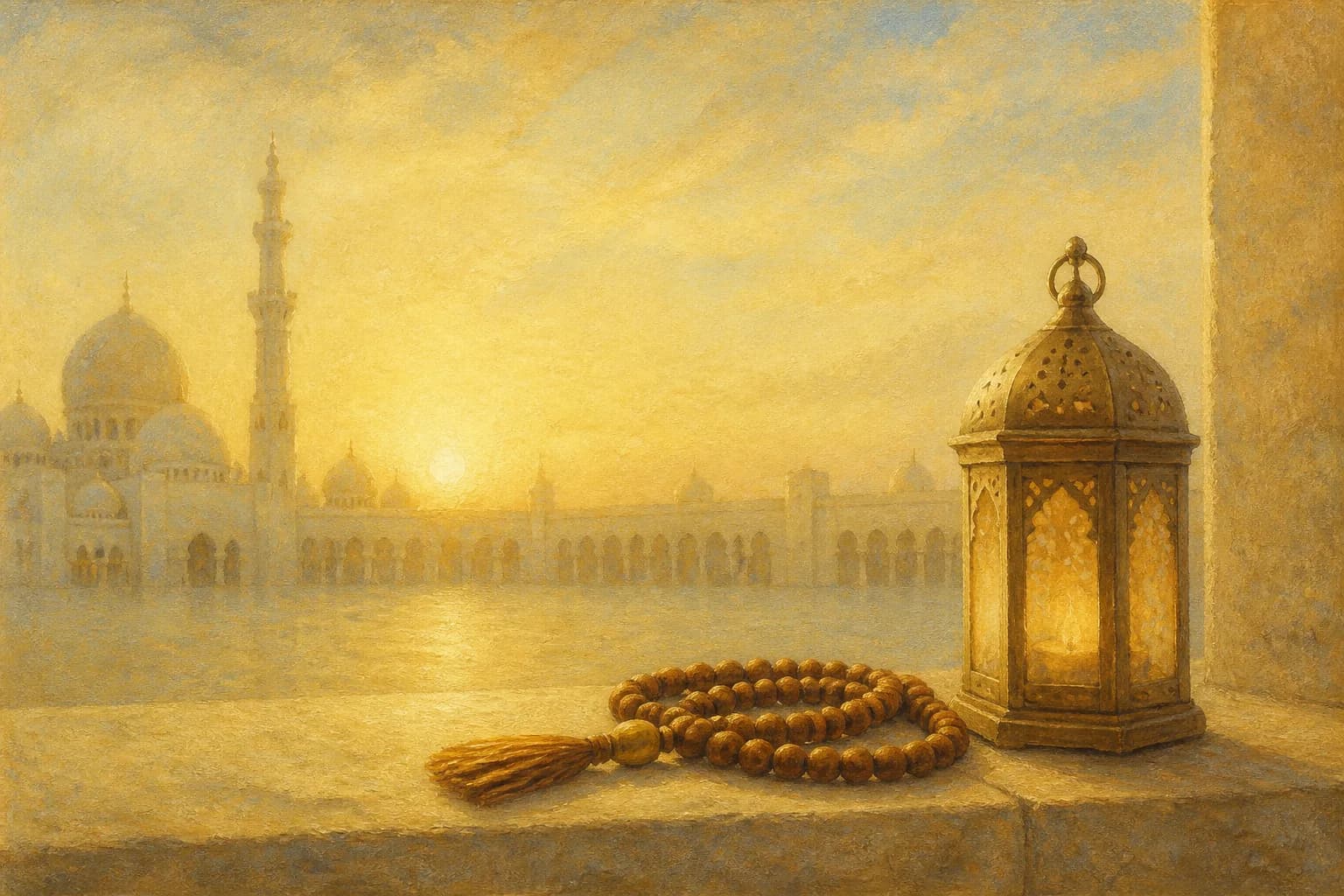

There is a reason Muslim scholars have called dhikr (ذِكْر) — the remembrance of Allah — the life of the heart. Not an accessory to worship. Not a bonus practice for the spiritually advanced. The life itself.
Allah does not give us a condition before promising this:
أَلَا بِذِكْرِ اللَّهِ تَطْمَئِنُّ الْقُلُوبُ
"Verily, in the remembrance of Allah do hearts find rest." — (Surah Ar-Ra'd, 13:28)
Not in success. Not in security. Not in having the right circumstances. In dhikr. And the beauty of this promise is that it is available to you right now, wherever you are.
The Core Dhikr: What to Say and When
There are dozens of authentic dhikr formulas taught by the Prophet ﷺ, but a handful form the backbone of daily remembrance. These are the phrases that appear most frequently in hadith, carry the greatest weight, and are most suited to weaving through an ordinary day.
The two lightest and weightiest:
سُبْحَانَ اللَّهِ وَبِحَمْدِهِ — سُبْحَانَ اللَّهِ الْعَظِيمِ
SubhanAllahi wa bihamdihi — SubhanAllahil Adhim
"Glory and praise be to Allah — Glory be to Allah the Mighty."
The Prophet ﷺ said of these two phrases: "Two phrases light on the tongue, heavy on the scale, beloved to Ar-Rahman." (Sahih Bukhari 6682, Sahih Muslim 2694)
The best of dhikr:
لَا إِلَهَ إِلَّا اللَّهُ
La ilaha illallah
"There is no god but Allah."
"The best dhikr is La ilaha illallah, and the best supplication is Alhamdulillah." (Sunan Tirmidhi 3383)
The Tasbih of Fatimah — after every prayer:
The Prophet ﷺ taught his daughter Fatimah رضي الله عنها and her husband Ali رضي الله عنه to say SubhanAllah 33 times, Alhamdulillah 33 times, and Allahu Akbar 34 times after each obligatory prayer. He told them this was better than hiring a servant. (Sahih Muslim 2727)
This practice takes under two minutes and is one of the most consistent forms of post-prayer dhikr in the Sunnah.
The Context: Why Dhikr Is a Two-Way Conversation
Dhikr is not a one-directional act. That understanding changes everything about how you approach it.
Allah says:
فَاذْكُرُونِي أَذْكُرْكُمْ
"Remember Me; I will remember you." — (Surah Al-Baqarah, 2:152)
When you say SubhanAllah with awareness — not mechanical repetition, but a genuine turning of the heart toward Allah — He responds. The hadith qudsi narrated by Abu Hurairah رضي الله عنه records Allah saying: "I am with My servant when he thinks of Me. If he remembers Me to himself, I remember him to Myself. If he remembers Me in an assembly, I remember him in an assembly better than his." (Sahih Bukhari 7405, Sahih Muslim 2675)
This is not poetic language. It is the declared reality of the relationship between a believer and his Lord. The believer who makes dhikr is not speaking into the void. He is entering a remembered conversation.
The companions understood this. Muadh ibn Jabal رضي الله عنه reportedly said that nothing saves a person from the punishment of Allah more than the remembrance of Allah. When asked if that includes even fighting in the path of Allah, he said yes — even that. The weight the sahaba placed on dhikr reflects what they had absorbed from the Prophet's own life.
Making Dhikr Part of Your Daily Life
The gap between knowing dhikr is important and actually doing it daily is usually not a knowledge problem. It is a habit design problem.
Anchor dhikr to existing transitions. The prophetic model is instructive here: there is dhikr for waking up, for leaving the house, for entering the masjid, for sitting down, for eating, for sleeping. Every transition in the day has a corresponding remembrance. You are not adding dhikr to your schedule — you are inserting it into the hinges that already exist.
Start with after-prayer dhikr. If you pray five times a day, you have five natural anchors. The Tasbih of Fatimah after each prayer — 33 SubhanAllah, 33 Alhamdulillah, 34 Allahu Akbar — is established Sunnah and takes about 90 seconds. Building this one habit gives you 500+ counts of dhikr daily before you add anything else.
Use the morning and evening adhkar. The Prophet ﷺ was consistent about specific dhikr in the morning and after Asr. These are available in authentic collections and have been compiled into easy reference formats. The morning dhikr is not just a spiritual practice — it is a form of protection.
For building good daily Islamic habits and for understanding how to make your supplications and remembrance more meaningful, a consistent morning routine is where most Muslims find the most traction.
Let ordinary moments be dhikr. Waiting for a meeting to start. Sitting in traffic. Walking between tasks. The Prophet ﷺ described the wise Muslim as one whose tongue is moist with the remembrance of Allah. This is not constant formal recitation — it is a background orientation of the heart that surfaces in small moments throughout the day.
Do you feel your duas are unanswered?
Have you read the dua properly? Learn authentic duas, understand their meanings, and call upon Allah with greater confidence through DeenUp.
Take the Dua Quiz
DeenBack's guide to building a morning dua routine is a useful companion for structuring the first part of your day around authentic remembrance. And Demi Manifest's guide to Islamic morning routines explores how to build the environment — the habits, the rhythm, the wake time — that makes consistent dhikr feel natural rather than forced.
You can explore the full dhikr hadith corpus with chain verification at sunnah.com and the Quranic commands for remembrance with tafsir at quran.com.
Related Dhikr Practices to Build Alongside
As you establish a core dhikr practice, a few related acts deepen the same root:
Istighfar. Saying Astaghfirullah (أَسْتَغْفِرُ اللَّهَ) — "I seek forgiveness from Allah" — is itself a form of dhikr. The Prophet ﷺ sought forgiveness more than seventy times a day despite having no sin to be forgiven. Istighfar is an act of turning toward Allah, not only a response to wrongdoing.
Salawat on the Prophet ﷺ. Sending blessings on the Prophet — Allahumma salli ala Muhammad — is both an act of remembrance and an honored form of worship. The Prophet ﷺ said that whoever sends one blessing on him, Allah sends ten blessings on that person. (Sahih Muslim 408)
Reciting Ayatul Kursi. Reciting Ayatul Kursi after each obligatory prayer and before sleeping is part of the prophetic dhikr tradition. The Prophet ﷺ described it as protection — whoever recites it after each prayer, nothing prevents them from entering Jannah except death. (Nasa'i, Al-Yawm Wal-Layla 100)
For the connection between barakah and dhikr — and how remembrance of Allah draws blessing into daily life — and for the relationship between taqwa and consistent remembrance, both are worth exploring alongside this practice.
If you want to go deeper into the dua dimension of remembrance, our guide on dua for guidance and our adab in Islam guide cover the etiquette that makes both supplication and dhikr more powerful.
Common Questions About Dhikr
Is dhikr only for times of difficulty? No — though dhikr during hardship is especially emphasized. Surah Ar-Ra'd 13:28 is addressed in the context of general human experience, not only crisis. Regular dhikr in ease prepares the heart for times of difficulty better than turning to it only when things fall apart.
Does dhikr have to be in Arabic? The scholarly consensus is that the specific prophetic dhikr formulas should be said in Arabic as transmitted. Personal supplication and reflection can be in any language. For established formulas like SubhanAllah, Alhamdulillah, and La ilaha illallah, the Arabic is the practice.
Can I do dhikr while walking or doing chores? Yes. Dhikr is not bound to a prayer mat or a formal sitting. The companions made dhikr during their daily work, travel, and rest. The exception is places of ritual impurity — dhikr in the bathroom, for instance, is not recommended by scholars.
What if my mind wanders during dhikr? This is expected, especially early on. Scholars advise: do not stop because of wandering; return to the dhikr. Over time, the practice of returning — not the absence of distraction — is what trains the heart. Consistency matters more than perfection.
Closing
Dhikr is not a supplement to the spiritual life. It is the spiritual life — the ongoing conversation between a believer and the One who created him, remembering and being remembered in return.
You do not need a special occasion or a high spiritual state to begin. The Quran's promise is unconditional: hearts find rest in the remembrance of Allah. Not eventually. Not after you have earned it. Now.
Start with one phrase after your next prayer. Then let it grow.
Do you feel your duas are unanswered?
Have you read the dua properly? Learn authentic duas, understand their meanings, and call upon Allah with greater confidence through DeenUp.
Take the Dua QuizFrequently Asked Questions
What is dhikr in Islam?
Dhikr is the Arabic word for remembrance of Allah. It includes any phrase, word, or act through which a Muslim consciously directs their heart and tongue toward Allah — from SubhanAllah to reciting Quran to reflecting on His names.
When is the best time to do dhikr?
The Prophet taught specific adhkar for morning and evening, after each prayer, before sleeping, and upon waking. Any time is valid, but anchoring dhikr to existing routines makes it stick.
How much dhikr should I do each day?
There is no fixed minimum beyond the adhkar attached to obligatory prayers. The Prophet encouraged frequent remembrance, and even a few minutes of focused dhikr daily is transformative when done consistently.
Can I do dhikr silently or does it need to be said aloud?
Both are valid. The Quran mentions remembering Allah quietly (Surah Al-Araf, 7:205). Scholars generally prefer a low voice over pure silence, but quiet internal dhikr is fully accepted.