

- Authors

- Name
- Ahmad
- Role
- Senior Marketing Manager, Islamic education • DeenUp
بِسْمِ اللهِ الرَّحْمٰنِ الرَّحِيْمِ
In the name of God, the Most Gracious, the Most Merciful.
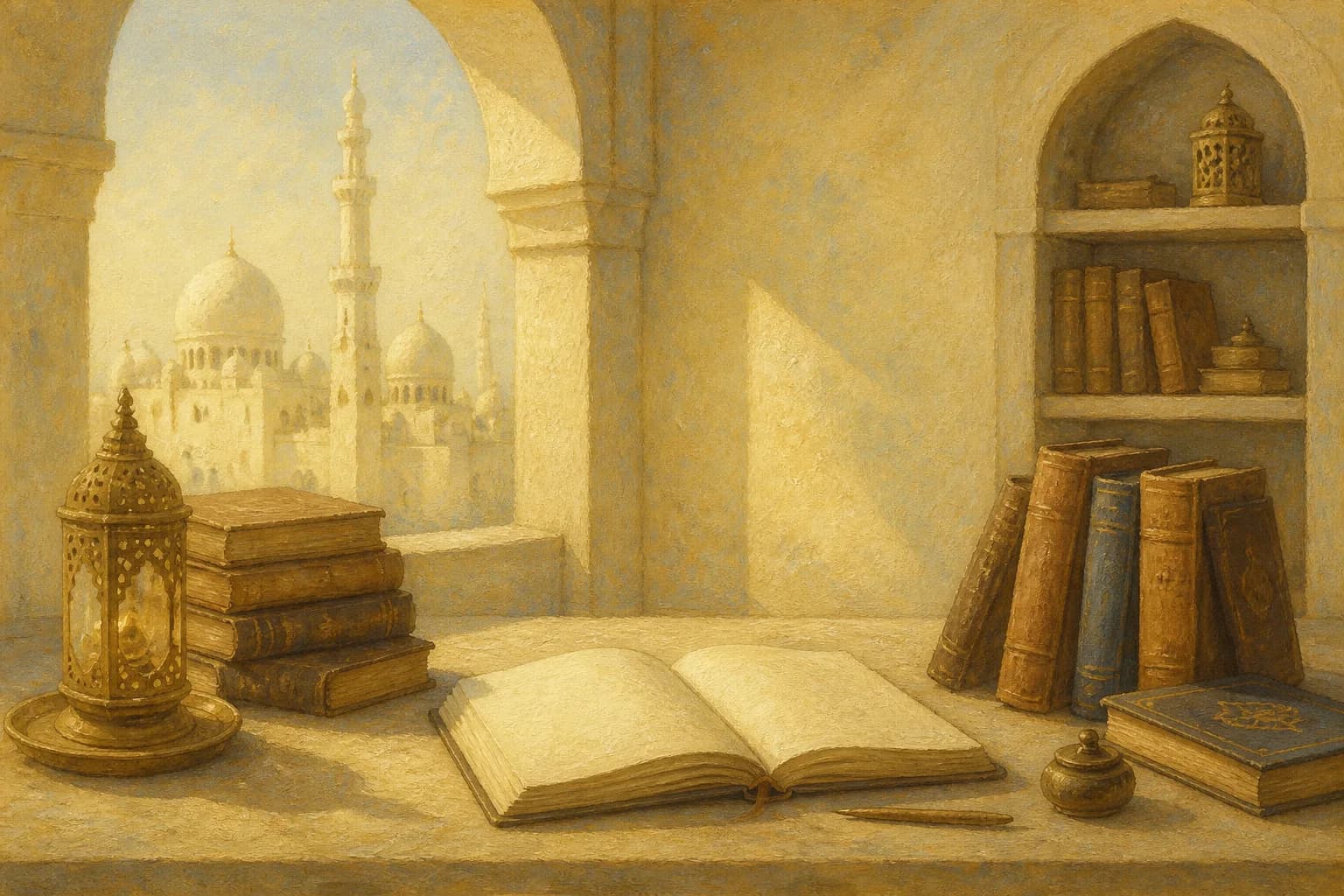

The New Year That Begins Quietly
Every culture marks a new year. Fireworks, countdowns, resolutions that fade by February. The Islamic New Year arrives differently — without noise, without prescribed celebration, without the pressure of a fresh-start spectacle.
On 1 محرم (Muharram), the Islamic year turns. It is the beginning of a month the Prophet ﷺ singled out by name as شَهْرُ اللَّهِ الْمُحَرَّمُ — "the sacred month of Allah." The Hijri calendar, the calendar of the Muslim ummah, opens here.
If you have ever wondered what the Islamic New Year actually is, why it moves each year, what observance (if any) is appropriate, or how to make it meaningful without falling into innovation — this is where those answers begin.
What the Islamic New Year Actually Is
The Hijri Calendar: Lunar, Not Solar
The Islamic calendar is lunar. Each month begins with the sighting of the new crescent moon and lasts 29 or 30 days. Twelve months make a Hijri year — approximately 354 days, about 11 days shorter than the Gregorian solar year.
This means the Islamic New Year moves earlier each year relative to the Gregorian calendar. Muharram rotates through all the seasons over roughly 33 years. Unlike a fixed cultural marker, it is embedded in the rhythms of the moon — a constant reminder that Islamic time is calibrated differently.
The four sacred months are designated in the Quran itself:
"Indeed, the number of months with Allah is twelve lunar months in the register of Allah from the day He created the heavens and the earth; of these, four are sacred." — (Surah At-Tawbah, 9:36)
Muharram is one of those four — alongside Rajab, Dhul-Qadah, and Dhul-Hijjah. Our full guide on the four sacred months in Islam explains what distinguishes these months and why heightened worship in them carries additional weight.
Why the Calendar Starts at the Hijra
The Hijri calendar does not begin at the birth of the Prophet ﷺ or the first revelation. It begins at the Hijra — the migration of the Prophet ﷺ and his companions from Mecca to Medina in 622 CE.
This was a deliberate choice by Caliph Umar ibn al-Khattab, who formally established the calendar system during his reign. The companions debated several starting points. The Hijra was chosen because it marked a defining moment of sacrifice, community, and the beginning of the first Muslim state — a shared point of reference for the entire ummah.
The message embedded in that choice is worth sitting with: the Islamic year begins not at a birth or a revelation, but at a moment of giving up what was familiar in order to be faithful.
1 Muharram Today
The first of Muharram is the new year's day. There is no prescribed prayer for this day, no authentic hadith calling for a special gathering or ritual. Be cautious of practices presented as obligations on this occasion — scholars across the major schools of Islamic law have noted that specific "Islamic New Year" celebrations have no foundation in the Sunnah.
What is authentic: the month of Muharram itself is sacred, and the rewards of worship within it are heightened. The centerpiece is the fast of Ashura on the 10th. For a detailed look at that day and its prophetic basis, the article on Muharram and Ashura covers the hadith evidence and practical guidance fully.
Why This Matters for Modern Muslims
We live in a world that tells you a new year demands a spectacle. The Islamic tradition says something quieter and, in the long run, more sustainable: a new beginning is marked by niyyah (intention) and action, not performance.
The Prophet ﷺ established this clearly regarding Muharram:
"The best fasting after Ramadan is the month of Allah, Muharram." — (Sahih Muslim 1163)
Calling Muharram "the month of Allah" places it in rare company. The Prophet did not attach to this description a long list of prescribed rituals. He pointed to voluntary fasting — a personal act between the believer and Allah — as the highest available practice.
That framing is freeing. You do not need to attend any event, buy anything, or perform anything publicly. The Islamic New Year is an invitation to deepen what is between you and Allah, privately and sincerely.
For Muslims wrestling with how to be intentional without falling into innovation — that is actually the cleaner path. The article on how to repent in Islam pairs well with this: the turn of the Islamic year is a natural moment to seek forgiveness and reset.
How to Mark the Islamic New Year With Purpose
Set an intention for the Hijri year
This does not need to be complicated. One area of growth: more consistent salah, more Quran reading, one voluntary fast per month, increased sadaqah. The point is that the year begins with direction, not drift.
Write it down if that helps. Revisit it at the next Hijri new year. The DeenBack team has written about approaching the Islamic New Year with intentional planning — a practical read if you want a structured framework.
Fast the 10th of Muharram
The fast of Ashura (10 Muharram) is the single most powerful act of worship in this month. The Prophet ﷺ said it expiates the sins of the previous year (Sahih Muslim 1162). Put it in your calendar now, before the month arrives. Pair it with the 9th if you can.
If you are new to voluntary fasting, start here. One day, enormous reward. That is the simplicity of Ashura.
Increase istighfar throughout Muharram
The practice of seeking forgiveness (istighfar) is one of the most consistently recommended forms of dhikr across the Sunnah. A sacred month is an ideal context for making it a daily habit. The guide on benefits of istighfar covers both the Quranic and hadith basis and practical ways to incorporate it.
أَسْتَغْفِرُ اللَّهَ
Astaghfirullāh — "I seek forgiveness from Allah"
One hundred times a day takes less than five minutes. In Muharram, that five minutes carries outsized spiritual weight.
Use the Islamic calendar as a reference point
One practical shift: begin tracking time according to both the Hijri and Gregorian calendars. Knowing where you are in the Islamic year — which month, which sacred period — connects your life to a different kind of rhythm. For an overview of the full Islamic year, the Islamic calendar for 2026 is a useful reference to bookmark.
For a reflective take on what the Hijri New Year can mean for personal spiritual renewal, this piece from Demi Manifest on the Hijri New Year is worth reading alongside this one.
Still searching for a clear Islamic answer?
Explore sourced answers rooted in the Quran, authentic hadith, and respected scholarship—without getting lost in conflicting search results.
Take the Islam Quiz
Signs That the Islamic New Year Is Working on You
You do not need a dramatic transformation to know the month is doing something. These are quieter signs:
- Ashura is on your calendar before Muharram begins — it is part of your year, not an afterthought
- You increased an act of worship this month, even a small one, because you were aware it was Muharram
- You made a sincere intention at the start of the Hijri year and can still name it weeks later
- The phrase "the month of Allah" gives you a different feeling about how time is allocated
These are not signs of perfection. They are signs of awareness — and that awareness is what the Islamic year is designed to cultivate.
Common Questions About the Islamic New Year
Is it haram to say "Happy Islamic New Year"?
Most scholars hold that wishing someone well at the start of Muharram is not prohibited, provided no specific innovative ritual is attached to it. The concern in scholarship is not a kind greeting but the creation of obligatory or culturally pressured celebrations that have no basis in the Sunnah.
Why does the Islamic New Year change every year?
Because the Hijri calendar is purely lunar. The Islamic year is about 11 days shorter than the Gregorian solar year, so the calendar rotates backward through the seasons. This is by design — it means every Muslim, regardless of hemisphere or climate, experiences the sacred months across all seasons over a 33-year cycle.
What happened at the Hijra that made it important enough to anchor the calendar?
The migration to Medina was the moment the first Muslim community was truly established. The Prophet ﷺ and his companions left behind their homes, wealth, and social standing in Mecca because their faith required it. In Medina, the first mosque was built, the first Islamic society took shape, and the bonds of the ummah were formed. Beginning the calendar here is a statement about what Islamic identity is built on: sacrifice and community, not geography or ancestry.
Is Muharram a time for mourning?
Sunni Muslims do not observe Muharram as a month of mourning. The Prophet ﷺ described it as a month for worship and voluntary fasting. The mourning practices observed by Shia Muslims in Muharram are related to the martyrdom of Husayn ibn Ali at Karbala in 61 AH — a significant historical event that occurred after the Prophet's ﷺ death and is understood differently across Islamic traditions.
Closing Thoughts
The Islamic New Year arrives quietly, and that is the point. There is no external pressure, no cultural spectacle, no prescribed gathering. Just a new month — one that Allah called His own — and an invitation to begin it with intention.
Fast on Ashura. Make istighfar a daily practice through Muharram. Set one clear intention for the Hijri year ahead. These are small, achievable actions that carry the weight of sincerity.
The year turns. What you do with the first month sets a tone.
Still searching for a clear Islamic answer?
Explore sourced answers rooted in the Quran, authentic hadith, and respected scholarship—without getting lost in conflicting search results.
Take the Islam QuizFrequently Asked Questions
When is the Islamic New Year?
The Islamic New Year begins on 1 Muharram, the first day of the first month of the Hijri lunar calendar. Because the Islamic calendar is lunar and shorter than the Gregorian year by about 11 days, the date shifts earlier each solar year.
Should Muslims celebrate the Islamic New Year?
There is no prescribed celebration for the Islamic New Year in the Quran or authentic hadith. Scholars generally advise against innovating festive rituals. The month is best marked by increased worship, especially fasting on Ashura, and sincere intention for the year ahead.
What is the Hijri calendar and how does it work?
The Hijri calendar is a lunar calendar with 12 months, each lasting 29 or 30 days, making the year approximately 354 days. It was formally established by Caliph Umar ibn al-Khattab, who chose the year of the Prophet's migration to Medina as year 1 AH.
How is the Islamic New Year different from the Gregorian New Year?
The Gregorian New Year is cultural and civil. The Islamic New Year is a religious time marker rooted in the Hijri calendar. There are no parties or countdowns — the focus is on reflection, renewed intention, and taking advantage of Muharram as one of the sacred months.