

- Authors

- Name
- Ahmad
- Role
- Senior Marketing Manager, Islamic education • DeenUp
بِسْمِ اللهِ الرَّحْمٰنِ الرَّحِيْمِ
In the name of God, the Most Gracious, the Most Merciful.
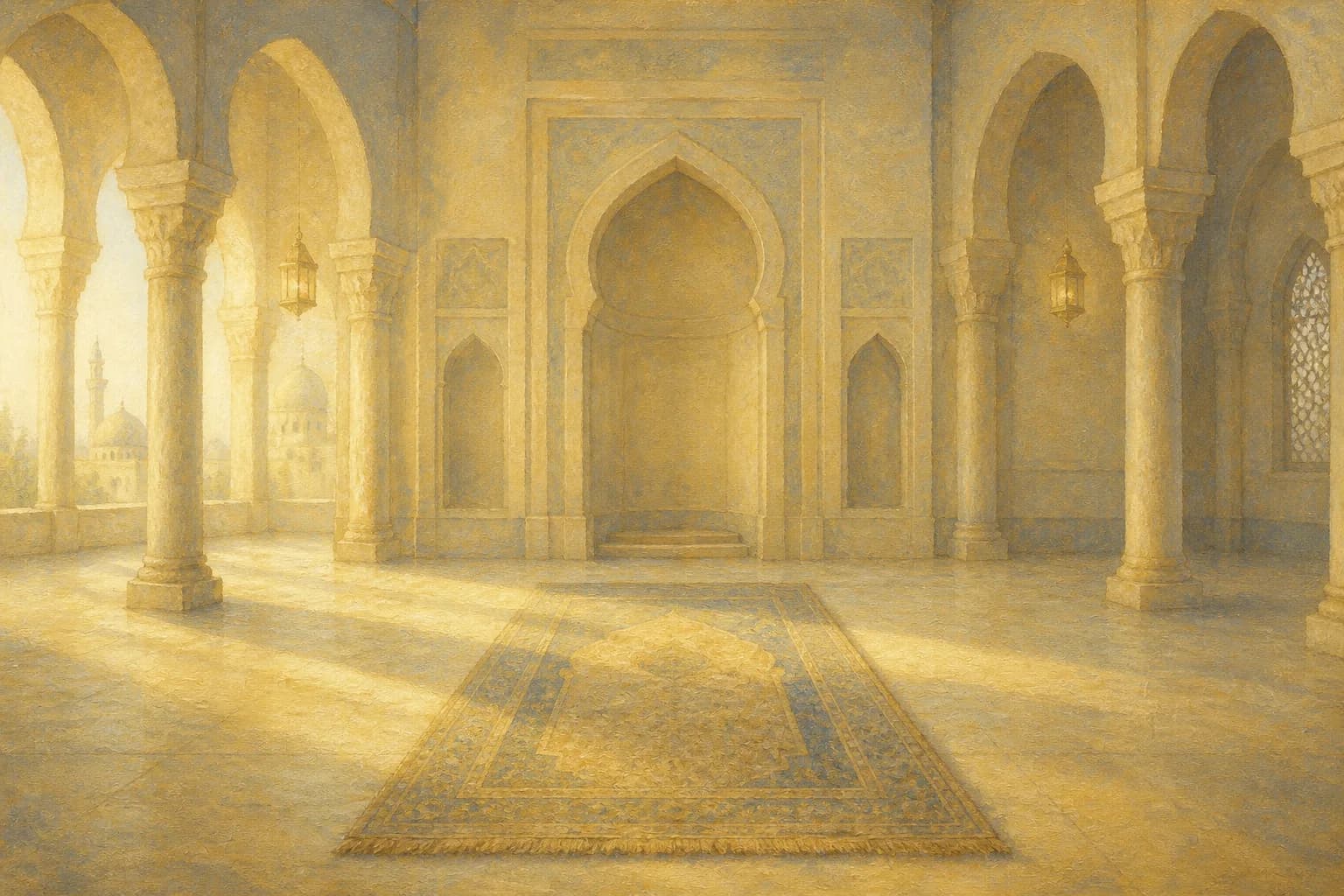

There are nights that bend history. The Night of Isra and Miraj — the miraculous journey of Prophet Muhammad (ﷺ) in the 10th year of his prophethood — is one of them. It took place in what scholars call the Year of Grief (Aam al-Huzn, عَامُ الْحُزْن): both his beloved wife Khadijah and his uncle Abu Talib had died within weeks of each other. The Prophet was grieving, and the opposition to his message was intensifying. Then, in a single night, Allah took him on a journey through the heavens that no human had made before — and sent him back with something that would define Muslim life for all time: the five daily prayers.
The Two-Part Journey: Isra and Miraj
The night has two distinct phases. Understanding both is essential to grasping what this event means.
Isra (الإسراء) is the horizontal journey — from Masjid al-Haram in Mecca to Masjid al-Aqsa in Jerusalem, carried on the Buraq, a noble creature described in the hadith. The Quran states it plainly in Surah Al-Isra 17:1:
سُبْحَانَ الَّذِي أَسْرَى بِعَبْدِهِ لَيْلًا مِّنَ الْمَسْجِدِ الْحَرَامِ إِلَى الْمَسْجِدِ الْأَقْصَى الَّذِي بَارَكْنَا حَوْلَهُ
"Glory be to the One Who took His servant on a night journey from the Sacred Mosque to the Farthest Mosque, whose surroundings We have blessed." (Surah Al-Isra, 17:1)
In Jerusalem, the Prophet (ﷺ) led the earlier prophets — Ibrahim, Musa, Isa, and others — in prayer at Masjid al-Aqsa. This moment alone carries extraordinary weight: the seal of prophethood leading all the messengers in worship.
Miraj (الْمِعْرَاج) is the vertical journey — the ascension through the seven heavens. At each station, the Prophet (ﷺ) met the earlier prophets in their respective ranks and was welcomed. The ascent reached Sidrat al-Muntaha (سِدْرَةُ الْمُنْتَهَى), the Lote Tree of the Utmost Boundary, beyond which no angel has passed. The Quran refers to this sacred moment in Surah An-Najm 53:13–18.
The Gift That Changed Everything
There, at that boundary, fifty daily prayers were prescribed. Prophet Musa (peace be upon him) — aware of human capacity from his own experience with his people — advised the Prophet (ﷺ) to return and ask for a reduction. Through repeated intercession, the number was brought down to five. Yet each prayer carries the weight and reward of ten in the sight of Allah. (Sahih Bukhari, Book of the Prophets, narrated by Anas ibn Malik from Malik ibn Sa'sa'ah)
This is the origin of the five daily prayers that every Muslim performs. They were not an afterthought or a gradual development — they were prescribed at the highest point of creation, in the most intimate encounter between a prophet and his Lord.
Why This Matters for Every Muslim
For the full life story of the Prophet (ﷺ), the Isra and Miraj arrived at his lowest moment — grief piled upon grief, with the early Muslim community under pressure and persecution. Allah's response was not to remove the hardship immediately but to take His Messenger into His presence and entrust him with a gift for the entire ummah: direct, structured, daily access to the divine.
The five prayers are not burdens. They are the inheritance of Miraj.
Every time a Muslim stands for salah, they are enacting what was prescribed in those moments between the Prophet and his Lord. This is why the benefits of Fajr prayer carry such depth — it is the first of five anchors in the day, each one a return to the awareness that was born during the Miraj. And praying in congregation amplifies that connection, echoing the moment the Prophet led all the prophets in prayer in Jerusalem.
There is also something profound in the structure of Miraj itself: the Prophet ascended through ranks of creation, met the messengers who came before him, and was then brought into a nearness no human had reached. The five prayers are, in a sense, a daily miniature of that journey — pulling the believer upward, out of the mundane and into the presence of Allah.
How to Let Miraj Reshape Your Salah
Understanding the Isra and Miraj changes how you approach the five prayers. Rather than obligations to get through, they become invitations — each one echoing that sacred night.
1. Approach each prayer with intention. Set your niyyah (نِيَّة) consciously before you begin. This small act — pausing to acknowledge what you are stepping into — aligns your salah with its origin. The Prophet (ﷺ) did not stumble into the Miraj; he was taken from a state of worship to an even greater one.
2. Protect your Fajr. The Miraj is inseparable from the night and the pre-dawn. Building the habit of Fajr connects you to the spirit of that sacred night — the discipline of rising when the world is quiet to turn toward Allah. Start by protecting this one prayer consistently before expanding.
3. Let sujood be your closest moment. The Prophet drew near to Allah at Sidrat al-Muntaha. You draw near in sujood (سُجُود), prostration. The authentic hadith confirms it: "The closest a servant is to his Lord is in prostration, so increase your supplication in it." (Sahih Muslim 482) Do not rush through it.
4. Understand what you recite. The Fatiha recited in every unit of prayer, the tashahhud, the salam — these have histories and meanings that transform mechanical repetition into genuine conversation. Resources like quran.com make it easy to read the translation of every verse you say in salah.
5. Connect iman to practice. The Miraj was a deepening of certainty — not just an event but a lived encounter. Letting your understanding of what you believe inform how you pray is what turns salah from motion into meaning.
Still struggling to perform salah properly?
Learn each prayer step by step, understand what you are saying, and build a consistent salah habit with clear, scholar-approved lessons in DeenUp.
Take the Salah Quiz
Signs That Miraj Is Reshaping How You Pray
Growth here is quiet but real. You may notice:
- Prayer begins to feel like an anchor in your day rather than an interruption
- You find something in sujood — a stillness, a nearness — that you protect and seek again
- Missing a prayer creates a genuine sense of loss rather than relief
- You approach salah with increasing intimacy rather than formality
These are not achievements to announce. They are private marks of a deepening relationship with Allah — the relationship that the Miraj was designed to make available to every believer, every day.
For those wanting to build the early morning habit that connects most directly to the spirit of this night, DeenBack's Fajr morning routine offers practical steps for starting the day in worship. And for broader guidance on developing consistent night prayer habits, the writers at Demimanifest share thoughtful approaches to making the night a time of genuine connection.
Common Questions About the Night Journey
Was the Night Journey physical or spiritual? The majority of scholars hold that it was a physical journey — body and soul — supported by the wording of Surah Al-Isra, which says "His servant" (biabdihi), referring to the whole person. The Quraysh ridiculed the Prophet when he described it publicly, which would make little sense if it were merely a dream. A spiritual-only journey would not have provoked that reaction.
Why did the journey begin in Jerusalem? Masjid al-Aqsa is the third holiest site in Islam and was the original qibla (direction of prayer) before it was changed to Mecca. The Isra connected the Prophet — and through him, the entire ummah — to the full lineage of prophethood that Jerusalem represents. The prayer he led there was a statement of continuity: Islam is the culmination, not a departure, of the prophetic tradition.
Should we observe the 27th of Rajab in a special way? Scholars differ on the precise date and the status of formal observance. What is widely agreed upon is that increasing worship, reflection, and gratitude on this night is appropriate, without inventing specific rituals not established in the Sunnah. Reading about the Prophet's life, performing voluntary prayers, and reflecting on the meaning of salah are all ways to honour the night meaningfully.
Conclusion: The Gift Is Still Given Every Day
The Night of Isra and Miraj is not just a story to know — it is the origin of the most direct encounter every Muslim has with Allah, five times daily, every day of their life.
When you stand for salah, you are standing in the echo of Miraj. When you prostrate, you are touching — however briefly — the nearness that was given as a gift in the hardest year of the Prophet's life. The five prayers are not a religious formality. They are the living inheritance of the most sacred night in human history.
Still struggling to perform salah properly?
Learn each prayer step by step, understand what you are saying, and build a consistent salah habit with clear, scholar-approved lessons in DeenUp.
Take the Salah QuizFrequently Asked Questions
What is the Night of Isra and Miraj?
Isra refers to the miraculous night journey of Prophet Muhammad from Mecca to Jerusalem, while Miraj is his ascension through the seven heavens to nearness with Allah. Both took place in a single night, as described in the Quran and authenticated hadith.
Is the Night Journey mentioned in the Quran?
Yes. Surah Al-Isra (17:1) explicitly describes the Isra, and scholars identify verses in Surah An-Najm (53:13-18) as referring to the Miraj, when the Prophet saw Jibreel near Sidrat al-Muntaha.
What was given to Muslims during the Miraj?
The five daily prayers were prescribed during the Miraj. Originally fifty prayers were commanded, but through the intercession of Prophet Musa, they were reduced to five — each carrying the reward of ten in the sight of Allah.
When does the Night of Isra and Miraj fall in the Islamic calendar?
It is traditionally observed on the 27th of Rajab, though scholars note the exact date is not definitively established. It is a night many Muslims mark with increased worship, reflection, and gratitude.