

- Authors

- Name
- Ahmad
- Role
- Senior Marketing Manager, Islamic education • DeenUp
بِسْمِ اللهِ الرَّحْمٰنِ الرَّحِيْمِ
In the name of God, the Most Gracious, the Most Merciful.
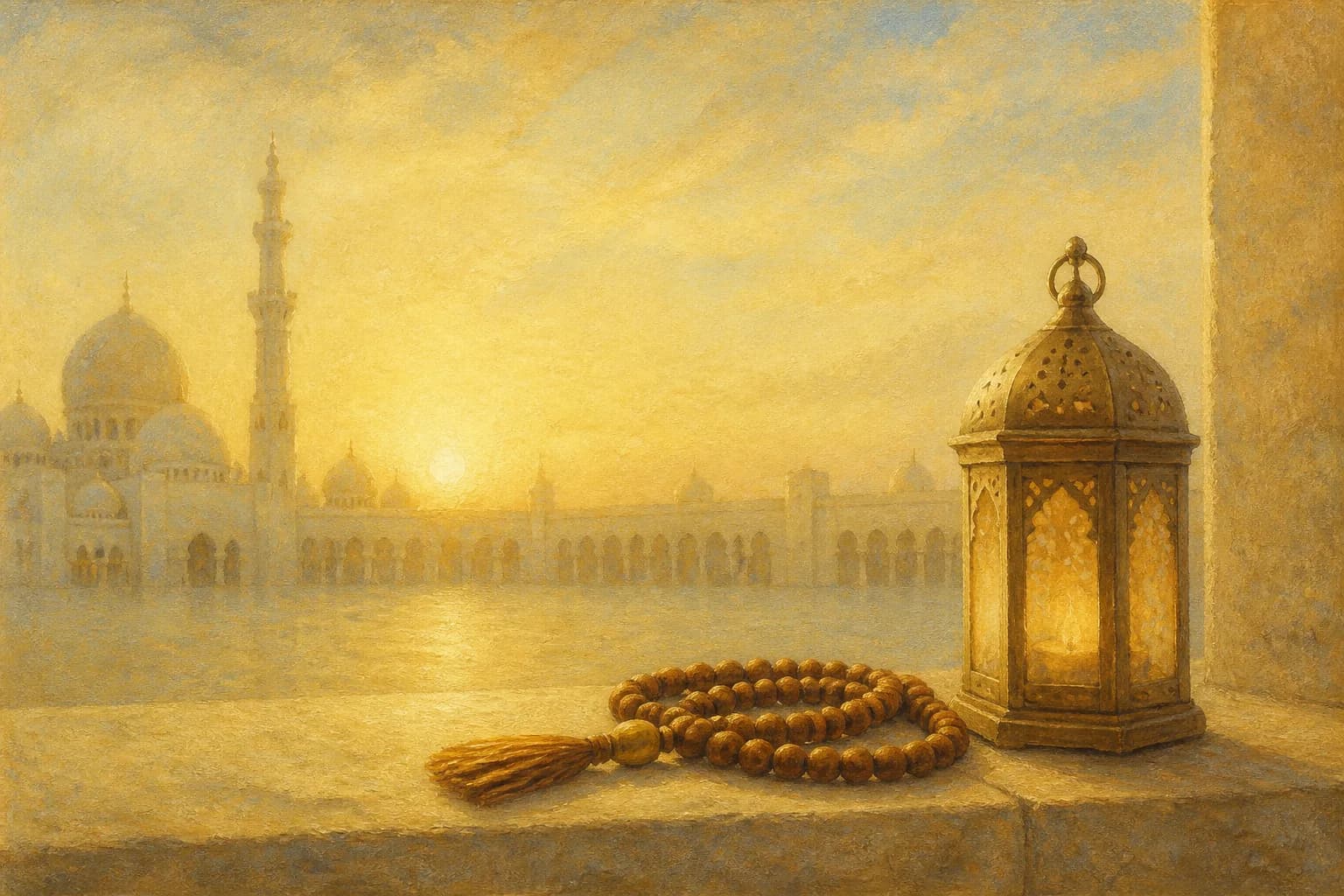

The Most Important Phrase in Any Language
لَا إِلَهَ إِلَّا اللَّهُ
If you have been Muslim your entire life, you may have said La ilaha illallah thousands of times. You heard it whispered at birth, recited it in prayer, said it at the bedside of those departing. But there is a difference between repeating a phrase and understanding the weight it carries — and that difference changes everything about how you say it.
La ilaha illallah is not just the opening of the Shahada. It is the statement that defines what a Muslim believes about reality itself. According to the Prophet ﷺ, it is the best form of dhikr. Understanding it properly is not a theological exercise — it is a practical necessity for anyone who wants their faith to be alive rather than automatic.
What La Ilaha Illallah Actually Means
The phrase breaks into two parts, and both matter equally.
La ilaha — there is no ilah. The Arabic word ilah (إِلَه) does not mean "god" in some abstract distant sense. It means anything treated as an ultimate authority — anything that commands your deepest loyalty, your fundamental obedience, anything you organize your life around as if it were essential. The Arabian society of the Prophet's time had hundreds of aliha — idols, tribal chiefs, wealth, status. La ilaha wipes all of that away. It is a negation so complete it leaves nothing standing.
Illa Allah — except Allah. After the negation comes the affirmation: one reality deserves the position of ilah, and it is Allah alone. Not power. Not wealth. Not reputation. Not your own desires. Allah alone occupies that position.
Together, the phrase is not a passive description of belief. It is a declaration that reshapes the entire hierarchy of your inner life. This is why tawheed — the absolute Oneness of Allah — is the most fundamental concept in Islam. La ilaha illallah is tawheed spoken aloud, enacted in language.
Allah commands in the Quran:
فَاعْلَمْ أَنَّهُ لَا إِلَهَ إِلَّا اللَّهُ
"So know that there is no god but Allah." (Surah Muhammad, 47:19)
The command is not just "say it" — it is "know it." Understanding precedes declaration, and declaration should flow from genuine understanding. The full context of this verse at quran.com connects it directly to seeking forgiveness and sincere action.
And again, in a verse that emphasizes the universality of this reality:
وَإِلَٰهُكُمْ إِلَٰهٌ وَاحِدٌ لَّا إِلَٰهَ إِلَّا هُوَ الرَّحْمَٰنُ الرَّحِيمُ
"And your God is one God. There is no deity except Him, the Entirely Merciful, the Especially Merciful." (Surah Al-Baqarah, 2:163)
Why This Declaration Matters More Than Ever
In a world structured around the constant pursuit of status, influence, income, and comfort, La ilaha illallah is quietly countercultural. It names all of those things as potential aliha — potential false gods — and insists there is only One. That is not abstract theology. It is a daily orientation decision.
Many Muslims today experience a quiet fragmentation: they believe in Allah but live as though other things are ultimate. Social media validation feels urgent. Career advancement feels necessary. Approval from specific people feels essential. None of this is wrong in its proper place, but when these things begin to occupy the center — when you lose sleep over them, miss salah for them, compromise your character to protect them — they have taken the position that belongs only to Allah.
La ilaha illallah is the reset. Said with genuine understanding, it reorganizes everything. If Allah is your ilah — your ultimate authority, your deepest loyalty — then everything else finds its proper size. This connects directly to what iman means as a lived experience, not just a held belief. The entire structure of the five pillars of Islam flows from this foundational declaration.
How to Make La Ilaha Illallah Part of Your Daily Life
The Prophet ﷺ was explicit about the value of this phrase:
"The best dhikr is La ilaha illallah, and the best supplication is Alhamdulillah."
— (Sunan al-Tirmidhi 3383)
This recommendation — verified at sunnah.com — is not an encouragement to say it mechanically while your mind wanders elsewhere. It is a recommendation for intentional, present practice connected to its meaning.
Here are practical ways to build La ilaha illallah into your day:
Make it your anchor before salah. Before standing for prayer, take one breath and say La ilaha illallah once with full attention. Let it remind you of what you are about to do — stand before the One who deserves all worship — before the mechanics of the prayer begin.
Use it in moments of difficulty. When anxiety rises, when something goes wrong, when you feel pulled in too many directions, La ilaha illallah is the internal calibration tool. It does not fix external circumstances, but it reorders internal ones. This pairs naturally with the morning and evening adhkar practice that the Sunnah outlines for beginning and ending the day.
Say it before sleep. The Prophet ﷺ encouraged remembering Allah before sleeping. Ending your day with La ilaha illallah is a natural bookend — releasing the day's anxieties back to their proper size and affirming what remains constant through the night.
Connect it to gratitude. When something good happens — even something small — follow your natural Alhamdulillah with a quiet La ilaha illallah. Good things come from Allah alone. The phrase is true in those moments too, not only in hardship.
Reflect on it, not just recite it. Once a week, sit with this phrase for five minutes. Ask: what things in my life are currently competing for the position of ilah? What would it look like if Allah genuinely occupied that position more fully? DeenBack's guide to daily dhikr habits explores how structured dhikr practice transforms from repeated words into lived conviction over time.
Do you feel your duas are unanswered?
Have you read the dua properly? Learn authentic duas, understand their meanings, and call upon Allah with greater confidence through DeenUp.
Take the Dua Quiz
Signs That This Phrase Is Becoming Real for You
Progress with La ilaha illallah is interior and gradual, but it has recognizable markers.
You notice it when something you once chased loses its grip. When a promotion, a compliment, or an outcome that once felt essential no longer feels worth compromising your deen for — that is La ilaha illallah working at depth. When you default to patience in difficulty because you genuinely believe that the One who has authority over this situation is Allah — not you, not other people — that is the phrase becoming a conviction rather than a recitation.
Your salah also changes. When La ilaha illallah is real to you, standing before Allah in prayer feels different. The connection that Demi Manifest explores in their writing on Islamic purpose and clarity — real faith reshaping not just what we believe but how we experience everything — is exactly what happens when this declaration moves from the tongue to the heart.
Common Questions
Is saying La ilaha illallah alone enough to become Muslim? It is the beginning, but not complete on its own. The full Shahada includes the second part: Muhammadun rasulullah — Muhammad is the Messenger of Allah. Both together constitute the declaration of faith and the first pillar of Islam. Neither is sufficient without the other.
Does it count if I say it out of habit without thinking? Scholars distinguish between habitual recitation and genuine dhikr. Habitual recitation maintains the verbal practice and carries some reward. But the transformative effect of La ilaha illallah — the internal reordering — comes with presence of heart. The goal is for the meaning and the saying to happen together.
Can children be taught this phrase? Yes — and this is sunnah. Teaching children the declaration of faith from a young age is a prophetic tradition. It is often the first meaningful phrase whispered into a newborn's ear. Teaching its meaning in age-appropriate terms helps children build faith on a genuine foundation rather than inherited habit alone.
What if I say it but feel disconnected from its meaning? This experience is very common, and acknowledging it honestly is itself a form of spiritual awareness. The scholars say that feeling the gap between what you say and what you feel is a beginning. Start by asking Allah to make the meaning real to you. Then study it — understanding the meaning intellectually often opens the door to feeling it experientially over time.
Closing
La ilaha illallah — there is no deity worthy of worship except Allah. You have said it. You will say it again today. The invitation is to mean it more deeply each time — to let it gradually reshape what you chase, what you fear, and what you rest in when everything else feels uncertain. That is a project that takes a lifetime, and it is the most worthwhile one you will ever undertake.
Do you feel your duas are unanswered?
Have you read the dua properly? Learn authentic duas, understand their meanings, and call upon Allah with greater confidence through DeenUp.
Take the Dua QuizFrequently Asked Questions
What does La ilaha illallah mean in Arabic?
La ilaha illallah (لَا إِلَهَ إِلَّا اللَّهُ) means there is no deity worthy of worship except Allah. The phrase has two parts: a negation — la ilaha, meaning no god — and an affirmation — illa Allah, meaning except Allah alone.
Is La ilaha illallah the same as the Shahada?
La ilaha illallah is the first part of the Shahada. The complete declaration of faith is: La ilaha illallah, Muhammadun rasulullah — there is no deity worthy of worship except Allah, and Muhammad is the Messenger of Allah. Both parts together constitute entry into Islam.
How many times should I say La ilaha illallah daily?
There is no single fixed number required. The Prophet ﷺ encouraged abundant dhikr. Some scholars reference saying it 100 times in the morning and evening as part of the prophetic adhkar. The key is consistency and presence of heart, not quantity alone.
What is the reward for saying La ilaha illallah?
The Prophet ﷺ said it is the best form of dhikr (Tirmidhi 3383). He also said that whoever says it sincerely will enter Paradise (Bukhari 128), and that renewing your faith through it is a constant source of spiritual strengthening.
Can La ilaha illallah be said at any time of day?
Yes. It can be said at any time — during morning and evening adhkar, after salah, while walking, before sleep, or in moments of difficulty and gratitude. The Prophet ﷺ encouraged making it a constant presence on the tongue and in the heart.