

- Authors

- Name
- Ahmad
- Role
- Senior Marketing Manager, Islamic education • DeenUp
بِسْمِ اللهِ الرَّحْمٰنِ الرَّحِيْمِ
In the name of God, the Most Gracious, the Most Merciful.
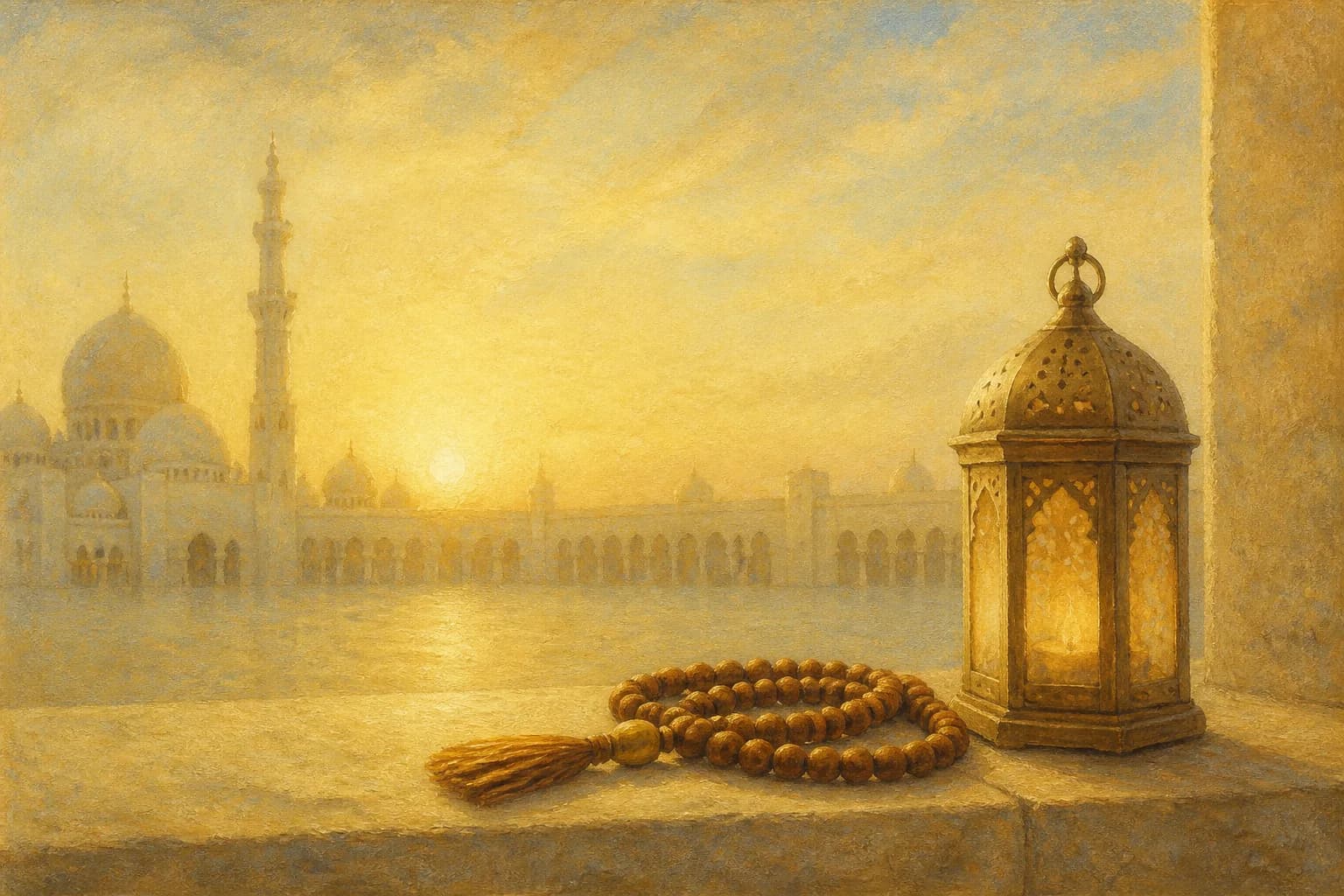

The Arabic phrase سُبْحَانَ اللَّهِ (Subhanallah) is among the most frequently spoken words in a Muslim's life — after each prayer, in response to something breathtaking, and woven through the Quran in dozens of forms. Yet many Muslims say it out of habit without grasping the depth it carries.
Subhanallah is not just an exclamation. It is an act of worship, a theological declaration, and one of the phrases the Prophet Muhammad ﷺ described as beloved to Allah and heavy on the scale of good deeds.
What Subhanallah Actually Means
Subhanallah (سُبْحَانَ اللَّهِ) means "How perfect is Allah" or "Glory be to Allah." The root word s-b-h (س-ب-ح) in Arabic carries the sense of glorification, exaltation, and declaring that something is completely free of defect. In Islamic theology, this concept is called tanzih — affirming that Allah is transcendent and wholly above any imperfection, partner, or limitation.
When you say Subhanallah, you are making a statement: Allah is perfect, and whatever flaw or inadequacy exists in the world does not apply to Him.
The Quran uses forms of this glorification throughout. Surah Al-Isra (17:43) declares:
سُبْحَانَهُ وَتَعَالَى عَمَّا يَقُولُونَ عُلُوًّا كَبِيرًا
"Exalted is He and high above what they say by great sublimity." — (Surah Al-Isra, 17:43)
And in Surah Al-Isra (17:44), Allah reveals that every element of creation glorifies Him:
"The seven heavens and the earth and all that is therein praise Him, and there is not a thing but glorifies His praise, but you do not understand their glorification." — (Surah Al-Isra, 17:44)
Subhanallah connects you to a chorus of glorification that never ceases — from the stars to the rain to the beat of every heart.
The Prophet ﷺ also specified a particular extended form of this phrase:
سُبْحَانَ اللَّهِ وَبِحَمْدِهِ، سُبْحَانَ اللَّهِ الْعَظِيمِ
"Subhan Allahi wa bihamdihi, Subhan Allahil Azim." "How perfect is Allah and His is the praise. How perfect is Allah, the Magnificent." — (Sahih al-Bukhari 6682, Sahih Muslim 2694)
He ﷺ said these two phrases are "light on the tongue, heavy in the balance, and beloved to the Most Merciful."
The Spiritual Weight of Glorifying Allah
To glorify Allah (tasbeeh) is to consciously recognize the unbridgeable distance between human limitation and divine perfection — not with despair, but with awe and love. It is the act of the heart turning toward what is eternal and flawless.
This is why Subhanallah is not just reactive (something you say when surprised) but also proactive. The Prophet ﷺ instructed believers to say Subhanallah 33 times after each of the five daily prayers:
"Say SubhanAllah 33 times, Alhamdulillah 33 times, and Allahu Akbar 33 times." — (Sahih Muslim 597)
This practice, done five times a day, means a committed Muslim says Subhanallah at least 165 times every day — not including the times it arises naturally in conversation, dhikr, and Quran recitation. Over a lifetime, Subhanallah becomes inseparable from the rhythms of a believing heart.
Why Subhanallah Matters for Modern Muslims
We live in a world that celebrates human achievement: technology that defies old limits, art that moves millions, science that maps galaxies. Islam has no quarrel with that admiration. But Subhanallah redirects the credit upstream.
When you see something extraordinary — a sunrise, a newborn, a mathematical elegance — saying Subhanallah trains your heart to look beyond the object to the Creator behind it. This is a form of muraqabah (spiritual watchfulness) that takes no extra time.
In the modern context, this matters especially because distraction is relentless. Social media, news, notifications — all compete for the attention that dhikr asks you to return to Allah. Subhanallah becomes a reset button: one phrase that reorients the heart toward what is real and lasting.
The Prophet ﷺ also taught that Subhanallah has a practical effect — the phrase Subhan Allahi wa bihamdihi said 100 times wipes away sins even if they are as numerous as the foam of the sea (Sahih al-Bukhari 6405). This is not a transaction but a sign of how deeply Allah responds to the heart that turns to Him in glorification.
For more on building Islamic phrases into daily life, see our guides to the meaning of Bismillah, the meaning of Inshallah, and the meaning of Mashallah — together they form a vocabulary of God-consciousness for every moment.
Bringing Subhanallah Into Every Day
Here are the primary ways the Sunnah guides us to practice Subhanallah:
After each of the five prayers (33 times). This is the most consistent daily practice. The Prophet ﷺ specifically prescribed Subhanallah 33 times after every salah (Sahih Muslim 597). Whether you use prayer beads (misbaha) or count on your fingers, this practice grounds the rest of your day in remembrance. The fajr morning routine is a particularly powerful place to anchor this — beginning the day with post-prayer dhikr sets a tone that carries through to sunset.
In response to something remarkable. Subhanallah is the Islamic "wow" — spiritually loaded. Whether you encounter extraordinary beauty, an unexpected kindness, or something that silences you, saying Subhanallah directs that awe toward Allah. It makes wonder an act of worship.
As part of morning and evening adhkar. The extended form Subhan Allahi wa bihamdihi (سُبْحَانَ اللَّهِ وَبِحَمْدِهِ) is specifically highlighted in hadith as effective and beloved. Building it into your morning and evening routine transforms ordinary time into worship. The Islamic morning routine shows how Subhanallah fits naturally alongside other adhkar to create a spiritually oriented start to the day.
When reading the Quran. Many reciters pause to say Subhanallah or its honorific Subhanahu wa ta'ala (سُبْحَانَهُ وَتَعَالَى) when the text describes Allah's attributes. This is a living engagement with what you are reading — not passive recitation but responsive worship.
Do you feel your duas are unanswered?
Have you read the dua properly? Learn authentic duas, understand their meanings, and call upon Allah with greater confidence through DeenUp.
Take the Dua Quiz
For a deeper collection of remembrances for every part of your day, explore our guide to daily duas for Muslim life and our broader introduction to what is barakah in Islam.
Signs of a Growing Practice
You will know Subhanallah is becoming part of you when:
- You say it reflexively in response to beauty, news, or wonder — without thinking "oh, I should say that"
- Your post-prayer dhikr feels grounding rather than obligatory, a moment you look forward to rather than rush through
- You notice a quality of awe returning to ordinary things — rain, bread, conversation — because Subhanallah has been reframing them
- The phrase Subhan Allahil Azim — "How perfect is Allah, the Magnificent" — rises in your heart when you encounter the vastness of creation
These are signs that glorification of Allah is moving from the lips to the heart, which is where the real transformation happens.
Common Questions About Subhanallah
What is the difference between Subhanallah, Alhamdulillah, and Allahu Akbar? These three phrases work together and are often said as a group. Subhanallah glorifies Allah (He is perfect). Alhamdulillah praises and thanks Allah. Allahu Akbar declares that Allah is greater than everything. Together, they map the full range of Islamic gratitude and awe.
Can Subhanallah be said silently? Yes. Dhikr can be said aloud, whispered, or silently in the heart — all are valid. The Prophet ﷺ taught that the best dhikr is that which is said with presence of heart (khushu'), not merely with the tongue.
How does Subhanallah relate to Mashallah? Both are expressions of acknowledging Allah, but they work differently. Subhanallah is a direct act of glorification directed at Allah Himself — an assertion of His perfection. Mashallah acknowledges Allah's will and ownership over a specific blessing or event. When you witness something beautiful, you might say Mashallah (acknowledging it is by Allah's will) and Subhanallah (glorifying Allah for His power to create it). Read more in our article on the meaning of Mashallah.
Is there a best time to say Subhanallah? The post-prayer dhikr (33 times after each salah) is the most established Sunnah. Beyond that, morning and evening adhkar are the next most recommended. But the Quran also describes the entire creation as glorifying Allah continuously — which suggests that Subhanallah, at its deepest, has no off-season.
Closing
Subhanallah (سُبْحَانَ اللَّهِ) is one of the most powerful phrases in a Muslim's daily life — light on the tongue, immense in meaning, and beloved to Allah. It costs nothing, requires no preparation, and can transform any ordinary moment into an act of worship.
Start with the post-prayer dhikr. Then let it spill into your day: when you see the sky change color, when a verse of the Quran moves you, when life reveals a moment of grace you did not earn. Over time, what begins as a deliberate habit becomes an instinct — and the instinct of glorifying Allah is among the finest a heart can develop.
Do you feel your duas are unanswered?
Have you read the dua properly? Learn authentic duas, understand their meanings, and call upon Allah with greater confidence through DeenUp.
Take the Dua QuizFrequently Asked Questions
What does Subhanallah mean in English?
Subhanallah (سبحان الله) means 'How perfect is Allah' or 'Glory be to Allah.' It is an act of glorifying Allah and declaring that He is free from all imperfection and deficiency.
When should I say Subhanallah?
Say Subhanallah after each of the five daily prayers (33 times), when you witness something awe-inspiring, or as part of your morning and evening dhikr. It is one of the most versatile phrases in Islamic worship.
What is the difference between Subhanallah, Alhamdulillah, and Allahu Akbar?
Subhanallah glorifies Allah's perfection. Alhamdulillah praises and thanks Allah. Allahu Akbar declares Allah's greatness above everything. Together, they form the backbone of Islamic dhikr and are said 33 times each after every prayer.
Is Subhanallah in the Quran?
Yes, forms of tasbeeh (glorification using the root s-b-h) appear throughout the Quran. Surah Al-Isra (17:43) states: Exalted is He and high above what they say by great sublimity. The entire creation glorifies Allah, as described in Surah Al-Isra (17:44).