

- Authors

- Name
- Ahmad
- Role
- Senior Marketing Manager, Islamic education • DeenUp
بِسْمِ اللهِ الرَّحْمٰنِ الرَّحِيْمِ
In the name of God, the Most Gracious, the Most Merciful.
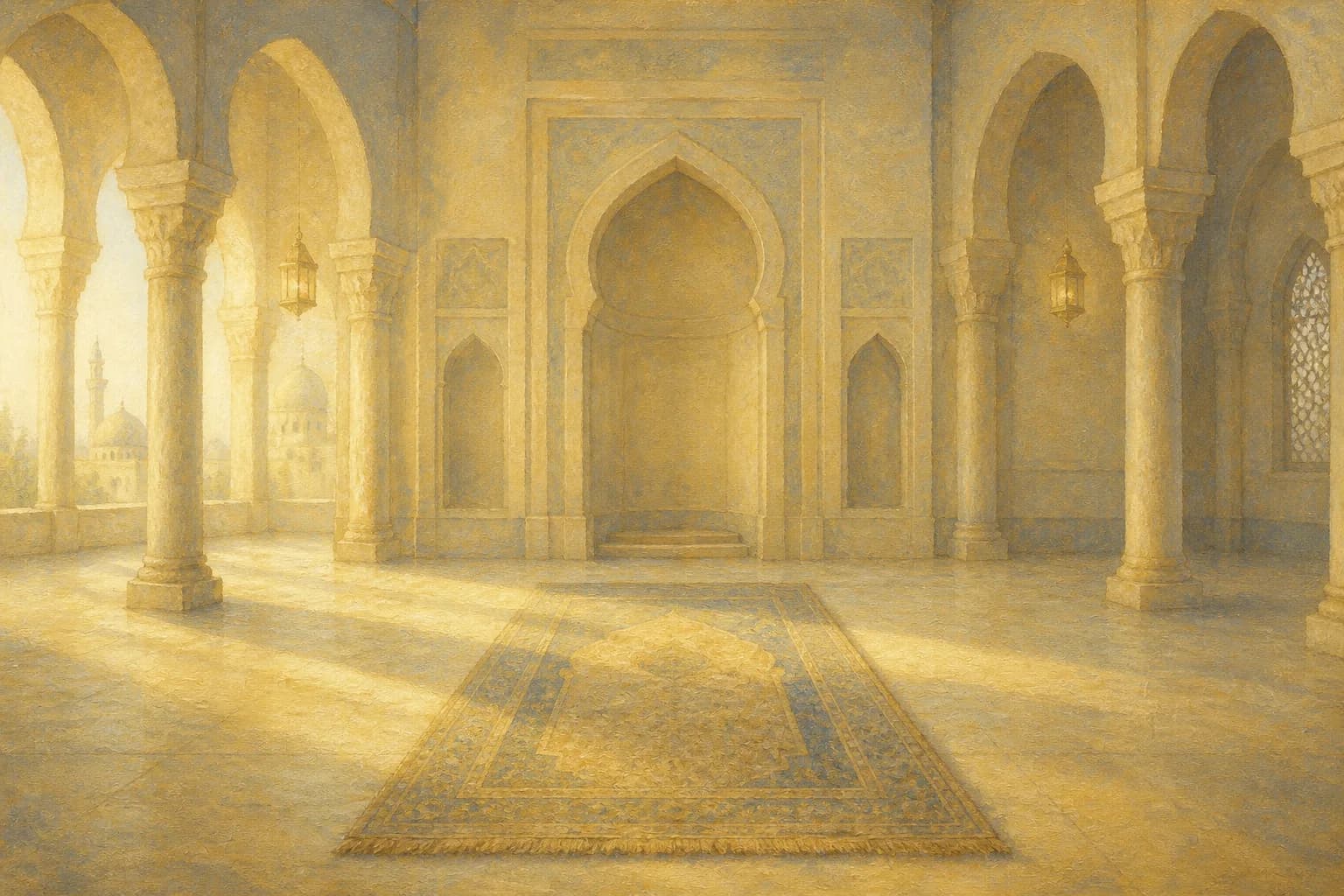

Asr Prayer and the Afternoon Hours
Of all five daily prayers, Asr falls in the one window of the day that is easiest to lose — the busy afternoon, when work presses in, meetings run long, and the call to prayer can slip past unnoticed. Yet the Quran specifically singles this prayer out. Understanding how many rakats Asr has and why it holds such weight helps transform it from an obligation you remember to one you actively protect.
How Many Rakats Is Asr Prayer?
Asr prayer is 4 obligatory Fard (fard) rakats, with an additional 4 voluntary Sunnah rakats recommended before the Fard. The 4 Fard rakats are the core obligation for every adult Muslim. The Prophet Muhammad ﷺ is reported to have said: "May Allah have mercy on one who prays four rakats before Asr prayer." (Abu Dawud 1271, graded hasan by Al-Tirmidhi) While the Sunnah rakats are not required, scholars consistently praise those who observe them. The total, when praying the full Sunnah, is 8 rakats.
The Full Rakat Count for All Five Prayers
To understand Asr in context, here is the complete breakdown of the five daily prayers with their Fard and voluntary rakats:
| Prayer | Sunnah (Before) | Fard | Sunnah (After) | Notes |
|---|---|---|---|---|
| Fajr | 2 (strong Sunnah) | 2 | — | Prayed aloud |
| Dhuhr | 4 | 4 | 2 | Prayed silently |
| Asr | 4 (recommended) | 4 | — | Prayed silently |
| Maghrib | — | 3 | 2 | Prayed aloud |
| Isha | — | 4 | 2 + Witr (3) | Prayed aloud |
Total Fard rakats per day: 17. Total including all Sunnah and Witr: approximately 40. This table is a quick reference — for the full step-by-step of how to pray each rakat, our guide on how to pray salah covers every position, recitation, and movement in detail.
Why the Quran Singles Out Asr
The Quran contains a remarkable instruction specifically about Asr. In Surah Al-Baqarah:
حَافِظُوا عَلَى الصَّلَوَاتِ وَالصَّلَاةِ الْوُسْطَىٰ وَقُومُوا لِلَّهِ قَانِتِينَ
"Guard strictly the five obligatory prayers — especially the middle prayer — and stand before Allah with devotion." — (Surah Al-Baqarah, 2:238)
The phrase al-salat al-wusta (الصَّلَاةِ الْوُسْطَىٰ) — the middle prayer — is identified by the overwhelming majority of scholars as Asr. This identification is further confirmed by an explicit hadith: during the Battle of the Trench, when the enemy caused the companions to miss Asr, the Prophet ﷺ said: "They occupied us from the middle prayer, Asr prayer, until the sun set." (Sahih al-Bukhari 596)
That Asr is mentioned by name in the Quran as deserving special protection tells us something important: it is the prayer most likely to be lost in the flow of the day. The command is not to pray it occasionally but to guard it.
When Is Asr Prayer Time?
Asr time begins when the shadow of an upright object equals its own height (plus the length of the midday shadow), and it extends until sunset. In practice, this means:
- Preferred time (ikhtiyari): From Asr start until the sun begins to turn yellow — scholars describe this as the ideal window.
- Disliked but valid (makruh): From when the sun turns yellow until just before sunset — the prayer is still valid but discouraged.
- Time expires: At sunset. If the sun has set, Asr is missed.
The Prophet ﷺ said: "Whoever catches one rakat of Asr before the sun sets has caught Asr." (Sahih al-Bukhari 579) This means even catching a single rakat before sunset counts — though deliberately waiting until the last moment is not the spirit of the command to guard this prayer.
How to Pray Asr: Step by Step
Asr consists of 4 Fard rakats, prayed silently (not aloud). Here is a summary of the structure:
- Make intention (niyyah) in your heart: "I intend to pray 4 rakats of Asr for Allah."
- Say Takbeer: Allahu Akbar (اللَّهُ أَكْبَرُ) — raise hands to earlobes.
- Recite Al-Fatihah in every rakat. In the first two rakats, follow with another surah.
- Perform ruku (bowing) and sujood (prostration) as in all prayers.
- After the second rakat, sit for the first Tashahhud.
- Complete the third and fourth rakats — Al-Fatihah only, no additional surah.
- After the fourth rakat, sit for the final Tashahhud and send salawat on the Prophet ﷺ.
- End with Tasleem — as-salamu alaykum wa rahmatullah to the right, then left.
For focused, unhurried guidance through every movement and recitation, how to improve concentration in salah and what is khushoo in salah are worth reading alongside this prayer.
Asr and the Modern Muslim Day
The afternoon window — roughly 3–5 PM depending on season and latitude — is genuinely one of the most contested parts of the day. Most people are in the middle of work, school, or errands. That is precisely why the Quran commands guarding it rather than merely performing it.
Asr on time is an act of putting Allah before the momentum of the afternoon. Practically:
- Set a phone reminder for Asr time in your city. Apps with accurate local prayer times can make this effortless.
- If you are at work, pray in a quiet room, stairwell, or designated prayer area — even a short break is enough for 4 rakats.
- If you also want to pray the 4 Sunnah rakats before, arrive a few minutes early.
DeenBack's guide on improving your salah focus has practical techniques for making each rakat more present — not just going through the motions. And the Demi Manifest piece on mindful prayer explores how to cultivate a genuine heart connection in salah, which transforms Asr from a checkbox into a real conversation with Allah.
Still struggling to perform salah properly?
Learn each prayer step by step, understand what you are saying, and build a consistent salah habit with clear, scholar-approved lessons in DeenUp.
Take the Salah Quiz
The Reward of Protecting Asr
The Prophet ﷺ connected consistent Asr observance to the highest reward: "Whoever prays the two cool prayers (al-bardayn) — Fajr and Asr — will enter paradise." (Sahih al-Bukhari 574) The word bardayn refers to the cooler parts of the day — dawn and afternoon — the two periods historically most likely to be neglected. Protecting Asr is therefore not just an obligation; it is a gateway.
After you pray, make the most of the post-Asr moments. Our collection of duas to read after salah includes the full post-prayer adhkar that the Prophet ﷺ taught, and our guide to Sunnah prayers shows how to structure voluntary worship around your Fard prayers throughout the day. Understanding the full context of the five prayers — including the benefits and wisdom of Fajr — deepens your appreciation for the entire salah framework.
Signs You Are Building a Consistent Asr Practice
You know Asr is becoming a protected part of your day when:
- You notice the Asr call to prayer even in noisy environments
- You plan afternoon appointments around the prayer window rather than praying whenever is convenient
- Finishing work to go pray feels natural, not like an interruption
- You begin to feel unsettled when Asr time is near and you have not yet prayed
That internal alertness is the beginning of khushoo (خُشُوع) — the quality of heart presence in salah — working its way into the structure of your day.
Still struggling to perform salah properly?
Learn each prayer step by step, understand what you are saying, and build a consistent salah habit with clear, scholar-approved lessons in DeenUp.
Take the Salah QuizFrequently Asked Questions
How many rakats is Asr prayer?
Asr prayer consists of 4 obligatory Fard rakats. Many scholars also recommend 4 voluntary Sunnah rakats before the Fard, based on a hadith of the Prophet Muhammad. If you pray the full Sunnah, Asr totals 8 rakats — though only the 4 Fard are required of every Muslim.
When does Asr prayer time begin and end?
Asr time begins when the shadow of an object equals its own height plus the length of its midday shadow, and ends at sunset. Scholars agree that praying before the sun turns yellow is strongly recommended, as the Prophet Muhammad described delaying until then as a sign of the hypocrite.
Is there a Sunnah prayer before Asr?
Yes. Four Sunnah rakats before Asr are recommended. The Prophet Muhammad said: May Allah have mercy on one who prays four rakats before Asr prayer. (Abu Dawud 1271, graded hasan by Al-Tirmidhi) These are voluntary and not sinful to skip, but scholars praise their consistent observance.
What happens if I miss Asr prayer?
Missing Asr is a serious matter. The Prophet Muhammad said that missing Asr is as if one has lost their family and wealth (Sahih al-Bukhari 553). If missed unintentionally due to sleep or forgetfulness, it should be made up as soon as remembered. Deliberate abandonment is a major sin in the view of most scholars.
What is the middle prayer mentioned in the Quran?
The vast majority of scholars, including the Hanafi, Hanbali, and Shafi schools, identify the middle prayer (al-salat al-wusta) in Surah Al-Baqarah (2:238) as Asr. Several authentic hadiths, including reports in Sahih al-Bukhari and Sahih Muslim, confirm this identification explicitly.
How many total Fard rakats are in all five daily prayers?
The five daily prayers contain 17 Fard rakats in total: Fajr has 2, Dhuhr has 4, Asr has 4, Maghrib has 3, and Isha has 4. When the voluntary Sunnah and Witr prayers are added, a Muslim who prays all the recommended prayers completes approximately 40 or more rakats in a day.
What should I recite in Asr prayer?
In every rakat of Asr, recite Surah Al-Fatihah — this is mandatory. In the first two rakats, add another surah or Quranic verses after Al-Fatihah. The third and fourth rakats include only Al-Fatihah. Asr is prayed silently (not aloud), unlike Fajr, Maghrib, and Isha prayers.