

- Authors

- Name
- Ahmad
- Role
- Senior Marketing Manager, Islamic education • DeenUp
بِسْمِ اللهِ الرَّحْمٰنِ الرَّحِيْمِ
In the name of God, the Most Gracious, the Most Merciful.
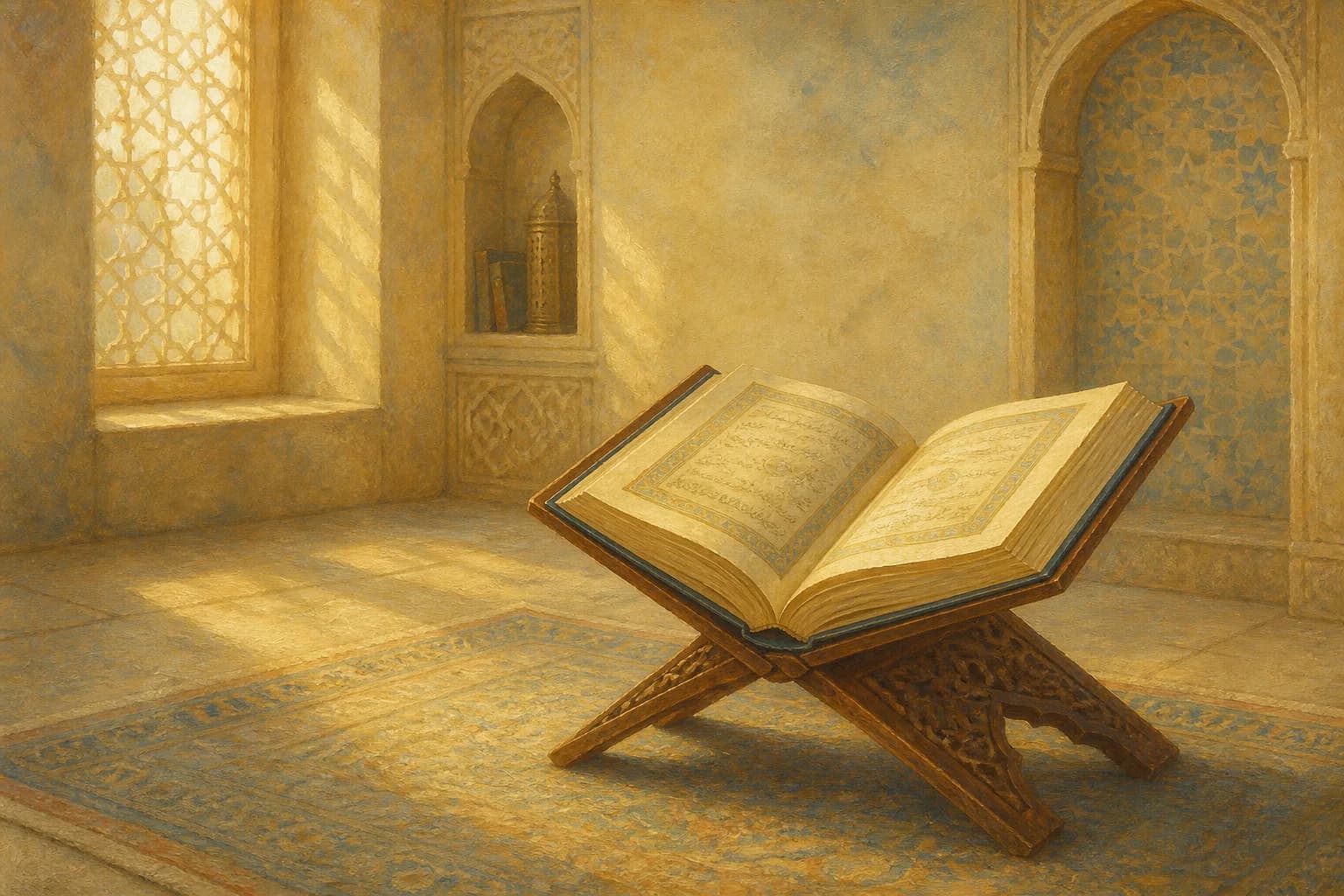

Why Choosing the Right Quran Translation Matters
For English-speaking Muslims, the Quran translation you reach for every day shapes how deeply you understand your faith. An archaic or poorly worded translation can make the Quran feel distant. A clear, accurate one can make a verse feel like it was written for your exact situation, right now.
The Prophet ﷺ said: "The best of you are those who learn the Quran and teach it." (Sahih al-Bukhari 5027) That learning has always included understanding, not just recitation. For those whose first language is English, a good translation is the bridge between the Arabic they are learning and the meaning they need to carry in their hearts.
This guide covers the major English translations honestly — what each does well, who it is for, and which to pick depending on where you are in your Quran journey.
What Is the Best English Quran Translation?
The best English Quran translation for most Muslims is the Sahih International (1997), widely recognized for its accuracy and clear modern language. For readability, Dr. Mustafa Khattab's The Clear Quran (2015) is the top recommendation for new Muslims and younger readers. Both are free on quran.com with the Arabic text, transliteration, and audio. No single translation is perfect for every purpose — the right choice depends on whether you are reading for understanding, study, or learning alongside Arabic.
The Major English Translations Compared
Sahih International — The Accuracy Standard
Published in 1997 by three American Muslim women scholars in Saudi Arabia, the Sahih International is widely considered the most accurate mainstream English translation for modern readers. It does not try to be literary — it tries to be precise. Each verse reads as clear, direct prose. The word choices are carefully selected to reflect the Arabic meaning without imposing interpretive layers.
This is the translation most Islamic scholars in the English-speaking world recommend as a starting point because it does not mislead. When scholars quote Quran in English, Sahih International is frequently the default.
It is freely available in full on quran.com alongside the original Arabic, audio recitation, and transliteration.
The Clear Quran — The Readability Choice
Dr. Mustafa Khattab's The Clear Quran (2015) prioritizes making the Quran genuinely readable in English without sacrificing accuracy. Where Sahih International gives you precision, The Clear Quran gives you flow. Sentences read naturally. The meaning is transparent.
Khattab includes brief bracketed notes that clarify implied meaning without requiring the reader to consult a tafsir for basic comprehension. Many Islamic centers and Quran classes for adults recommend this translation specifically because new Muslims can understand it on the first read.
For those just starting their Quran journey, see the guide to reading Quran as a beginner — it covers both the Arabic and English reading practices together.
Yusuf Ali — The Classical Option
Abdullah Yusuf Ali's translation, completed in 1934, was the standard English Quran for most of the twentieth century. Its language is poetic and Shakespearean, which some readers find dignified and others find alienating. The footnotes and commentary are extensive and often insightful from a traditional perspective.
The main limitation is that the archaic English creates a distance for modern readers — thee, thou, hath — that can make first-contact reading feel like studying a historical document rather than the word of Allah. Scholars who grew up with this translation often still use it; those coming to the Quran for the first time usually fare better with a more recent version.
Muhammad Asad — For Deeper Inquiry
Muhammad Asad's The Message of the Quran (1980) is a literary and analytical translation written by a European convert with exceptional Arabic and scholarly credentials. The translation is thoughtful and the commentary is extensive, engaging seriously with classical tafsir and rational interpretation.
It is not recommended as a first translation because some of Asad's interpretive choices diverge from majority scholarly positions. But for readers who have a solid foundation and want to engage intellectually with the Quran's language, it is a serious work worth studying.
Maariful Quran — When You Are Ready for Tafsir
Mufti Shafi Usmani's Maariful Quran is technically a tafsir, not just a translation — it includes both a clear Urdu-based English translation and multi-page commentary on each passage. If you want to understand why a verse means what it means, the historical context, the ruling implications, and the scholarly disagreements, this is the resource.
It is not for daily reading — it is for study. The benefits of reading Quran daily explains why building a daily reading habit with a clear translation comes first, before diving into deep tafsir.
Translation Comparison at a Glance
| Translation | Translator | Style | Best For |
|---|---|---|---|
| Sahih International | Saheeh International | Precise, modern | Daily reading and general reference |
| The Clear Quran | Dr. Mustafa Khattab | Natural, flowing | New Muslims and younger readers |
| Yusuf Ali | Abdullah Yusuf Ali | Poetic, classical | Traditional study with detailed notes |
| Muhammad Asad | Muhammad Asad | Analytical, detailed | Academic and intellectual readers |
| Maariful Quran | Mufti Shafi Usmani | Tafsir + translation | Structured Quranic study |
Why This Matters for English-Speaking Muslims Today
The Quran describes itself as تِلَاوَةُ الْقُرْآنِ (tilawat al-Quran) — recitation — and the reward is specifically tied to the Arabic letters. The Prophet ﷺ said: "Whoever reads a letter from the Book of Allah, he will have a reward. And that reward will be multiplied by ten." (Tirmidhi 2910) That reward is for the Arabic.
But understanding is not separate from worship — it is part of it. The Quran commands reflection: "Then do they not reflect upon the Quran?" (Surah An-Nisa, 4:82). An English translation is how most English-speaking Muslims reflect on what they are reciting.
The practical implication: read in Arabic, understand in English. Use a translation not as a substitute for the Quran but as a companion to it. Read the Arabic first, even if you do not understand it yet. Then read the English to understand what you just recited.
This pairing — tafsir and tilawah — is how classical scholars approached the Quran. For modern tools that support this combined practice, quran.com displays Arabic and English side by side with word-by-word breakdown.
Want the Qur'an to feel easier to understand?
Read with clear contextual insights, revisit the verses that matter to you, and build a steady daily Qur'an habit with DeenUp.
Take the Qur'an Quiz
How to Use a Translation Effectively Every Day
The most useful thing a translation does is make the daily verse comprehensible. When you read a verse in Arabic and then read it in English, the meaning settles into memory differently than reading only one.
Start with the daily verse. Pick one verse each morning and read it in both Arabic and your chosen English translation. Do not rush through it. Read it slowly, sit with the meaning, and carry it into the day. The benefits of reading Quran daily documents the spiritual and psychological impact of consistent daily reading.
Use word-by-word breakdowns for verses you recite in prayer. For the surahs you say in every prayer — Al-Fatihah, Al-Ikhlas, Al-Falaq, An-Nas — knowing the word-by-word meaning transforms salah from recitation to conversation. Quran.com has this feature built in.
Read tafsir on the weekend, not daily. Save the detailed commentary for a slower study session. Daily reading with a clear translation should be fast and consistent; deep study is a separate practice.
Progress toward the Arabic. The goal is not to need the English forever. As you learn more Arabic — even basic vocabulary — the Arabic becomes increasingly intelligible on its own. The guide to how to memorize Quran explains how consistent Arabic exposure naturally builds comprehension over time.
For a structured approach to learning Quranic Arabic alongside reading, the DeenBack guide to seeking Islamic knowledge offers a practical framework for building Quran study as a daily habit.
Signs That Your Translation Is Working for You
Progress with a Quran translation is not measured by how fast you read. It is measured by whether the meaning stays with you.
You are using your translation well when:
- Verses come to mind during your day without you looking for them
- You can paraphrase a verse you have recently read in your own words
- You notice connections between different parts of the Quran you have read
- Your understanding of a ruling or concept deepens because you read the verse behind it
If after weeks of daily reading the verses feel abstract and disconnected, the translation may not be the right one for your reading level. Try The Clear Quran if you have been using Yusuf Ali, or try reading with audio recitation running simultaneously.
The Demi Manifest piece on living Islam daily explores how Quranic engagement — not just reading, but understanding — shapes character and daily choices in ways that other forms of Islamic learning do not.
For a curated list of supporting resources beyond translation, see the Quran resources guide, which covers apps, audio, and structured learning tools available for English speakers.
The Yaqeen Institute has published research on how Muslims engage with the Quran in English-speaking contexts, including recommendations on translation and study — worth reading for those who want a scholarly perspective on this question.
The Quran Deserves Your Best Effort
The Quran says of itself: "Indeed, it is a noble Quran, in a Register well-protected. None touch it except the purified." (Surah Al-Waqi'ah, 56:77-79) Choosing a reliable translation is part of approaching the Quran with the care those verses call for.
"Recite the Quran, for it will come as an intercessor for its reciters on the Day of Resurrection." (Sahih Muslim 804) That intercession is not conditional on understanding every word — but understanding deepens the relationship, and a clear translation is the most accessible way to build that understanding.
Start with Sahih International or The Clear Quran. Read daily. Read both Arabic and English together, even imperfectly. The translation is not the destination — it is the door.
Want the Qur'an to feel easier to understand?
Read with clear contextual insights, revisit the verses that matter to you, and build a steady daily Qur'an habit with DeenUp.
Take the Qur'an QuizFrequently Asked Questions
Which English Quran translation is most accurate?
The most accurate English Quran translation, according to many Islamic scholars, is the Sahih International for its precision, or Dr. Mustafa Khattab The Clear Quran for its balance of accuracy and readability. Both are vetted by scholars and freely available on quran.com alongside the original Arabic text.
Is the Sahih International Quran translation reliable?
The Sahih International Quran translation is considered reliable and is widely endorsed by Islamic organizations and scholars worldwide. Published in 1997, it prioritizes accuracy over literary style and uses clear modern English. It is the default translation displayed on quran.com and has been reviewed by numerous Islamic scholars.
What is the best Quran translation for new Muslims?
The best Quran translation for new Muslims is generally The Clear Quran by Dr. Mustafa Khattab (2015). It uses natural, accessible language, includes brief clarifying notes in brackets, and avoids archaic phrasing. Many Islamic centers recommend it for English-speaking converts, young adults, and those returning to Islam.
Can I read the Quran in English for my daily recitation?
Reading the Quran in English for daily understanding is valuable and encouraged, but it does not carry the same tilawah reward as reading the Arabic. The reward of recitation comes from the Arabic text itself. Reading an English translation alongside the Arabic deepens comprehension and strengthens your relationship with the Quran.
What is the difference between a Quran translation and a tafsir?
A Quran translation renders the meaning of the Arabic into another language, while a tafsir is a detailed scholarly commentary explaining context, language, and rulings. A tafsir in English, such as the Maariful Quran by Mufti Shafi Usmani, goes far deeper than a translation and is suited for study rather than daily reading.
Which Quran translation is recommended for children?
For children, The Clear Quran by Dr. Mustafa Khattab is widely recommended for its simple, accessible English. Some Islamic educators also suggest the Dar ul-Salam Noble Quran. The most important factor for children is that the language is easy to follow alongside the Arabic text they are beginning to memorize.
Is the Yusuf Ali Quran translation still worth reading?
The Yusuf Ali Quran translation (completed 1934) remains historically significant and widely circulated, but its Shakespearean-era English can feel archaic to modern readers. Its detailed poetic footnotes are appreciated by traditional scholars. For everyday reading today, a more recent translation like Sahih International or The Clear Quran is generally recommended.