

- Authors

- Name
- Ahmad
- Role
- Senior Marketing Manager, Islamic education • DeenUp
بِسْمِ اللهِ الرَّحْمٰنِ الرَّحِيْمِ
In the name of God, the Most Gracious, the Most Merciful.
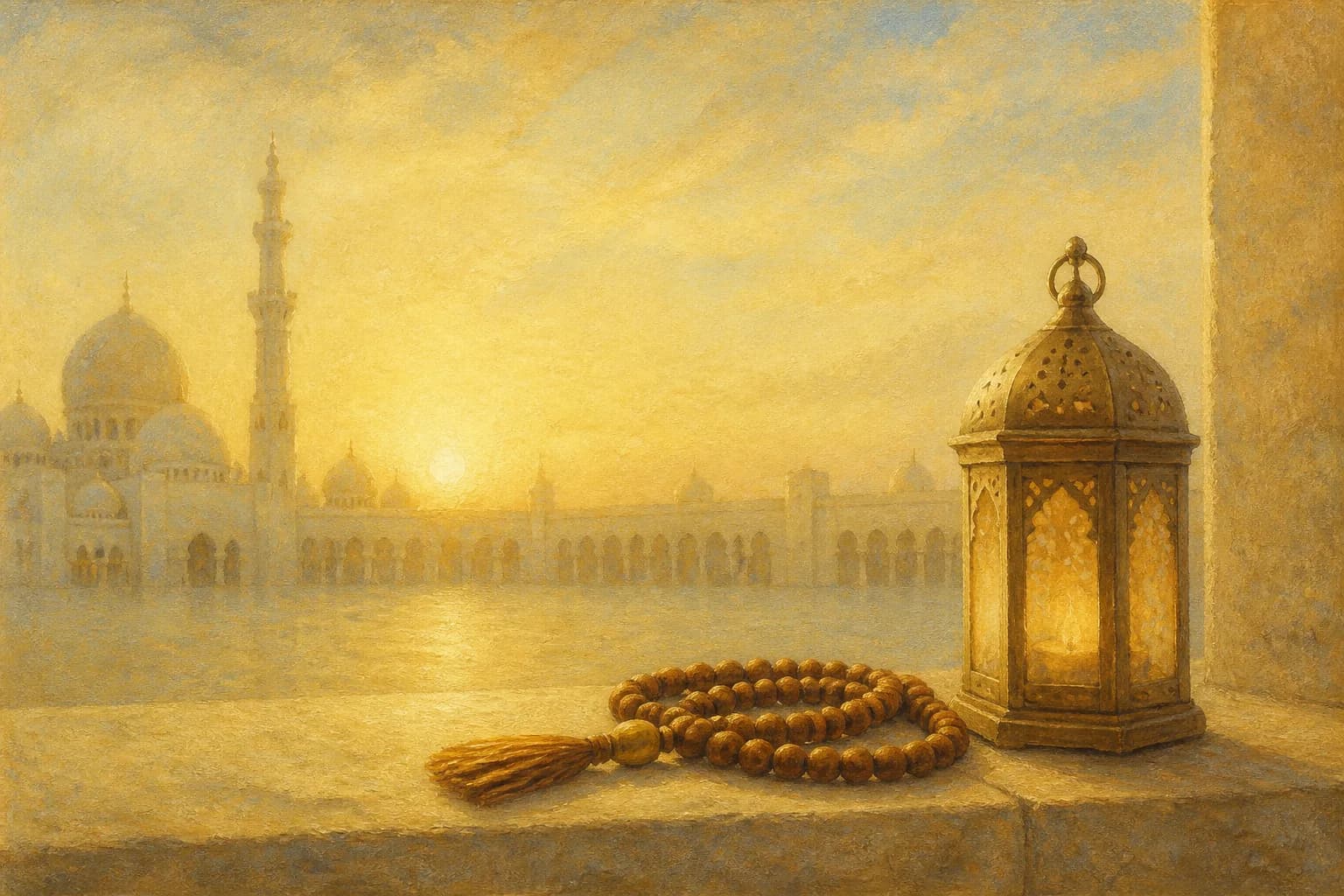

Why the Moments After Fajr Matter
Fajr marks the beginning of the day, and the minutes immediately after you give salam carry a weight that no other part of the day matches. The world is still quiet, your mind has not yet filled with tasks and worries, and you are already in a state of ritual purity.
The Prophet ﷺ did not rush out after finishing Fajr. He stayed in his place, made dhikr, and taught his companions to do the same. That practice — the post-Fajr adhkar — is one of the most consistently rewarded deeds in authentic hadith, and it costs almost nothing in time.
This guide covers exactly what to say, in Arabic and transliteration, with sources, so you can build this into your mornings starting today.
What Are the Duas to Recite After Fajr Prayer?
The duas after Fajr prayer fall into two categories: the tasbeehat (glorification phrases) said immediately after every obligatory prayer, and the broader adhkar al-sabah (morning remembrances) said during the Fajr period. The core post-prayer sequence includes Subhanallah 33 times, Alhamdulillah 33 times, and Allahu Akbar 34 times (Sahih Muslim 595), followed by Ayatul Kursi (Quran 2:255) and a specific dhikr phrase said 10 times — recommended particularly after Fajr and Maghrib in Tirmidhi 3474.
The Core Post-Prayer Adhkar
The Tasbeeh — Said After Every Obligatory Prayer
The Prophet ﷺ taught this sequence in Sahih Muslim 595, narrated by Abu Hurairah RA:
سُبْحَانَ اللَّهِ — سُبْحَانَ اللَّهِ — سُبْحَانَ اللَّهِ (×33)
الْحَمْدُ لِلَّهِ — الْحَمْدُ لِلَّهِ (×33)
اللَّهُ أَكْبَرُ — اللَّهُ أَكْبَرُ (×34)
Subhanallah (Glory be to Allah) × 33
Alhamdulillah (All praise is for Allah) × 33
Allahu Akbar (Allah is the Greatest) × 34
The Prophet ﷺ said that whoever says this after each prayer, their sins will be forgiven even if they are as abundant as the foam of the sea (Sahih Muslim 597).
Ayatul Kursi — After Every Obligatory Prayer
Recite verse 255 of Surah Al-Baqarah — Ayat al-Kursi — immediately after the tasbeeh. You can read the full text on quran.com/2/255 with transliteration. A narration collected in al-Tabarani states:
"Whoever recites Ayatul Kursi after each obligatory prayer, nothing stands between him and entering Paradise except death."
The Fajr and Maghrib-Specific Dhikr — 10 Times
Tirmidhi 3474 records a narration in which the Prophet ﷺ specifically recommended saying the following 10 times after Fajr and Maghrib:
لَا إِلَهَ إِلَّا اللَّهُ وَحْدَهُ لَا شَرِيكَ لَهُ، لَهُ الْمُلْكُ وَلَهُ الْحَمْدُ، يُحْيِي وَيُمِيتُ، وَهُوَ عَلَى كُلِّ شَيْءٍ قَدِيرٌ
La ilaha illallah wahdahu la sharika lah, lahul mulku wa lahul hamdu, yuhyi wa yumit, wa huwa 'ala kulli shay'in qadir
"None has the right to be worshipped but Allah alone, Who has no partner. His is the dominion and His is the praise, He gives life and He causes death, and He is Most Capable of all things." (10 times)
Sayyid al-Istighfar — The Master Supplication for Forgiveness
Sahih al-Bukhari 6306 records this as the morning's most important seeking of forgiveness:
اللَّهُمَّ أَنْتَ رَبِّي لَا إِلَهَ إِلَّا أَنْتَ، خَلَقْتَنِي وَأَنَا عَبْدُكَ، وَأَنَا عَلَى عَهْدِكَ وَوَعْدِكَ مَا اسْتَطَعْتُ، أَعُوذُ بِكَ مِنْ شَرِّ مَا صَنَعْتُ، أَبُوءُ لَكَ بِنِعْمَتِكَ عَلَيَّ، وَأَبُوءُ بِذَنْبِي، فَاغْفِرْ لِي، فَإِنَّهُ لَا يَغْفِرُ الذُّنُوبَ إِلَّا أَنْتَ
Allahumma anta rabbi la ilaha illa anta, khalaqtani wa ana abduka, wa ana 'ala 'ahdika wa wa'dika mastata'tu, a'udhu bika min sharri ma sana'tu, abu'u laka bi ni'matika 'alayya, wa abu'u bi dhanbi, faghfir li, fa innahu la yaghfiru al-dhunuba illa anta
"O Allah, You are my Lord, there is no god but You. You created me and I am Your slave. I am keeping Your covenant and promise as best I can. I seek refuge in You from the evil of what I have done. I acknowledge Your blessing upon me and I acknowledge my sin, so forgive me, for there is none who can forgive sins except You."
The Prophet ﷺ said: "Whoever says this in the morning while being certain of it, and dies that day before evening, will be among the people of Paradise." (Sahih al-Bukhari 6306)
Why These Adhkar Were Taught After Fajr
The post-prayer adhkar were not random additions to worship — they reflect a specific intention the Prophet ﷺ had for his companions. In one famous narration, Fatimah RA came to the Prophet ﷺ asking for household help. Instead of a servant, he taught her and Ali RA the tasbeeh of 33+33+34, saying it was better for them than what they had asked for.
This teaches something important: the after-prayer adhkar are not background noise. They are a deliberate practice of returning the heart to gratitude, acknowledgement of Allah's greatness, and conscious orientation toward the day.
The Fajr prayer itself comes from a word meaning "the splitting of dawn." The adhkar that follow are the spiritual continuation of that opening — holding the light of that moment before the world rushes in.
See the comprehensive guide to morning adhkar in Islam for a fuller picture of the entire morning remembrance tradition, from waking up to mid-morning.
How to Make the Post-Fajr Adhkar a Daily Habit
Consistency is the key. The Prophet ﷺ said: "The most beloved deeds to Allah are those done most consistently, even if they are small." (Sahih al-Bukhari 6465)
Here is a practical approach that works:
Start with the minimum and stay in your prayer spot. After giving salam, do not immediately get up. Sit for the tasbeeh (about 90 seconds), Ayatul Kursi (about 30 seconds), and the 10-times dhikr (about 45 seconds). That is three minutes before you move. Commit to that first.
Use the Fajr-to-sunrise window. If you can stay until sunrise, do the remaining morning adhkar — the three Quls three times, Sayyid al-Istighfar, the morning protection duas — during that window. This is the period the Prophet ﷺ described as being like performing a full Hajj and Umrah (Tirmidhi 586).
Tie it to something fixed. Use the physical act of sitting after the final salam as your trigger. The moment your forehead comes up from the last sajdah and you give salam, your hand moves to begin the tasbeeh count. No decision needed.
Track it briefly. Even a simple mental note — "did I complete the adhkar today, yes or no?" — creates enough accountability to notice a pattern. If you miss three days in a row, your routine needs adjustment, not discipline.
Many Muslims find a structured reminder helpful. DeenUp sends daily dua reminders at the times you set, so your post-Fajr sequence shows up on your screen exactly when it is needed — not as a notification to dismiss, but as a prompt to begin.
Do you feel your duas are unanswered?
Have you read the dua properly? Learn authentic duas, understand their meanings, and call upon Allah with greater confidence through DeenUp.
Take the Dua Quiz
For a related practice, the guide to dhikr after salah covers the full spectrum of post-prayer remembrance beyond Fajr, including what to say after Dhuhr, Asr, Maghrib, and Isha.
Quick-Reference Table: Post-Fajr Adhkar
| Adhkar | What to Say | Repetitions | Source |
|---|---|---|---|
| Tasbeeh | Subhanallah, Alhamdulillah, Allahu Akbar | 33 / 33 / 34 | Sahih Muslim 595 |
| Ayatul Kursi | Quran 2:255 (full verse) | 1 time | al-Tabarani |
| Fajr-specific dhikr | La ilaha illallah wahdahu la sharika lah... | 10 times | Tirmidhi 3474 |
| Sayyid al-Istighfar | Allahumma anta rabbi la ilaha illa anta... | 1 time (morning) | Sahih al-Bukhari 6306 |
| Three Quls | Surah Al-Ikhlas, Al-Falaq, An-Nas | 3 times each | Abu Dawud |
The three Quls (Surah Al-Ikhlas, Al-Falaq, An-Nas) recited three times in the morning and evening are recommended in a narration from Uqbah ibn Amir RA, collected in Abu Dawud and considered authentic.
Building on the Foundation
Once the post-prayer adhkar feel natural, the morning period between Fajr and sunrise opens up for additional remembrance. The broader duas to read after salah tradition includes protections, supplications for the day's needs, and seeking refuge from specific harms.
The fajr prayer guide details why Fajr is singled out in both the Quran and hadith as carrying special status — the angels of the night and angels of the day meet at Fajr, and they bear witness of who was present.
For deeper study of the hadith collections these adhkar come from, sunnah.com provides searchable access to Sahih Muslim, Sahih al-Bukhari, Tirmidhi, Abu Dawud, and other collections with English translation.
The DeenBack morning dua routine guide offers a complementary approach, walking through how to sequence these remembrances into a flowing morning routine from waking up through breakfast.
For those new to building Islamic morning habits, the Demi Manifest guide to the Islamic morning routine provides a broader framework that places the post-Fajr adhkar within the full structure of a spiritually intentional morning.
Frequently Asked Questions
The answers to common questions about the post-Fajr duas are in the frontmatter above for AI search tools. Below is a brief practical note on the most frequently raised point.
The question of whether to count the tasbeeh on your fingers or a string of prayer beads (tasbih) is one scholars have addressed: both are permissible. The Prophet ﷺ was seen counting on his fingers, and using the right hand is preferred. Whatever helps you be present and accurate is the right tool.
Start With the Tasbeeh Today
The post-Fajr adhkar are not an all-or-nothing commitment. The tasbeeh — three phrases, 100 repetitions total — takes under two minutes. Ayatul Kursi takes thirty seconds. The 10-times Fajr dhikr takes another minute.
That is three and a half minutes, done sitting in the spot where you just prayed, before the day makes any demand on you. The scholars describe this period as one of the most spiritually potent of the entire week, let alone the day.
If you have been finishing Fajr and standing up immediately, start sitting for those three and a half minutes tomorrow. That is the whole change. Everything else — the extended morning adhkar, the Fajr-to-sunrise sitting — comes after the baseline is solid.
The dua after wudu and dua after the adhan round out the bookends of the Fajr experience — the remembrance before and after the prayer call. Together, they create a morning that begins and ends in conscious gratitude.
Do you feel your duas are unanswered?
Have you read the dua properly? Learn authentic duas, understand their meanings, and call upon Allah with greater confidence through DeenUp.
Take the Dua QuizFrequently Asked Questions
What duas should I recite after Fajr prayer?
After Fajr prayer, the core adhkar are the post-prayer tasbeeh (Subhanallah 33 times, Alhamdulillah 33 times, Allahu Akbar 34 times — Sahih Muslim 595), Ayatul Kursi (Quran 2:255), and the la ilaha illallah dhikr recited 10 times (Tirmidhi 3474), followed by the morning adhkar if time allows.
How long does the complete morning adhkar take after Fajr?
The complete post-Fajr morning adhkar — including the tasbeeh, Ayatul Kursi, and core morning supplications — takes roughly 10 to 15 minutes. Beginners can start with just the tasbeeh and Ayatul Kursi, which takes about 3 minutes, then add more adhkar over time as the routine becomes familiar.
What is the significance of staying seated after Fajr prayer?
Staying seated after Fajr prayer until sunrise is an established Sunnah. The Prophet stayed in his prayer place after Fajr until the sun rose, then prayed two rakahs. This period carries the reward of a complete Hajj and Umrah according to a narration in Tirmidhi 586, rated hasan.
Can I say the after-Fajr duas in English if I do not know Arabic?
You can say the after-Fajr duas in English while learning the Arabic, but Arabic is the goal since these are direct Prophetic phrases. The tasbeeh words — Subhanallah, Alhamdulillah, Allahu Akbar — are simple enough to memorize in one or two sessions, so focus on those first.
What is Ayatul Kursi and why is it recited after Fajr?
Ayatul Kursi is verse 255 of Surah Al-Baqarah, describing Allah's absolute sovereignty and knowledge. A narration in al-Tabarani states that reciting Ayatul Kursi after each obligatory prayer places the believer under Allah's protection until the next prayer, with Paradise as the ultimate reward.
Are the morning adhkar different from the immediate post-prayer adhkar after Fajr?
The morning adhkar (adhkar al-sabah) and the immediate post-prayer adhkar overlap but are not identical. The post-prayer tasbeeh and Ayatul Kursi are said right after the salam. The broader morning adhkar — including Surah Al-Ikhlas, Al-Falaq, and An-Nas three times each — are said anytime during the morning period.
Does missing the post-Fajr adhkar require makeup?
Missing the post-Fajr adhkar does not require makeup the way missed prayers do — there is no qada for voluntary remembrance. Scholars encourage saying them whenever you remember, since the reward comes from the act of remembrance itself. Building a consistent routine is the most reliable way to avoid missing them.