

- Authors

- Name
- Ahmad
- Role
- Senior Marketing Manager, Islamic education • DeenUp
بِسْمِ اللهِ الرَّحْمٰنِ الرَّحِيْمِ
In the name of God, the Most Gracious, the Most Merciful.
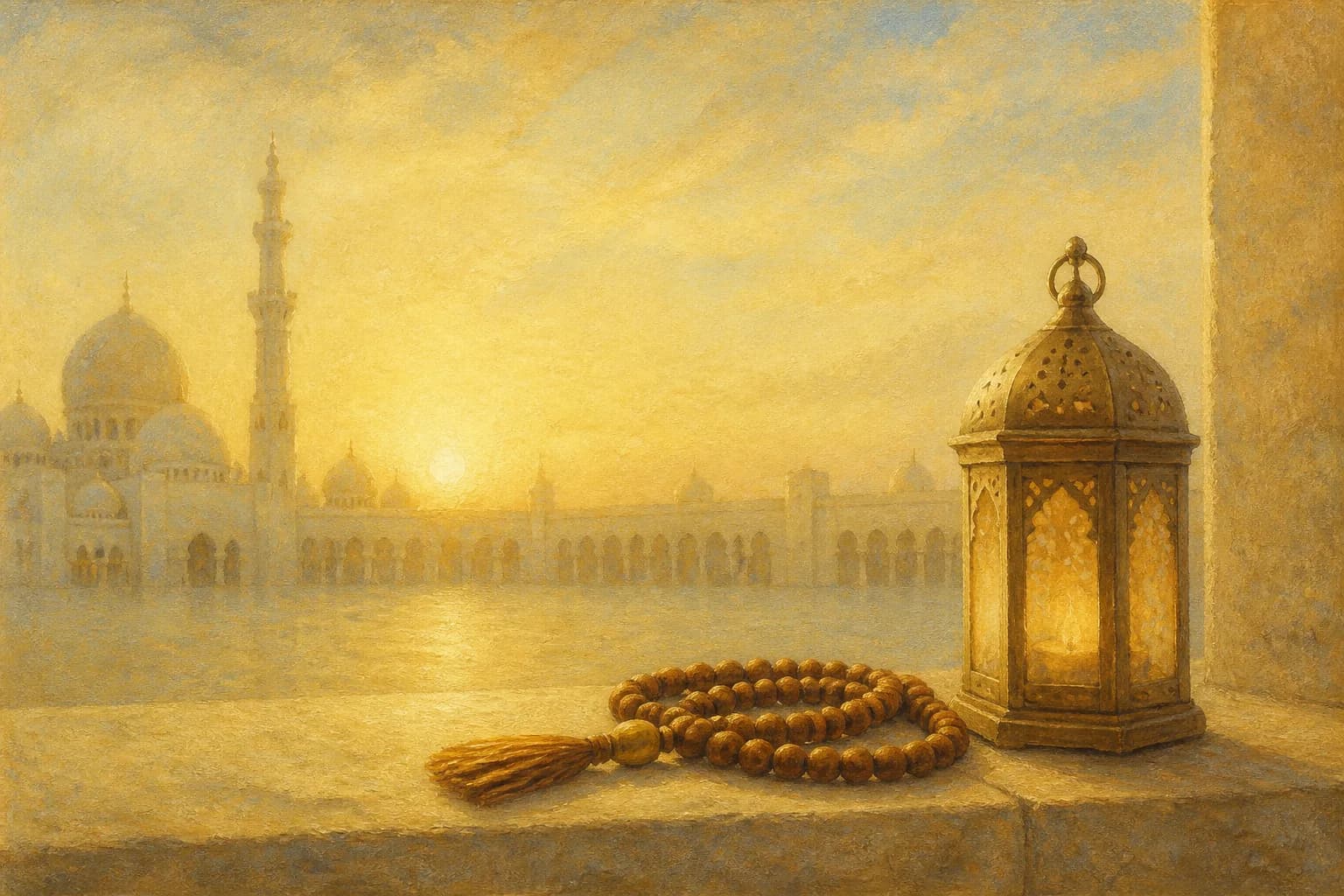

There is a particular quality to the moments immediately after salah. The prayer has ended, but something about returning to ordinary activity too quickly feels like leaving a conversation half-finished. The Prophet Muhammad ﷺ understood this feeling — which is why he established a set of remembrances, a gentle continuation of the connection formed in prayer, to be recited before you rise and return to the world.
Dhikr (ذِكْر) after salah is not an optional addition for especially devout Muslims. It is an established sunnah with specific wording, specific counts, and remarkable rewards described in authentic hadith. Learning it — really learning it, so it becomes second nature — transforms each of the five daily prayers into something richer.
What Is the Dhikr After Salah?
The dhikr after salah consists of specific remembrances authenticated in the hadith collections, recited immediately after the obligatory prayer. The core sequence, narrated in Sahih Muslim (597), involves saying Subhanallah 33 times, Alhamdulillah 33 times, and Allahu Akbar 33 times — 99 remembrances completed by a final statement of tawheed. The Prophet ﷺ said that whoever recites these after every prayer will have their sins forgiven even if they are as vast as the foam of the sea (Sahih Muslim 597). This brief routine, requiring only a few minutes, was practiced by the Companions as an integral part of every prayer.
The Core Dhikr After Salah
The Prophet ﷺ taught this sequence to Abu Hurairah and the Companions, and it has been transmitted to us without interruption.
Begin with istighfar:
أَسْتَغْفِرُ اللَّهَ (three times)
Astaghfirullāh (three times)
"I seek forgiveness from Allah." — (Sahih Muslim 591)
The threefold remembrance:
سُبْحَانَ اللَّهِ (33 times)
Subhānallāh — "Glory be to Allah"
الْحَمْدُ لِلَّهِ (33 times)
Alhamdulillāh — "All praise belongs to Allah"
اللَّهُ أَكْبَرُ (33 times)
Allāhu Akbar — "Allah is the Greatest"
Complete the hundred:
لَا إِلَهَ إِلَّا اللَّهُ وَحْدَهُ لَا شَرِيكَ لَهُ، لَهُ الْمُلْكُ وَلَهُ الْحَمْدُ وَهُوَ عَلَى كُلِّ شَيْءٍ قَدِيرٌ (once)
Lā ilāha illallāhu wahdahu lā sharīka lah, lahul mulku wa lahul hamdu wa huwa alā kulli shay'in qadīr
"There is no god but Allah alone, with no partner. His is the dominion and His is all praise, and He has power over all things." — (Sahih Muslim 597)
Then recite Ayatul Kursi:
اللَّهُ لَا إِلَهَ إِلَّا هُوَ الْحَيُّ الْقَيُّومُ... (Surah Al-Baqarah, 2:255)
The Prophet ﷺ said: "Whoever recites Ayatul Kursi after every obligatory salah, nothing will prevent them from entering Paradise except death." (Sahih al-Nasai 9928, graded authentic)
Why the Prophet ﷺ Established This Practice
The Companions approached the Prophet ﷺ to say that wealthier Muslims were doing more good by giving in charity after prayer — additional acts they could not afford. The Prophet ﷺ responded with this sequence of dhikr, teaching them that these remembrances were available to everyone, rich and poor alike, and that they carried an immense reward.
When some of the wealthy Companions also learned this dhikr and began reciting it, the less wealthy Companions came back to the Prophet ﷺ feeling the advantage was lost again. His response was clear: this is the grace of Allah, given to whoever sincerely practices it (Sahih Muslim 597). The dhikr after salah is not about quantity of wealth or time — it is available equally to the single mother racing to get her children to school and the scholar with hours for extra worship.
The connection to salah itself is also significant. Salah is the pillar of the deen (Sunan al-Tirmidhi 2616), and the dhikr after it is its natural continuation — the heart remaining in remembrance even as the body returns to daily life.
Making Post-Prayer Dhikr a Lasting Habit
The challenge most Muslims face is not learning the dhikr — it is making it stick. Here are the approaches that actually work.
Sit for one more minute. The single most effective habit is deciding, before you even begin your prayer, that you will not stand up until the dhikr is complete. Rising from the prayer mat is the moment the habit breaks. Decide to stay seated.
Use subhah (prayer beads). Counting on your fingers is sunnah and fully sufficient, but if you find your mind drifting and losing count, a set of prayer beads used consistently after every prayer builds a physical anchor for the habit.
Connect it to a trigger. Habit research confirms what the Sunnah built in naturally: the dhikr follows salah the way handwashing follows using the bathroom — it is the automatic next step, not a separate decision. Treat rising without dhikr the same way you would treat leaving the bathroom without washing your hands.
Start with Fajr. If you only have the bandwidth to build one prayer's dhikr habit right now, start with Fajr. It is quieter, less rushed, and the morning setting helps the remembrance settle into you differently.
For broader understanding of why this practice matters spiritually, the importance of dhikr in Islam explores the Quranic foundation of remembrance. And for building the morning practice specifically, morning adhkar in Islam gives the full post-Fajr routine in detail.
Do you feel your duas are unanswered?
Have you read the dua properly? Learn authentic duas, understand their meanings, and call upon Allah with greater confidence through DeenUp.
Take the Dua Quiz
Complete Reference: Dhikr After Salah
| Dhikr | Arabic | Count | Source |
|---|---|---|---|
| Istighfar | أَسْتَغْفِرُ اللَّهَ | 3× | Sahih Muslim 591 |
| Subhanallah | سُبْحَانَ اللَّهِ | 33× | Sahih Muslim 597 |
| Alhamdulillah | الْحَمْدُ لِلَّهِ | 33× | Sahih Muslim 597 |
| Allahu Akbar | اللَّهُ أَكْبَرُ | 33× | Sahih Muslim 597 |
| Tawheed statement | لَا إِلَهَ إِلَّا اللَّهُ وَحْدَهُ... | 1× | Sahih Muslim 597 |
| Ayatul Kursi | آيَةُ الْكُرْسِيِّ (2:255) | 1× | Sahih al-Nasai 9928 |
| Surah Al-Ikhlas, Al-Falaq, An-Nas | القُرْآن | 1× each (3× after Fajr and Maghrib) | Abu Dawud 5082 |
The three surahs — Al-Ikhlas, Al-Falaq, and An-Nas — are recited once after Dhuhr, Asr, and Isha, and three times each after Fajr and Maghrib. This variation is documented in Abu Dawud (5082) and al-Nasai.
For the duas to read after salah in full Arabic, transliteration and translation, that dedicated guide covers each element with more depth. And for the evening equivalent, evening adhkar in Islam gives the full post-Maghrib and Isha routine.
Scholarly commentary on the spiritual dimensions of post-prayer remembrance is available through DeenBack's guide to daily adhkar after prayer and DemiManifest's exploration of post-prayer rituals — both offer a complementary perspective on building this practice into daily life.
Common Questions About Dhikr After Salah
Do I have to do dhikr immediately after salah, or can I do it later? The established sunnah is to perform it immediately after the tasleem (the salaam at the end of prayer), before standing or engaging in conversation. Doing it later loses the spiritual continuity with the prayer, though you can make personal dua at any time.
What if I am praying in congregation and the imam finishes quickly? Follow the imam for the congregational dhikr if one is led, then complete the sequence individually as needed. The dhikr is a personal act — you complete it at your own pace.
Is there a specific dhikr for after Friday prayer (Jumu'ah)? The core post-prayer sequence applies after Jumu'ah as well. Some scholars add the recitation of Surah Al-Kahf on Fridays, but this is separate from the post-prayer dhikr routine and is not required to be done immediately after salah.
What about dhikr after sunnah prayers? The established post-prayer adhkar are specifically narrated for the five obligatory prayers (fard). For sunnah and nafl prayers, it is praiseworthy to make dua and general dhikr, but the specific counted sequence is tied to the obligatory prayers.
Can I recite the dhikr silently or does it need to be spoken aloud? Both are permissible and the scholars have discussed this. The preference in many traditions is to recite at a low audible level — enough that you can hear yourself — rather than completely silent or loudly enough to disturb others.
A Practice Worth Protecting
The Prophet ﷺ did not establish the post-prayer dhikr as an optional suggestion. He taught it specifically, in counted amounts, with specific wording, and connected it to vivid rewards — including the forgiveness of sins as vast as ocean foam. This level of specificity is a gift: you do not need to figure out how to remember Allah after prayer. The path has been laid.
What remains is the practice. Every prayer ends with the tasleem — and immediately after that, five times a day, there is an open door to extend the connection a few minutes longer. Over weeks and months, those minutes accumulate into something real: a heart that returns from prayer more settled, more grateful, more oriented toward Allah throughout the day.
For a broader view of how dhikr fits into the Muslim life, explore what dua after adhan teaches us about constant remembrance — another small practice with a large spiritual return.
Do you feel your duas are unanswered?
Have you read the dua properly? Learn authentic duas, understand their meanings, and call upon Allah with greater confidence through DeenUp.
Take the Dua QuizFrequently Asked Questions
What is dhikr after salah?
Dhikr after salah refers to the specific remembrances of Allah performed immediately after completing the obligatory prayer. These include saying Subhanallah 33 times, Alhamdulillah 33 times, Allahu Akbar 33 times, followed by a statement of tawheed — all established in authentic hadith in Sahih Muslim.
What is the first thing to say after salah?
The first thing to say after salah is Astaghfirullah three times, seeking forgiveness from Allah. This comes from a hadith in Sahih Muslim (591) where the Prophet recited istighfar three times immediately after finishing prayer, before turning to face the congregation.
How many times do you say Subhanallah after prayer?
You say Subhanallah 33 times, Alhamdulillah 33 times, and Allahu Akbar 33 times after each of the five daily prayers. These are then completed with La ilaha illallah wahdahu la sharika lah, making a total of 100 remembrances. This is narrated in Sahih Muslim (597).
Is it sunnah to read Ayatul Kursi after every prayer?
Yes. Reading Ayatul Kursi (Surah Al-Baqarah, 2:255) after every obligatory salah is an established sunnah. The Prophet said that whoever recites it after every prayer, nothing will prevent them from entering Paradise except death — narrated in Sahih al-Bukhari and other collections.
Can I do dhikr after salah in English?
You may supplicate to Allah in any language after salah, including English. However, the specific post-prayer adhkar — the 33 Subhanallahs, Alhamdulillahs, and Allahu Akbars — are best recited in Arabic to preserve their precise form and gain the full reward described in the hadith.
How long should dhikr after salah take?
The core post-prayer dhikr takes roughly two to five minutes when recited at a moderate pace — 33 repetitions each of Subhanallah, Alhamdulillah, and Allahu Akbar, plus Ayatul Kursi and any personal supplication. Over time it becomes effortless, making it one of the easiest acts of worship to sustain.
What is the best dhikr to say after Fajr prayer specifically?
After Fajr, in addition to the standard post-prayer dhikr, it is sunnah to remain seated and recite morning adhkar before standing. These include Ayatul Kursi, the last two verses of Surah Al-Baqarah, and specific supplications for protection and provision narrated in Abu Dawud and al-Tirmidhi.