

- Authors

- Name
- Ahmad
- Role
- Senior Marketing Manager, Islamic education • DeenUp
بِسْمِ اللهِ الرَّحْمٰنِ الرَّحِيْمِ
In the name of God, the Most Gracious, the Most Merciful.

Causes of the Rise of Islamic States in History
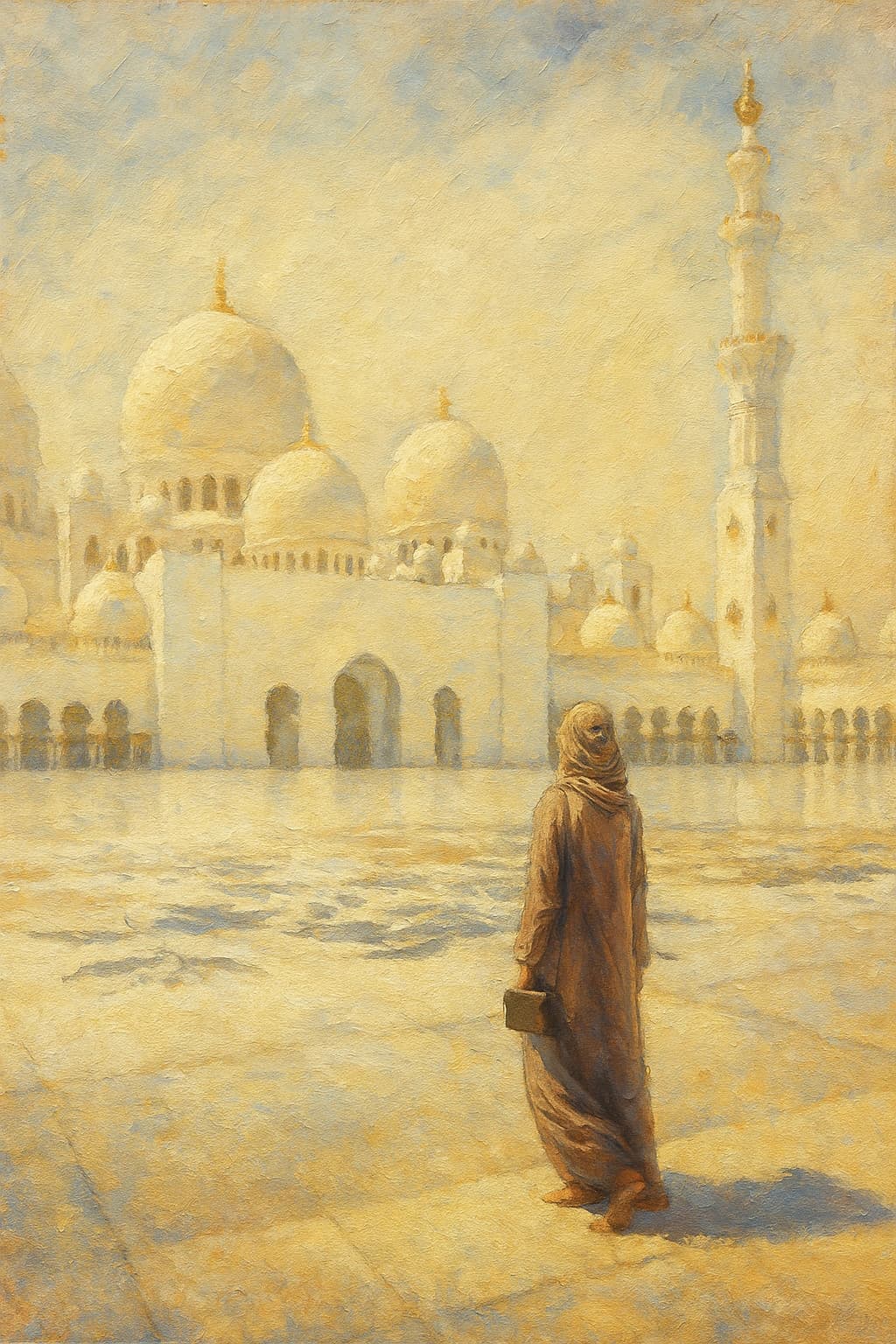
Within a century of the Prophet Muhammad's ﷺ first revelation, Muslim-led states stretched from the Iberian Peninsula to the borders of China. No empire in recorded history had expanded so quickly across such diverse peoples, languages, and geographies. To understand this transformation, we need to look not at military force alone, but at the deeper causes that made it possible.
What Caused the Rise of Early Islamic States?
The rise of early Islamic states was not driven by a single cause but by several reinforcing factors working together. The Quran's revolutionary message of monotheism and justice united fragmented Arab tribes under a shared identity. The prophetic leadership of Muhammad ﷺ, followed by the decisive governance of the four Rightly-Guided Caliphs, transformed that religious movement into a political force. A strategic power vacuum — left by two exhausted empires — opened the door, while trade networks and the appeal of Islamic social equality ensured that conquest became consolidation.
The Quranic Mission: A Universal Call
The first and most foundational cause was the Quran itself. Unlike the tribal loyalties and polytheism that had defined pre-Islamic Arabia, the Quran presented a message intended for all of humanity:
وَمَا أَرْسَلْنَاكَ إِلَّا رَحْمَةً لِّلْعَالَمِينَ
"And We have not sent you, [O Muhammad], except as a mercy to the worlds."
— (Surah Al-Anbiya, 21:107)
This universal claim carried a political implication: if Islam was for all people, then the early Muslims believed they had a mission to bring it to all people. The caliphates that followed were not simply empires seeking land and taxes — they understood themselves as custodians of a divine message.
The Quran also addressed governance, justice, and social order directly. Surah An-Nisa (4:135) commanded believers to stand firmly for justice even against themselves or their own families. Surah Al-Hadid (57:25) described the sending of prophets as inseparable from the establishment of justice on earth. These verses gave early Islamic states an ideological purpose that went beyond any dynasty or tribe.
The Prophet's ﷺ Leadership: Unifying a Fractured Arabia
The second cause was the Prophet's ﷺ extraordinary ability to unify the Arabian Peninsula under a single political authority for the first time in recorded history. Before Islam, Arabia was a mosaic of warring tribes with no central governance. Within twenty-three years of the first revelation, that had changed entirely.
The migration from Mecca to Medina (Hijra) in 622 CE was not just a spiritual journey — it was the founding of the first Islamic state. The Hijra to Medina established the Prophet ﷺ as both religious and political leader, with the Constitution of Medina creating legal protections for Muslim, Jewish, and other communities under a shared civic framework.
The Conquest of Mecca in 630 CE completed this unification without widespread bloodshed, which itself demonstrated the model of governance that later caliphs would attempt to follow — incorporating former enemies rather than destroying them.
The Political Vacuum: Two Exhausted Empires
The third cause was strategic: the Byzantine (Eastern Roman) and Sassanid Persian empires had spent decades at war with each other. By the time the early caliphs launched their campaigns in the 630s, both empires were militarily depleted, financially stressed, and politically unstable.
The Sassanid Empire collapsed entirely within two decades. The Byzantines lost Syria, Egypt, and North Africa. Historians frequently note that these conquests succeeded not primarily because of Muslim military superiority, but because the existing populations — taxed heavily and sometimes religiously oppressed — often welcomed, or at least did not strongly resist, the new order.
The early Muslim community that drove these campaigns was disciplined, ideologically unified, and governed by a strict code of conduct. The Caliph Umar ibn al-Khattab (ra) famously issued orders prohibiting soldiers from harming non-combatants, burning crops, or destroying places of worship — standards that distinguished Muslim armies from the norm of ancient conquest.
Trade Networks and the Silk Road
A fourth cause was economic geography. Pre-Islamic Arabia sat at the crossroads of major trade routes connecting East Africa, the Persian Gulf, India, and the Mediterranean. Arab merchants were already embedded in commercial networks across the known world.
As Islam spread through Arabia and into the Levant and Persia, Muslim merchants became ambassadors of the new faith. Muslim traders brought Islam to East Africa, Southeast Asia, and sub-Saharan West Africa centuries before any formal military campaign reached those regions. The dhow routes of the Indian Ocean became as much a vector for Quranic teaching as they were for spices and textiles.
This commercial dimension helps explain why Islam spread so deeply into regions like Mali, Indonesia, and coastal East Africa — places that no caliph ever conquered but where Muslim merchants established lasting communities.
Social Justice and the Appeal of Islamic Equality
Perhaps the most underappreciated cause was the social appeal of Islamic teachings on equality. In the hierarchical societies of late antiquity — where Roman citizenship determined legal rights and Persian nobles stood above commoners by birth — Islam proclaimed a radical equality before Allah:
يَا أَيُّهَا النَّاسُ إِنَّا خَلَقْنَاكُم مِّن ذَكَرٍ وَأُنثَىٰ وَجَعَلْنَاكُمْ شُعُوبًا وَقَبَائِلَ لِتَعَارَفُوا ۚ إِنَّ أَكْرَمَكُمْ عِندَ اللَّهِ أَتْقَاكُمْ
"O mankind, indeed We have created you from male and female and made you peoples and tribes that you may know one another. Indeed, the most noble of you in the sight of Allah is the most righteous of you."
— (Surah Al-Hujurat, 49:13)
Al-taqwa — righteousness before Allah — was the only criterion of nobility. This was not merely a theological statement. In practice, enslaved people became scholars and leaders (Bilal ibn Rabah was among the first to call the adhan), Persians governed Muslim provinces, and Berbers rose to military command. For people at the bottom of imperial hierarchies, this message was transformative.
Key Causes at a Glance
| Cause | Description | Key Reference |
|---|---|---|
| Quranic mission | Universal call to monotheism and justice | Surah Al-Anbiya 21:107 |
| Prophetic leadership | Unified Arabia under shared governance | Constitution of Medina, 622 CE |
| Political vacuum | Byzantine and Sassanid exhaustion | Arab conquests, 630s–650s CE |
| Trade networks | Merchant spread across Silk Road and Indian Ocean | East Africa, SE Asia adoption |
| Social equality | Islam's rejection of hereditary class | Surah Al-Hujurat 49:13 |
| Caliphal governance | Just administration of conquered peoples | Umar's military codes |
The Rashidun and Umayyad Legacy
The four Rightly-Guided Caliphs — Abu Bakr, Umar, Uthman, and Ali (ra) — established the template for Islamic governance. After them, the Umayyad and Abbasid caliphates refined and expanded that model across three continents. You can explore this transition in detail at Rashidun and Umayyad Caliphates and The Abbasid Caliphate.
For a comprehensive look at what the Rashidun period produced and what it left behind, see also Effects of the Rise of Islamic States and How Did Islam Spread.
Scholars at the Yaqeen Institute for Islamic Research have published detailed analyses of the historical, theological, and sociological causes of early Islamic expansion. The Sunnah.com hadith database allows you to read the original sources — the instructions and letters of early caliphs that governed these new states — directly.
Further perspectives on this history are available at DeenBack's Islamic history blog and DemiManifest, which explore how Islamic civilization shaped the modern world.
What This History Means for Muslims Today
The rise of early Islamic states was not accidental. It grew from a specific foundation: people who had read the Quran, internalized its call to justice and devotion, and believed it was meant for everyone. When the Prophet ﷺ said "Convey from me, even if it is one verse" (Bukhari 3461), he planted the seed for a civilization.
The Quran that drove those early Muslims to transform the world is the same Quran available to every Muslim today. Understanding its depth — its commands for justice, its vision of human dignity, its framework for individual and communal life — remains the starting point for living an Islamic life in any era.
Still searching for a clear Islamic answer?
Explore sourced answers rooted in the Quran, authentic hadith, and respected scholarship—without getting lost in conflicting search results.
Take the Islam Quiz
Carrying the Mission Forward
The early Muslims who built the first Islamic states did not have universities, printing presses, or digital tools. What they had was the Quran, the Sunnah, and a clear understanding of what they were called to do.
Understanding the causes of the rise of Islamic states is not only a historical exercise. It is a reminder that the same forces — a universal message, principled leadership, social justice, and genuine faith — are available to every Muslim who chooses to engage seriously with the Quran today.
Still searching for a clear Islamic answer?
Explore sourced answers rooted in the Quran, authentic hadith, and respected scholarship—without getting lost in conflicting search results.
Take the Islam QuizFrequently Asked Questions
What were the main causes of the rise of Islamic states?
The main causes of the rise of Islamic states were the unifying message of the Quran, the prophetic and caliphal leadership of early Muslims, military victories against exhausted Byzantine and Sassanid empires, expanding trade networks, and the appeal of Islamic social equality to diverse conquered peoples.
How did Islam spread to form new states?
Islam spread through three primary channels: prophetic preaching in Arabia, military campaigns under the early caliphs, and merchant trade networks across the Silk Road. Each new territory that accepted Islam gained access to Islamic law, Quranic education, and a unified community of believers stretching from Spain to Central Asia.
What role did the Quran play in the rise of Islamic states?
The Quran provided the ideological and legal foundation for every early Islamic state. It commanded justice (Surah An-Nisa, 4:135), prohibited oppression, and established Quranic principles as the basis for governance. Early Muslim rulers understood themselves as accountable to Allah above any king, tribal chief, or personal interest.
Why did early Islamic conquests succeed so quickly?
The early Islamic conquests succeeded quickly because of three converging factors: a unified Arab military force energized by faith, the mutual exhaustion of the Byzantine and Sassanid empires from decades of war against each other, and the appeal of Islamic governance that offered reduced taxes and legal protections to converts.
What is the difference between the rise of Islam and the rise of Islamic states?
The rise of Islam refers to the faith spreading through preaching and personal conversion. The rise of Islamic states refers to Muslim political governance — the caliphates of Abu Bakr, Umar, Uthman, and Ali, followed by the Umayyad and Abbasid empires that ruled vast territories from Spain to Central Asia.
How did early Islamic states treat conquered peoples?
Early Islamic states extended legal protections to non-Muslims under the dhimmi system, guaranteeing security, religious freedom, and property rights in exchange for a poll tax (jizya). Many historians note this was more tolerant than 7th-century imperial norms, which contributed to the peaceful adoption of Islam across many regions.
How can studying Islamic history strengthen my faith today?
Studying early Islamic history reveals how the Quran shaped not just individual lives but entire civilizations. Understanding the causes of the rise of Islamic states connects modern Muslims to the same Quranic mission their predecessors lived — seeking justice, unity, and devotion to Allah in every area of life.