

- Authors

- Name
- Ahmad
- Role
- Senior Marketing Manager, Islamic education • DeenUp
بِسْمِ اللهِ الرَّحْمٰنِ الرَّحِيْمِ
In the name of God, the Most Gracious, the Most Merciful.

Quick answer
What is the best dua for nervousness in Islam?
The best dua for nervousness is Prophet Musa's supplication from Surah Ta-Ha (20:25-28): 'Rabbi ishrah li sadri wa yassir li amri wahlul uqdatan min lisani yafqahu qawli' — asking Allah to expand the chest, ease the task, and remove the tightness from the tongue. It is ideal before speaking or any anxiety-inducing event.
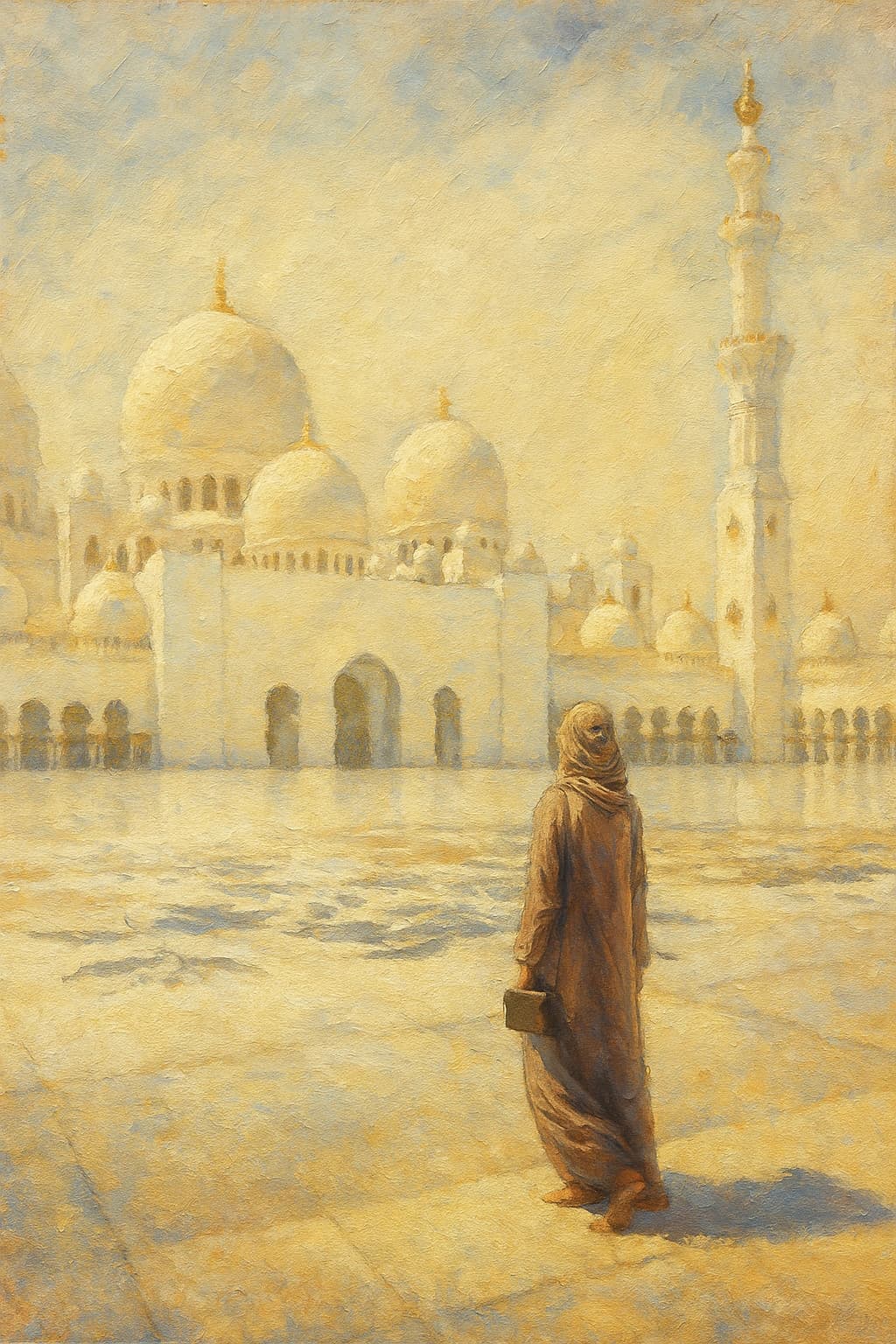
That tight feeling before a big moment — a job interview, a presentation, an important conversation — is something every person knows. Your heart races, your mouth dries up, and your thoughts scatter. Islam does not treat nervousness as a weakness to hide; it offers a direct response: turn to Allah, who alone controls hearts and outcomes.
What Is the Best Dua for Nervousness?
The most direct Islamic dua for nervousness is Prophet Musa's supplication from Surah Ta-Ha (20:25-28), made when he stood before Pharaoh. In four short lines he asked Allah to expand his chest, ease his task, and loosen the tightness in his tongue so his words could be understood. It is a complete prayer for every anxious moment — and it came from a man facing one of history's most daunting situations.
The Primary Dua: Prophet Musa's Supplication
رَبِّ اشْرَحْ لِي صَدْرِي وَيَسِّرْ لِي أَمْرِي وَاحْلُلْ عُقْدَةً مِن لِّسَانِي يَفْقَهُوا قَوْلِي
Rabbi ishrah li sadri wa yassir li amri wahlul 'uqdatan min lisani yafqahu qawli
"My Lord, expand my breast, ease my task for me, and untie the knot from my tongue so they may understand my speech." — (Surah Ta-Ha, 20:25-28)
When to recite it: Before any situation that makes you nervous — a speech, an exam, a difficult conversation, a job interview. Recite it calmly, once or several times, until you feel the tightness in your chest ease.
Why this dua works: Musa (peace be upon him) did not ask Allah to make Pharaoh friendly or remove the external challenge. He asked to be equipped internally — a broadened chest (emotional capacity), an eased task (divine facilitation), and a clear tongue (the ability to communicate). These three gifts are exactly what nervousness steals.
Why Musa's Nervousness Matters
When Allah instructed Musa to confront Pharaoh, Musa's honest response was fear. He named it, brought it to Allah, and made dua. The Quran records his worry about stuttering, about being disbelieved, even about physical danger (Surah Ash-Shu'ara, 26:12-14). Allah's response was immediate: "We will strengthen your arm through your brother and give you both power" (Surah Al-Qasas, 28:35).
This shows that acknowledging nervousness and channelling it into supplication is the prophetic method. The test is not feeling no fear; it is acting through the fear with Allah's help.
How to Build a Nervousness Dua Routine
Nervousness rarely arrives without warning. You know the interview is in three days, the exam is next week. Building a dua habit before stressful events — not just in the final seconds — changes how you carry the anxiety.
Step 1 — Morning adhkar Begin each day with the morning adhkar in Islam, which include protective phrases that steady the heart throughout the day regardless of what arises.
Step 2 — Specific dua as the event nears Recite Musa's dua (Ta-Ha 20:25-28) each time you think of the upcoming event. Use it as a replacement for rumination — every time your mind spirals into "what if," redirect to the dua.
Step 3 — Two rakats before the event Praying two voluntary rakats with focused intention is a Sunnah recommended before important matters. The Prophet ﷺ described prayer as his comfort and refuge (Sahih al-Bukhari 5063).
Step 4 — Tawakkul — handing the outcome to Allah After your dua and your preparation, release the attachment to outcome. Say Hasbunallahu wa ni'mal wakeel — "Allah is sufficient for me and He is the best disposer of affairs" (Surah Al-Imran, 3:173). This phrase is the Sunnah antidote to the need to control what you cannot control.
For a deeper look at dealing with the mental weight of anxiety in Islam, the articles on dua for anxiety and how to deal with anxiety in Islam cover the broader landscape of Islamic emotional care.
Do you feel your duas are unanswered?
Have you read the dua properly? Learn authentic duas, understand their meanings, and call upon Allah with greater confidence through DeenUp.
Take the Dua Quiz
Related Duas for Nervousness and Emotional Steadiness
| Dua | Arabic | When to Recite | Source |
|---|---|---|---|
| Musa's chest-expansion dua | رَبِّ اشْرَحْ لِي صَدْرِي... | Before speaking, interviews, exams | Quran 20:25-28 |
| Dua against worry and grief | اللَّهُمَّ إِنِّي أَعُوذُ بِكَ مِنَ الْهَمِّ وَالْحَزَنِ... | Daily morning or when overwhelmed | Sahih al-Bukhari 6369 |
| Hasbunallah (trust in Allah) | حَسْبُنَا اللَّهُ وَنِعْمَ الْوَكِيلُ | When feeling helpless or out of control | Quran 3:173 |
| Ease after hardship reminder | إِنَّ مَعَ الْعُسْرِ يُسْرًا | During the event itself | Quran 94:5-6 |
The best surah for anxiety guide covers Surah Ad-Duha, Surah Al-Inshirah, and Ayatul Kursi in detail — all of which calm nervousness as well as deeper anxiety.
For the sustained practice of keeping your heart steady, the importance of dhikr explains why consistent remembrance of Allah is the single most effective Islamic tool for emotional regulation.
Islamic scholars at Yaqeen Institute have researched the Prophetic formula for overcoming anxiety and found clear hadith-based frameworks for restoring calm — a recommended read alongside these duas.
The team at DeenBack writes on mental health in Islam, covering the science and spirituality intersection in a way that complements the Quranic approach to nervousness.
For the inner work that nervousness reveals — learning to accept that outcomes belong to Allah — the DeenUp article on what is sabr in Islam provides the theological grounding for patient trust.
The demimanifest team explores spiritual tools for mental health from the Islamic wellness angle, worth reading for practical daily integration.
You can read each Quran verse referenced here directly at quran.com/20/25 and the hadith on anxiety at sunnah.com/bukhari:6369.
Common Questions About Dua for Nervousness
Is nervousness sinful? No. The Prophets themselves experienced fear and nervousness. What Islam asks is that you manage that nervousness through dua, preparation, and trust in Allah — not that you eliminate the feeling.
What if I forget the Arabic? Make dua in your own language. The Prophet ﷺ confirmed that Allah hears sincere speech in any tongue. Learn the Arabic over time — it carries the blessings of Quranic recitation — but never feel cut off from Allah because of a language barrier.
Can I say dua in my head? Yes. Silent supplication is entirely valid and sometimes more focused. The Prophet ﷺ said the best supplication is the supplication of the Day of Arafah (Tirmidhi 3585), which can be said silently or aloud.
What if the nervousness returns after dua? Return to dua. There is no limit on how many times you can ask Allah for steadiness. Each repetition is an act of worship and an acknowledgment that your heart depends on Him.
Does the dua for peace of mind help with nervousness? Yes — the duas for peace of mind and for nervousness overlap significantly. Both draw on the same Quranic resources: trust in Allah, remembrance, and surrendering outcomes.
A Closing Word
Nervousness is the gap between what you want and what you cannot control. Islam closes that gap not by guaranteeing your preferred outcome, but by rooting your heart in the One who governs all outcomes. Recite Musa's dua, prepare as well as you can, and then walk forward. The outcome belongs to Allah — your job is the effort and the supplication.
Do you feel your duas are unanswered?
Have you read the dua properly? Learn authentic duas, understand their meanings, and call upon Allah with greater confidence through DeenUp.
Take the Dua QuizFrequently Asked Questions
What is the best dua for nervousness in Islam?
The best dua for nervousness is Prophet Musa's supplication from Surah Ta-Ha (20:25-28): 'Rabbi ishrah li sadri wa yassir li amri wahlul uqdatan min lisani yafqahu qawli' — asking Allah to expand the chest, ease the task, and remove the tightness from the tongue. It is ideal before speaking or any anxiety-inducing event.
Can I recite Musa's dua before a presentation or interview?
Yes. Scholars consider Prophet Musa's dua in Surah Ta-Ha (20:25-28) suitable for any situation requiring clear speech, calm nerves, and confidence. Recite it quietly before entering the room, combine it with reliance on Allah (_tawakkul_), and trust that Allah opens what He wills.
Which surah helps with nervousness and anxiety?
Surah Ad-Duha (93) is widely recommended by scholars for emotional distress and nervousness because Allah directly addresses the Prophet ﷺ with reassurance. Surah Al-Inshirah (94) follows with the verse 'Verily, with hardship comes ease' (94:5-6), providing a grounding reminder during anxious moments.
How many times should I repeat the dua for nervousness?
There is no fixed number prescribed in authentic hadith for nervousness duas. Repeat as many times as needed until you feel settled. The Prophet ﷺ often repeated duas three times (Sahih al-Bukhari 240), and scholars note that sincerity and presence of heart matter more than a specific count.
Does dhikr help reduce nervousness in Islam?
Yes. The Quran states 'Verily, in the remembrance of Allah do hearts find rest' (Surah Ar-Ra'd, 13:28). Regular dhikr — including 'SubhanAllah,' 'Alhamdulillah,' and 'Allahu Akbar' — lowers the body's stress response and reconnects the heart to the source of all peace and calm.
What should I do right before a stressful event?
Before any nerve-racking event, perform wudu, pray two rakats of voluntary prayer if time allows, recite Musa's dua (Surah Ta-Ha 20:25-28), and say 'Hasbunallahu wa ni'mal wakeel' (Surah Al-Imran, 3:173). Taking a deep breath and reminding yourself that outcomes rest with Allah helps centre the heart.
Is nervousness a sign of weak faith?
No. Nervousness is a natural human emotion — even the Prophets experienced it. Prophet Musa shook with fear at Pharaoh's court, yet he made dua and pressed on. Scholars teach that the test of faith is not the absence of nervousness but turning to Allah when it strikes, which is exactly what Islam encourages.