

- Authors

- Name
- Ahmad
- Role
- Senior Marketing Manager, Islamic education • DeenUp
بِسْمِ اللهِ الرَّحْمٰنِ الرَّحِيْمِ
In the name of God, the Most Gracious, the Most Merciful.

Quick answer
What is the most powerful dua to ask for forgiveness in Islam?
The most powerful dua to ask for forgiveness is Sayyidul Istighfar — the Master of Istighfar. It acknowledges Allah as Lord, confesses one's covenant with Him, recognizes His blessings, admits sin, and asks for pardon. The Prophet ﷺ said whoever recites it in the morning with firm conviction and dies that day will enter Paradise (Sahih al-Bukhari 6306).

The feeling arrives without announcement — a heaviness after something you said, a decision you regret, the quiet awareness that you have drifted from where you want to be. Every person knows this feeling. What Islam offers is not a way to suppress it but a direction to turn it. The dua to ask for forgiveness is not a ritual of self-punishment — it is a gate the Prophet ﷺ left wide open.
What Is the Dua to Ask for Forgiveness in Islam?
The most complete dua to ask for forgiveness is Sayyidul Istighfar — the Master of Supplications for Forgiveness — taught by the Prophet ﷺ. It acknowledges Allah as Lord, confesses one's covenant with Him, recognizes His blessings, admits sin, and asks for pardon. The Prophet ﷺ said whoever recites it in the morning with firm conviction and dies that day will enter Paradise (Sahih al-Bukhari 6306).
Sayyidul Istighfar: The Complete Dua
The Prophet ﷺ said this is "the master of istighfar":
اللَّهُمَّ أَنتَ رَبِّي لا إِلَهَ إِلاَّ أَنتَ خَلَقْتَنِي وَأَنَا عَبدُكَ وَأَنَا عَلَى عَهْدِكَ وَوَعْدِكَ مَا اسْتَطَعتُ أَعُوذُ بِكَ مِنْ شَرِّ مَا صَنَعتُ أَبُوءُ لَكَ بِنِعمَتِكَ عَلَيَّ وَأَبُوءُ لَكَ بِذَنبِي فَاغْفِرْ لِي فَإِنَّهُ لا يَغفِرُ الذُّنُوبَ إِلاَّ أَنتَ
Allahumma anta Rabbi la ilaha illa anta, khalaqtani wa ana abduka, wa ana 'ala 'ahdika wa wa'dika mas-tata'tu, a'udhu bika min sharri ma sana'tu, abu'u laka bini'matika 'alayya, wa abu'u laka bidhanbi faghfir li, fa'innahu la yaghfiru al-dhunuba illa anta.
"O Allah, You are my Lord. There is no god except You. You created me and I am Your servant. I am upon Your covenant and promise to the best of my ability. I seek refuge in You from the evil of what I have done. I acknowledge Your blessings upon me, and I acknowledge my sin. So forgive me, for indeed no one forgives sins except You."
— (Sahih al-Bukhari 6306)
When to say it: Morning (after Fajr) and evening (after Maghrib), as part of the morning and evening adhkar. The Prophet ﷺ specified these two times and attached the promise of Paradise to each.
The Prophet ﷺ and Daily Istighfar
Abu Hurairah reported that the Prophet ﷺ said: "By Allah, I seek forgiveness from Allah and turn to Him in repentance more than seventy times a day." (Sahih al-Bukhari 6307) This was not a response to great sin — the Prophet ﷺ was protected from major transgression. It was a modeling of how the believer should orient toward Allah: continuously, habitually, without waiting for a moment of crisis.
The Quran confirms this disposition in several places. "Indeed, Allah loves those who are constantly repentant and loves those who purify themselves." (Surah Al-Baqarah, 2:222) The word tawwabin — constantly repentant — is a present-continuous form. Repentance is not a one-time event but an ongoing posture.
Sayyidul Istighfar was taught by the Prophet ﷺ to Shaddad ibn Aws, and the hadith preserves his exact words: this is the best way to ask for forgiveness. Its structure is not accidental. Breaking it down explains why:
"You created me and I am Your servant" grounds the dua in correct relationship — not equal to equal, but creature to Creator. "I am upon Your covenant and promise to the best of my ability" acknowledges that the commitment is real and the failing is human. "I seek refuge in You from the evil of what I have done" reframes the sin as harmful first to the person who committed it. "I acknowledge Your blessings upon me" places the confession within a context of gratitude, not despair. The petition — "so forgive me" — arrives only after all of this.
This architecture mirrors the conditions scholars describe for a valid tawbah: awareness, remorse, stopping the act, and firm resolution not to return. Our guide on how to repent in Islam covers the full conditions in detail.
Your personal 28-Day Deen Plan
Learn your deen in 28 days, 5 minutes a day
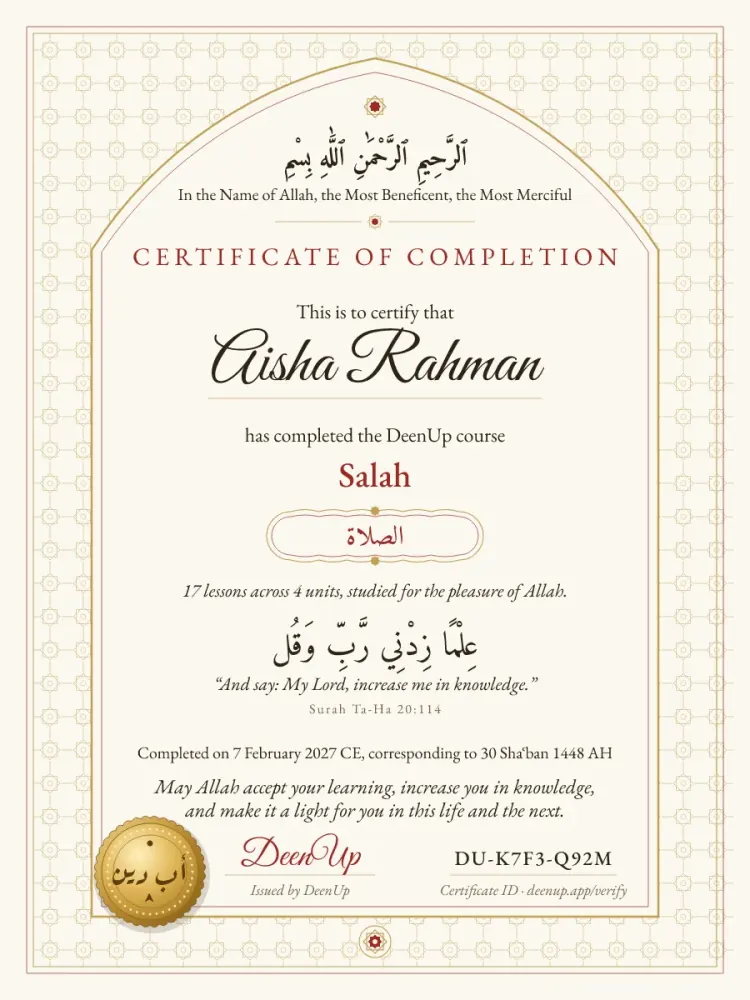
The essentials of salah, fiqh and faith, step by step from authentic sources. Finish all 28 days and earn a verifiable Certificate of Completion.
Take the free quizAnswer a few questions and get your personal plan.
A Feed Worth Scrolling
Swipe through short, scholar-approved Islamic lessons instead of mindless doom-scrolling.
Learn Through Play
Bite-sized lessons, quizzes, levels, and daily streaks make growing your Deen a habit.
Scholar-Approved
Every lesson is rooted in the Quran and authentic Sunnah and reviewed by qualified scholars.
Other Authentic Duas for Seeking Forgiveness
Adam's Supplication
When Adam and Hawwa were descended from Paradise, they did not despair — they turned to Allah with an honest admission:
رَبَّنَا ظَلَمنَا أَنفُسَنَا وَإِن لَّم تَغفِر لَنَا وَتَرحَمنَا لَنَكُونَنَّ مِنَ الخَاسِرِينَ
Rabbana zalamna anfusana wa-in lam taghfir lana wa-tarhama lana lanakunnanna min al-khasirin.
"Our Lord, we have wronged ourselves, and if You do not forgive us and have mercy upon us, we will surely be among the losers."
— (Surah Al-A'raf, 7:23)
This dua carries no negotiation and no excuse — only honest acknowledgment and appeal to Allah's mercy. It is the original human dua for forgiveness, preserved in the Quran.
Quick Reference: Duas to Ask for Forgiveness
| Dua | When to Recite | Source |
|---|---|---|
| Sayyidul Istighfar (full text above) | Morning and evening adhkar | Sahih al-Bukhari 6306 |
| Rabbana zalamna — Adam's dua | After sinning; entering sincere tawbah | Surah Al-A'raf 7:23 |
| Rabb ighfir li (رَبِّ اغْفِرْ لِي) — "My Lord, forgive me" | After each of the five prayers | Sunan Abu Dawud 1516 |
| Astaghfirullah (أَسْتَغْفِرُ اللهَ) — brief | Throughout the day; in idle moments | Sahih al-Bukhari 6307 |
Building Daily Istighfar Into Your Life
The Prophet ﷺ himself sought forgiveness more than seventy times a day — not because he had sins the way other humans do, but to model that istighfar is not crisis management. It is a way of living. Building this practice follows a simple escalation:
After every prayer (three times). The Prophet ﷺ would say Astaghfirullah three times after completing salah (Sahih Muslim 591). Five prayers a day means fifteen daily anchors for istighfar — before you have done anything else. This creates the habit structure before Sayyidul Istighfar even begins.
After Fajr. Add Sayyidul Istighfar to your morning routine immediately after the post-prayer tasbeeh. It takes about thirty seconds. Reciting it once sincerely fulfils the hadith's promise; reciting it three times deepens the engagement. See the benefits of istighfar for why this particular timing has such weight in the tradition.
When something weighs on you. Sayyidul Istighfar converts free-floating guilt into an act of worship. When the heaviness comes, it is an invitation — not to replay the mistake, but to say the dua. DeenBack's guide to daily istighfar habits shows how to structure this into a sustainable daily routine without it feeling punitive.
Before sleep. The dua for forgiveness and repentance includes specific supplications from the hadith for before sleep. Ending the day with acknowledgment and petition closes the loop that Sayyidul Istighfar opened in the morning.
Demi Manifest's reflection on remembering death in Islam offers a related perspective worth sitting with: when death is kept in conscious view, the daily practice of seeking forgiveness becomes less abstract and more urgent.
Allah's Response to Those Who Seek Forgiveness
The Quran speaks to those who have wronged themselves with direct reassurance: "Say: O My servants who have transgressed against themselves, do not despair of the mercy of Allah. Indeed, Allah forgives all sins." (Surah Az-Zumar, 39:53). The phrase "all sins" (jami'a al-dhunub) is as comprehensive as it sounds.
Allah names Himself Al-Ghaffar (the Perpetual Forgiver) and Al-Ghafur (the Oft-Forgiving) across the Quran's 114 surahs. These are not descriptors of a God who forgives reluctantly. The design of Sayyidul Istighfar — taught for every morning and every evening — points at this: forgiveness is meant to be sought regularly, because the human being regularly needs it and regularly receives it.
Your personal 28-Day Deen Plan
Learn your deen in 28 days, 5 minutes a day
The essentials of salah, fiqh and faith, step by step from authentic sources. Finish all 28 days and earn a verifiable Certificate of Completion.
Take the free quizAnswer a few questions and get your personal plan.
Frequently Asked Questions
What is the most powerful dua to ask for forgiveness in Islam?
The most powerful dua to ask for forgiveness is Sayyidul Istighfar — the Master of Istighfar. It acknowledges Allah as Lord, confesses one's covenant with Him, recognizes His blessings, admits sin, and asks for pardon. The Prophet ﷺ said whoever recites it in the morning with firm conviction and dies that day will enter Paradise (Sahih al-Bukhari 6306).
When should Muslims say Sayyidul Istighfar?
Muslims should say Sayyidul Istighfar in the morning and evening. The Prophet ﷺ said whoever says it in the morning with firm conviction and dies before the evening will enter Paradise, and likewise for the evening (Sahih al-Bukhari 6306). It is best recited after Fajr prayer as part of morning adhkar.
What are the conditions for tawbah in Islam?
For tawbah (repentance) to be accepted in Islam, scholars identify three core conditions: sincerely regretting the sin, stopping the action immediately, and firmly resolving not to return to it. If the sin involved another person's rights, a fourth condition is restoring those rights or seeking their pardon.
Can a dua for forgiveness be said in English?
Dua in a language the worshipper understands is widely accepted by scholars for personal supplication. The Prophet's authentic Arabic duas, however, carry a specific spiritual weight and fulfil the Sunnah. Learning Sayyidul Istighfar in Arabic — even gradually — is the recommended approach, while beginning with English is a valid starting point.
Is there a specific time when dua for forgiveness is more likely to be accepted?
Several times are highlighted in authentic hadith: the last third of the night when Allah descends to the lower heaven (Sahih Muslim 758), just before breaking fast during Ramadan, the final moments of Friday, and after the obligatory prayers. The Prophet ﷺ himself sought forgiveness more than 70 times a day regardless of timing (Sahih al-Bukhari 6307).
What should I do after saying the dua for forgiveness?
After sincerely asking for forgiveness, the Islamic approach is to follow it with good deeds. The Quran says good deeds erase bad ones (Surah Hud, 11:114). Practically, this means resuming salah if neglected, being generous in charity, maintaining honest dealings, and not dwelling excessively on the sin after it has been confessed to Allah.
Does repeating Astaghfirullah count as asking for forgiveness?
Yes — Astaghfirullah (I seek forgiveness from Allah) is a valid and authenticated form of istighfar. The Prophet ﷺ said he sought forgiveness more than 70 times a day (Sahih al-Bukhari 6307). Said with presence and genuine intent, even brief repeated phrases of istighfar are a form of dua. Sayyidul Istighfar adds the conditions of acknowledgment, confession, and petition in full form.