

- Authors

- Name
- Ahmad
- Role
- Senior Marketing Manager, Islamic education • DeenUp
بِسْمِ اللهِ الرَّحْمٰنِ الرَّحِيْمِ
In the name of God, the Most Gracious, the Most Merciful.
Quick answer
What is the most authentic dua to cure illness in Islam?
The most direct Prophetic dua to cure illness is the shifa dua the Prophet ﷺ recited when visiting the sick: Allahumma Rabb an-nas, adhhib al-bas, ishfi wa anta al-shafi, la shifa illa shifa uka, shifa an la yughadiru saqaman — "O Allah, Lord of mankind, remove the affliction, heal, for You are the Healer; there is no healing except Your healing, a healing that leaves no illness behind" (Sahih al-Bukhari 5675).
Illness brings a person closer to their limits — and in Islam, that threshold is exactly where the door to Allah opens widest. When the body is weakened, the heart is often more attentive. The Prophet ﷺ left specific duas and practices for sickness, not as alternatives to medicine but as the spiritual dimension of healing that medicine does not address.
What Is the Dua to Cure Illness in Islam?
The primary Prophetic dua to cure illness is the shifa (healing) supplication the Prophet ﷺ recited when visiting the sick. It directly names Allah as Ash-Shafi — the Healer — and petitions Him for a healing that leaves no trace of illness behind. The Prophet ﷺ also taught a hand-placed supplication for personal use and endorsed the practice of reciting Surah Al-Fatiha over the ill (Sahih al-Bukhari 5675; Sahih al-Bukhari 5736).
The Prophetic Dua for Healing
This is the dua the Prophet ﷺ recited when visiting someone who was ill:
اللَّهُمَّ رَبَّ النَّاسِ أَذهِبِ البَأسَ اشفِ وَأَنتَ الشَّافِي لَا شِفَاءَ إِلاَّ شِفَاؤُكَ شِفَاءً لَا يُغَادِرُ سَقَمًا
Allahumma Rabb an-nas, adhhib al-bas, ishfi, wa anta al-Shafi, la shifa illa shifa'uka, shifa'an la yughadiru saqaman.
"O Allah, Lord of mankind, remove the affliction. Heal — for You are the Healer. There is no healing except Your healing, a healing that leaves no illness behind."
— (Sahih al-Bukhari 5675)
When to recite it: When visiting a sick person, recite it seven times. When ill yourself, recite it over yourself. The hadith from Aisha states the Prophet ﷺ used to blow on the sick person while reciting (Sahih al-Bukhari 5016).
The Dua for Personal Use When in Pain
For self-recitation when experiencing pain or illness, the Prophet ﷺ taught a specific practice:
Place your hand on the area of pain, say Bismillah three times, then say seven times:
أَعُوذُ بِاللَّهِ وَقُدرَتِهِ مِن شَرِّ مَا أَجِدُ وَأُحَاذِرُ
A'udhu billahi wa qudratihi min sharri ma ajidu wa uhadhiru.
"I seek refuge in Allah and in His power from the evil of what I find and what I fear."
— (Sahih Muslim 2202)
This practice is remarkably accessible — no specific location, no requirement for a scholar's presence, no elaborate preparation. A hand on the pain, Bismillah, seven repetitions. The Prophet ﷺ taught it to Uthman ibn Abu al-'As when he complained of pain he had felt since embracing Islam.
Your personal 28-Day Deen Plan
Learn your deen in 28 days, 5 minutes a day
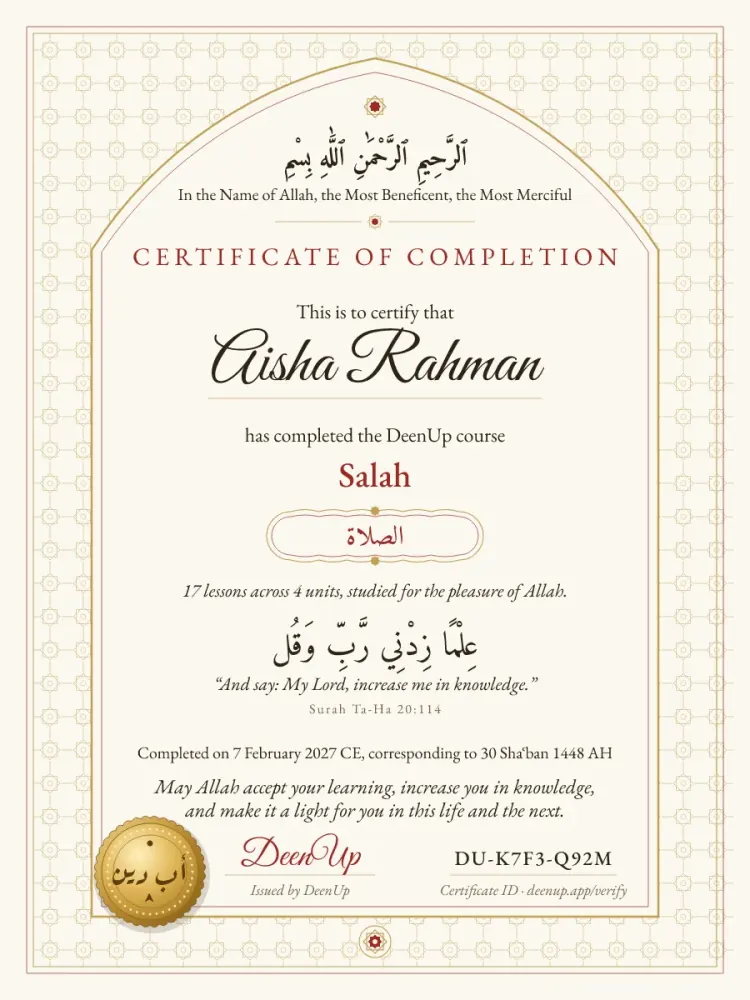
The essentials of salah, fiqh and faith, step by step from authentic sources. Finish all 28 days and earn a verifiable Certificate of Completion.
Take the free quizAnswer a few questions and get your personal plan.
A Feed Worth Scrolling
Swipe through short, scholar-approved Islamic lessons instead of mindless doom-scrolling.
Learn Through Play
Bite-sized lessons, quizzes, levels, and daily streaks make growing your Deen a habit.
Scholar-Approved
Every lesson is rooted in the Quran and authentic Sunnah and reviewed by qualified scholars.
Ruqyah: Quranic Recitation for Healing
Ruqyah (رُقيَة) is the Islamic practice of reciting Quranic verses and authenticated supplications for healing and protection. The Prophet ﷺ performed ruqyah on himself and others and endorsed it explicitly: "There is no harm in ruqyah as long as it does not involve shirk." (Sahih Muslim 2200)
The established ruqyah from the Sunnah involves:
- Surah Al-Fatiha (seven recitations) — the Prophet ﷺ described it as "a ruqyah for every disease" (Sahih al-Bukhari 5736)
- Ayatul Kursi (Al-Baqarah 2:255) — for protection and healing
- Al-Muwwidhatain: Surah Al-Falaq (113) and Surah An-Nas (114) — for protection from harm
The Prophet ﷺ's practice before sleep was to cup his hands, blow into them after reciting these surahs, then pass his hands over his body. During illness, Aisha reported that she would do this for him (Sahih al-Bukhari 5016). Our full guide to the most powerful dua for shifa covers the complete ruqyah practice in detail.
The Quranic Foundation of Healing
The Quran describes itself as a healing:
"And We send down of the Quran that which is a healing and a mercy to those who believe." (Surah Al-Isra, 17:82)
This verse uses the word shifa — the same word in the dua above. The Quran's healing operates on the heart and spirit, addressing what illness often exposes: anxiety, fear, the feeling of being out of control. And alongside the Quran, the Prophet ﷺ explicitly endorsed medicine. "Make use of medical treatment, for Allah has not made a disease without appointing a remedy for it." (Sunan Abu Dawud 3855)
Dua and medicine are not alternatives — they address different dimensions of the same reality. DeenBack's guide to spiritual care during illness explores how these two dimensions support rather than compete with each other.
Duas at a Glance: What to Recite When Ill
| Occasion | Dua | Source |
|---|---|---|
| Visiting a sick person | Allahumma Rabb an-nas... (full text above) ×7 | Bukhari 5675 |
| Pain in a specific place | Bismillah ×3, then A'udhu billahi wa qudratihi... ×7 | Muslim 2202 |
| General illness, self-recitation | Surah Al-Fatiha ×7 | Bukhari 5736 |
| Before sleep during illness | Al-Muwwidhatain ×3, blow into cupped hands | Bukhari 5016 |
| Greeting a sick person | La ba'sa tahurun inshallah | Bukhari 5656 |
Illness as Spiritual Purification
The Prophet ﷺ said: "No Muslim is afflicted with harm — not even a thorn prick — except that Allah expiates some of their sins because of it." (Sahih al-Bukhari 5641) This is not a framework that minimizes suffering or uses it to guilt the sick person. It is a reframing: every difficulty, patiently borne, carries a spiritual return.
The Quran describes sabr (patient perseverance) as one of the defining qualities of the believer: "And give good tidings to the patient — those who, when disaster strikes them, say: Indeed we belong to Allah, and indeed to Him we will return." (Surah Al-Baqarah, 2:155–157). Illness is one of the situations where this disposition is tested and developed.
For a full guide to the etiquette and practice of caring for the sick in Islam, our article on Islamic etiquette of visiting the sick covers the rights of the ill, what to say, and how to pray for them.
Building a Healing Practice Into Daily Life
Dua for illness is most powerful when it is part of a larger structure of daily remembrance — not something reached for only in emergency.
Add the morning and evening adhkar. Several supplications from the authenticated morning and evening adhkar address protection from illness directly. Saying Bismillah al-ladhi la yadurru ma'a ismihi shay'un fi al-ard wa la fi al-sama' three times morning and evening is recorded in Abu Dawud 5088 as protection from unexpected harm.
Learn the dua for a sick person. When someone in your household or community becomes ill, having the Prophet's supplications memorized means you can offer them immediately — a visitation that is both human and spiritual. See our detailed guide to dua for a sick person for the full practice.
Understand what the dua is doing. The shifa dua names Allah as Ash-Shafi — the Healer. This is not a title given casually; it describes a divine attribute. Using this name in supplication is an act of tawassul (seeking through the right means): appealing to Allah through the specific capacity that the request requires.
Demi Manifest's reflection on hope through hardship captures something important here: how the Islamic orientation toward difficulty — including illness — is not stoicism but active expectation of Allah's response.
For more on the healing traditions in Islam and the full range of Quranic and prophetic resources available to the sick person, see our article on dua for health and healing.
Your personal 28-Day Deen Plan
Learn your deen in 28 days, 5 minutes a day
The essentials of salah, fiqh and faith, step by step from authentic sources. Finish all 28 days and earn a verifiable Certificate of Completion.
Take the free quizAnswer a few questions and get your personal plan.
Frequently Asked Questions
What is the most authentic dua to cure illness in Islam?
The most direct Prophetic dua to cure illness is the shifa dua the Prophet ﷺ recited when visiting the sick: Allahumma Rabb an-nas, adhhib al-bas, ishfi wa anta al-shafi, la shifa illa shifa uka, shifa an la yughadiru saqaman — "O Allah, Lord of mankind, remove the affliction, heal, for You are the Healer; there is no healing except Your healing, a healing that leaves no illness behind" (Sahih al-Bukhari 5675).
Can I recite dua to cure illness for myself?
Yes — the Prophet ﷺ taught several duas for self-recitation when ill. Placing a hand on the site of pain and saying Bismillah three times followed by seven repetitions of A udhu billahi wa qudratihi min sharri ma ajidu wa uhadhiru is established from Sahih Muslim 2202. Personal supplication to Allah for health and healing is always valid and encouraged.
What is ruqyah and how is it used for illness?
Ruqyah is the Islamic practice of reciting specific Quranic verses and authenticated duas for healing and protection. The most established form is reciting Surah Al-Fatiha, Ayatul Kursi (Al-Baqarah 2:255), and the Muwwidhatain (Surahs Al-Falaq and An-Nas) with the intention of seeking healing. The Prophet ﷺ performed ruqyah on himself and others (Sahih al-Bukhari 5016).
Is it permissible to seek medical treatment alongside making dua for illness?
Seeking medical treatment alongside dua is not only permissible but encouraged in Islam. The Prophet ﷺ said, 'Make use of medical treatment, for Allah has not made a disease without appointing a remedy for it' (Sunan Abu Dawud 3855). Dua and medicine work together — tawakkul means trusting Allah while taking the means He provided, not abandoning them.
Which Quranic verses are recited for healing in Islam?
Surah Al-Fatiha is described by the Prophet ﷺ as a healing (Sahih al-Bukhari 5736). Surah Al-Isra 17:82 states the Quran is a healing for what is in the breasts. Ayatul Kursi (Al-Baqarah 2:255), and the last two verses of Surah Al-Baqarah (2:285-286) are also recited for protection and healing in authentic practice.
What dua should I say when visiting someone who is sick?
When visiting a sick person, the Prophet ﷺ taught reciting: La ba'sa tahurun inshallah — 'No harm, it is a purification if Allah wills' (Sahih al-Bukhari 5656). Additionally, reciting the shifa dua seven times over the sick person with a hand placed nearby is established practice. Our guide to the dua for a sick person covers the full visiting etiquette.
Does illness expiates sins in Islam?
Yes — illness carries a profound spiritual dimension in Islam. The Prophet ﷺ said no Muslim is afflicted with harm, not even a thorn prick, except that Allah expiates some of their sins because of it (Sahih al-Bukhari 5641). This does not mean illness is a punishment — it means every difficulty, patiently borne, carries a spiritual return. Combining dua, medicine, and patience fulfils the complete Islamic response to sickness.