

- Authors

- Name
- Ahmad
- Role
- Senior Marketing Manager, Islamic education • DeenUp
بِسْمِ اللهِ الرَّحْمٰنِ الرَّحِيْمِ
In the name of God, the Most Gracious, the Most Merciful.
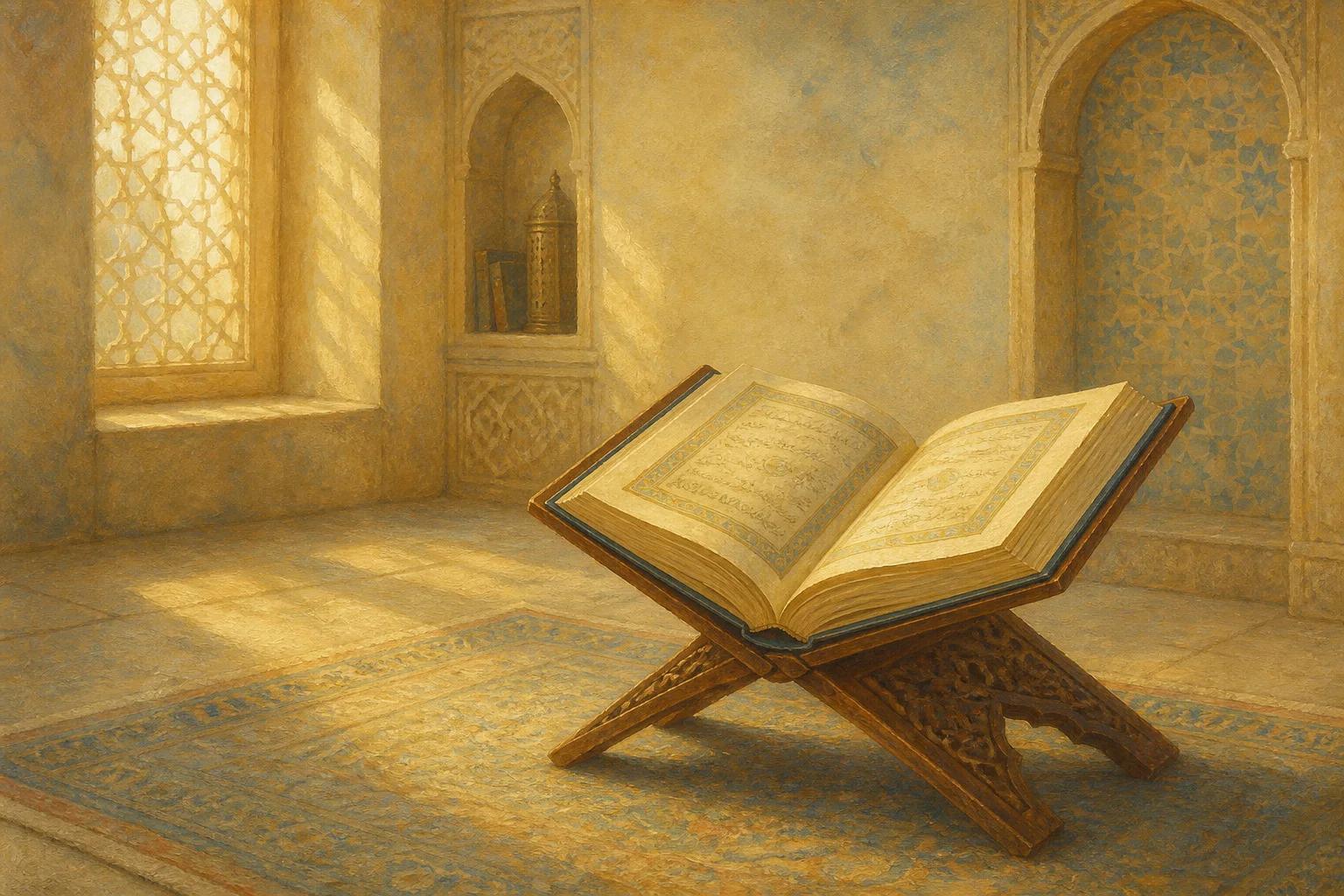
Every human being wonders what comes after this life. The question is universal — across traditions, centuries, and cultures. Islam does not leave that question unanswered. The Quran describes heaven — al-jannah (الجنة) — with a specificity and beauty that sets it apart from vague notions of an afterlife.
What does Islam teach about heaven? What does it look like, who enters it, how many levels does it have, and — perhaps most practically — how should that reality shape a Muslim's daily life today?
Before diving in, take the free DeenUp quiz at /start to explore how Islamic belief in the hereafter connects to your own daily practice.
What Is Heaven in Islam?
Heaven in Islam is jannah (الجنة), meaning garden in Arabic — the eternal abode Allah has prepared for the believers. The Quran describes it as a place of rivers, shade, fruits, profound spiritual peace, and the ultimate reward: the vision of Allah Himself. It is not a metaphor or a symbolic consolation; Islamic theology treats jannah as a real, physical, and spiritual place that believers will inhabit after resurrection and judgment.
The Quran states: "وَبَشِّرِ الَّذِينَ آمَنُوا وَعَمِلُوا الصَّالِحَاتِ أَنَّ لَهُمْ جَنَّاتٍ تَجْرِي مِن تَحْتِهَا الْأَنْهَارُ" — "And give good tidings to those who believe and do righteous deeds that they will have gardens beneath which rivers flow." (Surah Al-Baqarah, 2:25).
Your personal 28-Day Deen Plan
Learn your deen in 28 days, 5 minutes a day
The essentials of salah, fiqh and faith, step by step from authentic sources. Finish all 28 days and earn a verifiable Certificate of Completion.
Take the free quizAnswer a few questions and get your personal plan.
What Does the Quran Say Heaven Looks Like?
The Quran dedicates entire passages to describing jannah. Surah Ar-Rahman (Chapter 55) returns repeatedly to its descriptions with the refrain: "فَبِأَيِّ آلَاءِ رَبِّكُمَا تُكَذِّبَانِ" — "So which of the favors of your Lord would you deny?" — after each description of paradise.
Key Quranic descriptions of jannah include:
- Rivers — of pure water, milk, honey, and non-intoxicating drink (Surah Muhammad, 47:15)
- Shade and cool gardens — the heat of the world will be replaced by perfect comfort (Surah Ar-Rahman, 55:46–47)
- Fruits always within reach — "Its fruit is nearby" (Surah Al-Haqqah, 69:23)
- Beautiful dwellings — elevated thrones, fine furnishings, fine silk clothing (Surah Al-Kahf, 18:31)
- No idle talk or sin — only peace: "They will not hear therein any ill speech — only peace." (Surah Al-Waqi'ah, 56:25–26)
The Prophet Muhammad ﷺ reported that Allah said: "I have prepared for My righteous servants what no eye has seen, no ear has heard, and no human heart has imagined." (Sahih al-Bukhari 3244).
The Greatest Reward: Seeing Allah
Beyond every physical description, Islamic scholars consistently identify the vision of Allah (رُؤْيَةُ اللَّهِ, ru'yat Allah) as the supreme reward of paradise. The Quran alludes to this directly:
"وُجُوهٌ يَوْمَئِذٍ نَّاضِرَةٌ إِلَى رَبِّهَا نَاظِرَةٌ" — "Faces, that day, will be radiant, looking at their Lord." (Surah Al-Qiyamah, 75:22–23).
The Prophet ﷺ described this in a hadith: "You will see your Lord as you see the full moon with nothing obscuring it." (Sahih al-Bukhari 554). Every other pleasure of jannah is magnificent — but the believers' encounter with Allah surpasses all of it.
How Many Levels Does Heaven Have in Islam?
| Level / Name | Description |
|---|---|
| Al-Firdaws al-Ala | Highest level; directly beneath the Throne of Allah; source of the rivers of jannah |
| Jannat al-Ma'wa | "Garden of Refuge"; mentioned in Surah An-Najm (53:15) |
| Jannat al-Khuld | "Garden of Eternity"; the permanent abode |
| Jannat al-Na'im | "Garden of Bliss"; mentioned frequently in the Quran |
| Jannat al-Firdaws | Often used as synonymous with the highest jannah |
| Dar al-Salam | "Abode of Peace"; mentioned in Surah Yunus (10:25) |
| Dar al-Maqama | "Abode of Permanence"; mentioned in Surah Fatir (35:35) |
| Illiyyun | The highest register of deeds and abode of the righteous |
The Prophet ﷺ advised: "If you ask Allah for paradise, ask Him for al-Firdaws, for it is the highest part of paradise and from it flow the rivers of jannah, and above it is the Throne of the Most Merciful." (Sahih al-Bukhari 2790).
The Eight Gates of Jannah
Jannah has eight gates, each named after the righteous deed that serves as its primary path. This detail from hadith is not just theological trivia — it maps directly to the acts of worship Islam emphasizes most.
| Gate | Named For | Source |
|---|---|---|
| Baab al-Salah | Those who guarded the five daily prayers | Ahmad |
| Baab al-Jihad | Those who strived in the path of Allah | Bukhari |
| Baab al-Sadaqah | Those who gave generously in charity | Bukhari |
| Baab al-Rayyan | Those who fasted | Bukhari 1896 |
| Baab al-Hajj | Those who performed Hajj | Ahmad |
| Baab al-Kazimeen | Those who controlled their anger | Ahmad |
| Baab al-Iman | Those who entered through faith | Various |
| Baab al-Ayman | The right gate | Bukhari |
The Prophet ﷺ said: "Whoever performs the ablution perfectly and then says the shahada, all eight gates of jannah will be opened for him and he may enter through whichever he wishes." (Sahih Muslim 234).
Who Enters Heaven in Islam?
Islamic theology teaches that jannah is for those who believe in Allah and the Last Day, perform righteous deeds, and die in a state of submission to Allah. The Quran addresses this in multiple places:
"إِنَّ الَّذِينَ آمَنُوا وَعَمِلُوا الصَّالِحَاتِ كَانَتْ لَهُمْ جَنَّاتُ الْفِرْدَوْسِ نُزُلًا" — "Indeed, those who have believed and done righteous deeds will have the Gardens of al-Firdaws as a lodging." (Surah Al-Kahf, 18:107).
The Quran also emphasizes Allah's profound mercy and forgiveness. For more on belief in the hereafter as one of the six pillars of faith, see our guide to the pillars of iman.
How This Connects to This Life
Belief in jannah is not meant to make Muslims detached from this world. The Quran calls the people of wisdom those who "race toward forgiveness from your Lord and a Garden as wide as the heavens and earth, prepared for the righteous." (Surah Al-Imran, 3:133).
That framing — race — implies urgency and engagement, not withdrawal. The practical implications:
- Daily prayer becomes an investment, not an interruption
- Giving charity becomes a transfer to a permanent account
- Restraint from wrongdoing becomes a rational choice, not just obedience
- Gratitude becomes natural when you hold the final destination in view
For more on this forward-looking orientation, see preparing for the hereafter and the importance of gratitude in Islam.
The companion to jannah in Islamic theology is jahannam (جهنم) — the fire. Understanding both together is what scholars call a balanced khawf and raja' (fear and hope), which motivates sincere action. For a full treatment of that contrast, see what is jahannam.
Heaven Compared to This World
The Prophet ﷺ put the relationship between jannah and this world in precise terms: "A space the size of a bow in jannah is better than everything the sun rises upon." (Sahih al-Bukhari 2793). And elsewhere: "By Allah, this world in comparison to the hereafter is nothing except like one of you dips his finger in the sea — let him see how much he brings back." (Sahih Muslim 2858).
This is not pessimism about the world. Islam honors this life as the field of action, the place where deeds are sown. But it places the harvest firmly in the next life.
DeenBack's exploration of the believer's perspective on paradise connects this Quranic teaching to daily self-discipline. DemiManifest's piece on how heaven shapes Islamic ethics examines the civilizational and moral impact of jannah belief.
For a reflection on the Quranic descriptions of beauty and divine mercy, the benefits of Surah Ar-Rahman connects many of jannah's descriptions to the chapter scholars call the "Beauty of the Quran."
Your personal 28-Day Deen Plan
Learn your deen in 28 days, 5 minutes a day
The essentials of salah, fiqh and faith, step by step from authentic sources. Finish all 28 days and earn a verifiable Certificate of Completion.
Take the free quizAnswer a few questions and get your personal plan.
Frequently Asked Questions
The FAQs below address the most common questions about heaven in Islam — including who enters, what it looks like, and how belief in jannah shapes a Muslim's daily life.
The reality of jannah is one of the most motivating beliefs in Islam. It does not ask you to ignore this life — it asks you to invest it wisely. Every prayer, every act of patience, every choice to do right when it costs something: these are deposits in an account that never closes.
Take the free DeenUp quiz at /start to see how your current practice connects to the beliefs you have just read about — and where you might want to go deeper.
Islam holds the vision of Allah in jannah as the highest reward any human being could receive. The Quran's repeated descriptions of paradise are not meant to overwhelm — they are meant to give direction. As the Prophet ﷺ taught, when you ask Allah for paradise, ask for the best: "Ask Allah for al-Firdaws al-Ala." That is the goal. Everything in between is the path.
For the companion topic to this article, what is jannah gives a focused treatment of the Arabic term and what Islamic scholarship has elaborated about its nature. And for how the Day of Judgment leads to jannah, see what is the Day of Judgment and what are the five pillars of Islam.
Frequently Asked Questions
What is heaven called in Islam?
Heaven in Islam is called jannah, which means garden in Arabic. The Quran describes jannah as an eternal abode of peace, beauty, and divine presence prepared for those who believe and do righteous deeds. It is the ultimate goal of a Muslim's life and the reward Allah has promised the believers.
How many levels of heaven are there in Islam?
Islamic scholars identify multiple levels of paradise based on Quranic and hadith evidence. Al-Firdaws is the highest level, described as being directly beneath the Throne of Allah. The Prophet advised believers to ask specifically for al-Firdaws when supplicating. (Sahih al-Bukhari 2790)
What does heaven look like in Islam according to the Quran?
The Quran describes jannah as containing rivers of pure water, milk, honey, and non-intoxicating drink; lush gardens with shading trees; fruits always within reach; and elevated thrones. Most importantly, believers will be granted the vision of Allah — described as the greatest reward of paradise.
Who enters heaven in Islam?
Those who believe in Allah and the Last Day, perform righteous deeds, maintain prayer, give zakat, fast in Ramadan, and show sincere repentance are described in the Quran as the people of jannah. Allah's mercy extends to those who sincerely seek forgiveness, even those who struggled with sins.
What is the highest level of heaven in Islam?
Al-Firdaws al-Ala is the highest level of jannah, situated directly beneath the Throne of Allah. The Prophet Muhammad said: 'If you ask Allah for paradise, ask Him for al-Firdaws, for it is the highest part of paradise and from it flow the rivers of paradise.' (Sahih al-Bukhari 2790)
Is heaven permanent in Islam?
Yes. Jannah in Islam is eternal — its inhabitants do not age, die, or leave. The Quran describes it as a permanent abode: 'They will abide therein forever' (Surah Al-Bayyinah, 98:8). This permanence is central to why Islamic ethics frame worldly sacrifice as a worthwhile investment.
How does belief in heaven affect a Muslim daily life?
Belief in jannah reframes every difficulty. When prayer feels demanding, fasting feels hard, or giving feels costly, the certainty of paradise puts these acts in perspective. The Prophet described this vividly: even one moment in jannah would cause a person to forget all the hardships of the world. (Sahih Muslim 2807)