

- Authors

- Name
- Ahmad
- Role
- Senior Marketing Manager, Islamic education • DeenUp
بِسْمِ اللهِ الرَّحْمٰنِ الرَّحِيْمِ
In the name of God, the Most Gracious, the Most Merciful.
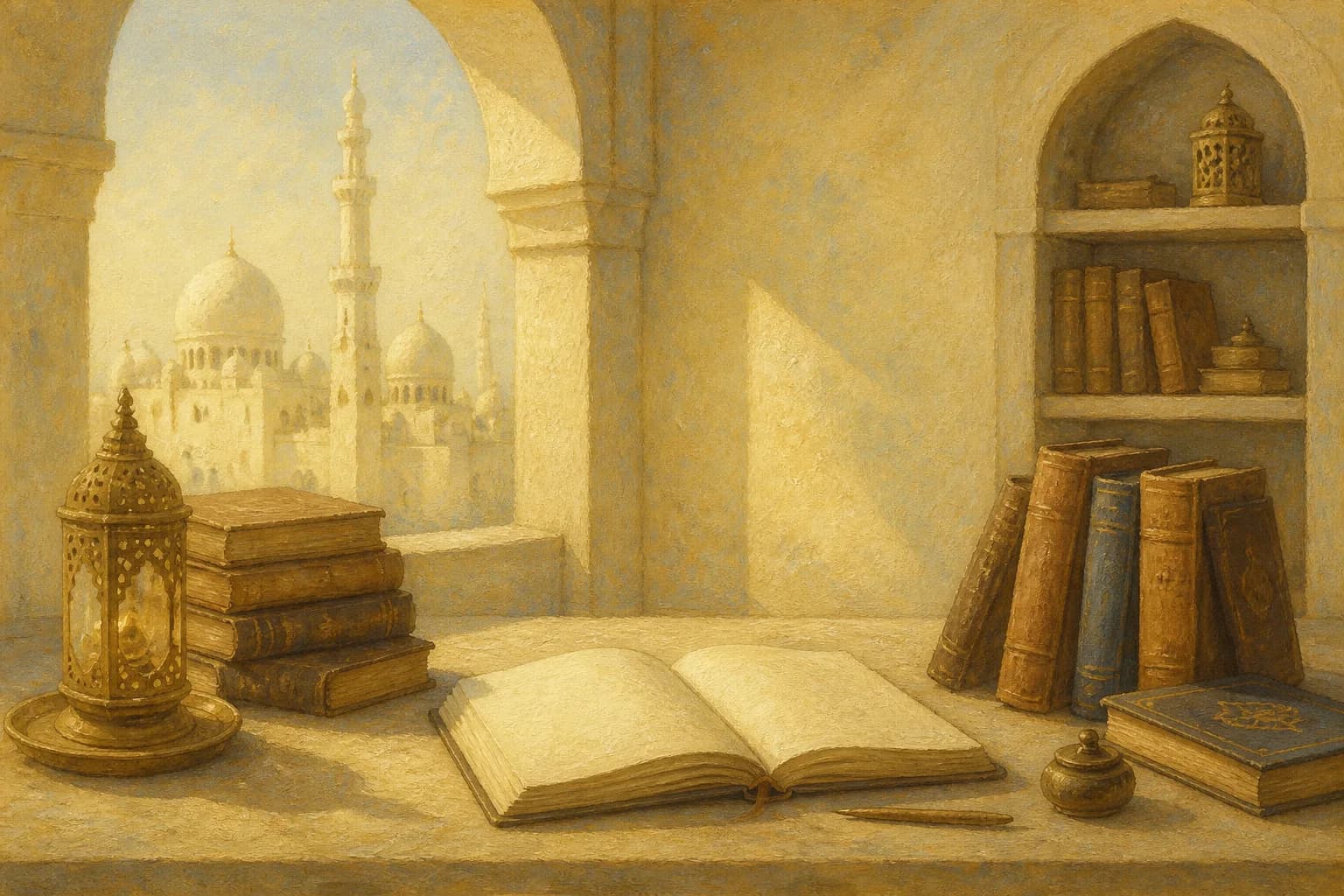

There are days when everything feels heavy — the work is relentless, the relationships are strained, the future uncertain. And then a single moment breaks through: the warmth of sunlight through a window, a child's laugh, one breath drawn without effort. Islam asks us to see that moment not as coincidence, but as provision.
Shukr — شُكْر (shukr) — is one of the most emphasized qualities in the Quran and the Sunnah. It is not simply saying thank you. It is a state of the heart, a way of perceiving, and a discipline that can transform ordinary life into an ongoing connection with Allah. And unlike many spiritual qualities that feel abstract, shukr has concrete dimensions you can practice starting today.
What Shukr Actually Means
The Arabic root sha-ka-ra (شَكَرَ) carries the meaning of recognizing a benefit, acknowledging its source, and responding appropriately. Classical scholars identified three dimensions of true shukr:
- Shukr of the heart — recognizing that every blessing, great or small, comes from Allah alone
- Shukr of the tongue — expressing praise and thanks, most often through Alhamdulillah (الْحَمْدُ لِلَّهِ — "All praise is due to Allah")
- Shukr of the limbs — using what Allah gave you in ways that please Him
This three-part framework matters because shukr is not sentiment alone. Someone who says Alhamdulillah while using their health to harm others, or their wealth to fuel arrogance, has not embodied it. True gratitude is complete — it moves from the inner world to outward action.
The Quran links this quality to wisdom itself:
وَلَقَدْ آتَيْنَا لُقْمَانَ الْحِكْمَةَ أَنِ اشْكُرْ لِلَّهِ
"And We had certainly given Luqman wisdom, saying: Be grateful to Allah. And whoever is grateful — is grateful for the benefit of himself." — (Surah Luqman, 31:12)
And Allah gives a direct, unambiguous promise about what gratitude produces:
وَإِذْ تَأَذَّنَ رَبُّكُمْ لَئِن شَكَرْتُمْ لَأَزِيدَنَّكُمْ
"If you are grateful, I will surely increase you in favor; but if you deny, My punishment is indeed severe." — (Surah Ibrahim, 14:7 — quran.com/ibrahim/7)
The connection between gratitude and increase is not metaphorical. It is a statement of divine law — one that applies regardless of the circumstances you are in.
Why This Matters for Modern Muslims
We live in an environment almost engineered for dissatisfaction. Advertisers remind us of what we lack. Social media surfaces everyone else's highlight reels. News cycles through what is broken. The cumulative effect is a subtle but persistent ingratitude — not the dramatic kind the Quran warns against, but a quiet forgetting.
The Prophet Muhammad ﷺ understood this pull, and his life was the antidote to it. Despite being the most honored of all creation, he stood in night prayer until his feet swelled with the effort. When Aisha (رضي الله عنها) asked why, he replied:
"Should I not be a grateful servant?" (Sahih Bukhari 4837 — sunnah.com/bukhari:4837)
His gratitude was not proportional to blessings being new or exciting. It was a steady orientation — a disciplined turning of heart toward Allah in all conditions. That is the model.
This matters practically. Research in positive psychology consistently finds that grateful people experience greater resilience, stronger relationships, and deeper wellbeing. These findings echo what Islam has taught for fourteen centuries. The Yaqeen Institute has explored how prophetic practices like gratitude align with and often exceed what modern psychological research recommends for flourishing.
For Muslims, shukr is inseparable from the importance of dhikr — both are daily practices of reorienting the heart toward Allah. And the morning adhkar are among the most structured ways to begin that practice each day.
How to Practice Shukr Daily
Knowing gratitude matters is different from building it as a habit. Here are concrete ways to cultivate shukr consistently.
Begin and End With Alhamdulillah — and Mean It
The simplest practice is to mark ordinary moments with awareness: before eating, after completing a task, when arriving home safely. The word Alhamdulillah, said slowly and with presence, begins to shift perception over time.
The Prophet ﷺ taught a supplication that ties remembrance, gratitude, and worship into one:
اللَّهُمَّ أَعِنِّي عَلَى ذِكْرِكَ وَشُكْرِكَ وَحُسْنِ عِبَادَتِكَ
"O Allah, help me to remember You, to be grateful to You, and to worship You well." — (Abu Dawud 1522)
He taught this dua specifically to Mu'adh ibn Jabal and instructed him to say it after every prayer. It is a complete program for the inner life, and returning to it daily is one of the most direct paths to building shukr.
Reflect Specifically — Not Generally
Before sleeping, spend two or three minutes naming specific blessings from that day. Not abstract ones. The fact that your eyesight let you read. The colleague who helped without being asked. The meal that was ready when you were hungry.
Specificity is what moves gratitude from concept to feeling. And it is feeling that changes the heart.
Thank the People Around You
The Prophet ﷺ said: "Whoever does not thank people has not thanked Allah." (Abu Dawud 4811, Tirmidhi 1954 — sunnah.com/abudawud:4811)
Thanking your parents, your spouse, a colleague who did something small, the person who held the door — these are not just courtesies. When done with awareness that Allah placed those people in your life, they become acts of worship. This is one reason Islam places such emphasis on maintaining family ties and expressing care for those around you.
For further reflection on building this kind of intentional daily practice, the DeenBack blog offers perspectives on reforming the self through consistent Islamic habits.
Use Your Blessings in Ways That Please Allah
If Allah gave you wealth, shukr means spending some in sadaqah. If He gave you health, shukr means using your body for prayer and service. If He gave you knowledge, shukr means sharing it. This closes the loop between recognition and response — the shukr of the limbs that completes what begins in the heart.
This connects directly to what barakah in Islam actually means: divine blessing that multiplies through righteous use, not hoarding.
Keep learning your deen with short, sourced lessons in DeenUp.
Signs That Shukr Is Growing in You
Gratitude does not arrive fully formed. It grows, slowly, like a plant that needs daily watering. Some signs that shukr is taking root:
- You begin noticing blessings you previously ignored — clean water, good health, safety, ease
- Complaining decreases, not because life became easier, but because your perspective shifted
- You find yourself more patient in difficulty, trusting that Allah's provision continues even when it is not visible
- The word Alhamdulillah starts feeling meaningful rather than automatic
The Quran states plainly: "And few of My servants are truly grateful." (Surah Saba, 34:13). This is not a condemnation — it is an invitation. Being among the shakireen (those who are grateful) is a high station, and it begins with a single, aware moment.
This quality of awareness is closely connected to taqwa — the God-consciousness that shapes a Muslim's relationship with every experience. And it is also why benefits of istighfar and gratitude reinforce each other: as you grow in awareness of blessings, you naturally grow in awareness of how often you fall short — which leads you back to seeking forgiveness.
The Demi Manifest blog explores similar themes around purposeful Islamic living that complements this daily practice of shukr.
Common Questions
Is it wrong to want things to be different while also being grateful?
No. Gratitude and du'a coexist completely. Making dua for better circumstances reflects belief that Allah can improve your situation — that is itself a form of trust. Shukr is about recognizing what you have, not suppressing the desire for growth or relief.
What if I genuinely do not feel grateful?
Begin with the action, and the feeling often follows. Say Alhamdulillah even when it feels rote. Reflect on what would be lost if one specific blessing were taken away. The heart responds to repeated practice. The scholars understood that shukr is not a mood you wait for — it is a habit you build.
Does shukr apply in hardship too?
Yes, and this is one of the most remarkable features of Islamic spirituality. The Prophet ﷺ described the believer's affair as remarkable: if blessed, he is grateful; if tested, he is patient — and both are good for him. (Sahih Muslim 2999). Gratitude in hardship does not mean denying pain. It means acknowledging that Allah's care continues through it.
Closing
Shukr is not a task to add to your list. It is a lens that changes what you see. A Muslim practicing gratitude moves through the same day as everyone else — the same traffic, the same pressures, the same small disappointments — but perceives them differently. The mundane becomes occasion for praise. Difficulty becomes a test from a merciful Lord who has promised reward for patience. Beauty becomes proof of divine generosity.
Start with the small things. Say Alhamdulillah and mean it. Thank someone near you today. Use one blessing in a way that would please Allah.
If you want support making this a daily discipline — with Quranic verses, curated duas, and gentle habit reminders — DeenUp is designed for exactly that.
Keep learning your deen with short, sourced lessons in DeenUp.
Frequently Asked Questions
What does shukr mean in Islam?
Shukr (شُكْر) means gratitude or thankfulness to Allah. It involves recognizing His blessings with the heart, acknowledging them verbally, and responding through righteous actions with your limbs.
How do Muslims express gratitude to Allah?
By saying Alhamdulillah (الْحَمْدُ لِلَّهِ), maintaining prayer consistently, using their blessings in ways that please Allah, and thanking people who do good to them.
Does gratitude increase blessings in Islam?
Yes. Allah says in the Quran: 'If you are grateful, I will surely increase you in favor' (Surah Ibrahim, 14:7). Gratitude is directly linked to divine increase.
Is thanking people also part of shukr in Islam?
Yes. The Prophet said: 'Whoever does not thank people has not thanked Allah.' (Abu Dawud 4811). Gratitude to Allah includes appreciating the people He sends to bless you.
What is the opposite of shukr in Islam?
The opposite is kufr al-nimah — ingratitude to blessings. This is not just failing to say thank you; it includes using blessings in disobedience to Allah or denying that blessings come from Him.