

- Authors

- Name
- Ahmad
- Role
- Senior Marketing Manager, Islamic education • DeenUp
بِسْمِ اللهِ الرَّحْمٰنِ الرَّحِيْمِ
In the name of God, the Most Gracious, the Most Merciful.
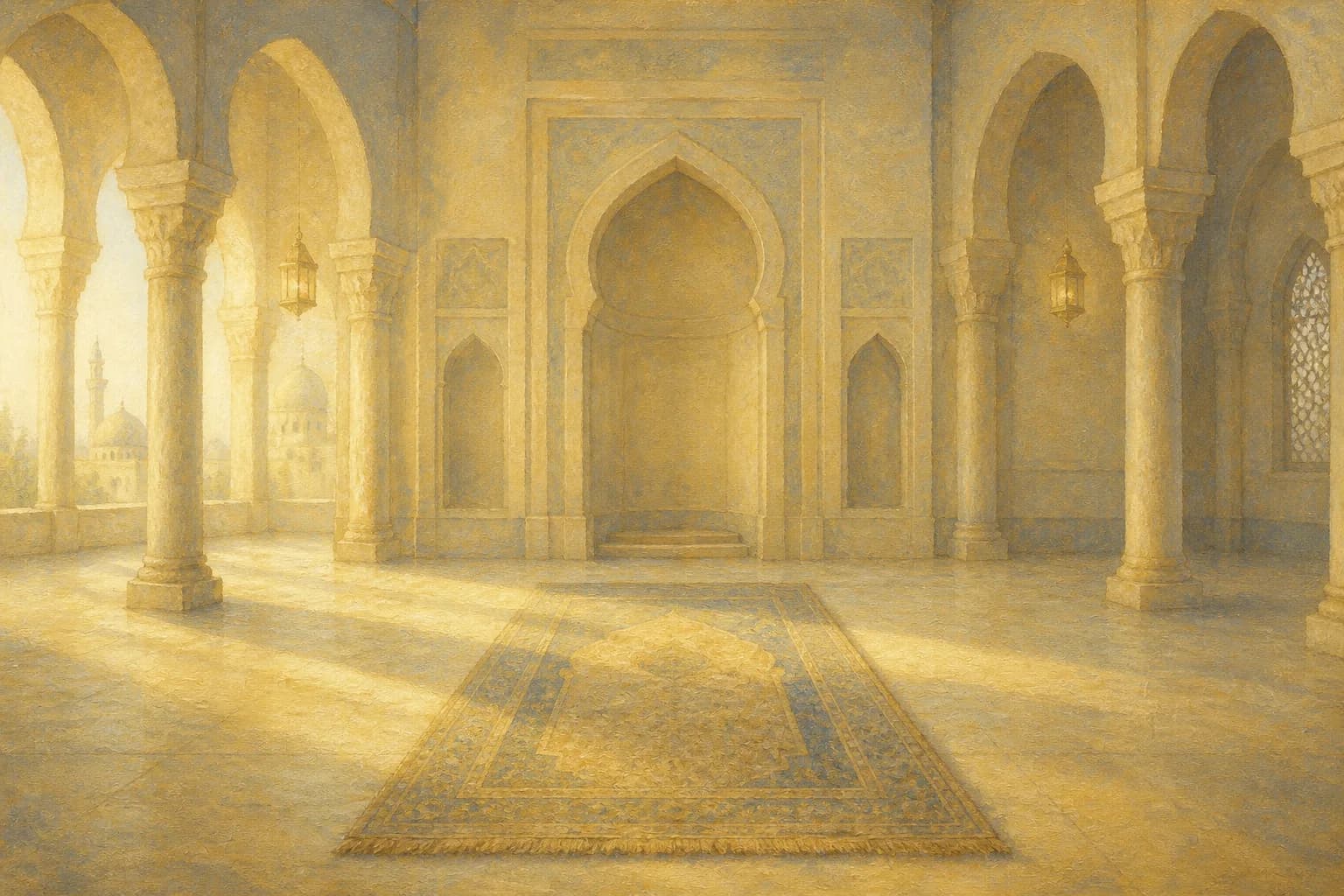

There is something singular about the moments before sunrise. The city is quiet, the house is still, and you are awake — about to stand before Allah in the prayer that the Quran calls "ever witnessed." Fajr salah is not merely the first prayer of the day. It is a covenant between you and your Creator, renewed every single morning.
Whether you are learning to pray for the first time or refining your practice, this guide walks through everything you need to perform Fajr salah correctly.
How Do You Perform Fajr Salah?
Fajr salah consists of 4 rakahs in total: 2 Sunnah al-Muakkadah (strongly emphasized Sunnah) followed by 2 fard (obligatory) rakahs. Each rakah includes standing recitation, bowing (ruku), and two prostrations (sujood). Both fard rakahs are recited aloud. The prayer begins at true dawn and must be completed before the sun fully rises. The entire prayer takes roughly 5 to 10 minutes.
Why Does the Quran Single Out Fajr?
Allah specifically mentions the Fajr prayer in the Quran: "Establish prayer at the decline of the sun until the darkness of the night, and [also] the Quran of dawn. Indeed, the recitation of dawn is ever witnessed." (Surah Al-Isra, 17:78)
The phrase "ever witnessed" is significant. Scholars of tafsir explain that the angels of the night and the angels of the day both bear witness to the Fajr prayer — making it uniquely observed in the heavens.
The Prophet ﷺ reinforced this with one of the most powerful promises in the Sunnah: "Whoever prays Fajr is under the protection of Allah." (Sahih Muslim) Two short rakahs, and you are under divine protection for the day.
What to Do Before Fajr Salah
Renew Your Wudu
Sleep breaks wudu, so the first step on waking is to perform a fresh wudu. Follow the complete wudu steps if you need a refresher — washing hands, rinsing mouth, nose, face, arms, wiping the head and ears, and washing feet.
If ghusl (full ritual bath) is required, perform it now — it also fulfills the wudu requirement.
Face the Qibla
Determine the direction of Mecca (qibla) for your location. Most masjids have this clearly marked; apps like DeenUp and most Islamic prayer apps include a qibla compass.
Make Your Niyyah
Make your intention (niyyah) in your heart to pray Fajr salah. You do not need to say it aloud — the intention is an act of the heart. For the Sunnah rakahs, your niyyah is "I intend to pray 2 rakah of Sunnah Fajr." For the fard, "I intend to pray 2 rakah of fard Fajr."
Step-by-Step: How to Perform Fajr Salah
The Sunnah Rakahs (2 Rakah, Quiet)
Pray these before the fard, ideally at home or upon arriving at the masjid. They are prayed quietly (sirr).
Rakah 1:
- Raise both hands to your earlobes and say: Allahu Akbar (اللَّهُ أَكْبَرُ)
- Lower hands to your chest; recite the opening supplication silently (e.g., Subhanaka Allahumma wa bihamdika...)
- Recite Surah al-Fatihah — "In the name of Allah, the Most Gracious, the Most Merciful..."
- Recite a short surah — Surah al-Kafirun is recommended for the first Sunnah rakah
- Bow (ruku): place hands on knees, back parallel to the floor; say Subhana Rabbi al-Azim (سُبْحَانَ رَبِّيَ الْعَظِيمِ) three times
- Rise and say: Sami'a Allahu liman hamidah, Rabbana wa lakal hamd (سَمِعَ اللَّهُ لِمَنْ حَمِدَهُ، رَبَّنَا وَلَكَ الْحَمْدُ)
- Prostrate (sujood): seven body parts on the ground (forehead, nose, both palms, both knees, both feet); say Subhana Rabbi al-A'la (سُبْحَانَ رَبِّيَ الأَعْلَى) three times
- Sit briefly between the two prostrations
- Perform the second prostration as in step 7
Rakah 2: Repeat steps 3–7, then sit for the full tashahhud (At-tahiyyatu...), recite the salawat on the Prophet ﷺ, and give taslim (salaam to the right, then left).
The Fard Rakahs (2 Rakah, Aloud)
The fard rakahs follow the same structure but are recited aloud (jahr). It is Sunnah to recite a longer surah in the fard Fajr rakahs — the Prophet ﷺ would often recite between 60 and 100 verses.
After the second fard rakah, sit for tashahhud, recite the salawat and any du'a, then give taslim.
Fajr Salah at a Glance
| Component | Sunnah Rakahs | Fard Rakahs |
|---|---|---|
| Number of rakahs | 2 | 2 |
| Status | Sunnah al-Muakkadah | Obligatory (fard) |
| Recitation style | Quiet (sirr) | Aloud (jahr) |
| Recommended surah | Al-Kafirun, Al-Ikhlas | Longer surahs |
| When to pray | Before fard | After Sunnah |
| What follows | Start fard | Morning adhkar |
Building a Consistent Fajr Habit
Waking for Fajr is where most Muslims struggle — not the prayer itself. Explore these approaches that many Muslims find genuinely helpful:
- Sleep with wudu. Some scholars note that sleeping in a state of wudu helps condition the heart and mind for worship.
- Set a firm bedtime. If Fajr is at 5:30 AM and you need 7 hours of sleep, be in bed by 10 PM. The math is simple; the discipline is the challenge.
- Prepare the night before. Lay out your prayer mat, face it toward the qibla, and place your phone alarm nearby. Remove as many morning decisions as possible.
- Pray Isha in congregation. The Prophet ﷺ said: "Whoever prays Isha in congregation, it is as if he prayed half the night. Whoever prays Fajr in congregation, it is as if he prayed the whole night." (Sahih Muslim) Starting the evening prayer on time creates momentum for Fajr.
- Track your prayer habit. Seeing a consistent streak motivates you to maintain it.
For deeper morning spiritual preparation, read this guide on building an Islamic morning routine and how morning du'a practices complement your Fajr.
Still struggling to perform salah properly?
Learn each prayer step by step, understand what you are saying, and build a consistent salah habit with clear, scholar-approved lessons in DeenUp.
Take the Salah Quiz
Common Mistakes to Avoid in Fajr Salah
Skipping the Sunnah rakahs. The Prophet ﷺ described the 2 Sunnah rakahs before Fajr as "better than this world and all it contains." Only skip them if the congregation is already in the fard prayer — never miss them casually.
Rushing the recitation. Fajr is specifically recommended for longer recitation. Even if you are tired, take the time to recite Surah al-Fatihah with presence, not speed.
Improper ruku and sujood. In ruku, the back must be parallel to the floor — not slightly bent. In sujood, all seven body parts must be on the ground simultaneously. These are pillars of the prayer, and an invalid ruku or sujood invalidates the rakah.
Forgetting the intention. Niyyah must be present before you say the opening takbir. The intention does not need to be spoken aloud — it is a heart-state, not a verbal declaration.
Praying Fajr in Congregation
If you can reach the masjid, praying Fajr in congregation multiplies your reward enormously. The Prophet ﷺ considered it the most rewarding time to pray in jamaah, partly because it requires the most effort. Many Muslims who commit to masjid Fajr find it transforms their entire day.
After Fajr: The Morning Adhkar
After finishing the fard rakahs, stay seated and make the morning adhkar. These include Astaghfirullah three times, Ayatul Kursi, and the Subhanallah/Alhamdulillah/Allahu Akbar sequence of 33 each. The morning adhkar seal the prayer with remembrance and protect the rest of your day.
The full rewards of Fajr prayer — from divine protection to increased rizq — are only accessible to those who show up. And showing up, consistently, is what transforms Fajr from an obligation into the anchor of your day.
Performing Fajr Salah Well
Fajr is two fard rakahs — and two Sunnah rakahs before them — prayed between true dawn and sunrise, recited aloud, in a state of wudu, facing the qibla. That is the technical minimum. But the heart of Fajr is the choice to wake when the world sleeps and stand before the One who never sleeps.
Perform the wudu. Lay down the prayer mat. Say the takbir. Everything else falls into place.
Still struggling to perform salah properly?
Learn each prayer step by step, understand what you are saying, and build a consistent salah habit with clear, scholar-approved lessons in DeenUp.
Take the Salah QuizFrequently Asked Questions
How many rakahs is Fajr salah?
Fajr salah consists of 4 rakahs total: 2 Sunnah al-Muakkadah followed by 2 fard (obligatory) rakahs. The Sunnah rakahs are prayed quietly before the fard. The Prophet ﷺ emphasized the Sunnah rakahs greatly, describing them as better than the world and everything in it.
What time does Fajr salah begin?
Fajr salah begins at true dawn — when a horizontal whiteness spreads across the horizon — and ends at sunrise. This window typically lasts between 60 and 90 minutes depending on your location and season. Use a reliable prayer time app or local masjid schedule to get the exact time for your area.
Do I need wudu before Fajr salah?
Yes, valid wudu is required before every salah, including Fajr. If you slept overnight, your wudu is broken and must be renewed. If ghusl is required (such as after marital relations), performing ghusl fulfills the wudu requirement. You may perform tayammum if no water is available.
What do I recite in Fajr salah?
In each rakah you recite Surah al-Fatihah followed by another surah or verses. The Prophet ﷺ recommended longer recitation at Fajr. Common choices include Surah al-Kafirun and Surah al-Ikhlas for the Sunnah rakahs, and a longer surah for the fard rakahs. Both fard rakahs are recited aloud.
What do I do if I miss Fajr salah?
If you miss Fajr due to sleep or forgetfulness, pray it as a qada (make-up) as soon as you wake or remember. The Prophet ﷺ taught: 'There is no negligence in sleep; negligence occurs only when one is awake and delays.' (Sahih Muslim) Do not wait until the next Fajr — make it up immediately.
Can I pray Fajr salah alone at home?
Yes, Fajr salah is fully valid when prayed alone at home. However, men are strongly encouraged to pray in congregation at the masjid when possible. The Prophet ﷺ said that praying Fajr in congregation carries the reward of praying the entire night. Women may pray at home without any reduction in reward.
What do I say after Fajr salah?
After Fajr salah, it is Sunnah to remain seated and recite the morning adhkar — supplications the Prophet ﷺ made after each fard prayer. These include saying Astaghfirullah three times, then Allahu Akbar, Subhanallah, and Alhamdulillah each 33 times, and reciting Ayatul Kursi. The morning adhkar take about 5 minutes and carry immense spiritual protection for the day ahead.