

- Authors

- Name
- Ahmad
- Role
- Senior Marketing Manager, Islamic education • DeenUp
بِسْمِ اللهِ الرَّحْمٰنِ الرَّحِيْمِ
In the name of God, the Most Gracious, the Most Merciful.
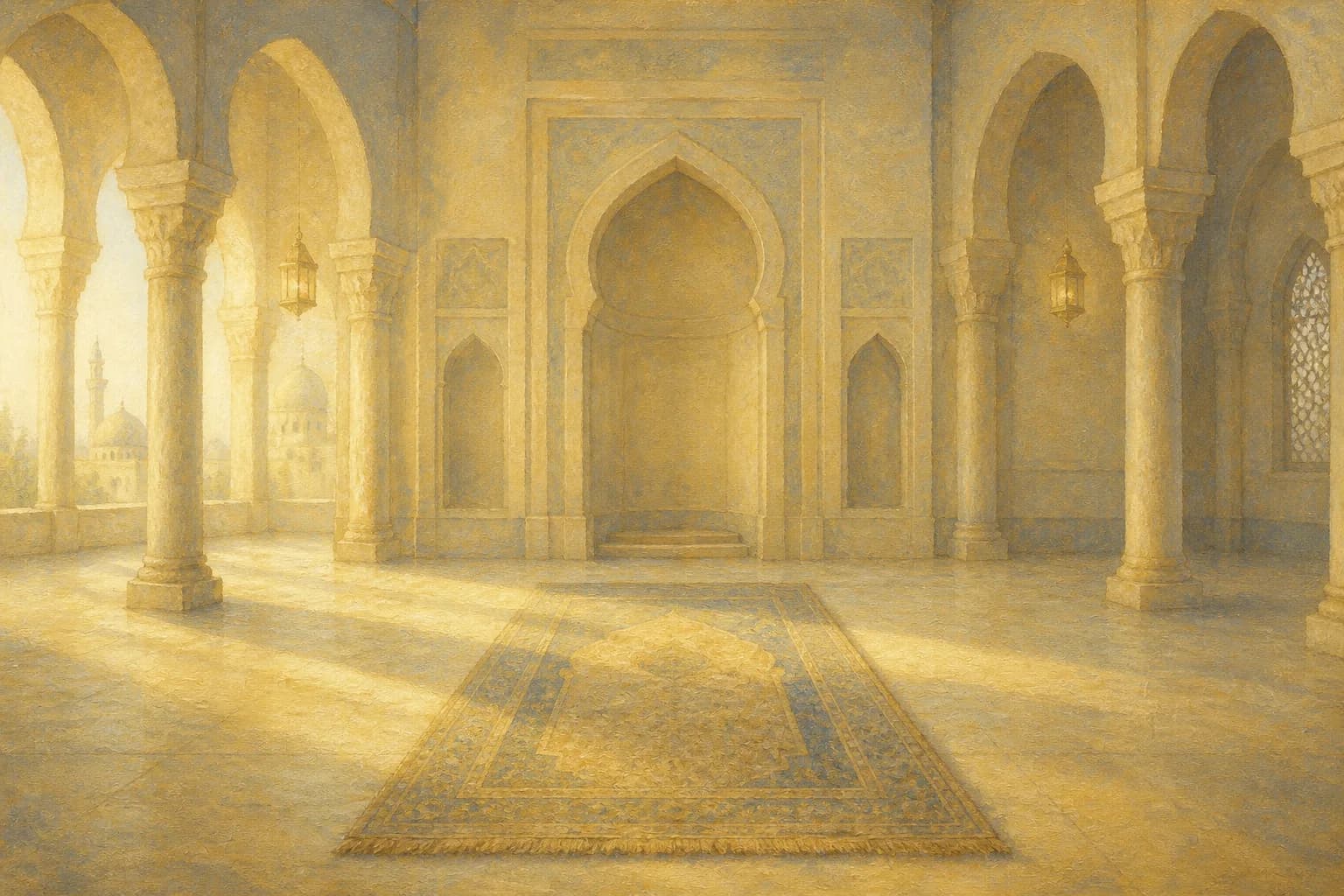

Before the call to prayer echoes across the rooftops, before the world stirs and the demands of the day begin, there is a window — quiet, still, and sacred. Salat al Fajr, the dawn prayer, occupies that window. It is the prayer the Quran calls "ever witnessed," prayed when the night angels depart and the day angels arrive. It is also, for many Muslims, the hardest prayer to maintain consistently.
This guide covers what Salat al Fajr is, when to pray it, how to perform it correctly, and how to make it the steadiest part of your day.
What Is Salat al Fajr?
Salat al Fajr (صَلَاةُ الْفَجْر) is the Dawn Prayer — the first of the five obligatory daily prayers in Islam. The word salat (صَلَاة) means ritual prayer, and al-fajr (الْفَجْر) refers to the breaking of dawn. Together, Salat al Fajr is a 4-rakah prayer (2 Sunnah + 2 fard) performed between the moment of true dawn and sunrise, recited aloud in the fard rakahs. It is the anchor of the Islamic day, setting the spiritual tone for every hour that follows.
When Is the Time for Salat al Fajr?
Salat al Fajr begins at al-fajr al-sadiq (true dawn) — when a thin whiteness spreads horizontally across the horizon, distinct from the false dawn (al-fajr al-kadhib) which appears as a vertical streak and then fades. The time ends at the moment the sun begins to rise above the horizon.
In most regions, this window lasts between 60 and 90 minutes. It varies by latitude and season. In northern latitudes in summer, Fajr can begin as early as 2:30 AM and end before 5:00 AM. In winter, it may begin at 6:00 AM. Always use a verified prayer time source for your specific location.
| Aspect | Detail |
|---|---|
| Arabic name | صَلَاةُ الْفَجْر (Salat al Fajr) |
| English meaning | The Dawn Prayer |
| Time begins | True dawn (al-fajr al-sadiq) |
| Time ends | Sunrise |
| Total rakahs | 4 (2 Sunnah + 2 Fard) |
| Fard recitation style | Aloud (Jahr) |
| Mentioned in Quran | Surah Al-Isra, 17:78 |
Why Does Salat al Fajr Carry Such Reward?
The Quran gives Salat al Fajr a name that no other prayer receives: "Indeed, the recitation of dawn is ever witnessed." (Surah Al-Isra, 17:78) The phrase "ever witnessed" (mashhud) refers to the angels of the night and the angels of the day both being present at the time of Fajr — an extraordinary spiritual intersection that happens at no other prayer.
The Prophet ﷺ also said: "Whoever prays Fajr is under the protection of Allah." (Sahih Muslim) This protection is not metaphorical — it reflects Allah's direct care over those who choose to wake and worship at the most difficult hour.
Additionally, the Sunnah rakahs before Fajr carry an extraordinary statement: "The two rakah of Fajr are better than this world and all it contains." (Tirmidhi) Four rakahs in total. Two of them worth more than the world.
How to Prepare for Salat al Fajr
Make a Firm Intention the Night Before
Waking for Fajr begins the night before. Going to sleep with the sincere intention to wake for prayer is itself an act of worship. Set your alarm, complete your Isha prayer on time, and avoid staying up late without purpose.
Perform Wudu
Sleep breaks wudu, so the first physical act of the Fajr morning is to renew it. Review the complete Fajr salah performance guide if you need to walk through each step of wudu and the full prayer movements.
أَشْهَدُ أَنْ لَا إِلَهَ إِلَّا اللهُ وَأَشْهَدُ أَنَّ مُحَمَّدًا عَبْدُهُ وَرَسُولُهُ
"I bear witness that there is no god but Allah, and I bear witness that Muhammad is His servant and messenger."
— (Recite this after completing wudu; Sahih Muslim)
Face the Qibla and Set Your Niyyah
Turn toward the qibla and make your intention in your heart. The niyyah does not need to be spoken aloud — it is a heart-level commitment to perform Salat al Fajr for the sake of Allah alone.
How to Perform the Rakahs of Salat al Fajr
The 2 Sunnah Rakahs (Quiet — Sirr)
These are prayed first, quietly, before the fard prayer begins. They are Sunnah al-Muakkadah — so strongly emphasized that the Prophet ﷺ rarely left them even during travel.
In Rakah 1, recite Surah al-Fatihah followed by Surah al-Kafirun. In Rakah 2, recite Surah al-Fatihah followed by Surah al-Ikhlas. Complete the ruku (bowing) and two prostrations (sujood) in each rakah, and finish with the tashahhud and taslim (salaam right and left).
The 2 Fard Rakahs (Aloud — Jahr)
The two obligatory rakahs are recited aloud (Jahr) — whether you pray alone or in congregation. This is what distinguishes Fajr from the midday and afternoon prayers.
In the fard rakahs, the Prophet ﷺ would recite longer portions of the Quran than at other prayers. Common choices include Surah Al-Muzzammil, Surah Al-Waqi'ah, or any passage of equivalent length. Take your time — Fajr is not a prayer to rush.
After the second rakah, complete the full tashahhud, salawat on the Prophet ﷺ, and give taslim.
How to Wake Up for Salat al Fajr
The spiritual willingness to pray Fajr and the physical ability to wake for it are two different challenges. Here is what many Muslims who pray Fajr consistently actually do:
- Pray Isha on time in congregation. Ending your evening with a congregational prayer connects the night to the morning. The Prophet ﷺ said whoever prays Isha in congregation receives the reward of half a night of prayer; whoever then prays Fajr in congregation receives the reward of the full night. (Sahih Muslim)
- Keep wudu before sleep. Some scholars note this as a Sunnah that conditions the heart for nighttime worship.
- Place your alarm away from the bed. Physical movement breaks the pull of sleep. A prayer mat already laid out, facing the qibla, removes one more barrier between you and Fajr.
- Use a morning dua immediately on waking. The morning dua reconnects your intention before your feet hit the floor.
- Track your streak. Missing Fajr becomes much harder when you have 20 days of consistency you are reluctant to break.
For more on building the early-morning spiritual routine, read this guide on developing Islamic morning habits and how Quran recitation tips can enrich your Fajr recitation quality.
Still struggling to perform salah properly?
Learn each prayer step by step, understand what you are saying, and build a consistent salah habit with clear, scholar-approved lessons in DeenUp.
Take the Salah Quiz
A Feed Worth Scrolling
Swipe through short, scholar-approved Islamic lessons instead of mindless doom-scrolling.
Learn Through Play
Bite-sized lessons, quizzes, levels, and daily streaks make growing your Deen a habit.
Scholar-Approved
Every lesson is rooted in the Quran and authentic Sunnah and reviewed by qualified scholars.
After Salat al Fajr: The Morning Adhkar
Completing the prayer is the beginning, not the end, of the Fajr moment. The Prophet ﷺ would sit after fard prayer and make dhikr before rising. The morning adhkar — the remembrance recited after Fajr — include:
اللَّهُمَّ أَنْتَ السَّلَامُ وَمِنْكَ السَّلَامُ تَبَارَكْتَ يَا ذَا الْجَلَالِ وَالْإِكْرَامِ
"O Allah, You are Peace, and from You comes peace. Blessed are You, O Possessor of majesty and honor."
— (Sahih Muslim, after each fard prayer)
After the adhkar, many Muslims stay seated until sunrise and pray two rakahs of Salat al Ishraq — a voluntary prayer offered when the sun has fully risen, carrying a reward described as equivalent to a complete Hajj and Umrah (Tirmidhi).
Read more about the full benefits of the Fajr prayer and why waking early pays dividends far beyond the spiritual.
Praying Salat al Fajr When You Have Missed It
If you miss Salat al Fajr due to sleep, it does not simply expire. Pray it immediately upon waking as qada (a make-up prayer). The Prophet ﷺ said: "There is no negligence in sleep; negligence occurs when one is awake and delays." (Sahih Muslim)
If you regularly miss Fajr and feel discouraged, start with one step: read how to wake up for Fajr consistently. The habit is buildable, and the reward awaits.
Salat al Fajr Is a Defining Choice
Every morning that you pray Salat al Fajr, you are making the same choice the best of generations made — to begin the day with Allah rather than with the world. The call is clear, the window is real, and the promise of divine protection is authentic.
Two Sunnah rakahs. Two fard rakahs. Five minutes at the most precious time of day.
Still struggling to perform salah properly?
Learn each prayer step by step, understand what you are saying, and build a consistent salah habit with clear, scholar-approved lessons in DeenUp.
Take the Salah QuizFrequently Asked Questions
What does Salat al Fajr mean?
Salat al Fajr means the Dawn Prayer. Salat (صَلَاة) is the Arabic word for ritual prayer, and al-Fajr (الْفَجْر) means the dawn or break of light. Salat al Fajr is one of the five obligatory daily prayers in Islam and is the first prayer of the Islamic day, performed between true dawn and sunrise.
What time is Salat al Fajr?
Salat al Fajr begins at true dawn — when a white light spreads horizontally across the horizon — and ends at sunrise. This window is approximately 60 to 90 minutes, depending on your location and season. The prayer time shifts daily, so check a reliable Islamic prayer time source or app specific to your city.
How many rakahs is Salat al Fajr?
Salat al Fajr consists of 4 rakahs in total: 2 Sunnah al-Muakkadah (strongly emphasized) followed by 2 fard (obligatory) rakahs. The Sunnah rakahs are prayed quietly and are themselves described by the Prophet ﷺ as being better than the world and everything in it. The 2 fard rakahs are recited aloud.
Is Salat al Fajr the same as Fajr prayer?
Yes, Salat al Fajr and Fajr prayer refer to the same prayer. Salat is the Arabic word for ritual prayer, and al-Fajr specifies the dawn. The two terms are used interchangeably. In some contexts, Muslims say Salat al-Fajr to distinguish it formally from voluntary supplication (du'a) or other acts of worship.
Why is Salat al Fajr so important in Islam?
Salat al Fajr holds a unique place in Islamic worship because the Quran specifically calls its recitation 'ever witnessed' (Surah Al-Isra, 17:78), meaning both the departing night angels and arriving day angels bear witness to it. The Prophet ﷺ also taught that praying Fajr places a Muslim under the protection of Allah for that day.
Is Salat al Fajr recited aloud or quietly?
The 2 Sunnah rakahs of Salat al Fajr are recited quietly (sirr). The 2 fard (obligatory) rakahs are recited aloud (jahr) — meaning the imam recites aloud in congregation, and an individual praying alone also recites aloud. This aloud recitation is one of the distinguishing features of Fajr compared to Dhuhr and Asr.
What should I do immediately after Salat al Fajr?
After completing Salat al Fajr, remain seated and recite the morning adhkar — the supplications the Prophet ﷺ would make after each fard prayer. These include saying Astaghfirullah three times, followed by Subhanallah, Alhamdulillah, and Allahu Akbar each 33 times. Many Muslims also recite Ayatul Kursi and the Mu'awwidhatayn (last two surahs) for protection.