

- Authors

- Name
- Ahmad
- Role
- Senior Marketing Manager, Islamic education • DeenUp
بِسْمِ اللهِ الرَّحْمٰنِ الرَّحِيْمِ
In the name of God, the Most Gracious, the Most Merciful.
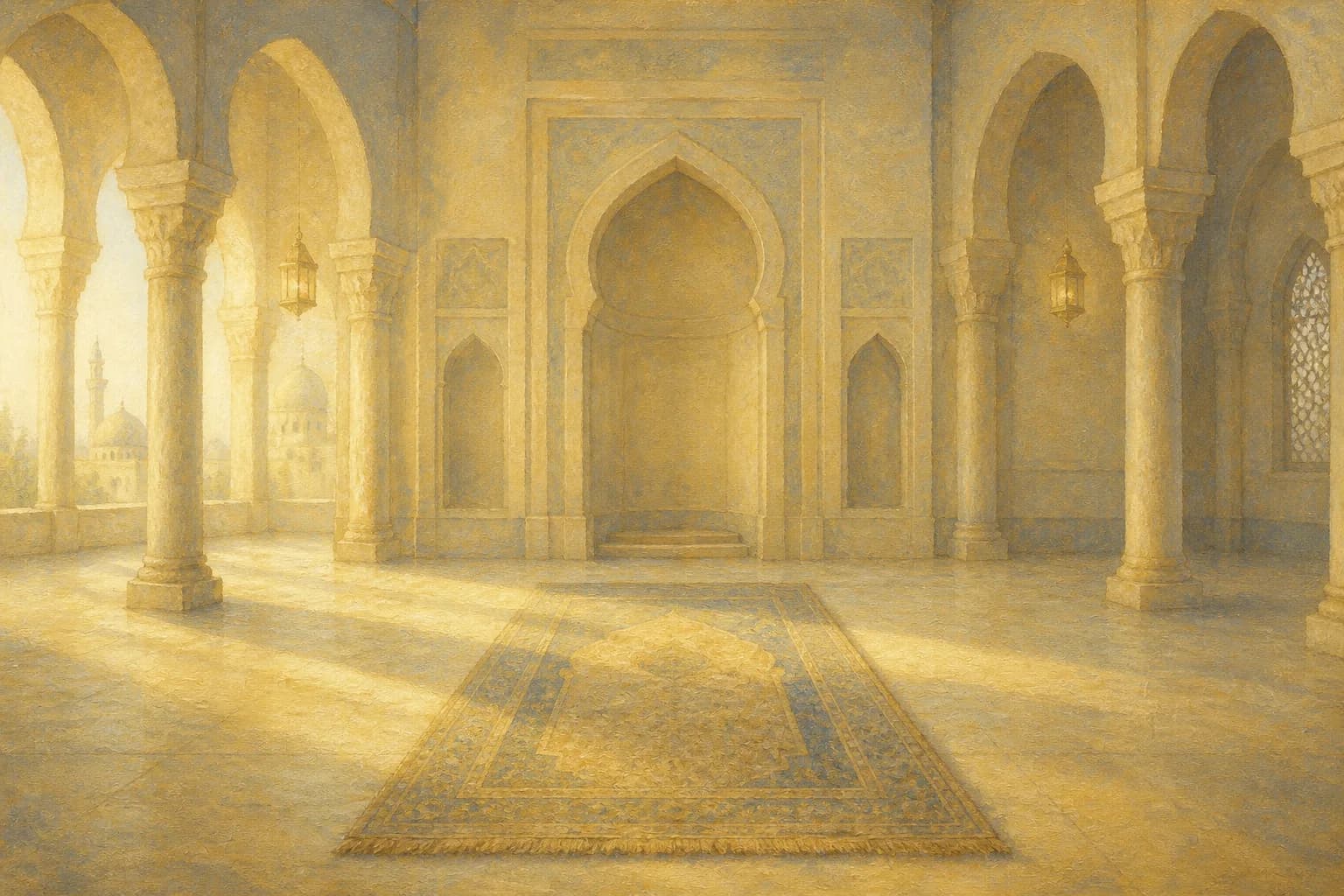

When a major decision is ahead of you — a marriage proposal, a job offer, a move to a new city — there is a prophetic practice specifically designed for moments like this. Salatul istikhara (صلاة الاستخارة), or istikhara namaz as it is widely called in South Asian Muslim communities, is two rakats of voluntary prayer followed by a specific dua in which you place your decision entirely in Allah's hands. It is one of the most practical and intimate gifts of prophetic guidance available to every Muslim.
How Do You Pray Istikhara Namaz?
Istikhara namaz consists of 2 voluntary rakats prayed at any permitted time, followed by the specific istikhara dua. Jabir ibn Abdullah رضي الله عنه narrated: "The Prophet ﷺ used to teach us the istikhara for all matters, just as he used to teach us a surah from the Quran" (Sahih al-Bukhari 1162). After the salam, you mention your specific matter and ask Allah to ordain it if it is good, and turn it away if it is not.
Istikhara Namaz at a Glance
| Step | What to Do | Notes |
|---|---|---|
| Wudu | Perform ritual purification | Required before any salah |
| Intention | Set niyyah for 2 rakats sunnah istikhara | In the heart; need not be spoken |
| Rakat 1 | Al-Fatihah + Surah Al-Kafirun (or any surah) | Voluntary prayer, prayed like regular sunnah |
| Rakat 2 | Al-Fatihah + Surah Al-Ikhlas (or any surah) | Complete as any 2-rakat prayer |
| Tasleem | Turn head right then left: Assalamu Alaykum | End the prayer normally |
| The Dua | Recite the full istikhara dua with your matter in mind | The specific mention of your affair replaces "this matter" |
Why Istikhara Is Different from Ordinary Dua
Most duas are requests. Istikhara is a surrender. You are not asking Allah to approve your choice; you are asking Allah to make the choice for you, within your circumstances. The Quran reminds us:
"And it may be that you dislike a thing which is good for you and that you like a thing which is bad for you. Allah knows, but you do not know." — (Surah Al-Baqarah, 2:216)
The istikhara prayer channels this Quranic truth into action. It begins with honest acknowledgment: "I do not know what is best; You do." That posture of tawadu (humility) is itself an act of worship, separate from whatever answer comes.
For the full theological context of what is tawakkul in Islam — the reliance on Allah that istikhara expresses — that article covers the concept in depth.
Step-by-Step: How to Pray Istikhara Namaz
Step 1: Make Wudu
Istikhara is salah, so valid wudu (ritual purification) is required. If you have just prayed Fajr or another salah and your wudu is still intact, you can proceed immediately. See how to pray salah — complete guide for the full wudu steps if you need a refresher.
Step 2: Choose Your Time
Istikhara can be prayed at any time voluntary prayer is allowed. Avoid:
- At sunrise (roughly 15 minutes after the sun appears)
- When the sun is directly overhead (around midday)
- At sunset (as the sun begins to set)
Many scholars recommend attaching istikhara to an established prayer — pray your Isha, then immediately pray the 2 rakats of istikhara while your heart is already engaged.
Step 3: Set Your Intention
In your heart, set the niyyah: "I intend to pray 2 rakats of sunnah salatul istikhara for the sake of Allah." There is no requirement to speak the intention aloud, though some scholars consider it permissible to do so quietly.
Step 4: The Opening Takbeer
Raise both hands to your earlobes and say:
اللهُ أَكْبَرُ
Allahu Akbar — "Allah is the Greatest"
From here, proceed exactly as a regular 2-rakat voluntary prayer.
Step 5: Rakat 1
Recite the opening supplication (thana), then seek refuge with A'udhu billahi min ash-shaytan ir-rajim, then Bismillah ir-Rahman ir-Rahim.
Recite Surah Al-Fatihah, followed by a surah. Many scholars recommend Surah Al-Kafirun (Surah 109) in the first rakat — it affirms the absolute primacy of worshipping Allah alone, fitting for a prayer about direction in life. Any other surah you know also works.
Complete ruku (bowing): Subhana Rabbiyal Adheem three times.
Complete sujud (two prostrations): Subhana Rabbiyal A'la three times each.
Step 6: Rakat 2
Rise for the second rakat. Recite Al-Fatihah, then a surah — Surah Al-Ikhlas (Surah 112) is often recommended, affirming Allah's oneness and self-sufficiency.
Complete ruku and both sujuds as in Rakat 1.
Step 7: Final Tashahhud and Tasleem
Remain seated after the second sujud and recite the full tashahhud (At-tahiyatu lillahi...) and salawat on the Prophet ﷺ. Then:
السَّلَامُ عَلَيْكُمْ وَرَحْمَةُ اللَّهِ
Assalamu Alaykum wa Rahmatullah
Turn your head to the right, then repeat to the left. The 2 rakats are now complete.
Step 8: Recite the Istikhara Dua
Immediately after the tasleem, while still facing the Qiblah, raise your hands and recite:
اللَّهُمَّ إِنِّي أَسْتَخِيرُكَ بِعِلْمِكَ وَأَسْتَقْدِرُكَ بِقُدْرَتِكَ وَأَسْأَلُكَ مِنْ فَضْلِكَ الْعَظِيمِ فَإِنَّكَ تَقْدِرُ وَلَا أَقْدِرُ وَتَعْلَمُ وَلَا أَعْلَمُ وَأَنْتَ عَلَّامُ الْغُيُوبِ اللَّهُمَّ إِنْ كُنْتَ تَعْلَمُ أَنَّ هَذَا الْأَمْرَ خَيْرٌ لِي فِي دِينِي وَمَعَاشِي وَعَاقِبَةِ أَمْرِي فَاقْدُرْهُ لِي وَيَسِّرْهُ لِي ثُمَّ بَارِكْ لِي فِيهِ وَإِنْ كُنْتَ تَعْلَمُ أَنَّ هَذَا الْأَمْرَ شَرٌّ لِي فِي دِينِي وَمَعَاشِي وَعَاقِبَةِ أَمْرِي فَاصْرِفْهُ عَنِّي وَاصْرِفْنِي عَنْهُ وَاقْدُرْ لِيَ الْخَيْرَ حَيْثُ كَانَ ثُمَّ أَرْضِنِي
Transliteration: Allahumma inni astakhiruka bi'ilmika wa astaqdiruka biqudratika wa as'aluka min fadlikal-azim. Fa'innaka taqdiru wa la aqdiru, wa ta'lamu wa la a'lamu, wa anta 'allam al-ghuyub. Allahumma in kunta ta'lamu anna hadhal-amra khayrun li fi dini wa ma'ashi wa 'aqibati amri faqdhurhu li wa yassirhu li thumma barik li fihi. Wa in kunta ta'lamu anna hadhal-amra sharrun li fi dini wa ma'ashi wa 'aqibati amri fasrifhu 'anni wasrifni 'anhu waqdur liyal-khayra haythu kana thumma ardini.
Translation: "O Allah, I seek Your guidance by virtue of Your knowledge, and I seek ability by virtue of Your power, and I ask You of Your great bounty. You have power; I have none. And You know; I know not. You are the Knower of hidden things.
O Allah, if in Your knowledge this matter is good for my religion, my livelihood and my affairs in the immediate and distant future, then ordain it for me, make it easy for me, and bless it for me.
And if in Your knowledge it is bad for my religion, my livelihood and my affairs, then turn it away from me, and turn me away from it. And ordain for me the good wherever it may be, and make me pleased with it."
When you reach the phrase "this matter" (hadhal-amr), pause and mention your specific situation in your own language or in Arabic. You do not need to memorize a specific phrase — your heart's intention is what matters.
Still struggling to perform salah properly?
Learn each prayer step by step, understand what you are saying, and build a consistent salah habit with clear, scholar-approved lessons in DeenUp.
Take the Salah Quiz
How to Know If Istikhara Was Answered
This is the question most people struggle with after praying istikhara. A few principles from scholars will help:
Istikhara is not about dreams. While some Muslims report seeing guiding dreams after istikhara, the hadith does not mention dreams at all. Scholars like Imam al-Nawawi explain that the answer is typically experienced as a natural change in inclination — things that felt blocked becoming easy, or things that felt open beginning to close.
Proceed with the decision. After istikhara, you make a decision and move forward. Ibn al-Qayyim رحمه الله noted that istikhara is not about waiting in suspension — it is about making a choice after consulting Allah. Trust that your circumstances after the dua carry the answer.
Combine istikhara with shura. The Prophet ﷺ said: "Take counsel; do not be without counsel" (Abu Dawud). Istikhara and shura (consultation with wise, knowledgeable people) work together. Both are part of the prophetic model for sound decision-making.
For deeper reading on the istikhara dua itself, see the full guide on dua for istikhara and the dua for guidance for related supplications to pair with it.
The Demi Manifest piece on tawakkul in daily life explores how the trust that istikhara expresses can be woven into your decisions well beyond individual moments of prayer. For building the daily dua habits that support consistent istikhara practice, the DeenBack guide on morning dua routines is a practical companion resource.
Common Mistakes When Praying Istikhara Namaz
Waiting for certainty before deciding. Istikhara is not meant to eliminate uncertainty — it is meant to transfer the outcome to Allah. Some people repeat istikhara dozens of times hoping for an unmistakable sign, when the prophetic practice is to pray and then proceed with trust.
Praying istikhara about matters already decided. Istikhara is for genuine decisions where your heart is open to either outcome. If you are already determined on a path regardless of any sign, what you need is not istikhara but tawbah or honest reflection — istikhara requires that you genuinely place the outcome in Allah's hands.
Not mentioning the specific matter. The dua says "this matter" — and you should substitute your actual situation there. Some people recite the dua generically without mentioning what they need guidance about. Scholars encourage specifying the matter clearly in your heart or aloud.
Skipping the 2 rakats. Some people recite only the dua without the prayer component. While making dua is always good, the prophetic practice of istikhara specifically combines 2 rakats of prayer with the dua. Both elements are part of the transmitted practice.
Taking the Next Step After Istikhara
When the prayer and dua are done, you do not need to wait for a lightning bolt. Make your wudu, pray your 2 rakats, recite the dua with full sincerity, name your matter — then make a decision with a tranquil heart and trust that Allah is already working on your behalf.
Review the full how to perform istikhara guide for additional scholarly perspectives, and explore how to make dua properly for the broader principles that apply to all supplications.
The Quran does not leave us without comfort on this:
وَمَن يَتَوَكَّلْ عَلَى اللَّهِ فَهُوَ حَسْبُهُ
"And whoever relies upon Allah — then He is sufficient for him." — (Surah At-Talaq, 65:3)
Istikhara is that reliance in its most structured, most beautiful form.
Still struggling to perform salah properly?
Learn each prayer step by step, understand what you are saying, and build a consistent salah habit with clear, scholar-approved lessons in DeenUp.
Take the Salah QuizFrequently Asked Questions
How many rakats is istikhara namaz?
Istikhara namaz consists of 2 rakats of voluntary prayer. After completing the 2 rakats and saying the final salam, the istikhara dua is recited — mentioning the specific matter you seek guidance about. The full prayer plus dua typically takes five to ten minutes to complete.
When should I pray istikhara namaz?
Istikhara can be prayed at any time that voluntary prayer is permitted. Avoid the three prohibited times: at sunrise, directly at midday, and at sunset. Many scholars recommend praying istikhara immediately after one of the five daily prayers when your wudu is fresh and your focus is strongest.
Which surah do I recite in istikhara namaz?
There is no specific surah prescribed for istikhara namaz — recite Al-Fatihah in both rakats, followed by any surah you know. A common recommendation is Surah Al-Kafirun in the first rakat and Surah Al-Ikhlas in the second, though this is a recommendation, not an obligation from hadith.
Do I need to see a dream after istikhara?
Istikhara does not require a dream. Scholars explain that the result is often an inclination of the heart, ease in circumstances, or the natural opening or closing of doors. If no clear sign comes, repeat the istikhara and proceed with the decision that feels most right after sincere reflection.
Can I pray istikhara for someone else?
You may make dua for another person's matter, but istikhara namaz is prayed for a decision in your own life. If you are a parent seeking guidance about your child's situation, some scholars allow adjusting the dua wording to refer to the other person's affair specifically.
How many times should I repeat istikhara?
One istikhara is sufficient according to most scholars, though many recommend repeating it up to 7 times if no clarity comes. The Prophet ﷺ taught istikhara alongside shura — practical consultation with wise people in your life. Combining both is the complete prophetic approach to decision-making.
What if things go wrong after istikhara?
Istikhara is a request for Allah to align your situation with what is best for your religion and life — not a guarantee of ease. If difficulties arise, trust that Allah answered your dua in ways you cannot yet see. A believer finds contentment in whichever path Allah ordains.