

- Authors

- Name
- Ahmad
- Role
- Senior Marketing Manager, Islamic education • DeenUp
بِسْمِ اللهِ الرَّحْمٰنِ الرَّحِيْمِ
In the name of God, the Most Gracious, the Most Merciful.
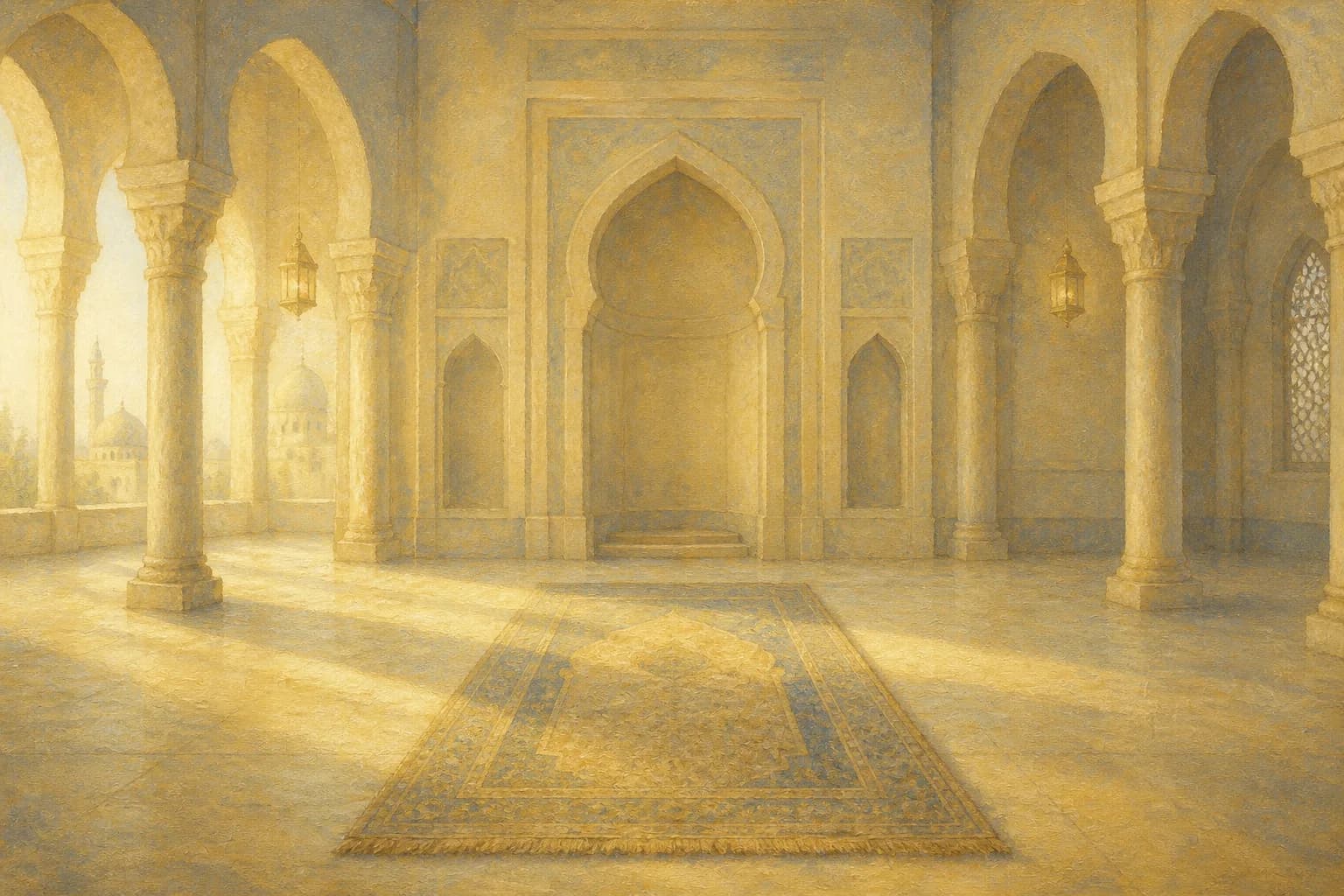

Taraweeh is one of the most beloved acts of worship in Ramadan — rows of worshippers standing together in the night, listening to the recitation of the Quran, completing this special prayer that Ramadan alone brings into our lives. Yet many Muslims feel uncertain about how to perform it properly, especially newer Muslims or those returning to prayer after time away.
This guide walks you through everything: the correct number of rakats, the method, the intention, and practical ways to make Taraweeh a consistent part of your Ramadan nights.
What Is Taraweeh and Why It Matters
Taraweeh (تراويح) comes from the Arabic root meaning "to rest." After every four rakats, worshippers traditionally pause to rest and engage in dhikr or supplication — and this rhythmic rest gives the prayer its name.
The Prophet Muhammad ﷺ established the pattern for Taraweeh when he prayed special night prayers during Ramadan. As narrated by Aisha (may Allah be pleased with her):
"Allah's Messenger prayed one night in the mosque and some people prayed with him. He prayed again the following night and more people gathered. Then on the third or fourth night, even more people assembled. But Allah's Messenger did not come out to them. In the morning he said: 'I saw what you did, and nothing prevented me from coming out to you except that I feared this prayer would become obligatory upon you.'" — (Sahih Bukhari 2012)
After the Prophet's ﷺ passing, his Companion Umar ibn al-Khattab (رضي الله عنه) gathered the Muslims to pray Taraweeh behind one imam, reviving and systematizing what became a beloved Ramadan tradition for over 1,400 years.
Allah's Messenger ﷺ gave a powerful incentive for these night prayers in Ramadan:
"Whoever stands in prayer during Ramadan out of faith and seeking reward from Allah, his previous sins will be forgiven." — (Sahih Bukhari 37, Sahih Muslim 759)
For more on the spiritual depth of Ramadan and how to maximize its blessings, read the complete Ramadan guide on DeenUp.
How Many Rakats Is Taraweeh?
This is the question most Muslims ask first. There are two well-established positions:
20 Rakats (the majority view)
The majority of classical scholars, including the Hanafi, Maliki, Shafi'i, and Hanbali schools, hold that Taraweeh consists of 20 rakats, prayed in sets of two. This is based on the practice of the Companions during the time of Umar ibn al-Khattab. Imam Malik, al-Nawawi, and other major scholars supported this position.
8 Rakats (the minority view)
A significant minority of scholars, including many in the contemporary period, hold that 8 rakats is sufficient — based on Aisha's (رضي الله عنها) description of the Prophet's ﷺ night prayers in Ramadan never exceeding 11 rakats (Sahih Bukhari 1147). They argue that these night prayers in Ramadan constitute the same prayer that later became called Taraweeh.
Practical guidance: Both positions are valid and grounded in authentic evidence. Follow your local masjid's practice when praying in congregation, or choose whichever number you can sustain with presence and focus when praying alone.
Regardless of the number, Taraweeh is followed by Witr prayer — typically 3 rakats — before concluding the night.
Step-by-Step: How to Pray Taraweeh
Taraweeh is prayed in sets of two rakats each, exactly like a two-rakat voluntary prayer. Here is the method:
Step 1: Make the Intention
Before beginning, make your intention in the heart: "I intend to pray two rakats of the Sunnah prayer of Taraweeh for the sake of Allah." The intention does not need to be spoken aloud.
Step 2: Open with Takbir al-Ihram
Raise both hands to your earlobes (or shoulders) and say:
اللَّهُ أَكْبَرُ
"Allahu Akbar" — Allah is the Greatest.
Fold your hands over your chest (right over left) and recite the opening supplication Du'a al-Istiftah silently.
Step 3: Recite Surah Al-Fatihah and a Portion of Quran
In each rakat, recite Surah Al-Fatihah followed by any portion of the Quran. In congregation, you follow the imam's recitation in silence. For reference on mastering Surah Al-Fatihah, see the complete Surah Al-Fatihah guide. The Quran.com recitation tool is also a helpful companion for following along with the imam's nightly Quran passages during Taraweeh.
In masjid Taraweeh, the imam typically recites one juz (part) of the Quran each night so that the full Quran is completed over the 30 nights of Ramadan.
Step 4: Perform the Bowing (Ruku) and Prostrations (Sujood)
Complete the raka the same way as any salah: bow in ruku, rise, then make two prostrations with the short sitting in between, then rise for the second rakat.
Step 5: Complete the Two-Rakat Set with Tashahhud and Tasleem
After the second rakat, sit for the final Tashahhud and complete the prayer with salaam to the right and left. This finishes one set of two rakats.
Step 6: Rest Briefly Between Every Four Rakats
The tradition is to pause after every four rakats (two sets of two) to rest, engage in dhikr, or make supplication. This is the meaning of the word taraweeh itself.
Step 7: Complete with Witr
After completing all the rakats of Taraweeh, close the night with Witr prayer. Witr is typically three rakats prayed as two plus one, or three together depending on your school of thought.
For a comprehensive foundation in prayer mechanics, the step-by-step salah guide covers every movement and recitation in detail.
Still struggling to perform salah properly?
Learn each prayer step by step, understand what you are saying, and build a consistent salah habit with clear, scholar-approved lessons in DeenUp.
Take the Salah Quiz
Building a Consistent Taraweeh Habit
The spiritual power of Taraweeh comes from consistency, not just showing up once. Here is how to approach it as a habit:
Start with the congregation. If a masjid is accessible, praying Taraweeh there is strongly recommended. The communal atmosphere — the recitation, the rows of worshippers, the shared focus — makes consistency easier and adds a depth of experience that is hard to replicate alone.
If you cannot attend the masjid, praying at home is fully valid. Pray the rakats at a comfortable pace, recite portions you know well, and make the prayer an anchor for your evening.
Plan your night around Isha. Taraweeh follows the Isha prayer. If you consistently pray Isha at its time, the transition into Taraweeh becomes natural. Review practical advice on maintaining the Fajr-to-Isha rhythm in the how to pray Fajr guide.
Do not let perfect be the enemy of good. If you miss Taraweeh one night, do not abandon the rest of Ramadan. The Prophet ﷺ said: "The most beloved deeds to Allah are those done consistently, even if they are small." (Sahih Bukhari 6465)
Engage with the recitation. Even if you do not understand Arabic, following along with a translation during the imam's recitation transforms Taraweeh from a routine to an act of reflection. The DeenUp Quran reading feature provides verse-by-verse AI-powered insights that help you connect with what is being recited each night.
For additional perspective on building Ramadan night prayer as a sustained habit, Deen Back's guide to Ramadan night worship covers how to structure the hours between Isha and Fajr for maximum spiritual benefit.
The team at Demi Manifest on Taraweeh spiritual focus also explores how to maintain presence of heart during the longer recitations — worth reading if concentration during prayer is something you are working on.
A Dua for Taraweeh Nights
Make this supplication at the start of each Taraweeh night or during the rest intervals:
اللَّهُمَّ إِنَّكَ عَفُوٌّ تُحِبُّ الْعَفْوَ فَاعْفُ عَنِّي
"O Allah, You are the Pardoner, You love to pardon, so pardon me." — (Sahih Ibn Majah 3850, recommended especially in the last 10 nights)
This supplication — taught by the Prophet ﷺ to Aisha when she asked what to say on Laylatul Qadr — is perfect for all of Ramadan's night prayers. The Yaqeen Institute's Ramadan reflection series offers deeper scholarly context on night worship and its spiritual dimensions. For a deeper understanding of the night these prayers are reaching toward, the Laylatul Qadr guide explains the signs and significance of the Night of Power.
Common Questions
Can I pray Taraweeh with a mushaf (Quran) in hand? Yes. This is permitted according to most scholars, and many mosques allow it, especially for those leading Taraweeh who wish to recite precisely.
What if I join the prayer late? Follow the imam from wherever he is and complete the missed rakats after he finishes, as you would with any congregational prayer.
Is it better to pray fewer rakats with focus or more rakats quickly? Quality over quantity. A shorter, more present prayer is more valuable than rushing through many rakats. Begin with what you can sustain with genuine focus.
Can I make up missed Taraweeh? Taraweeh is a voluntary Sunnah prayer specific to Ramadan nights. It does not need to be made up if missed. Simply resume the next night.
Taraweeh is a gift that arrives once a year — thirty nights to stand in the presence of Allah, listening to His words, asking His forgiveness. Whether you pray it in a masjid filled with hundreds or quietly in your own room, every rakat counts.
The key is to begin, to keep showing up, and to let the rhythm of Ramadan nights reshape your relationship with the night prayer long after Ramadan ends.
Still struggling to perform salah properly?
Learn each prayer step by step, understand what you are saying, and build a consistent salah habit with clear, scholar-approved lessons in DeenUp.
Take the Salah QuizFrequently Asked Questions
How many rakats is Taraweeh prayer?
The majority of scholars hold that Taraweeh is prayed in 20 rakats, though 8 rakats is also an accepted position based on the Prophet's night prayers in Ramadan. Both are valid.
Can I pray Taraweeh alone at home?
Yes. Praying Taraweeh at home is valid and rewarding. The congregation at the masjid is recommended but not obligatory. What matters is that you pray it regularly throughout Ramadan.
What is the intention (niyyah) for Taraweeh?
The niyyah is in the heart. Internally intend to pray the sunnah prayer of Taraweeh (two rakats at a time). You do not need to say the niyyah aloud.
Can women pray Taraweeh at the masjid?
Yes. Women may attend the masjid for Taraweeh. Many scholars encourage it, especially in Ramadan, though praying at home is equally rewarding for women according to authentic hadith.
Do I need to complete the full Quran recitation in Taraweeh?
Completing a khatm (full recitation) of the Quran during Taraweeh is a beautiful tradition but not required. You may recite any portion of the Quran in each rakat.