

- Authors

- Name
- Ahmad
- Role
- Senior Marketing Manager, Islamic education • DeenUp
بِسْمِ اللهِ الرَّحْمٰنِ الرَّحِيْمِ
In the name of God, the Most Gracious, the Most Merciful.
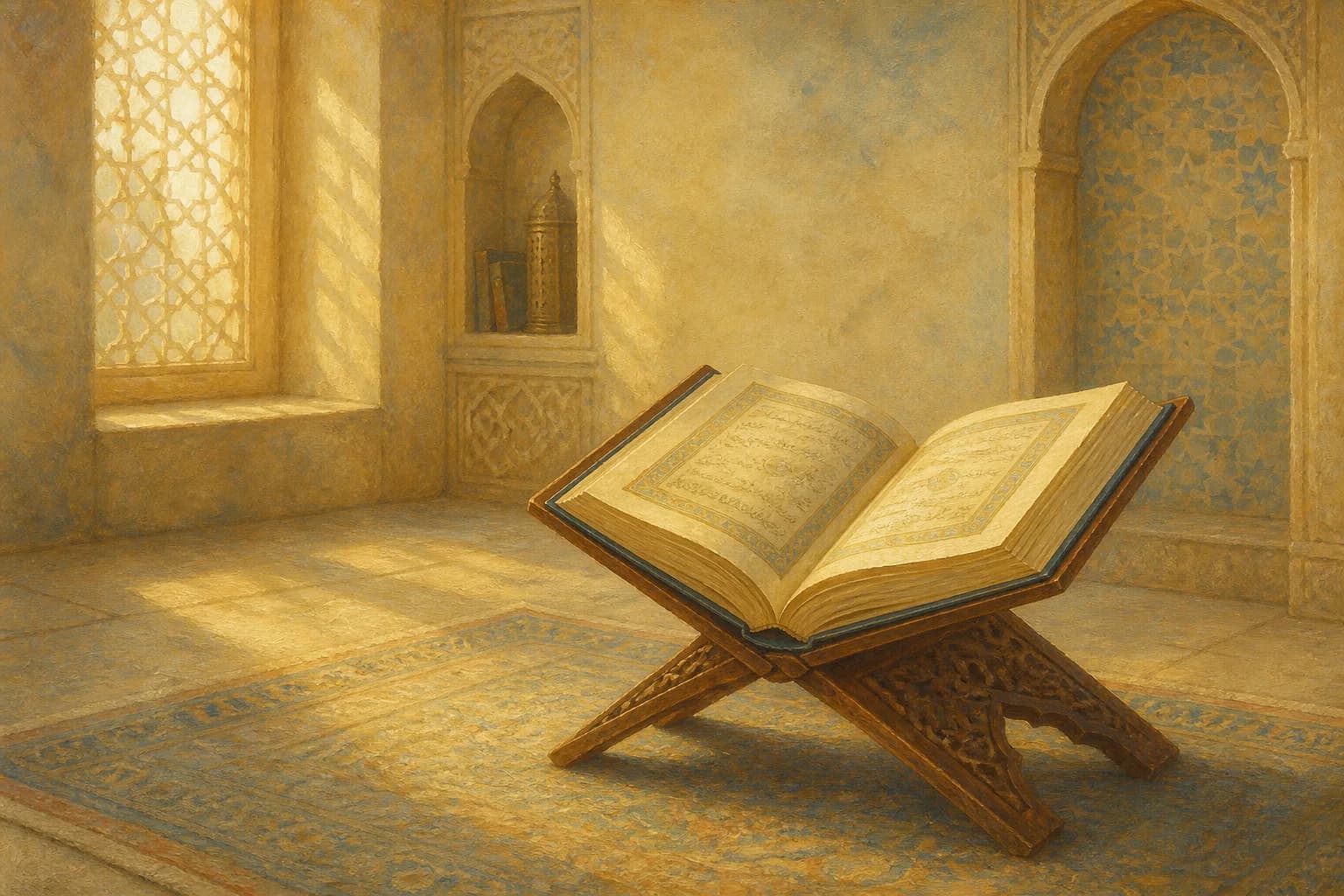

How well do you know the Quran? You might recite it daily, yet some of its most remarkable features remain unknown to many Muslims. This guide brings together 20 verified facts about the structure, history, and content of the Quran — each one designed not just to inform, but to deepen your wonder for the book Allah described as a "clear guidance for mankind" (Surah Al-Baqarah, 2:185).
What Is Quran Trivia?
Quran trivia covers verified facts about the structure, revelation, and content of the Quran — its 114 surahs, 6,236 verses, 23-year revelation span, and remarkable internal features that scholars across 14 centuries have studied and marveled at. These facts are not mere curiosities; knowing them deepens the relationship a Muslim has with the book they recite every day.
Basic Structure: Numbers Every Muslim Should Know
The Quran's architecture is both precise and purposeful. Here are the foundational facts:
How Many Surahs and Verses?
The Quran contains 114 surahs and 6,236 ayahs (using the standard Uthmani count). The surahs are arranged roughly from longest to shortest, though this arrangement does not follow the order in which they were revealed. Surah Al-Baqarah, the longest chapter, was revealed in Madinah, while Surah Al-Alaq, one of the first chapters revealed, appears near the end of the mushaf.
The Longest and Shortest Surahs
| Surah | Position | Verses | Revelation |
|---|---|---|---|
| Al-Baqarah (The Cow) | 2nd | 286 | Madinan |
| Aal Imran (The Family of Imran) | 3rd | 200 | Madinan |
| An-Nisa (The Women) | 4th | 176 | Madinan |
| Al-Kawthar (The Abundance) | 108th | 3 | Makkan |
| Al-Asr (The Declining Day) | 103rd | 3 | Makkan |
| Al-Nasr (The Victory) | 110th | 3 | Madinan |
The three shortest surahs — Al-Kawthar, Al-Asr, and Al-Nasr — each contain only 3 verses. Imam Shafi'i famously said: "If people reflected deeply on Surah Al-Asr alone, it would be sufficient for them" (meaning as a guide to a complete life).
The Revelation: 23 Years of Divine Guidance
The Quran was not revealed all at once. Allah revealed it gradually over approximately 23 years, from 610 CE until 632 CE. The wisdom behind this is stated in the Quran itself:
وَقَالَ الَّذِينَ كَفَرُوا لَوْلَا نُزِّلَ عَلَيْهِ الْقُرْآنُ جُمْلَةً وَاحِدَةً ۚ كَذَٰلِكَ لِنُثَبِّتَ بِهِ فُؤَادَكَ
"Those who disbelieve say: Why is the Quran not revealed to him all at once? Thus (it is revealed) so that We may strengthen your heart thereby." — (Surah Al-Furqan, 25:32)
The first revelation was the opening verses of Surah Al-Alaq (96:1-5): "Read in the name of your Lord who created." The final verses are widely considered to be from Surah Al-Maidah or the closing portion of Surah Al-Baqarah, revealed during the Farewell Pilgrimage in 632 CE.
Unique Features You Might Not Know
The Surah with Two Bismillahs
Every surah opens with Bismillahir-Rahmanir-Raheem — except Surah At-Tawbah (Surah 9), which has no opening Bismillah. Scholars explain this because Surah At-Tawbah opens with a declaration ending a peace treaty — a declaration, not an invocation of blessing.
To balance this, Surah An-Naml (Surah 27) contains Bismillah twice: once at the surah's opening and once within verse 30, where Prophet Sulayman ﷺ begins his letter to the Queen of Sheba with: "It is from Sulayman, and indeed it is, 'In the name of Allah, the Entirely Merciful, the Especially Merciful.'"
The Most Recited Portion
Surah Al-Fatihah is recited at minimum 17 times every single day by every practising Muslim — once in each rakah of the five daily prayers. The Prophet ﷺ called it:
أُمُّ الْقُرْآنِ وَأُمُّ الْكِتَابِ وَالسَّبْعُ الْمَثَانِي
"The Mother of the Quran, the Mother of the Book, and the Seven Oft-Repeated Verses." — (Sahih al-Bukhari 4704)
No other portion of any book in human history has been recited by more people, more times, across more centuries.
The Most Powerful Single Verse
Ayatul Kursi (Surah Al-Baqarah, 2:255) is widely regarded as the greatest verse of the Quran. When the Prophet ﷺ was asked which verse was greatest, he replied: "Ayatul Kursi" (Sahih Muslim 810). Muslims recite it after every obligatory prayer, before sleeping, and as protection throughout the day. Our deep dive at Ayatul Kursi meaning and benefits explains its significance in detail.
How the Quran Was Preserved
The Quran's preservation is itself a marvel studied by historians of religion.
During the Prophet's ﷺ lifetime, the Quran was memorized by thousands of companions and written on various materials. After his death, the first Caliph Abu Bakr ﷺ had the written fragments compiled into one document to protect the revelation after 70 huffaz (memorizers) were killed in the Battle of Yamama.
Caliph Uthman ibn Affan ﷺ later standardized the Quran into a single authoritative text — the Uthmani mushaf — around 650 CE, sending copies to all Muslim territories and ordering variant copies destroyed. This is the same text used by 1.8 billion Muslims today.
Allah's promise of preservation is stated in the Quran itself:
إِنَّا نَحْنُ نَزَّلْنَا الذِّكْرَ وَإِنَّا لَهُ لَحَافِظُونَ
"Indeed, it is We who sent down the Reminder, and indeed, We will be its guardian." — (Surah Al-Hijr, 15:9)
Building a Daily Quran Connection
Knowing these facts is not the end goal — it is a doorway into deeper engagement with the Quran itself. Some practical ways to build on your knowledge:
- Daily recitation habit: Even 10 minutes of recitation with reflection builds an extraordinary relationship over time. Our guide on benefits of reading Quran daily walks through the spiritual and practical rewards.
- Memorization: Starting with short surahs like Al-Kawthar (3 verses) or Al-Ikhlas (4 verses) is how every hafiz begins. See how to memorize Quran for a practical method.
- Understanding the first surah: Al-Fatihah opens every prayer, yet many Muslims have never studied its full meaning. Our complete guide to Surah Al-Fatihah covers it verse by verse.
Want the Qur'an to feel easier to understand?
Read with clear contextual insights, revisit the verses that matter to you, and build a steady daily Qur'an habit with DeenUp.
Take the Qur'an Quiz
10 Quick Quran Facts to Share
- 114 surahs total
- 6,236 ayahs in the Uthmani count
- 23 years of gradual revelation (610–632 CE)
- The longest surah is Al-Baqarah (286 verses)
- The shortest surahs are Al-Kawthar, Al-Asr, and Al-Nasr (3 verses each)
- The most recited portion: Surah Al-Fatihah (17+ times daily per Muslim)
- Only surah without Bismillah: Surah At-Tawbah (9)
- Only surah with Bismillah twice: Surah An-Naml (27)
- The greatest single verse: Ayatul Kursi (2:255)
- First word revealed: Iqra (اقرأ) — "Read" (Surah Al-Alaq, 96:1)
For a rich collection of Quran quotes to reflect on, quran quotes for inspiration on Demi Manifest offers a thoughtful companion read. For building a consistent habit of Quran reading, DeenBack's guide to reading Quran on your phone addresses a common practical question. The Quran's text itself is freely accessible with translations at quran.com, and the hadith about Al-Fatihah can be read in context at sunnah.com/bukhari:4704.
Closing: A Book That Rewards Every Level of Knowledge
Whether you are a new Muslim just opening the Quran for the first time or someone who has memorized the entire book, there is always more to discover. The Prophet ﷺ said: "The best of you are those who learn the Quran and teach it" (Sahih al-Bukhari 5027). Every fact you learn about this book, every verse you reflect on, every surah you recite with understanding — all of it counts.
Want the Qur'an to feel easier to understand?
Read with clear contextual insights, revisit the verses that matter to you, and build a steady daily Qur'an habit with DeenUp.
Take the Qur'an QuizFrequently Asked Questions
How many surahs are in the Quran?
The Quran contains 114 surahs (chapters). They vary greatly in length, from Surah Al-Baqarah with 286 verses down to Surah Al-Kawthar with just 3 verses. The surahs are arranged roughly by length, with longer chapters appearing earlier, though this ordering reflects divine wisdom, not chronological revelation.
How many verses are in the Quran?
The Quran contains 6,236 ayahs (verses) according to the most widely accepted count used in the Uthmani mushaf. Some counting methods reach slightly different totals depending on how certain basmalah recitations and verse breaks are counted, but 6,236 is the standard figure used globally.
What is the longest surah in the Quran?
Surah Al-Baqarah (The Cow) is the longest surah in the Quran, containing 286 verses. It covers foundational Islamic laws, stories of the prophets, and includes Ayatul Kursi (2:255), one of the most powerful and widely memorized verses. The Prophet ﷺ called Al-Baqarah a light and protection for the home.
What is the shortest surah in the Quran?
Surah Al-Kawthar (The Abundance) is the shortest surah in the Quran, containing only 3 verses. Revealed to comfort the Prophet ﷺ after the death of his sons, it promises him al-Kawthar (a river in Jannah) and declares that it is his enemies, not him, who will be without offspring or legacy.
Over how many years was the Quran revealed?
The Quran was revealed over approximately 23 years — from 610 CE (the first revelation in the Cave of Hira during Ramadan) until 632 CE, shortly before the death of the Prophet ﷺ. The first verses revealed were the opening lines of Surah Al-Alaq: "Read in the name of your Lord who created."
Which surah has the word Bismillah appearing twice?
Surah An-Naml (The Ant) is the only surah where Bismillah appears twice: once at the beginning of the surah like all others, and once within the body of the surah (verse 30) as part of Prophet Sulayman's letter to the Queen of Sheba. Every other surah has Bismillah only at its opening.
What is the most frequently recited verse of the Quran?
Surah Al-Fatihah (1:1-7) is the most frequently recited portion of the Quran. Every Muslim recites it at least 17 times daily across the five obligatory prayers. The Prophet ﷺ called it Umm al-Quran (Mother of the Quran) and Umm al-Kitab (Mother of the Book) — (Sahih al-Bukhari 4704).