

- Authors

- Name
- Ahmad
- Role
- Senior Marketing Manager, Islamic education • DeenUp
بِسْمِ اللهِ الرَّحْمٰنِ الرَّحِيْمِ
In the name of God, the Most Gracious, the Most Merciful.
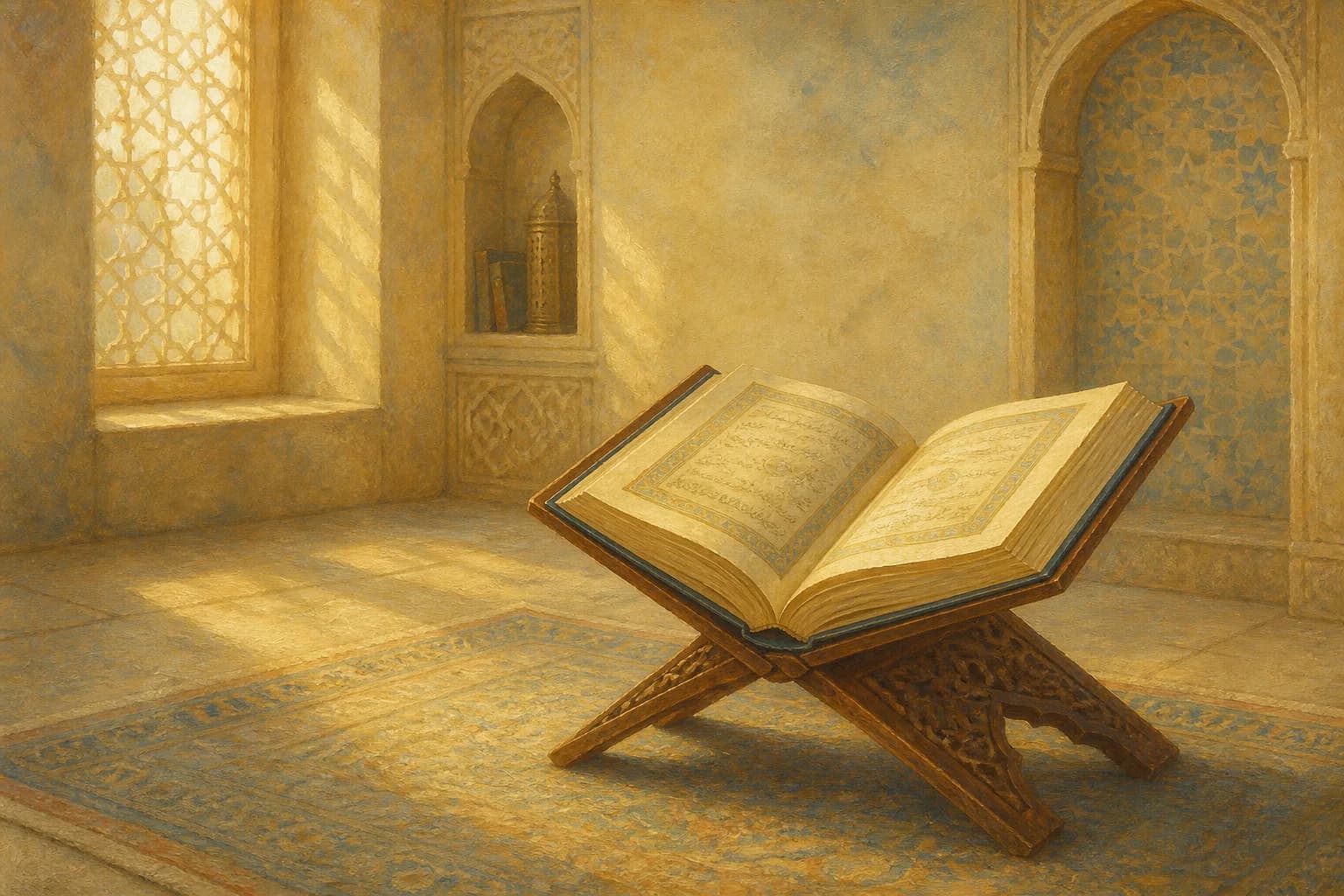

Why Surah Al-Mulk Deserves a Place in Your Daily Routine
There are surahs you recite in prayer. There are surahs you read on Fridays. And then there are surahs the Prophet ﷺ built into his daily life as consistent habits — chapters he returned to again and again because of what they do for the heart and what they do for you after death.
الملك (Al-Mulk) is one of those surahs.
Thirty verses. About five to ten minutes to recite. And according to an authentic hadith, enough to intercede for you on the Day of Judgment. The benefits of Surah Al-Mulk are not metaphors or folklore — they are rooted in the Quran's own themes and in statements the Prophet ﷺ made directly about this chapter.
If you have been looking for one surah to make a non-negotiable part of your nightly routine, this is a strong case for Al-Mulk.
What Surah Al-Mulk Contains
The Opening: Allah's Absolute Sovereignty
Surah Al-Mulk is the 67th chapter of the Quran. It opens with a verse that is immediately striking in its scope:
تَبَارَكَ الَّذِي بِيَدِهِ الْمُلْكُ وَهُوَ عَلَى كُلِّ شَيْءٍ قَدِيرٌ
"Blessed is He in Whose Hand is the dominion, and He is over all things competent." — (Surah Al-Mulk, 67:1)
Tabarak — "blessed" or "exalted" — carries a sense of overflowing goodness and elevation that belongs to Allah alone. Sovereignty (al-mulk) here is not political authority. It is absolute ownership of existence: every soul, every breath, every moment belongs to Him.
The second verse anchors this in purpose:
الَّذِي خَلَقَ الْمَوْتَ وَالْحَيَاةَ لِيَبْلُوَكُمْ أَيُّكُمْ أَحْسَنُ عَمَلًا
"Who created death and life to test you as to which of you is best in deed." — (Surah Al-Mulk, 67:2)
This verse reframes your entire existence. Life is not simply time to be spent. It is a test — and the criterion is not how much you accomplish, but the quality of what you do. Ahsanu amalan — best in deed, not most in deed.
Themes Across the Thirty Verses
As the surah moves forward, it covers a remarkable range:
- Signs in creation: The precision of the heavens, the birds held aloft by unseen forces, the earth made walkable for you — all are presented as evidence of the Sovereign who sustains them.
- The reality of accountability: The surah describes the regret of those who did not listen, and the safety of those who feared their Lord in private — not in a way that terrifies, but in a way that makes you want to be counted among the mindful.
- Dependence on Allah: "Say, have you considered: if your water were to disappear, who could bring you flowing water?" (67:30) — a quiet, powerful reminder that what we take for granted is sustained by Him alone.
Reading Surah Al-Mulk regularly is not just about the reward. It is about what these themes do to your heart over months and years of encounter.
The Intercession Hadith — What Was Said
The most well-known hadith about Surah Al-Mulk is this:
"There is a surah in the Quran of thirty verses that will intercede for its companion until he is forgiven: 'Blessed is He in Whose Hand is the dominion.'" — (Jami at-Tirmidhi 2891, also recorded in Sunan Abu Dawud 1400)
Tirmidhi classified this as hasan — a good, reliable hadith. The word "companion" in the text (sahib) suggests a relationship of consistent reading, not a one-time recitation. Scholars generally understand this as the benefit of making Al-Mulk a regular practice.
This is why many of the Prophet's companions made reading Surah Al-Mulk before sleep a nightly habit — not as a superstition, but as an act of trust that this chapter, read consistently and sincerely, carries weight with Allah.
For a wider picture of the role Quran recitation plays in daily spiritual health, the guide on benefits of reading Quran daily is worth exploring. And if you are building a broader Quran practice, the article on how to read Quran for beginners is a practical starting point.
Why Surah Al-Mulk Matters for Muslims Today
We live with enormous amounts of noise — notifications, news cycles, the endless churn of things demanding attention. Surah Al-Mulk is an antidote to a very specific spiritual problem: forgetting who is actually in charge.
When the surah asks you to look at the sky and see how the heavens are held in place without visible pillars (67:3), it is not asking you to do anything complicated. It is asking you to notice. To pause. To see creation as a deliberate act rather than a backdrop.
That kind of awareness — what Islamic tradition calls muraqabah or consciousness of Allah — is one of the hardest things to maintain in modern life. A chapter that cultivates it thirty verses at a time, read regularly enough to be internalized, quietly shapes how you see everything.
There is also the practical reality of the grave. Surah Al-Mulk's connection to intercession after death has made it a chapter Muslims across generations have prioritized. For an article that explores this dimension more directly, the piece on Surah Al-Mulk's protection in the grave covers that hadith tradition in detail.
For perspective on how surahs like Al-Mulk compare and complement one another in a Quran reading practice, this piece from Demi Manifest on building a consistent Quran habit offers useful framing. And for scholarly context on the virtues of specific Quranic chapters, the DeenBack team has explored the benefits of Surah Al-Mulk with relevant hadith grounding.
How to Build a Daily Surah Al-Mulk Practice
Making any Quran practice consistent comes down to pairing it with something already anchored in your day. Here is how to build Surah Al-Mulk into your routine without it feeling like another obligation.
Step 1: Choose a fixed trigger The strongest established practice is reading Al-Mulk before sleeping. Most people already have a bedtime — attach the recitation to it. Put your phone down, sit or lie quietly, and recite. The act of beginning is the hardest part.
Step 2: Start with listening if Arabic feels difficult Find a reciter whose style helps you follow along — Mishary Al-Afasy, Abdul Basit Abdus Samad, or any reciter with clear pronunciation. Follow the Arabic text on quran.com/al-mulk as you listen. Repetition builds familiarity faster than study alone.
Step 3: Memorize in small sections Surah Al-Mulk's thirty verses divide naturally into sections of five or six verses. Committing even two verses per week adds up over months. If you are already working on Quran memorization, the guide on how to memorize Quran has a structured framework you can apply here.
Step 4: Read the translation once a week The reward of recitation comes from the Arabic. But the transformation in your heart comes from understanding. Once a week, read the full surah in your language. Notice which verse lands differently that week.
Step 5: Pair it with dhikr After reciting Al-Mulk, add a brief round of tasbih — glorification of Allah. This natural follow-through extends the reflective state the surah opens in you. The piece on the importance of dhikr explains why this kind of consistent remembrance is central to spiritual health.
Want the Qur'an to feel easier to understand?
Read with clear contextual insights, revisit the verses that matter to you, and build a steady daily Qur'an habit with DeenUp.
Take the Qur'an Quiz
A Feed Worth Scrolling
Swipe through short, scholar-approved Islamic lessons instead of mindless doom-scrolling.
Learn Through Play
Bite-sized lessons, quizzes, levels, and daily streaks make growing your Deen a habit.
Scholar-Approved
Every lesson is rooted in the Quran and authentic Sunnah and reviewed by qualified scholars.
Signs That Surah Al-Mulk Is Working on You
Consistency in any spiritual practice produces subtle but real change. With Surah Al-Mulk, watch for:
- The opening verse becomes a reflex. You find yourself returning to تَبَارَكَ الَّذِي بِيَدِهِ الْمُلْكُ in moments of stress or awe — not because you planned it, but because it has become part of how you frame reality.
- You notice the signs it describes. A flock of birds, a clear sky, water from a tap — the surah has trained your eye to see these as signs rather than background.
- Your nights feel different. Starting sleep with Quran on your tongue settles the mind in a way that little else does. This is reported across centuries of Islamic practice for good reason.
- Accountability feels less abstract. Verse 67:2 — "to test you as to which of you is best in deed" — quietly becomes a lens for daily choices.
These are not dramatic transformations. They are quiet recalibrations. That is how the Quran works in a life that gives it consistent space.
Common Questions About Surah Al-Mulk
Does Surah Al-Mulk need to be read in one sitting?
Yes, it should be read as a continuous recitation rather than split across multiple sessions. It is thirty verses, which most readers can complete in five to ten minutes. There is no authentic hadith suggesting the benefit applies to interrupted or partial recitation.
Is there a specific number of times Al-Mulk should be read for extra benefit?
The hadith mentions regular recitation without specifying a count. Reading it once nightly is the established practice. Adding more recitations is not prohibited, but the emphasis in Islamic scholarship is on consistency over quantity.
What if I fall asleep before finishing?
Make a sincere effort to complete it. If fatigue consistently cuts the recitation short, consider moving it earlier in your evening — right after Isha prayer, for example, before tiredness sets in.
Can children read Surah Al-Mulk before bed?
Yes, and introducing children to this habit early is a meaningful act of parenting. Even listening to a recording together before sleep plants the surah in their memory and creates a healthy sleep ritual anchored in worship.
Is Surah Al-Mulk connected to the Day of Judgment specifically?
The intercession hadith is specifically about the day the scales are set. The surah itself speaks frequently about accountability, the nature of that reckoning, and what distinguishes those who are mindful from those who were not. Its intercession role is consistent with its themes.
Closing Thoughts
Surah Al-Mulk is thirty verses that take ten minutes. It asks nothing complicated of you: just read it. Night after night, until it lives in your memory, until the opening verse surfaces naturally, until the themes reshape how you see the world you move through.
The Prophet ﷺ kept this surah close. His companions made it a nighttime habit. Generations of Muslims have carried it into sleep as the last thing on their tongues. That chain of consistent practice is yours to join.
Start tonight. Open quran.com/al-mulk, read through it once, and commit to doing it again tomorrow. That is the whole plan.
Want the Qur'an to feel easier to understand?
Read with clear contextual insights, revisit the verses that matter to you, and build a steady daily Qur'an habit with DeenUp.
Take the Qur'an QuizFrequently Asked Questions
What are the main benefits of Surah Al-Mulk?
Surah Al-Mulk intercedes for its regular reader on the Day of Judgment, according to an authentic hadith in Tirmidhi and Abu Dawud. It also reminds the heart of accountability and deepens awareness of Allah as the ultimate sovereign.
When is the best time to read Surah Al-Mulk?
Many scholars recommend reading Surah Al-Mulk before sleeping. The Prophet's companions reported this as a regular practice, and it has been passed down as a well-known sunnah of the night.
How many verses does Surah Al-Mulk have and how long does it take to read?
Surah Al-Mulk has 30 verses. For most readers, it takes between 5 and 10 minutes to recite carefully. With regular practice, it can become part of a short nightly routine without much effort.
Can I read Surah Al-Mulk in translation if I do not know Arabic?
Reading the translation is deeply beneficial for understanding and reflection. For the intercession reward mentioned in hadith, scholars generally recommend reciting the Arabic — even imperfectly. Learning the Arabic gradually, with tajweed guidance, is the long-term goal.