

- Authors

- Name
- Ahmad
- Role
- Senior Marketing Manager, Islamic education • DeenUp
بِسْمِ اللهِ الرَّحْمٰنِ الرَّحِيْمِ
In the name of God, the Most Gracious, the Most Merciful.
Before any law was revealed, before the pillars of Islam were established, before a single ruling was given — the very first word Allah sent to humanity was a command to read. Surah Al-Alaq opens with Iqra (اقْرَأْ): "Recite." It is the beginning of everything.
The first five verses of this surah were delivered in the Cave of Hira in 610 CE, making Surah Al-Alaq not just one chapter among 114 — it is the starting point of the entire Quran. Understanding it deeply connects you to the moment Islam began.
What Is Surah Al-Alaq?
Surah Al-Alaq is Chapter 96 of the Quran and the first surah revealed to the Prophet Muhammad ﷺ. Its name means "the clinging substance" (alaq), referring to the early embryo mentioned in verse 2. The surah has 19 verses divided into two distinct sections: the first five verses delivered in the Cave of Hira, commanding humanity to read and honoring Allah as the Teacher, and verses 6–19 warning against the arrogance of those who forbid prayer.
Your personal 28-Day Deen Plan
Learn your deen in 28 days, 5 minutes a day
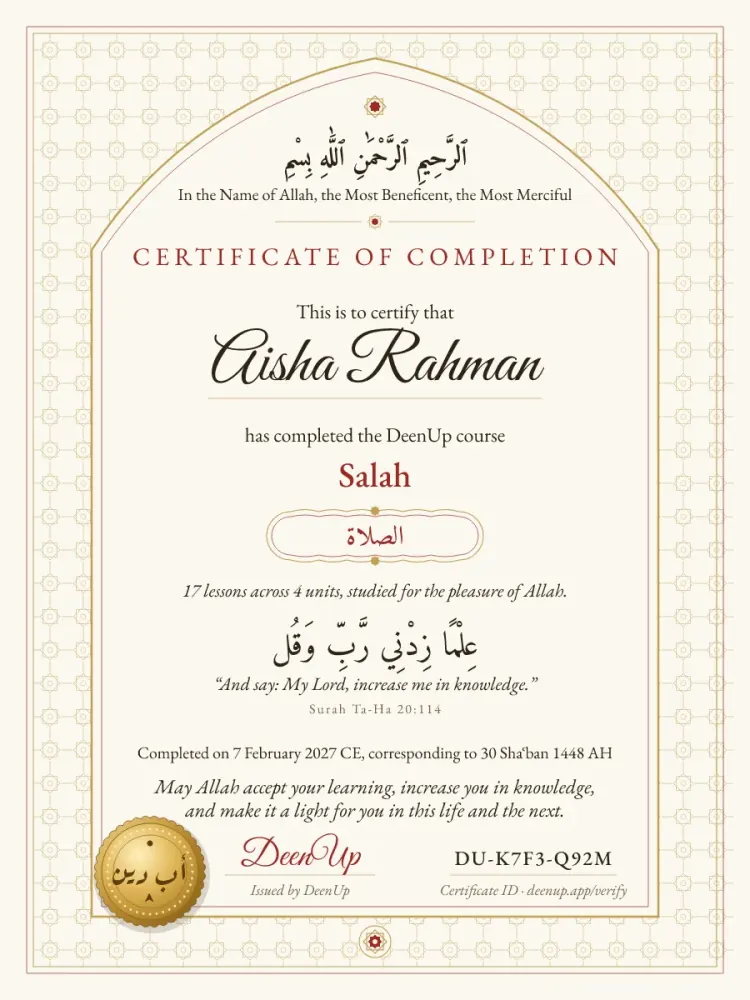
The essentials of salah, fiqh and faith, step by step from authentic sources. Finish all 28 days and earn a verifiable Certificate of Completion.
Take the free quizAnswer a few questions and get your personal plan.
If you're building a consistent habit of reading and reflecting on the Quran, try the free DeenUp quiz to get a personalized plan that includes daily Quran goals.
The First Five Verses: The Moment Islam Began
The Prophet ﷺ was meditating alone in the Cave of Hira on Mount Jabal Nur when Angel Jibreel appeared and embraced him three times, each time commanding: Iqra — "Read." Each time the Prophet replied that he could not read. On the third embrace, Jibreel recited the first five verses:
اقْرَأْ بِاسْمِ رَبِّكَ الَّذِي خَلَقَ
Iqra' bismi rabbika alladhī khalaq
"Recite in the name of your Lord who created" — (Quran 96:1)
خَلَقَ الْإِنسَانَ مِنْ عَلَقٍ
Khalaqa al-insāna min 'alaq
"Created man from a clinging substance." — (Quran 96:2)
اقْرَأْ وَرَبُّكَ الْأَكْرَمُ
Iqra' wa rabbuka al-akram
"Recite, and your Lord is the most Generous —" — (Quran 96:3)
الَّذِي عَلَّمَ بِالْقَلَمِ
Alladhī 'allama bil-qalam
"Who taught by the pen —" — (Quran 96:4)
عَلَّمَ الْإِنسَانَ مَا لَمْ يَعْلَمْ
'Allama al-insāna mā lam ya'lam
"Taught man that which he knew not." — (Quran 96:5)
The hadith of the first revelation is recorded in Sahih al-Bukhari (Book 1, Hadith 3), narrated by Aisha رضي الله عنها, and is one of the most detailed accounts in Islamic tradition. The Prophet ﷺ returned home trembling and Khadijah رضي الله عنها covered him and reassured him — the beginning of a 23-year revelation.
Surah Al-Alaq: Full Text, Transliteration, and Translation
| Verse | Arabic | Transliteration | Translation (Saheeh Int.) |
|---|---|---|---|
| 1 | اقْرَأْ بِاسْمِ رَبِّكَ الَّذِي خَلَقَ | Iqra' bismi rabbika alladhī khalaq | Recite in the name of your Lord who created |
| 2 | خَلَقَ الْإِنسَانَ مِنْ عَلَقٍ | Khalaqa al-insāna min 'alaq | Created man from a clinging substance |
| 3 | اقْرَأْ وَرَبُّكَ الْأَكْرَمُ | Iqra' wa rabbuka al-akram | Recite, and your Lord is the most Generous |
| 4 | الَّذِي عَلَّمَ بِالْقَلَمِ | Alladhī 'allama bil-qalam | Who taught by the pen |
| 5 | عَلَّمَ الْإِنسَانَ مَا لَمْ يَعْلَمْ | 'Allama al-insāna mā lam ya'lam | Taught man that which he knew not |
| 6–7 | كَلَّا إِنَّ الْإِنسَانَ لَيَطْغَىٰ أَن رَّآهُ اسْتَغْنَىٰ | Kallā inna al-insāna la-yaṭghā an ra'āhu istaghnaā | No! Indeed, man transgresses because he sees himself self-sufficient |
| 8 | إِنَّ إِلَىٰ رَبِّكَ الرُّجْعَىٰ | Inna ilā rabbika ar-ruj'ā | Indeed, to your Lord is the return |
| 9–10 | أَرَأَيْتَ الَّذِي يَنْهَىٰ عَبْدًا إِذَا صَلَّىٰ | Ara'ayta alladhī yanhā 'abdan idhā ṣallā | Have you seen the one who forbids a servant when he prays? |
| 14 | أَلَمْ يَعْلَم بِأَنَّ اللَّهَ يَرَىٰ | Alam ya'lam bi'anna Allāha yarā | Does he not know that Allah sees? |
| 19 | كَلَّا لَا تُطِعْهُ وَاسْجُدْ وَاقْتَرِب | Kallā lā tuṭi'hu wasjud waqtarib | No! Do not obey him. But prostrate and draw near to Allah |
The full surah can be read on Quran.com — Surah Al-Alaq.
The Context: Cave of Hira and the Beginning of Prophethood
Before this revelation, the Prophet Muhammad ﷺ regularly retreated to the Cave of Hira on Jabal Nur — a mountain about 3 km from the Masjid al-Haram in Mecca. He would spend days in meditation, contemplating the state of his people and the nature of the universe. The night of the first revelation is referred to in later tradition as the beginning of his prophethood, occurring around 610 CE when he was approximately 40 years old.
The cave itself, Ghar Hira, remains a significant site for Muslims visiting Mecca today. You can explore more about it in our detailed article on the Cave of Hira.
The Second Half: When Arrogance Confronts Prayer
Verses 6–19 were revealed later, addressing a specific confrontation. Abu Jahl — one of the Prophet's fiercest opponents — had threatened to put his foot on the Prophet's neck if he found him prostrating in prayer near the Kaaba.
The Quran's response is uncompromising: "Does he not know that Allah sees?" (96:14). It then declares that if he does not stop, the zabāniyah — the angels of Hell — will be called. The surah ends with the most powerful counter to arrogance: a command to the Prophet to continue prostrating and drawing close to Allah, regardless of opposition.
The final verse — wasjud waqtarib — is a verse of prostration. When recited or heard, scholars recommend performing a single sajdah al-tilawah as an act of drawing near to Allah.
Why Knowledge Is the Foundation of Faith
The opening five verses encode a profound theology of learning. Allah is described not only as Creator but as the One who teaches — through the pen, through revelation, through human capacity for understanding. The command to read is not merely about literacy: it is a command to engage with knowledge as an act of worship.
The Prophet ﷺ said: "Seeking knowledge is an obligation upon every Muslim" (Ibn Majah 224). Surah Al-Alaq is the foundation of that hadith. For a deeper look at how to build this into your life, read our guide on the importance of seeking knowledge in Islam.
How to Connect With Surah Al-Alaq Today
Surah Al-Alaq is short enough to memorize and profound enough to contemplate for a lifetime. Here are practical ways to engage with it:
- Recite it daily. At 19 short verses, it takes under two minutes to recite. Begin with it after Fajr as part of your morning Quran reading.
- Memorize it. The first five verses especially are worth memorizing because of their historical and spiritual significance. Our guide on how to memorize Quran has a system that works.
- Reflect on verse 1. Each time you open a book, attend a lecture, or search for Islamic knowledge, you are answering the first command of the Quran. That framing transforms learning from obligation into worship.
- Perform the sajdah. When you reach verse 19, pause and prostrate. The act itself mirrors the surah's message — drawing close to Allah through submission.
- Read the broader context. Understanding the first revelation is inseparable from understanding the benefits of reading Quran daily as a consistent spiritual practice.
Surah Al-Alaq is also one of the most rewarding surahs to read with tadabbur — deliberate reflection. Reading it on Quran.com — Surah Al-Alaq with English translation alongside a tafsir helps unlock layers of meaning.
Whether you're beginning your Quran journey or revisiting a surah you know by heart, the free DeenUp quiz can help you build a personalized reading plan that includes daily Quran goals and reflection prompts.
Your personal 28-Day Deen Plan
Learn your deen in 28 days, 5 minutes a day
The essentials of salah, fiqh and faith, step by step from authentic sources. Finish all 28 days and earn a verifiable Certificate of Completion.
Take the free quizAnswer a few questions and get your personal plan.
Frequently Asked Questions
What is Surah Al-Alaq about?
Surah Al-Alaq (Chapter 96) is the first surah revealed to the Prophet Muhammad in the Cave of Hira in 610 CE. Its first five verses command reading and honor Allah as the One who taught humanity through the pen. Its second section warns against those who forbid prayer out of arrogance.
Why is Surah Alaq important in Islam?
Surah Al-Alaq is the beginning of divine revelation in Islam. The command 'Iqra' (Read) established that knowledge and literacy are sacred. The surah also contains a verse of prostration (verse 19), making it one of the fifteen surahs in the Quran where sajdah al-tilawah is recommended.
What does Alaq mean in Arabic?
Alaq (عَلَق) means a clinging substance or a blood clot, referring to the embryo in its early stage of development. The name reflects verse 2, which states that Allah created the human being from a clinging substance. The surah is also called Surah Iqra after its first word.
Who revealed Surah Alaq to Prophet Muhammad?
Angel Jibreel (Gabriel) revealed Surah Al-Alaq to the Prophet Muhammad in the Cave of Hira on Mount Jabal Nur, near Mecca. The Prophet was meditating alone when Jibreel appeared and commanded him three times to 'Read,' then recited the first five verses. This occurred around 610 CE.
How many verses does Surah Alaq have?
Surah Al-Alaq has 19 verses. The first five were the very first revelation in Islam, received in the Cave of Hira around 610 CE. The remaining fourteen verses were revealed later in Mecca and address the arrogance of those who prevented the Prophet from praying near the Kaaba.
Is there a sajdah (prostration) in Surah Alaq?
Yes. The final verse of Surah Al-Alaq — 'No! Do not obey him. But prostrate and draw near to Allah' — is one of fifteen verses of prostration in the Quran. When a Muslim recites or hears this verse, performing a single prostration (sajdah al-tilawah) is recommended according to most scholars.
What is the main lesson of Surah Alaq?
Surah Al-Alaq teaches that knowledge is the first command of Islam, that human beings are created humble yet tend toward arrogance, and that prayer is the antidote to that arrogance. The surah closes by commanding believers to prostrate and draw close to Allah, grounding all learning in worship.