

- Authors

- Name
- Ahmad
- Role
- Senior Marketing Manager, Islamic education • DeenUp
بِسْمِ اللهِ الرَّحْمٰنِ الرَّحِيْمِ
In the name of God, the Most Gracious, the Most Merciful.
Surah Al-Inshiqaq opens with one of the most striking images in the entire Quran: the sky splitting apart. Not metaphorically — the ayah describes the heavens cracking open and obeying their Lord as if surrendering. Then the earth is stretched flat and empties itself out. The cosmos is rearranged.
What comes next is remarkably personal. After these cosmic events, Allah turns to address you: "O mankind, indeed you are laboring toward your Lord with great exertion and will meet it." The universe splits and your deeds are waiting.
What Is Surah Al-Inshiqaq?
Surah Al-Inshiqaq is the 84th surah of the Quran, containing 25 verses revealed in Mecca during the earliest years of the Prophet's mission ﷺ. Its name means "The Splitting" — from the Arabic inshaqqa, referring to the sky splitting open on the Day of Judgment. The surah delivers three interlocking messages: the earth and sky will obey Allah completely; every human will meet their record; and those who refuse to bow before the Quran are heading toward a painful end. It is among the short Meccan surahs of Juz 30 and contains a recommended prostration at verse 21.
The Full Arabic Text of Surah Al-Inshiqaq
بِسْمِ اللَّهِ الرَّحْمَنِ الرَّحِيمِ
إِذَا السَّمَاءُ انشَقَّتْ ﴿١﴾ وَأَذِنَتْ لِرَبِّهَا وَحُقَّتْ ﴿٢﴾ وَإِذَا الْأَرْضُ مُدَّتْ ﴿٣﴾ وَأَلْقَتْ مَا فِيهَا وَتَخَلَّتْ ﴿٤﴾ وَأَذِنَتْ لِرَبِّهَا وَحُقَّتْ ﴿٥﴾
يَا أَيُّهَا الْإِنسَانُ إِنَّكَ كَادِحٌ إِلَى رَبِّكَ كَدْحًا فَمُلَاقِيهِ ﴿٦﴾ فَأَمَّا مَنْ أُوتِيَ كِتَابَهُ بِيَمِينِهِ ﴿٧﴾ فَسَوْفَ يُحَاسَبُ حِسَابًا يَسِيرًا ﴿٨﴾ وَيَنقَلِبُ إِلَى أَهْلِهِ مَسْرُورًا ﴿٩﴾
وَأَمَّا مَنْ أُوتِيَ كِتَابَهُ وَرَاءَ ظَهْرِهِ ﴿١٠﴾ فَسَوْفَ يَدْعُو ثُبُورًا ﴿١١﴾ وَيَصْلَى سَعِيرًا ﴿١٢﴾ إِنَّهُ كَانَ فِي أَهْلِهِ مَسْرُورًا ﴿١٣﴾ إِنَّهُ ظَنَّ أَن لَّن يَحُورَ ﴿١٤﴾ بَلَى إِنَّ رَبَّهُ كَانَ بِهِ بَصِيرًا ﴿١٥﴾
فَلَا أُقْسِمُ بِالشَّفَقِ ﴿١٦﴾ وَاللَّيْلِ وَمَا وَسَقَ ﴿١٧﴾ وَالْقَمَرِ إِذَا اتَّسَقَ ﴿١٨﴾ لَتَرْكَبُنَّ طَبَقًا عَن طَبَقٍ ﴿١٩﴾ فَمَا لَهُمْ لَا يُؤْمِنُونَ ﴿٢٠﴾
وَإِذَا قُرِئَ عَلَيْهِمُ الْقُرْآنُ لَا يَسْجُدُونَ ۩ ﴿٢١﴾ بَلِ الَّذِينَ كَفَرُوا يُكَذِّبُونَ ﴿٢٢﴾ وَاللَّهُ أَعْلَمُ بِمَا يُوعُونَ ﴿٢٣﴾ فَبَشِّرْهُم بِعَذَابٍ أَلِيمٍ ﴿٢٤﴾ إِلَّا الَّذِينَ آمَنُوا وَعَمِلُوا الصَّالِحَاتِ لَهُمْ أَجْرٌ غَيْرُ مَمْنُونٍ ﴿٢٥﴾
Transliteration and Translation
Bismillah ir-Rahman ir-Raheem
- Idha as-sama' inshaqqa — When the sky has split [open]
- Wa adhinat li-Rabbiha wa huqqat — And has responded to its Lord and was obligated [to do so]
- Wa idhal ardu muddat — And when the earth has been extended
- Wa alqat ma fiha wa takhallat — And has cast out that within it and relinquished [it]
- Wa adhinat li-Rabbiha wa huqqat — And has responded to its Lord and was obligated [to do so]
- Ya ayyuhal insanu innaka kadihun ila Rabbika kadhan fa-mulaqih — O mankind, indeed you are laboring toward your Lord with [great] exertion and will meet it
- Fa-amma man utiya kitabahu bi-yaminihi — Then as for he who is given his record in his right hand,
- Fa-sawfa yuhasabu hisaban yasira — He will be judged with an easy account
- Wa yanqalibu ila ahlihi masrura — And return to his people in happiness
- Wa amma man utiya kitabahu wara'a zahrih — But as for he who is given his record behind his back,
- Fa-sawfa yad'u thubuura — He will cry out for destruction
- Wa yasla sa'eera — And [enter to] burn in a Blaze
- Innahu kana fi ahlihi masrura — Indeed, he had [once] been among his people in happiness
- Innahu zanna al-lan yahura — Indeed, he had thought he would never return [to Allah]
- Bala inna Rabbahu kana bihi baseera — But yes, indeed, his Lord was ever of him, Seeing
- Fala uqsimu bish-shafaq — So I swear by the twilight glow
- Wal-layli wa ma wasaq — And [by] the night and what it envelops
- Wal-qamari idhat-tasaq — And [by] the moon when it becomes full
- La-tarkabunna tabaqan 'an tabaq — [That] you will surely embark upon state after state
- Fama lahum la yu'minun — So what is [the matter] with them [that] they do not believe
- Wa idha quri'a 'alayhimul-Qur'anu la yasjudun — And when the Quran is recited to them, they do not prostrate ۩
- Balil-ladhina kafaru yukadhibun — But those who have disbelieved deny
- Wallahu a'lamu bima yu'un — And Allah is most knowing of what they keep within themselves
- Fa-bashshirhum bi-'adhabin aleem — So give them tidings of a painful punishment
- Illal-ladhina amanu wa 'amilus-salihati lahum ajrun ghayru mamnun — Except for those who believe and do righteous deeds. For them is a reward uninterrupted.
(Translation: Saheeh International. Full Arabic text at quran.com/84.)
The Themes of Surah Al-Inshiqaq
| Verses | Theme | Key Point |
|---|---|---|
| 1–5 | Cosmic obedience | The sky and earth obey Allah completely on the Day of Judgment |
| 6 | Human journey | Every person is traveling toward Allah and will meet their deeds |
| 7–9 | The right hand | Record given in right hand → easy reckoning, joyful return |
| 10–15 | The left hand | Record given behind the back → destruction, disbelief in accountability |
| 16–19 | Divine oath | Allah swears by twilight, night, and the full moon — stages will follow stages |
| 20–25 | The final division | Believers receive a reward that never ends; disbelievers face a painful punishment |
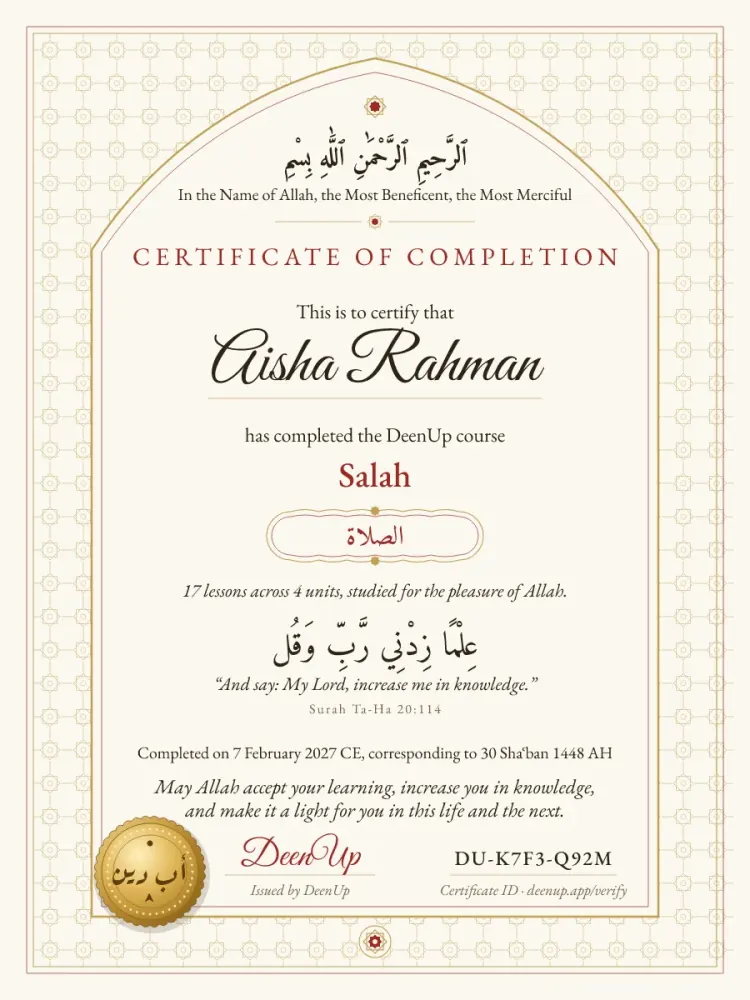
Your personal 28-Day Deen Plan
Learn your deen in 28 days, 5 minutes a day
The essentials of salah, fiqh and faith, step by step from authentic sources. Finish all 28 days and earn a verifiable Certificate of Completion.
Take the free quizAnswer a few questions and get your personal plan.
What Does Verse 6 Actually Mean?
Verse 6 is one of the most quoted ayat in the entire Quran for a reason:
يَا أَيُّهَا الْإِنسَانُ إِنَّكَ كَادِحٌ إِلَى رَبِّكَ كَدْحًا فَمُلَاقِيهِ
"O mankind, indeed you are laboring toward your Lord with great exertion and will meet it."
The Arabic word kadh means intense, effortful, unavoidable striving — the kind of effort a person puts into something they cannot escape. Allah is not saying you might be moving toward the meeting. He is saying you are, every single one of you, with every breath.
Scholars note that this ayah addresses all of mankind — believer and non-believer alike. The meeting is inevitable. What differs is the quality of what you bring to it.
Context of Revelation: Why This Surah Was Sent
Surah Al-Inshiqaq belongs to the early Meccan period — a time when the Prophet ﷺ and a small community of believers faced intense resistance from Quraysh. The Meccan leaders did not believe in accountability, resurrection, or Judgment. The surah directly confronts that denial.
Verse 14 identifies the core error: "He thought he would never return to Allah." This was not mere ignorance — it was a deliberate refusal to accept accountability. The surah strips that comfort away: Allah has been watching, all along. Bala — "But yes" — is one of the strongest affirmatives in the Quran.
The Prostration at Verse 21: Sajda al-Tilawa
Verse 21 contains the sign ۩, indicating a sajda al-tilawa (prostration of recitation). When a reciter — in salah or privately — reaches "And when the Quran is recited to them, they do not prostrate," they are encouraged to perform a prostration. This is recorded in Abu Dawud 1407 and is considered a sunnah act by the majority of scholars.
The irony is profound: the verse describes people who refuse to prostrate — and the response of the believer is to prostrate immediately. It is an act of differentiation.
Connecting Surah Al-Inshiqaq to Your Daily Practice
Short Meccan surahs are among the most powerful tools in the believer's daily Quran practice. Reciting Surah Al-Inshiqaq in Fajr or Isha keeps the awareness of accountability alive. The Surah Naba complete guide covers the sister surah on the Day of Judgment in Juz 30. And for broader protection and reflection, Surah Al-Mulk benefits is recommended to recite every night.
Building a consistent Quran habit is the foundation. The benefits of reading Quran daily article covers why daily recitation — even a few verses — changes the heart over time. And for context on the Hereafter that makes Surah Al-Inshiqaq click, Surah Al-Waqiah benefits on the events of the Last Day is a good companion text.
For a wider perspective on how short surahs build daily spiritual discipline, Demi Manifest's piece on consistent Quran practice explores why these brief but powerful chapters are the ideal entry point. The Deenback exploration of soul purification in Islam also connects the Quran's accountability theme to daily inner work.
Take the free DeenUp quiz at /start to get a personalized Quran reading plan — including structured daily time with Juz 30 surahs like Al-Inshiqaq.
For historical background and scholarly commentary, see the supporting hadith about the surah's prostration at sunnah.com/abudawud:1407.
Lessons from Surah Al-Inshiqaq for Today
The surah delivers three practical reminders for the modern Muslim:
1. You are always in a state of travel. Life is not a waiting room before the real journey — it is the journey. Every choice, every day, moves you toward that meeting. The believer who grasps this does not wait for a "better time" to get serious about their deen.
2. The record is being kept. Verse 15 says Allah has been watching, baseer — fully aware. This is not a threat; it is a protection. The believer who lives with this awareness treats private moments the same as public ones, because the witness does not change.
3. The believers' reward does not stop. Verse 25 ends on ajrun ghayru mamnun — a reward uninterrupted, without end, without diminishment. This is the nature of Jannah. What you do now has consequences that outlast everything in this world.
Closing
Surah Al-Inshiqaq is a surah for anyone who needs a reminder that this life has direction and destination. The sky will split. The earth will give up what it holds. And you will meet what you sent ahead of you.
Build the habit of reciting it. Add it to your Fajr or Isha. And when you reach verse 21, prostrate — and let the irony of that moment teach you everything the surah is saying.
Your personal 28-Day Deen Plan
Learn your deen in 28 days, 5 minutes a day
The essentials of salah, fiqh and faith, step by step from authentic sources. Finish all 28 days and earn a verifiable Certificate of Completion.
Take the free quizAnswer a few questions and get your personal plan.
Frequently Asked Questions
What does Al-Inshiqaq mean?
Al-Inshiqaq means 'The Splitting' or 'The Bursting Asunder' in Arabic. It refers to the sky splitting open on the Day of Judgment, the central image of Surah 84. The word comes from the Arabic root sh-q-q, meaning to crack or split apart.
How many verses does Surah Al-Inshiqaq have?
Surah Al-Inshiqaq has 25 verses. It is the 84th surah of the Quran and belongs to the 30th juz (Para). It is a Meccan surah revealed during the early years of the Prophet Muhammad in Mecca, before the migration to Medina.
Is there a sajda in Surah Al-Inshiqaq?
Yes. Surah Al-Inshiqaq contains a sajda al-tilawa (prostration of recitation) at verse 21: 'When the Quran is recited to them, they do not prostrate.' When a reciter reaches this ayah, performing a prostration is recommended. This is recorded in Abu Dawud 1407.
When was Surah Al-Inshiqaq revealed?
Surah Al-Inshiqaq was revealed in Mecca during the early Meccan period of the Prophet Muhammad. Scholars place it among the first fifty surahs revealed, alongside other short Meccan surahs that focus on the Day of Judgment and human accountability before Allah.
What is the main message of Surah Al-Inshiqaq?
The main message of Surah Al-Inshiqaq is that every human being is journeying toward Allah and will meet the result of that journey. Those given their record in their right hand will face an easy reckoning; those given it behind their back will face punishment. Every deed is recorded.
What does 'laboring toward your Lord' mean in Surah Al-Inshiqaq verse 6?
Verse 6 — 'O mankind, indeed you are laboring toward your Lord with great exertion and will meet it' — means that all of human life is a journey toward Allah, with or without awareness. Every choice, every day, moves the believer closer to or further from that meeting. The Arabic word kadh means intense, effortful striving.