

- Authors

- Name
- Ahmad
- Role
- Senior Marketing Manager, Islamic education • DeenUp
بِسْمِ اللهِ الرَّحْمٰنِ الرَّحِيْمِ
In the name of God, the Most Gracious, the Most Merciful.
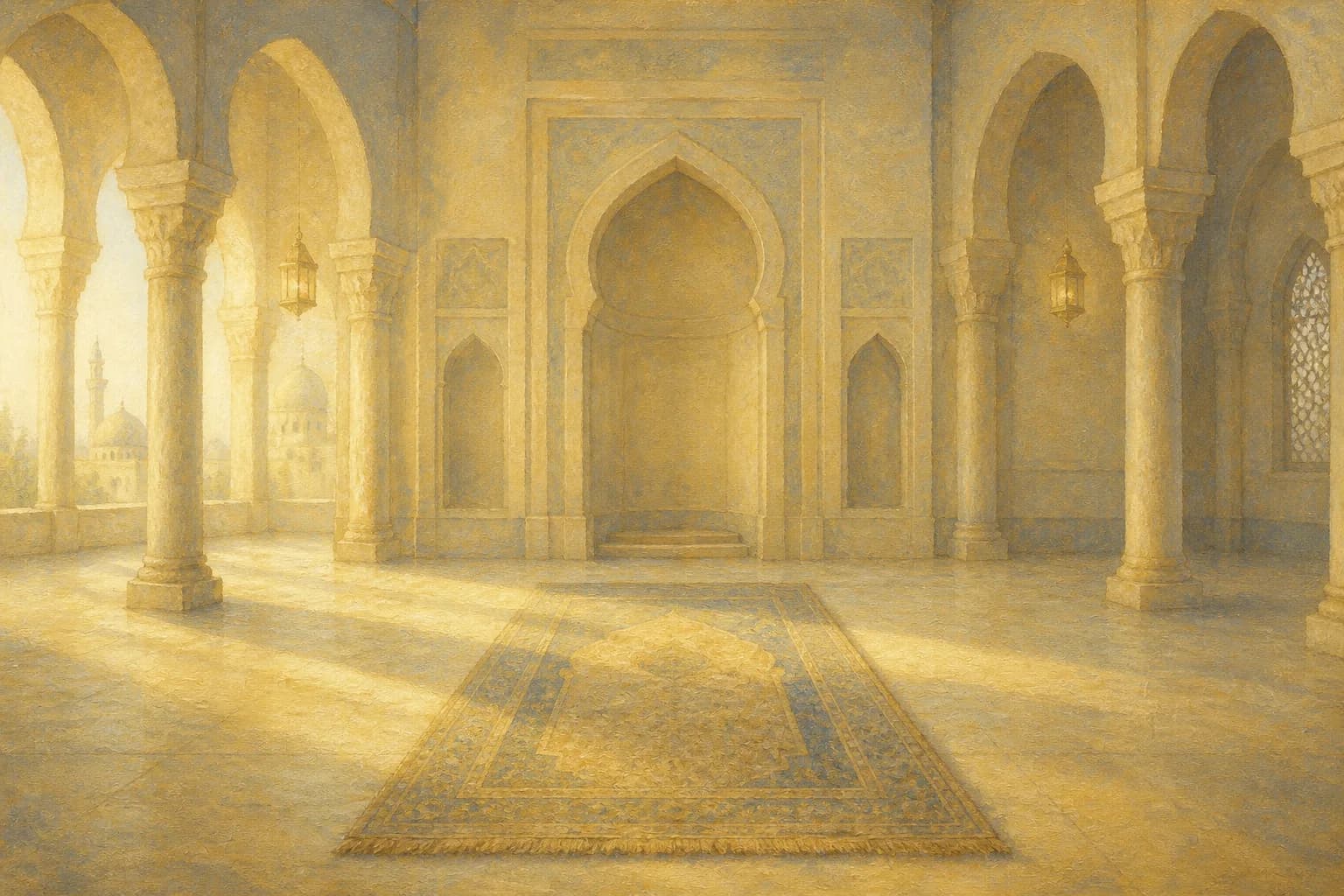

There is a particular quality to Friday mornings for practising Muslims. Something deliberate and unhurried — a different texture to the day. Even people who struggle to maintain consistency in worship often notice it: Friday carries weight.
That is not a coincidence. الجُمُعَة (Al-Jumu'ah) — Friday — has a specific status in Islam, and understanding what that status means helps transform Jummah from a weekly appointment into something you actually look forward to.
What Jummah Actually Means
The word الجُمُعَة (Al-Jumu'ah) derives from the Arabic root jama'a — to gather, to collect, to bring together. It describes both the day itself and the congregational midday prayer that defines it.
The Quran dedicates an entire surah to it — Surah Al-Jumu'ah (Chapter 62). The central command is direct:
يَـٰأَيُّهَا ٱلَّذِينَ ءَامَنُوٓاْ إِذَا نُودِىَ لِلصَّلَوٰةِ مِن يَوْمِ ٱلْجُمُعَةِ فَٱسْعَوْاْ إِلَىٰ ذِكْرِ ٱللَّهِ وَذَرُوْاْ ٱلْبَيْعَ
"O you who have believed, when the adhan is called for the prayer on the day of Jumu'ah, then proceed to the remembrance of Allah and leave trade. That is better for you, if you only knew." — (Surah Al-Jumu'ah, 62:9)
The verse continues: after the prayer, you are told to disperse and seek the bounty of Allah — to return to your work and world — but now with a renewed awareness. Friday is not a withdrawal from life; it is a reorientation within it.
The Prophet ﷺ described the day's standing explicitly:
"خَيْرُ يَوْمٍ طَلَعَتْ عَلَيْهِ الشَّمْسُ يَوْمُ الْجُمُعَةِ"
"The best day on which the sun rises is Friday. On it Adam was created, on it he was made to enter Paradise, on it he was expelled from it, and the Last Hour will not come about except on a Friday." — (Sahih Muslim 854)
That is a remarkable list. Friday frames the beginning and the end of the human story — creation, the first home, and the final accounting. Praying on that day is not just attendance at a weekly gathering. It is participation in something that spans the entire arc of human existence.
Why Jummah Matters for Muslims Today
صَلاةُ الجُمُعَة (Salat al-Jumu'ah) is fard — obligatory — for adult Muslim men who are sane, resident, free from legitimate excuses, and capable of attending. Missing it three consecutive times without excuse is described in hadith as a seal placed on the heart.
But beyond its legal status, Jummah serves a function that modern Muslims particularly need: it is a weekly reset.
Five daily prayers create a rhythm across the day. Jummah creates a rhythm across the week. It is the moment when the ummah — the global community of believers — physically gathers. When you enter the masjid on Friday and see rows of people who have left their offices, their shops, their to-do lists, and oriented themselves toward the same qibla, that is not just a ritual. It is a living demonstration of what the shahada means in practice.
The khutbah (sermon) given before the prayer connects the daily to the eternal. A good khutbah does what Islamic scholarship has always tried to do: ground the difficulties of lived life in the clarity of divine guidance.
Reading Surah Al-Kahf on Fridays is a well-established sunnah. The Prophet ﷺ said that whoever reads it on Friday, a light will shine for him between the two Fridays — a protection and a luminosity that carries through the week.
How to Apply the Meaning of Jummah Every Week
Understanding what Jummah means should change how you approach it. Here is what that looks like practically:
Perform ghusl on Friday morning. This is a confirmed sunnah — separate from ghusl for janabah — that marks the day as distinct. It is an act of preparation, like wearing your best clothes to an important meeting, except this meeting is the most important one of the week.
Go early. The Prophet ﷺ encouraged arriving at the masjid as early as possible. Those who arrive first, according to several hadith, are likened to someone who has sacrificed a camel in charity. Each row back from the first reduces the reward. Going early also gives you time to pray voluntary prayers, make dhikr, and arrive in a state of readiness rather than rushing in at the last moment.
Engage with the khutbah. The khutbah is not background noise. Talking during it — even to tell someone to be quiet — is described by the Prophet ﷺ as a waste. It is a time to listen, reflect, and bring what is being said into connection with your own life.
Send salawat on the Prophet ﷺ. Friday is the ideal day for this. The reward is multiplied, and the benefits of salawat on the Prophet are extensive — it draws blessings back to the sender. Build this into your morning and into the time after Asr.
Make dua in the blessed hour. Most scholars identify the final hour before Maghrib as the sacred period on Friday when sincere duas are accepted. Sit with the daily duas for Muslim life you find meaningful, and make them with attention in that window. This is a slot worth protecting.
Use dhikr throughout the day. The importance of dhikr is not confined to Friday, but Friday amplifies its value. The Quranic instruction after Jummah prayer is to remember Allah often — not just within the prayer walls, but in the afternoon and evening as well.
Still struggling to perform salah properly?
Learn each prayer step by step, understand what you are saying, and build a consistent salah habit with clear, scholar-approved lessons in DeenUp.
Take the Salah Quiz
The DeenBack guide to building a morning dua routine is a useful starting point for Muslims who want Friday mornings to feel meaningfully different — structured around adhkar and intention before the day runs away from them.
Signs That Jummah Is Becoming What It Should Be
How do you know that the meaning of Jummah is taking root in your life?
You look forward to it. Not just as a break from work, but as the most spiritually nourishing hour of the week. When arriving at the masjid feels like arriving somewhere you belong, that is a sign.
The week feels different around it. Muslims who treat Jummah seriously often notice their Thursday evenings and Friday mornings have a different quality — a kind of quiet preparation. The day does not begin when the adhan is called; it begins the night before.
Your dhikr increases on Fridays. You find yourself sending salawat more naturally, making dua in the Asr window without needing to remind yourself, finishing Surah Al-Kahf with a sense of continuity rather than obligation.
You carry something from the khutbah into the week. A verse. A point about character. A reminder about your relationship with Allah. When the khutbah lands and stays with you, the hour has done its work.
The Demi Manifest piece on tawakkul in daily life connects here: genuine reliance on Allah is reinforced by the weekly act of stopping, gathering, and returning to dhikr. Jummah is not a pause in the week — it is the axis the rest of the week rotates around.
Common Questions
What if I miss Jummah due to work? Scholars generally hold that work is not a valid excuse for missing Jummah unless the situation is genuinely exceptional — such as an emergency, a job that would be lost with no alternative, or a situation where attendance is truly impossible. Where possible, Muslim employees should negotiate a short break. The prayer itself takes under an hour including khutbah.
What should I read before Jummah? Surah Al-Kahf is the primary sunnah reading for Friday. The entire surah, recited on Friday, carries the light-between-Fridays reward. If you cannot complete the whole surah before the prayer, beginning it and completing it after is also practised by scholars.
Is the Friday prayer the same as Dhuhr? No. Jummah replaces Dhuhr on Friday for those obligated to attend. It consists of two rakaat of prayer led by the imam, preceded by the two khutbahs. If you miss Jummah entirely, you pray Dhuhr — four rakaat — as a substitute, not Jummah.
Can I pray Jummah at home? No. Jummah is defined by congregational performance in a masjid or designated prayer space. It requires a minimum number of attendees (scholars differ on the exact number, but congregation is the point). An individual praying alone at home is not performing Jummah — they would pray Dhuhr instead.
Closing
الجُمُعَة (Al-Jumu'ah) is the day the human story begins and ends. It is the day Adam stepped into existence, the day the ummah gathers across the globe, and the day, at its end, when the scales of the week are quietly settled.
You already know Friday is special. This understanding is built into the Islamic calendar, repeated in the Prophet's ﷺ teaching, woven into Surah Al-Jumu'ah. The invitation is to bring your full attention to it — not just your presence — and let it do what it is designed to do: reorient you, every single week, back to what actually matters.
Still struggling to perform salah properly?
Learn each prayer step by step, understand what you are saying, and build a consistent salah habit with clear, scholar-approved lessons in DeenUp.
Take the Salah QuizFrequently Asked Questions
What does Jummah mean in Arabic?
Jummah comes from the Arabic root meaning gathering or assembly. It refers to Friday, the day Muslims gather for the congregational midday prayer, and to the prayer itself.
Is Jummah prayer obligatory for women?
Jummah is obligatory for adult Muslim men. Women, travellers, the sick, and those with genuine hardship are exempt, though women are permitted and encouraged to attend.
What is the sacred hour on Friday when duas are accepted?
Most scholars identify the sacred hour as the period between Asr and Maghrib on Friday. Spending those minutes in sincere dua is highly recommended, especially in the last hour before sunset.
What should I do to prepare for Jummah?
Perform ghusl, wear clean clothes, apply fragrance if possible, go to the masjid early, recite Surah Al-Kahf, send salawat on the Prophet, and come in a state of quiet readiness.