

- Authors

- Name
- Ahmad
- Role
- Senior Marketing Manager, Islamic education • DeenUp
بِسْمِ اللهِ الرَّحْمٰنِ الرَّحِيْمِ
In the name of God, the Most Gracious, the Most Merciful.

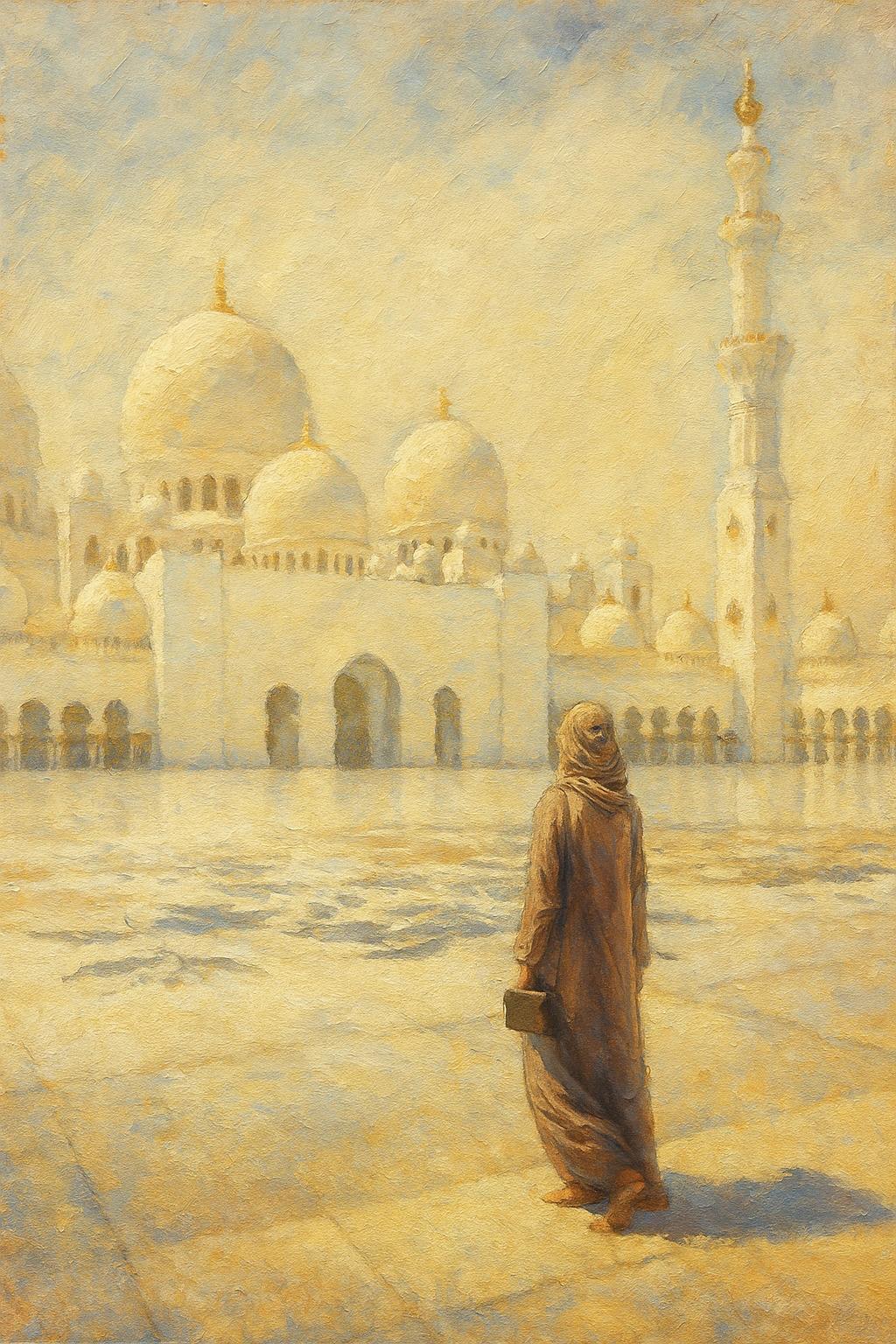
The history of Islam is not simply the history of a religion. It is the story of a civilization — one that preserved Greek philosophy when Europe had forgotten it, that produced some of humanity's greatest scholars in medicine and mathematics, and that brought monotheism and ethical accountability to societies that had neither. For a Muslim, this history is personal. The ummah you belong to today is the same community that gathered around the Prophet ﷺ in Medina fourteen centuries ago.
Understanding where you come from makes your practice richer, your faith more grounded, and your place in the global Muslim community more meaningful. This timeline covers the major eras of Islamic history from before the revelation through to the modern day.
What Is the Timeline of Islamic History?
Islamic history spans more than 1,400 years, beginning with the first Quranic revelation to Prophet Muhammad ﷺ in 610 CE. It encompasses the formation of the Muslim community in Medina, the rapid expansion of Islam across Arabia and beyond, the caliphates, the intellectual Golden Age, the great Islamic empires, and the modern era of Muslim-majority nations. The Islamic calendar marks year 1 AH as the Prophet's migration to Medina in 622 CE.
Pre-Islamic Arabia: The Jahiliyyah Period
Before Islam, the Arabian Peninsula was dominated by tribal rivalries, idol worship, and what the Quran calls jahiliyyah — a state of moral ignorance. The Ka'bah in Mecca, originally built by Ibrahim (AS) and his son Ismail (AS) as a house of monotheistic worship, had been filled with more than 360 idols over the centuries. Social structures were harsh: infanticide of girls was practiced, the poor had no protection, and wealth determined justice.
Into this world, Allah sent the final Prophet. The Quran describes this moment as a divine mercy: "And We have not sent you, [O Muhammad], except as a mercy to the worlds" (Surah Al-Anbiya, 21:107). The reform that followed was not just theological — it was social, legal, and civilizational.
The Prophet Muhammad ﷺ and the Formation of the Ummah
570 CE — 632 CE (Before and After Hijra)
Muhammad ﷺ was born in Mecca around 570 CE, in what is known as the Year of the Elephant. He received his first revelation at the Cave of Hira at age forty, in 610 CE. For thirteen years he preached in Mecca under severe persecution from the Quraysh tribe. In 622 CE, he made the Hijra — the migration to Medina — which established the first Muslim community (ummah) with its own constitution, moral code, and collective identity.
The years in Medina saw the revelation of the majority of Quranic verses, the establishment of salah, zakat, fasting, and the foundations of Islamic jurisprudence. In 630 CE, the Prophet ﷺ led the conquest of Mecca — peacefully and without retribution, declaring a general amnesty. The Ka'bah was purified of idols and restored to its Abrahamic purpose.
The Prophet ﷺ delivered his Farewell Sermon at Arafah in 632 CE, declaring the final perfection of the religion: "This day I have perfected for you your religion and completed My favor upon you and have approved for you Islam as religion" (Surah Al-Ma'idah, 5:3). He passed away weeks later in Medina. For a full account of his life, see who was Prophet Muhammad ﷺ.
The Rightly Guided Caliphs (11–41 AH / 632–661 CE)
The Prophet ﷺ was succeeded by four companions whom he had guided personally and whose leadership he had praised. The Prophet ﷺ said: "You must follow my Sunnah and the Sunnah of the rightly-guided caliphs" (Sunan Ibn Majah 42).
| Caliph | Period | Key Achievement |
|---|---|---|
| Abu Bakr as-Siddiq | 632–634 CE | Unified Arabia; compiled the Quran into one volume |
| Umar ibn al-Khattab | 634–644 CE | Expanded Islam to Persia, Syria, Egypt; established the Islamic calendar |
| Uthman ibn Affan | 644–656 CE | Standardized the written Quran (Mushaf) in one script |
| Ali ibn Abi Talib | 656–661 CE | Upheld justice during internal conflict; first Imam of Shia Islam |
This forty-year period saw Islam spread from the Arabian Peninsula to Persia, the Levant, North Africa, and Central Asia — not primarily through force but through the simplicity and justice of the message. See more on the timeline of Islamic caliphates.
The Umayyad Caliphate (41–132 AH / 661–750 CE)
The Umayyad dynasty moved the capital to Damascus and presided over one of history's most rapid territorial expansions. By 711 CE, Muslim armies under Tariq ibn Ziyad had crossed into the Iberian Peninsula. By 732 CE, Islam had reached southern France. The Umayyad period also saw significant internal tensions — the martyrdom of Husayn ibn Ali (RA) at Karbala in 680 CE became a defining moment in Islamic history, shaping the theological and political divisions that persist today.
The Abbasid Caliphate and the Islamic Golden Age (132–656 AH / 750–1258 CE)
The Abbasid revolution shifted the capital to Baghdad, founded in 762 CE. What followed was one of the most creative intellectual periods in human history. The House of Wisdom (Bayt al-Hikmah) in Baghdad became a global center for translation, scholarship, and original research.
The Quran's first revealed word — "Read" (Surah Al-Alaq, 96:1) — created a culture where knowledge was a religious obligation. Scholars like Ibn Sina (Avicenna) systematized medicine; Al-Khawarizmi invented algebra; Al-Biruni calculated the circumference of the Earth. The Muslim world led humanity in astronomy, optics, chemistry, and philosophy for five centuries. This era is covered in depth at the Islamic Golden Age and famous Muslims in history.
The Golden Age ended abruptly in 1258 CE when Mongol forces under Hulagu Khan destroyed Baghdad, burning the libraries of the House of Wisdom. Eyewitnesses reported that the Tigris ran black with ink from sunken books. It was one of the most significant losses in the history of human knowledge.
Your personal 28-Day Deen Plan
Learn your deen in 28 days, 5 minutes a day
The essentials of salah, fiqh and faith, step by step from authentic sources. Finish all 28 days and earn a verifiable Certificate of Completion.
Take the free quizAnswer a few questions and get your personal plan.
Later Islamic Empires (1299–1924 CE)
After the fall of the Abbasids, three major Muslim empires dominated the world:
- The Ottoman Empire (1299–1924 CE) — based in Constantinople (Istanbul from 1453); controlled the Arab heartlands, the Balkans, and North Africa. For much of its existence, the Ottoman sultan also held the title of Caliph, making it the last formal caliphate in Islamic history.
- The Safavid Empire (1501–1722 CE) — based in Persia (modern Iran); established Twelver Shia Islam as the state religion.
- The Mughal Empire (1526–1857 CE) — governed most of the Indian subcontinent; produced architectural wonders such as the Taj Mahal and significant contributions to Islamic art and literature.
The Ottoman Caliphate was abolished in 1924 by Mustafa Kemal Ataturk as part of Turkey's shift toward secularism, ending the formal institutional successor to the Prophet's leadership after thirteen centuries.
The Modern Muslim World (1924 CE–Present)
The twentieth century brought both challenge and renewal for Muslims worldwide. Independence movements across the Middle East, Africa, and Asia produced new Muslim-majority nations. Scholars and reformers worked to reconnect communities with their Islamic roots after decades of colonial disruption.
Today, approximately 1.8 billion Muslims live across every continent — the fastest-growing religious community on Earth. The Quran's promise remains in force: "Indeed, it is We who sent down the Quran and indeed, We will be its guardian" (Surah Al-Hijr, 15:9). Every Muslim who learns this history stands on 1,400 years of unbroken transmission.
For more on specific moments in this story, the articles on the migration to Medina, the conquest of Mecca, and the Farewell Sermon are excellent starting points.
For the history of Islam through its major festivals and practices, see the Laylatul Qadr guide and the hajj pilgrimage guide.
DeenBack's piece on faith and historical roots explores how connecting to this broader arc of Islamic history strengthens a Muslim's daily practice and sense of belonging. And Demi Manifest on trusting Allah through hardship shows how the ummah's experience of historical trials — Karbala, the Mongol destruction, colonial disruption — becomes a source of sabr and resilience rather than despair.
For a broader scholarly perspective on Islamic historical consciousness and its role in forming Muslim identity today, Yaqeen Institute's research on the Islamic intellectual tradition offers accessible, well-sourced articles on these themes.
Why Every Muslim Should Know This History
The Quran is filled with historical narratives for a reason. Allah says: "There was certainly in their stories a lesson for those of understanding" (Surah Yusuf, 12:111). The story of the Islamic ummah — from a small community of persecuted believers in Mecca to a civilization that preserved and advanced human knowledge for centuries — is one of the most powerful demonstrations of what faith in Allah makes possible.
Knowing this history is not nostalgia. It is spiritual orientation. It tells you who you are, where you come from, and what your practice is part of.
Your personal 28-Day Deen Plan
Learn your deen in 28 days, 5 minutes a day
The essentials of salah, fiqh and faith, step by step from authentic sources. Finish all 28 days and earn a verifiable Certificate of Completion.
Take the free quizAnswer a few questions and get your personal plan.
Frequently Asked Questions
When did Islamic history begin?
Islamic history began with the first revelation to Prophet Muhammad ﷺ in 610 CE at the Cave of Hira, near Mecca. The formal Islamic calendar, however, starts in 622 CE with the Hijra — the Prophet's migration from Mecca to Medina — marking year 1 AH (After Hijra).
Who were the four Rightly Guided Caliphs?
The four Rightly Guided Caliphs (Khulafa ar-Rashidun) were Abu Bakr as-Siddiq, Umar ibn al-Khattab, Uthman ibn Affan, and Ali ibn Abi Talib. They led the Muslim community from 632 to 661 CE. The Prophet ﷺ instructed Muslims to follow their guidance in Sunan Ibn Majah 42.
What was the Islamic Golden Age?
The Islamic Golden Age spanned roughly 750 to 1258 CE during the Abbasid Caliphate. Scholars in Baghdad, Cordoba, and Cairo made breakthroughs in mathematics, medicine, astronomy, and philosophy. It was powered by the Quranic command to read and reflect (Surah Al-Alaq, 96:1-5), which directed Muslims toward inquiry.
What ended the Abbasid Caliphate?
The Abbasid Caliphate ended in 1258 CE when Mongol forces under Hulagu Khan sacked Baghdad, destroying the House of Wisdom and killing the last Abbasid caliph. This devastating event marked the end of a 500-year period of centralized Islamic intellectual and political authority.
What was the significance of the Hijra in Islamic history?
The Hijra — the Prophet's migration from Mecca to Medina in 622 CE — was the turning point of early Islamic history. It established the first Muslim community (ummah) with a social and moral framework. Umar ibn al-Khattab (RA) later set this year as the start of the Islamic calendar.
How long did the Ottoman Empire last?
The Ottoman Empire lasted from 1299 CE to 1924 CE — over 600 years. At its peak, it controlled much of Southeast Europe, the Middle East, and North Africa. The caliphate formally ended in 1924 when the Turkish Republic under Mustafa Kemal Ataturk abolished the institution.
Why does knowing Islamic history benefit a Muslim?
Knowing Islamic history deepens a Muslim's connection to the ummah across time. It demonstrates how faith survived persecution, conquest, and renewal — grounding present-day practice in a living tradition. The Quran repeatedly invites reflection on the stories of past communities as signs for those who understand (Surah Yusuf, 12:111).