

- Authors

- Name
- Ahmad
- Role
- Senior Marketing Manager, Islamic education • DeenUp
بِسْمِ اللهِ الرَّحْمٰنِ الرَّحِيْمِ
In the name of God, the Most Gracious, the Most Merciful.
If you have ever come across the claim that Prophet Muhammad ﷺ was Jewish — perhaps in an online debate, a history class, or a conversation — you are not alone in wanting a clear, grounded answer. The question touches on Abrahamic history, the shared roots of the great monotheistic traditions, and some genuine confusion about what connects and distinguishes them.
The answer is straightforward: no, the Prophet Muhammad ﷺ was not Jewish. What follows explains why the question arises, what the Quran says, and what it means for how we understand Islam's place in the prophetic tradition.
Was Muhammad Jewish? The Direct Answer
Prophet Muhammad ﷺ was an Arab from the Quraysh tribe of Mecca, born around 570 CE. His lineage traces back through his ancestor Adnan to Prophet Ismail ﷺ, son of Prophet Ibrahim ﷺ. Judaism as a tradition descends from Ibrahim through his other son, Ishaq ﷺ, and then through Yaqub (Jacob) ﷺ, whose descendants became the Children of Israel. Sharing an ancestor with a tradition does not make someone a member of it — Islam, Judaism, and Christianity each constitute a distinct covenant, community, and body of law.
What Does the Quran Directly Say?
The Quran addresses this directly and unambiguously. Allah says:
مَا كَانَ إِبْرَاهِيمُ يَهُودِيًّا وَلَا نَصْرَانِيًّا وَلَٰكِن كَانَ حَنِيفًا مُّسْلِمًا
"Ibrahim was neither Jewish nor Christian. Rather, he was a pure monotheist, a Muslim — and he was not among the polytheists." — (Surah Al-Imran, 3:67)
This verse establishes that Ibrahim ﷺ — the patriarch both traditions trace their lineage to — was himself neither Jewish nor Christian. He preceded both covenants and represented a pure, primordial monotheism (hanifiyyah). The Prophet Muhammad ﷺ, as Ibrahim's descendant through Ismail and the bearer of the final revelation, carried forward that same hanifiyyah into the culminating form of Islamic practice.
The Quran also declares:
مَّا كَانَ مُحَمَّدٌ أَبَا أَحَدٍ مِّن رِّجَالِكُمْ وَلَٰكِن رَّسُولَ اللَّهِ وَخَاتَمَ النَّبِيِّينَ
"Muhammad is not the father of any of your men, but is the Messenger of Allah and the Seal of the Prophets." — (Surah Al-Ahzab, 33:40)
His identity is defined by prophethood and the final divine message — not by tribal or religious affiliation with the Israelite covenant.
Why Does the Confusion Arise?
Several historical facts can confuse people who encounter this question without Islamic context.
The shared Abrahamic heritage. Islam, Judaism, and Christianity all trace a spiritual lineage through Ibrahim ﷺ. The Quran repeatedly honors the prophets of the Hebrew Bible — Musa (Moses), Dawud (David), Sulayman (Solomon), and Isa (Jesus) ﷺ — as true messengers of Allah. This theological respect for the earlier revelations is sometimes misread as identity with them.
Prayer toward Jerusalem. In the earliest period of Islamic practice, Muslims prayed facing Jerusalem (al-Quds), a direction that changed to Mecca by divine command in 624 CE (Surah Al-Baqarah, 2:144). This early practice reflected the spiritual continuity with the Abrahamic prophetic chain, not Jewish affiliation.
The Constitution of Medina. After the Prophet's migration (hijrah) to Medina in 622 CE, he established the Constitution of Medina, a covenant of peaceful coexistence between Muslim and Jewish tribes. Respectful relations and shared governance between communities do not imply shared religious identity.
Confusion about "Abrahamic." All three traditions use the word "Abrahamic," which leads some to conflate them. The Quran's own teaching is clear: each revelation built on and sometimes corrected the previous one, and Islam is the final, complete form. Being "Abrahamic" means honoring Ibrahim ﷺ as a father of monotheism — it does not mean membership in the Israelite covenant.
The Prophet's Lineage in Hadith
Authentic hadith further confirm the Prophet's lineage and identity. The Prophet ﷺ is reported to have said:
"I am the best of you in lineage in every generation, until I was brought forth in the generation in which I exist." — (Sahih al-Bukhari 3557)
Islamic scholars trace his lineage with precision: Muhammad ibn Abdullah ibn Abd al-Muttalib ibn Hashim — all of the Quraysh tribe of Mecca, an Arab lineage. The chain leads back to Ismail ﷺ and beyond him to Ibrahim ﷺ. Hadith scholarship, biography (sirah), and genealogy are unanimous on this.
What It Actually Means to Be "Abrahamic"
The Quran teaches that Allah sent prophets to every people (Surah Fatir, 35:24). What connects Ibrahim, Musa, Isa, and Muhammad ﷺ is the core message — tawhid, the pure and undivided oneness of Allah — not ethnicity or tribal identity. The Quran says:
شَرَعَ لَكُم مِّنَ الدِّينِ مَا وَصَّىٰ بِهِ نُوحًا وَالَّذِي أَوْحَيْنَا إِلَيْكَ وَمَا وَصَّيْنَا بِهِ إِبْرَاهِيمَ وَمُوسَىٰ وَعِيسَىٰ
"He has ordained for you the same religion enjoined upon Nuh, and what We have revealed to you, and what We enjoined upon Ibrahim, Musa, and Isa — to establish the religion and not be divided in it." — (Surah Ash-Shura, 42:13)
This continuity of message is spiritual, not ethnic. The Prophet Muhammad ﷺ carried the culminating form of this message to all of humanity.
A Quick Reference: The Three Abrahamic Traditions
| Tradition | Key Figure | Primary Scripture | Covenant Through |
|---|---|---|---|
| Judaism | Musa ﷺ | Torah | Ibrahim → Ishaq → Yaqub (Israel) |
| Christianity | Isa ﷺ | Gospel (Injil) | Ibrahim → Ishaq → Dawud → Isa |
| Islam | Muhammad ﷺ | Quran | Ibrahim → Ismail → Muhammad |
Each is a distinct covenant and religious community, united by the core monotheistic message of tawhid but distinguished by their specific laws, practices, and scriptures.
Why This Matters for Your Faith
Understanding the Prophet's identity and lineage is not just historical trivia — it deepens your understanding of why Islam is the faith it is. The Prophet ﷺ came to restore and complete the primordial monotheism that Ibrahim ﷺ embodied, free from the distortions and divisions that accumulated over centuries. When you know who the Prophet ﷺ was and where he came from, you understand more clearly why the Quran calls Muslims "a middle community" (Surah Al-Baqarah, 2:143) — witnesses to humanity, upholding the pure, undivided worship of Allah.
Still searching for a clear Islamic answer?
Explore sourced answers rooted in the Quran, authentic hadith, and respected scholarship—without getting lost in conflicting search results.
Take the Islam Quiz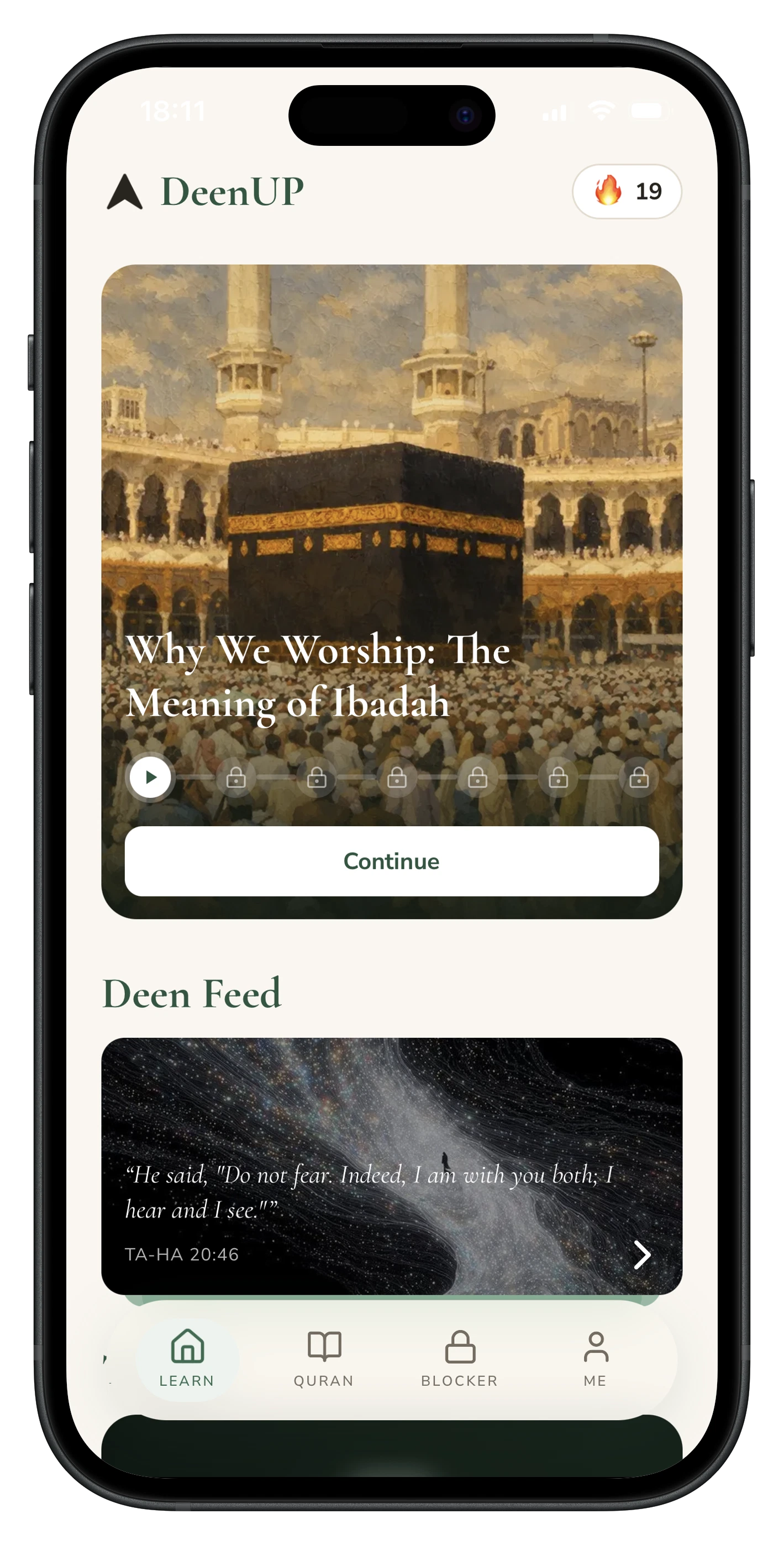
Signs of Growing Islamic Knowledge
You know you are deepening your knowledge of Islam when you can:
- Trace the prophetic chain from Ibrahim through Ismail to Muhammad ﷺ without confusion
- Explain the Abrahamic connection without conflating the three traditions
- Cite Quran 3:67 when someone asks whether Ibrahim — or Muhammad ﷺ — was Jewish or Christian
- Understand why the Prophet ﷺ respected earlier scriptures without adopting their specific covenants
These are not academic achievements — they are signs of a believer engaging seriously with the Quran and sirah.
Explore Further
For a deeper understanding of the Prophet's life and the prophetic chain:
- Was Muhammad Christian Before Islam? — a companion article addressing a related misconception
- Stories of the Prophets in Islam — the full Quranic prophetic chain
- Who Was Prophet Ibrahim? — the patriarch all three traditions trace to
- What Is Tawheed in Islam? — the core monotheism that connects all Abrahamic prophets
- What Is Shahada? — the testimony of faith that defines Muslim identity
A Feed Worth Scrolling
Swipe through short, scholar-approved Islamic lessons instead of mindless doom-scrolling.
Learn Through Play
Bite-sized lessons, quizzes, levels, and daily streaks make growing your Deen a habit.
Scholar-Approved
Every lesson is rooted in the Quran and authentic Sunnah and reviewed by qualified scholars.
Still searching for a clear Islamic answer?
Explore sourced answers rooted in the Quran, authentic hadith, and respected scholarship—without getting lost in conflicting search results.
Take the Islam QuizFrequently Asked Questions
Was Prophet Muhammad Jewish?
No. Prophet Muhammad ﷺ was an Arab from the Quraysh tribe of Mecca, a descendant of Prophet Ibrahim through his son Ismail ﷺ. He was born into a polytheist Arab society, not the Jewish community, and received the final revelation of Islam at age 40.
Why do some people think Muhammad was Jewish?
The confusion often arises from the shared Abrahamic heritage. Early Muslims prayed toward Jerusalem, maintained ties with Jewish tribes in Medina, and the Quran confirms many earlier prophets. However, sharing Abrahamic roots does not make someone Jewish — Judaism is a distinct covenant and community.
What does the Quran say about Ibrahim being Jewish or Christian?
The Quran explicitly states in Surah Al-Imran (3:67): "Ibrahim was neither Jewish nor Christian, but he was a pure monotheist, a Muslim — and he was not among the polytheists." The Prophet Muhammad ﷺ, as a descendant of Ibrahim through Ismail, followed the same pure monotheism.
What was the Prophet Muhammad's lineage?
Muhammad ﷺ was born in Mecca around 570 CE into the Banu Hashim clan of the Quraysh tribe. His lineage traces back through his ancestor Adnan to Prophet Ismail ﷺ, son of Prophet Ibrahim ﷺ. This is an Arab lineage, not a Jewish one, which descended from Ibrahim through his son Ishaq ﷺ.
Did the Prophet Muhammad have relationships with Jewish communities?
Yes — after migrating to Medina in 622 CE, the Prophet ﷺ signed the Constitution of Medina establishing peaceful coexistence with Jewish tribes there. He respected earlier scriptures and recognized the shared prophetic tradition. Cooperation and respectful relations are not the same as shared identity or religion.
How is Islam related to Judaism and Christianity?
Islam affirms the prophets of the Torah and the Gospel — including Ibrahim, Musa, and Isa ﷺ — as true messengers of Allah. However, Islam considers itself the final and complete form of the Abrahamic monotheistic tradition, with the Quran as Allah's final preserved word and Muhammad ﷺ as the Seal of the Prophets.
What does "Seal of the Prophets" mean?
The Quran (33:40) describes Muhammad ﷺ as Khatam an-Nabiyyin — the Seal of the Prophets — meaning he is the final prophet in the long line of Allah's messengers. This title affirms that the prophethood ends with him and that his message, Islam, completes what earlier revelations began.