

- Authors

- Name
- Ahmad
- Role
- Senior Marketing Manager, Islamic education • DeenUp
بِسْمِ اللهِ الرَّحْمٰنِ الرَّحِيْمِ
In the name of God, the Most Gracious, the Most Merciful.
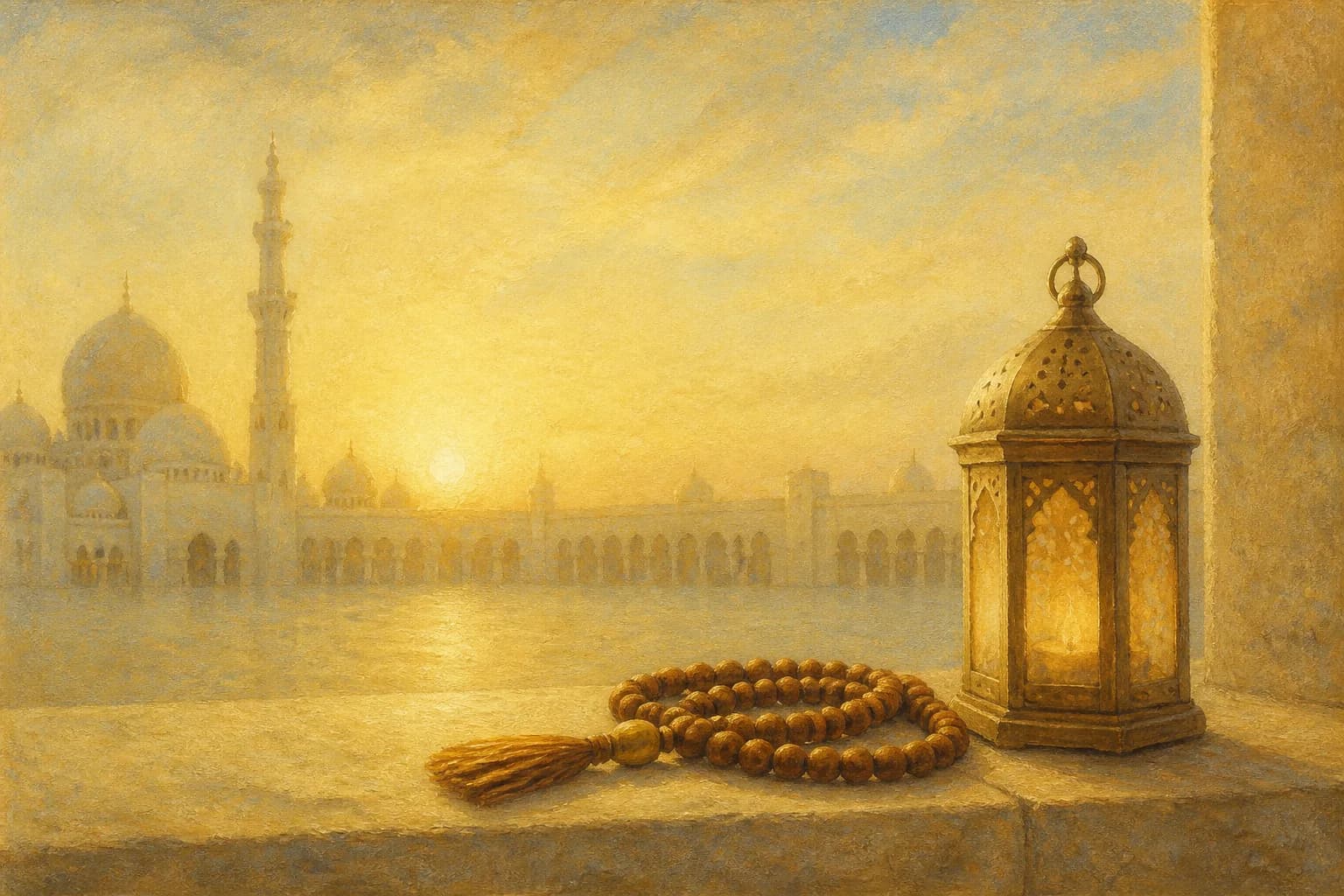
Quick answer
What is the dua for noor in Islam?
The dua for noor is a comprehensive supplication the Prophet Muhammad recorded in Sahih Muslim (763): "O Allah, place light in my heart, light in my tongue, light in my hearing, light in my sight, light above me, light below me, light on my right, light on my left, light in front of me, light behind me, and grant me light."

There are duas you recite out of habit, and there are duas that change how you see yourself. The dua for noor — divine light — is the second kind.
When the Prophet Muhammad ﷺ woke before the rest of the world in the still hours before dawn, he did not immediately begin reciting Quran. He first turned to Allah with a supplication that asked for something so fundamental it is easy to overlook: light. Light in his heart. Light in his hearing. Light on his right side and his left. Light above him and below him. Light in front of him and behind him. Light in every direction and dimension of his being.
That dua is preserved in Sahih Muslim — word for word, as his companion Ibn Abbas witnessed it — and it has been recited by Muslims for over 1,400 years since.
What Is the Dua for Noor?
The dua for noor is the supplication the Prophet Muhammad ﷺ recited during the night prayer, asking Allah to fill every part of his being with divine light. Recorded in Sahih Muslim (763) by Ibn Abbas (RA), it covers thirteen specific requests for noor — in the heart, tongue, hearing, sight, and all six directions of the physical world. It stands as one of the most comprehensive prayers in the Sunnah for spiritual and perceptual clarity.
The Full Dua for Noor: Arabic, Transliteration, and Translation
The dua for noor as preserved in Sahih Muslim (763):
اللَّهُمَّ اجْعَلْ فِي قَلْبِي نُورًا، وَفِي لِسَانِي نُورًا، وَفِي سَمْعِي نُورًا، وَفِي بَصَرِي نُورًا، وَمِنْ فَوْقِي نُورًا، وَمِنْ تَحْتِي نُورًا، وَعَنْ يَمِينِي نُورًا، وَعَنْ شِمَالِي نُورًا، وَمِنْ أَمَامِي نُورًا، وَمِنْ خَلْفِي نُورًا، وَاجْعَلْ لِي نُورًا
Allahumma aj'al fi qalbi nuran, wa fi lisani nuran, wa fi sam'i nuran, wa fi basari nuran, wa min fawqi nuran, wa min tahti nuran, wa 'an yamini nuran, wa 'an shimali nuran, wa min amami nuran, wa min khalfi nuran, waj'al li nuran
"O Allah, place light in my heart, light in my tongue, light in my hearing, light in my sight, light above me, light below me, light on my right, light on my left, light in front of me, light behind me, and grant me light." — (Sahih Muslim 763)
Some narrations of this hadith include additional phrases asking for light in the nerves, flesh, blood, and hair — and for the light to be made great. The version above is the most widely cited and easiest to memorize for daily practice.
The Shorter Dua for Noor After Wudu
A related, shorter supplication for light is recited after completing wudu (ritual purification):
اللَّهُمَّ اجْعَلْنِي مِنَ التَّوَّابِينَ وَاجْعَلْنِي مِنَ الْمُتَطَهِّرِينَ
Allahumma aj'alni min at-tawwabin waj'alni min al-mutatahhirin
"O Allah, make me of those who repent often and make me of those who purify themselves." — (Tirmidhi 55)
This connects the physical act of purification to the inner state of light and purity that the full noor dua asks for.
What Does It Mean to Ask for Divine Light?
Noor (نُور) appears 43 times in the Quran. It is used to describe Allah Himself in one of the most celebrated verses in the entire Book:
اللَّهُ نُورُ السَّمَاوَاتِ وَالْأَرْضِ
"Allah is the Light of the heavens and the earth." — (Surah An-Nur, 24:35)
This is not metaphorical. The verse continues with an extended parable: a niche within which is a lamp, the lamp within glass, the glass like a brilliant star, lit from a blessed olive tree — layered images of refracted, multiplied light. The point is that Allah is the source from which all light, physical and spiritual, originates.
When you recite the dua for noor, you are asking to be connected to that source. You are asking Allah to place in your heart the kind of clarity that cuts through confusion, the kind of guidance that makes the right path visible even in the most disorienting circumstances.
The dua also speaks to the Day of Judgment. In Surah Al-Hadid (57:12), the Quran describes the believers running with their light before them and on their right. In Surah At-Tahrim (66:8), they say: "Our Lord, perfect for us our light and forgive us." The noor the Prophet ﷺ asked for in this life is the same noor he was asking to carry into the next.
Why Every Sense Is Mentioned: Understanding the Dua Phrase by Phrase
| Phrase | What You Are Asking For |
|---|---|
| Light in the heart | Faith, guidance, and freedom from spiritual darkness |
| Light in the tongue | Truthful, beneficial, and remembered speech |
| Light in the hearing | The ability to recognize truth and ignore falsehood |
| Light in the sight | Seeing the signs of Allah in the world with clarity |
| Light above and below | Protection and guidance from all that surrounds you |
| Light on all sides | Divine presence in every direction you turn |
| Grant me light | A closing request that ties it all together — total illumination |
This structure is deliberate. The Prophet ﷺ was not making a generic request. He was moving through the body — heart, tongue, ears, eyes — and then through physical space — above, below, right, left, front, back — to leave no dimension of his existence outside the request. It is a dua of total encompassment.
How to Make the Dua for Noor Part of Your Daily Life
The Prophet ﷺ recited this dua in the night prayer, but that does not limit it to one time or context. Here is a practical way to weave it into your daily routine:
After Wudu: Before entering the prayer, recite the full dua. You have just purified your body — now ask Allah to fill it with light.
Before Fajr: If you wake before the adhan, recite the dua for noor before beginning your prayer. This is the closest to the context in which the Prophet ﷺ recited it.
In sujood: Add a short personal version — "Allahumma aj'al fi qalbi nuran" — to your prostrations throughout the day. Sujood is the closest a person comes to Allah in prayer (Sahih Muslim 482).
As a morning supplication: Pair it with your morning adhkar in Islam. It fits naturally after the core morning remembrances and before beginning the day.
The key is to recite it with awareness, not speed. Move through each phrase and briefly visualize what you are asking for — light in your heart for this difficult decision you face, light in your tongue for the conversation you are dreading, light in your sight for the clarity you have been lacking.
For a full guide to when and how dua connects to Islamic daily practice, see the importance of dhikr in Islam and duas to read after salah.
Do you feel your duas are unanswered?
Have you read the dua properly? Learn authentic duas, understand their meanings, and call upon Allah with greater confidence through DeenUp.
Take the Dua Quiz
Related Duas Connected to Noor and Divine Light
| Dua | Occasion | Source |
|---|---|---|
| Full dua for noor (Sahih Muslim 763) | Night prayer, before Fajr | Sahih Muslim 763 |
| After wudu (Tirmidhi 55) | After ritual purification | Tirmidhi 55 |
| "Rabbana atmim lana nurana" (Surah At-Tahrim 66:8) | As a general supplication | Quran 66:8 |
| Dua al-Isra wal-Miraj (morning supplication) | Morning adhkar | Sahih al-Bukhari 6317 |
| Evening adhkar for protection | After Asr, before Maghrib | Various |
For the full context of morning and evening remembrances, our guides on morning adhkar in Islam and evening adhkar in Islam cover each supplication with Arabic text and when to recite it.
Reading Quran also builds the connection to noor. Surah An-Nur, which contains the Ayat An-Nur (the Light Verse), is considered among the most spiritually luminous sections of the Quran. For a deeper relationship with the Quran itself, see the benefits of reading Quran daily.
After wudu, the dua after wudu article walks through the exact supplication and its connection to the state of spiritual purity that the noor dua builds on.
Common Questions About the Dua for Noor
Does the dua for noor have a specific number of repetitions? The authenticated sources do not specify a number. The Prophet ﷺ recited it as part of his night prayer without a fixed count attached. Recite it once with full concentration. The purpose is sincere, attentive asking — not mechanical repetition.
Is there a dua for noor on the face (for beauty)? Some people search for a dua for noor on the face, but the authenticated dua for noor covers the entire person, including the sight (basar), not a specific body part for cosmetic purposes. The concept of noor in Islam is primarily spiritual — the light of faith, good character, and righteousness — not physical appearance. Consistent prayer, dhikr, and Quran recitation are described in the tradition as the sources of visible light in a believer's face.
What is the connection between noor and the Quran? The Quran is itself described as light in multiple verses: "There has come to you from Allah a light and a clear Book" (Surah Al-Ma'idah, 5:15). Reciting it regularly is one of the most direct ways to invite noor into your heart. The dua and the Book work together — you ask for light with the dua, and you receive it through constant Quran recitation.
Is the dua for noor only for the night prayer? No. While the hadith records the Prophet ﷺ reciting it in the night prayer, the dua itself contains no restriction to a specific time or prayer. It can be recited after any obligatory or voluntary prayer, during morning adhkar, or as a standalone supplication at any time of day.
For scholarly context on the concept of spiritual light in Islam, Yaqeen Institute offers research on the Quran and the spiritual path. The full text of the hadith can be read at Sunnah.com, and the Ayat An-Nur can be explored with multiple translations at Quran.com.
For related reading on Islamic spiritual practice and daily dua routines, DeenBack explores the role of dhikr in building inner clarity and DemiManifest on bringing Islamic intention into daily habits.
Do you feel your duas are unanswered?
Have you read the dua properly? Learn authentic duas, understand their meanings, and call upon Allah with greater confidence through DeenUp.
Take the Dua QuizFrequently Asked Questions
What is the dua for noor in Islam?
The dua for noor is a comprehensive supplication the Prophet Muhammad recorded in Sahih Muslim (763): "O Allah, place light in my heart, light in my tongue, light in my hearing, light in my sight, light above me, light below me, light on my right, light on my left, light in front of me, light behind me, and grant me light."
When is the best time to recite the dua for noor?
The Prophet Muhammad recited the dua for noor during the night prayer (Sahih Muslim 763), making it ideal after waking for Tahajjud or Qiyam. It is also recited after Wudu, before entering the masjid, and as part of morning adhkar. Any moment of sincere supplication after a prayer is appropriate.
What does noor mean in Arabic?
Noor (نُور) means light in Arabic. In the Islamic context, it refers not only to physical light but to spiritual illumination — the inner clarity, guidance, and divine presence that Allah places in the hearts of believers. The Quran uses the word noor 43 times, often describing Allah Himself as the source of all true light.
Is the dua for noor in the Quran or hadith?
The full dua for noor asking for light in every part of the body is from hadith — specifically Sahih Muslim (763), narrated by Ibn Abbas. The Quran does contain related supplications, including Surah At-Tahrim (66:8): "Our Lord, perfect for us our light," which is recited on the Day of Judgment by believers.
How many times should I recite the dua for noor?
There is no fixed number of times prescribed in the authenticated sources for this specific dua. Recite it once with full presence and reflection, focusing on each phrase and its meaning. The goal is not repetition for its own sake but sincere engagement — asking Allah for light in each specific part of your being as you say the words.
What does asking Allah for light in the heart mean?
Asking for noor in the heart means asking Allah for faith, clarity, and guidance that dispels the darkness of doubt, sin, and heedlessness. The Prophet's dua covers the heart, senses, and all directions — because a believer needs Allah's light in every dimension of their inner and outer life, not just in moments of worship.
Can the dua for noor be recited in English?
Yes. While the Arabic is preferred because it is the exact wording the Prophet used, making dua in any language is valid since Allah understands all tongues. Reading the transliteration alongside the translation helps you engage with the meaning, which is the point of the supplication — asking Allah to fill every part of you with His light.