

- Authors

- Name
- Ahmad
- Role
- Senior Marketing Manager, Islamic education • DeenUp
بِسْمِ اللهِ الرَّحْمٰنِ الرَّحِيْمِ
In the name of God, the Most Gracious, the Most Merciful.
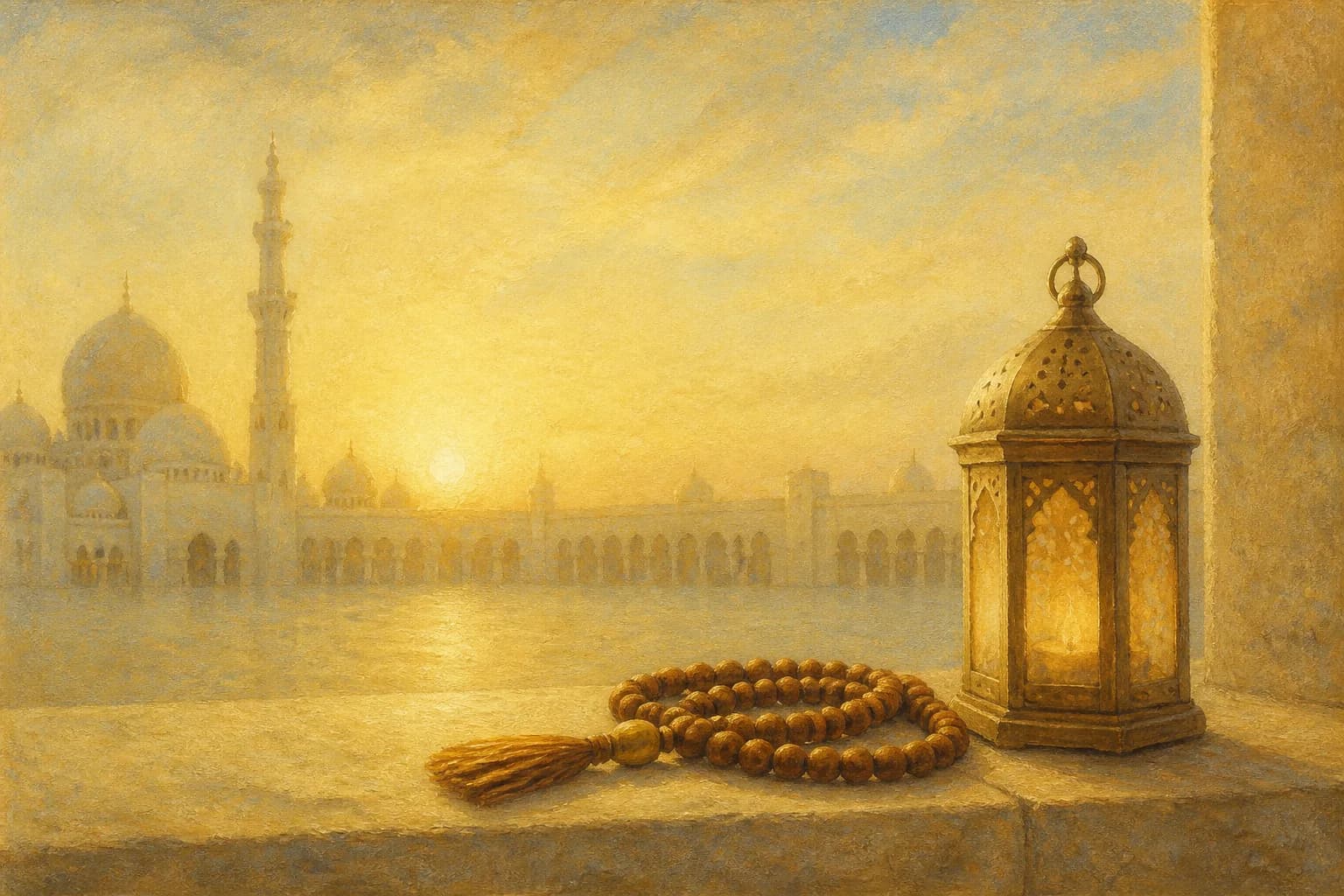
Quick answer
What is the Dua of Light in Islam?
The Dua of Light (Dua al-Nur) is a supplication the Prophet Muhammad recited before night prayer, asking Allah to place divine light in his heart, tongue, hearing, sight, and in every direction. It is recorded in Sahih al-Bukhari 6316 and Sahih Muslim 763, narrated by Ibn Abbas.

Why the Dua of Light Belongs in Your Daily Worship
Some duas work like a shield. Others work like a compass. The Dua of Light — Dua al-Nur — works like both.
When Ibn Abbas spent a night at the Prophet's home and watched him wake for night prayer, he witnessed something he never forgot. The Prophet ﷺ did not reach for water or settle back to sleep. He turned his face upward and asked Allah for light — in his heart, on his tongue, through his ears, behind his eyes, in every direction around him.
That dua has traveled fourteen centuries because something in it resonates instantly: this is not a prayer for protection from harm. It is a prayer for presence — for the kind of divine light that lets you see clearly what actually matters.
What Is the Dua of Light?
The Dua of Light (Dua al-Nur) is a prophetic supplication recorded in Sahih al-Bukhari 6316 and Sahih Muslim 763, in which the Prophet Muhammad ﷺ asked Allah to fill every dimension of his being with nur — divine light — before rising for Tahajjud prayer. Narrated by Ibn Abbas, it lists ten specific locations where light is sought (heart, tongue, hearing, sight, and four directions plus above and below), then concludes with a request for Allah to make that light great.
The Dua: Arabic, Transliteration, and Meaning
The following text is exactly as narrated by Ibn Abbas in Sahih al-Bukhari 6316:
اللَّهُمَّ اجْعَلْ فِي قَلْبِي نُورًا، وَفِي لِسَانِي نُورًا، وَفِي سَمْعِي نُورًا، وَفِي بَصَرِي نُورًا، وَمِنْ فَوْقِي نُورًا، وَمِنْ تَحْتِي نُورًا، وَعَنْ يَمِينِي نُورًا، وَعَنْ شِمَالِي نُورًا، وَمِنْ أَمَامِي نُورًا، وَمِنْ خَلْفِي نُورًا، وَعَظِّمْ لِي نُورًا
Allahumma ij'al fi qalbi nuran, wa fi lisani nuran, wa fi sam'i nuran, wa fi basari nuran, wa min fawqi nuran, wa min tahti nuran, wa 'an yamini nuran, wa 'an shimali nuran, wa min amami nuran, wa min khalfi nuran, wa 'azzim li nuran.
"O Allah, place light in my heart, light in my tongue, light in my hearing, light in my sight, light above me, light below me, light to my right, light to my left, light in front of me, light behind me — and magnify the light for me."
— (Sahih al-Bukhari 6316; Sahih Muslim 763)
When to recite it: The Prophet ﷺ said this after waking at night, before beginning Tahajjud. It can also be added to your morning adhkar after Fajr as a closing supplication.
What Does Each Part Mean?
The structure is deliberate. Light in the heart — so your intentions stay clear and your conscience is sensitive to guidance. Light on the tongue — so your words build rather than break. Light in hearing — so you receive truth and filter falsehood. Light in the eyes — so you perceive the signs of Allah in the world around you.
The directional light — above, below, right, left, front, back — is scholars say a request for total ihata (encompassing protection and orientation). You are asking not just to see the light, but to be surrounded by it completely.
The Longer Narration
The version in Sahih Muslim 763 adds further phrases: light in the supplicant's nerves, flesh, blood, hair, and skin. It then concludes: "O Allah, make my light great." Both versions are authentic and commonly recited together.
The Context: How This Dua Was Preserved
Ibn Abbas (may Allah be pleased with him) narrated that he once spent the night at the home of his maternal aunt, Maymunah (may Allah be pleased with her), who was one of the Prophet's wives. He positioned himself across the room to observe.
After sleeping for part of the night, the Prophet ﷺ woke, performed wudu, and stood for prayer. Before beginning, he turned his face toward the sky and recited this supplication. Ibn Abbas heard every phrase and recorded them faithfully.
That single night of observation gave us a window into the Prophet's interior life: even before standing to pray, he prepared himself by asking Allah to illuminate his entire being. The prayer was not the starting point — the asking was.
This dua connects to one of the Quran's most profound declarations: "Allah is the Light of the heavens and the earth" (Surah An-Nur, 24:35). Asking for nur is asking to be oriented toward the source of all clarity.
Do you feel your duas are unanswered?
Have you read the dua properly? Learn authentic duas, understand their meanings, and call upon Allah with greater confidence through DeenUp.
Take the Dua Quiz
How to Make the Dua of Light a Daily Practice
The Prophet ﷺ recited this dua before Tahajjud, but its application extends further. Here is a practical guide for weaving it into your worship:
| Occasion | How to Use the Dua of Light | Why It Fits |
|---|---|---|
| Before Tahajjud | Recite immediately after waking, before wudu | This is the Sunnah context from Bukhari 6316 |
| After Fajr adhkar | Add as a closing supplication | Begins your day with a request for divine clarity |
| Before important decisions | Ask for light in heart and tongue first | Seeking guidance before speaking or choosing |
| During evening dhikr | Pair with your evening adhkar routine | Bookends the day with requests for divine light |
| Before Quran recitation | Recite to prepare heart and hearing | Asking for receptive faculties before listening |
The key is not to wait for the "right moment." The dua is short enough — fewer than 40 Arabic words — that it can become a consistent anchor before any act of worship.
Building the Habit Step by Step
If you already practice Tahajjud prayer, place a small card with this dua's text near your prayer mat. When your alarm goes off, the card is your first visual cue. Recite before anything else.
If Tahajjud is not yet consistent for you, add the Dua of Light to the end of your Fajr adhkar. The benefits of qiyamul layl include a profound sense of spiritual orientation — and this dua captures exactly that quality even when said after Fajr.
For the Arabic text and transliteration of other related daily dhikr, DeenBack's collection of night worship adhkar and DemiManifest's guide to the prophetic morning routine both provide structured frameworks for building consistent Sunnah-based habits. The dhikr after salah article on this site also covers what to recite directly following each prayer, which pairs naturally with the Dua of Light before prayer.
Common Questions About the Dua of Light
Is it necessary to recite the Dua of Light before Tahajjud?
No — this dua is a Sunnah supplication, not a condition for valid prayer. But the fact that the Prophet ﷺ recited it consistently before night prayer suggests it carries spiritual significance as preparation. Making it a habit before any salah enriches your worship.
Can women recite the Dua of Light during menstruation?
Yes. Because this is dhikr (remembrance of Allah), not salah, it can be recited at any time, including during menstruation or periods when prayer is not performed. Asking Allah for light has no condition attached to it.
How do I memorize the Dua of Light quickly?
Break it into three parts: (1) Allahumma ij'al fi qalbi nuran — heart; (2) the three senses — tongue, hearing, sight; (3) the six directions — above, below, right, left, front, behind — then the closing. Practice one section each day for three days.
Does the Dua of Light have any specific reward mentioned in hadith?
The hadith in Bukhari 6316 records the supplication itself without specifying a numerical reward. The broader context of night prayer and dhikr carries well-established rewards in Islamic scholarship — including the Prophet's statement that Allah descends to the lowest heaven each night and responds to those who ask. (Sahih al-Bukhari 1145)
Do you feel your duas are unanswered?
Have you read the dua properly? Learn authentic duas, understand their meanings, and call upon Allah with greater confidence through DeenUp.
Take the Dua QuizFrequently Asked Questions
What is the Dua of Light in Islam?
The Dua of Light (Dua al-Nur) is a supplication the Prophet Muhammad recited before night prayer, asking Allah to place divine light in his heart, tongue, hearing, sight, and in every direction. It is recorded in Sahih al-Bukhari 6316 and Sahih Muslim 763, narrated by Ibn Abbas.
When should I recite the Dua of Light?
The Dua of Light is best recited before Tahajjud or after waking at night. The Prophet recited it upon rising from sleep for night prayer. It can also be added to your morning adhkar after Fajr, since asking Allah for divine clarity is relevant throughout every part of the day.
What does Allahumma ij'al fi qalbi nuran mean?
Allahumma ij'al fi qalbi nuran means 'O Allah, place light in my heart.' It is the opening phrase of the Dua of Light from Sahih Bukhari 6316. The full supplication asks for nur — divine light — in every dimension of one's being: heart, tongue, senses, and all directions around the body.
Is the Dua of Light in the Quran?
The Dua of Light is not a Quranic verse — it is an authentic prophetic supplication from Sahih al-Bukhari 6316, narrated by Ibn Abbas. However, its meaning connects directly to the Quran, particularly Ayat al-Nur in Surah An-Nur (24:35), which declares that Allah is the Light of the heavens and the earth.
How many parts does the Dua of Light have?
The Dua of Light names ten dimensions where light is sought: heart, tongue, hearing, sight, above, below, right, left, in front, and behind. It concludes by asking Allah to magnify that light. A longer narration in Muslim 763 also adds light in nerves, flesh, blood, hair, and skin.
Can I recite the Dua of Light in English?
You may sincerely recite the Dua of Light in English, though scholars recommend learning the Arabic text for authenticity and spiritual depth. Knowing the meaning while reciting Arabic combines both benefits: the Sunnah reward of prophetic wording and a personal, heartfelt connection to every phrase.