

- Authors

- Name
- Ahmad
- Role
- Senior Marketing Manager, Islamic education • DeenUp
بِسْمِ اللهِ الرَّحْمٰنِ الرَّحِيْمِ
In the name of God, the Most Gracious, the Most Merciful.

Quick answer
What is the dua to reduce pain in Islam?
The primary dua to reduce pain involves placing your hand on the painful area, saying Bismillah three times, then reciting seven times: A'udhu billahi wa qudratihi min sharri ma ajidu wa uhadhiru — I seek refuge in Allah and His power from the evil of what I feel and what I fear. This comes from Sahih Muslim 2202.

Pain tests our patience and turns our hearts toward Allah. Whether it is a headache, chronic ache, or sudden injury, Islam provides specific supplications — taught by the Prophet Muhammad ﷺ himself — that a believer can reach for in the moment of need.
What Is the Dua to Reduce Pain in Islam?
The primary Islamic supplication for reducing pain comes directly from the Prophet ﷺ. Place your right hand on the area of discomfort, say Bismillah three times, then recite seven times: A'udhu billahi wa qudratihi min sharri ma ajidu wa uhadhiru — "I seek refuge in Allah and His power from the evil of what I feel and what I fear." This method, recorded in Sahih Muslim (2202), was taught to a companion who reported his pain was relieved after following it.
The Complete Dua for Pain: Arabic Text and Transliteration
The main supplication for pain relief comes from a well-known hadith narrated by Uthman ibn Abi al-As (may Allah be pleased with him). He told the Prophet ﷺ of a pain he was experiencing, and the Prophet instructed him precisely:
Step 1: Place your right hand on the painful area.
Step 2: Say Bismillah (بِسْمِ اللَّهِ) three times.
Step 3: Then recite seven times:
أَعُوذُ بِاللَّهِ وَقُدْرَتِهِ مِنْ شَرِّ مَا أَجِدُ وَأُحَاذِرُ
A'udhu billahi wa qudratihi min sharri ma ajidu wa uhadhiru
"I seek refuge in Allah and His power from the evil of what I feel and what I fear." — (Sahih Muslim 2202)
Uthman reported that after practicing this, his pain left and did not return during his lifetime.
The Healing Dua from Bukhari
When visiting someone who is ill, or when asking for healing for yourself, the following supplication was regularly recited by the Prophet ﷺ:
اللَّهُمَّ رَبَّ النَّاسِ أَذْهِبِ الْبَأْسَ وَاشْفِهِ أَنْتَ الشَّافِي لَا شِفَاءَ إِلَّا شِفَاؤُكَ شِفَاءً لَا يُغَادِرُ سَقَمًا
Allahumma Rabb al-Nas, adhhibil ba's, washfihi anta al-Shafi, la shifa'a illa shifa'uka, shifa'an la yughadiru saqama
"O Allah, Lord of mankind, remove the affliction and heal. You are the Healer; there is no healing except Your healing, a healing that leaves no illness." — (Sahih al-Bukhari 5742)
What the Quran Says About Healing
The Quran explicitly describes itself as a source of healing. Allah says:
وَنُنَزِّلُ مِنَ الْقُرْآنِ مَا هُوَ شِفَاءٌ وَرَحْمَةٌ لِلْمُؤْمِنِينَ
"And We send down of the Quran that which is a healing and a mercy for the believers." (Surah Al-Isra, 17:82)
This verse establishes that the Quran itself carries shifa' (healing) — spiritual and, by Allah's permission, physical. Scholars note that reciting Surah Al-Fatiha as a ruqyah (healing recitation) was practiced by the Companions, as recorded in Sahih al-Bukhari (5736).
Prophet Ayyub's Dua of Distress
Prophet Ayyub (Job) is a model of patience under severe affliction. When his illness became overwhelming, he turned to Allah with this concise supplication (Surah Al-Anbiya, 21:83):
أَنِّي مَسَّنِيَ الضُّرُّ وَأَنتَ أَرْحَمُ الرَّاحِمِينَ
Anni massaniyad-durru wa anta arhamur-rahimin
"Indeed, adversity has touched me, and You are the Most Merciful of the merciful."
Allah responded by removing his affliction and restoring his health (Surah Al-Anbiya, 21:84). This dua is powerful in moments when pain feels overwhelming — a direct, humble appeal to Allah's mercy.
How These Duas Fit Your Daily Life
| Situation | Dua | Source |
|---|---|---|
| Your own pain | Bismillah x3 + A'udhu billahi... x7 | Sahih Muslim 2202 |
| Visiting someone ill | Allahumma Rabb al-Nas... | Sahih al-Bukhari 5742 |
| Overwhelming distress | Anni massaniyad-durru... | Quran 21:83 |
| General healing | Recite Surah Al-Fatiha | Sahih al-Bukhari 5736 |
| Seeking Allah's mercy | Dua of Prophet Yunus | Quran 21:87 |
Do you feel your duas are unanswered?
Have you read the dua properly? Learn authentic duas, understand their meanings, and call upon Allah with greater confidence through DeenUp.
Take the Dua Quiz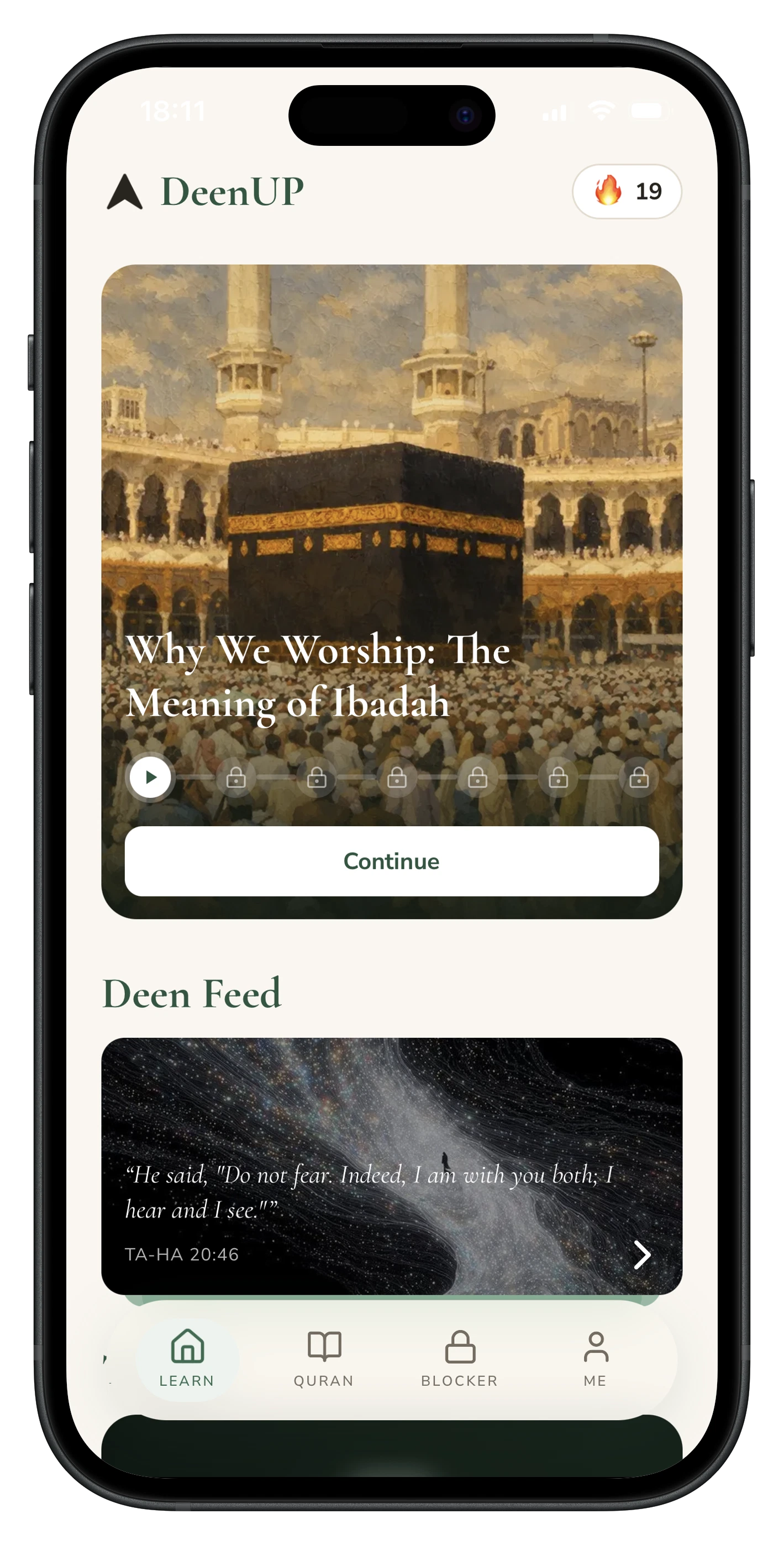
Making It a Habit: Dua Before Reaching for Anything Else
Many Muslims find it helpful to establish a mental habit: before taking a painkiller or calling a doctor, spend one minute reciting the Prophetic dua. This is not a replacement for medical care — the Prophet ﷺ said: "Make use of medical treatment, for Allah has not made a disease without appointing a remedy for it" (Abu Dawud 3855). It is about making dua the first response, not the last resort.
Small consistency beats occasional intensity. If you are dealing with chronic pain, making this dua each morning alongside your morning adhkar builds a steady relationship with Allah through difficulty.
The Prophet ﷺ also encouraged visiting and praying for those in pain. Learning the dua for visiting the sick — covered in our guide on dua for sick person — extends this practice to the people around you.
When pain appears suddenly, it can accompany deeper difficult times. If you are going through prolonged hardship, the supplications in our dua for difficult times guide provide broader spiritual support.
The Spiritual Context: Pain and Expiation
The Prophet ﷺ said: "No fatigue, illness, anxiety, sorrow, harm or distress befalls a Muslim, even the prick of a thorn, but Allah expiates some of his sins thereby." (Sahih al-Bukhari 5641). This reframes pain not as punishment but as purification — a mercy from Allah that erases sins.
Knowing this, the dua to reduce pain is not desperate pleading. It is a believer engaging with a merciful Lord who already has their wellbeing in mind. The act of making dua itself is an act of shukr (gratitude) and tawakkul (trust).
For a deeper understanding of how dua supports your spiritual health alongside physical healing, the resources at DeenBack on daily dhikr habits offer practical Islamic daily routines that keep the heart connected throughout difficulty.
Thinking about pain and resilience from an Islamic perspective is also explored in DemiManifest's guide on trusting Allah through hardship.
Common Questions About Dua and Pain
The dua for health and healing guide covers broader questions about Islamic healing practices beyond acute pain.
Do you feel your duas are unanswered?
Have you read the dua properly? Learn authentic duas, understand their meanings, and call upon Allah with greater confidence through DeenUp.
Take the Dua QuizWhether your pain is brief or ongoing, the Prophet's guidance gives you a specific, authenticated action to take. Bismillah three times, then seek Allah's refuge seven times. That is the Sunnah, and it is available to you right now.
Frequently Asked Questions
What is the dua to reduce pain in Islam?
The primary dua to reduce pain involves placing your hand on the painful area, saying Bismillah three times, then reciting seven times: A'udhu billahi wa qudratihi min sharri ma ajidu wa uhadhiru — I seek refuge in Allah and His power from the evil of what I feel and what I fear. This comes from Sahih Muslim 2202.
How do you recite the pain relief dua correctly?
Place your right hand on the area of pain. Say Bismillah three times. Then say the full supplication seven times: A'udhu billahi wa qudratihi min sharri ma ajidu wa uhadhiru. The Prophet Muhammad taught this method to a companion who complained of pain, and it brought him relief (Sahih Muslim 2202).
Is placing the hand on the painful area part of the Sunnah?
Yes, placing the right hand on the painful area while reciting the dua is explicitly Prophetic practice. Uthman ibn Abi al-As complained of pain to the Prophet, who instructed him to place his hand on the painful spot and recite the supplication seven times. This tactile method is part of the dua itself.
What Quranic verse speaks about healing pain?
Allah says in Surah Al-Isra: "And We send down of the Quran that which is a healing and a mercy for the believers" (17:82). Prophet Ayyub also made the famous dua of distress when afflicted: "Indeed, adversity has touched me, and you are the Most Merciful of the merciful" (Surah Al-Anbiya, 21:83).
Can dua help with chronic or ongoing pain?
Islamic teaching affirms that dua is always beneficial for the believer, though healing is in Allah's hands. The Prophet said no illness is incurable except old age and death (Sahih al-Bukhari 5678). Combining authentic dua with medical care reflects trusting Allah while taking the necessary means He provided.
What is the Prophet's dua for healing a sick person?
The Prophet recited: Allahumma Rabb al-Nas, adhhibil ba's, washfihi, anta al-Shafi, la shifa'a illa shifa'uka, shifa'an la yughadiru saqama — O Allah, Lord of mankind, remove the affliction and heal. You are the Healer; there is no healing except Yours, a healing that leaves no illness (Sahih al-Bukhari 5742).
Should I say these duas in Arabic or can I use English?
The duas transmitted from the Prophet are most authentically recited in Arabic, as this is how they were taught. However, if you are learning, you may also make sincere supplications in your own language. For the specific ruqyah method for pain, use the Arabic text, which is short enough to memorize quickly.