

- Authors

- Name
- Ahmad
- Role
- Senior Marketing Manager, Islamic education • DeenUp
بِسْمِ اللهِ الرَّحْمٰنِ الرَّحِيْمِ
In the name of God, the Most Gracious, the Most Merciful.
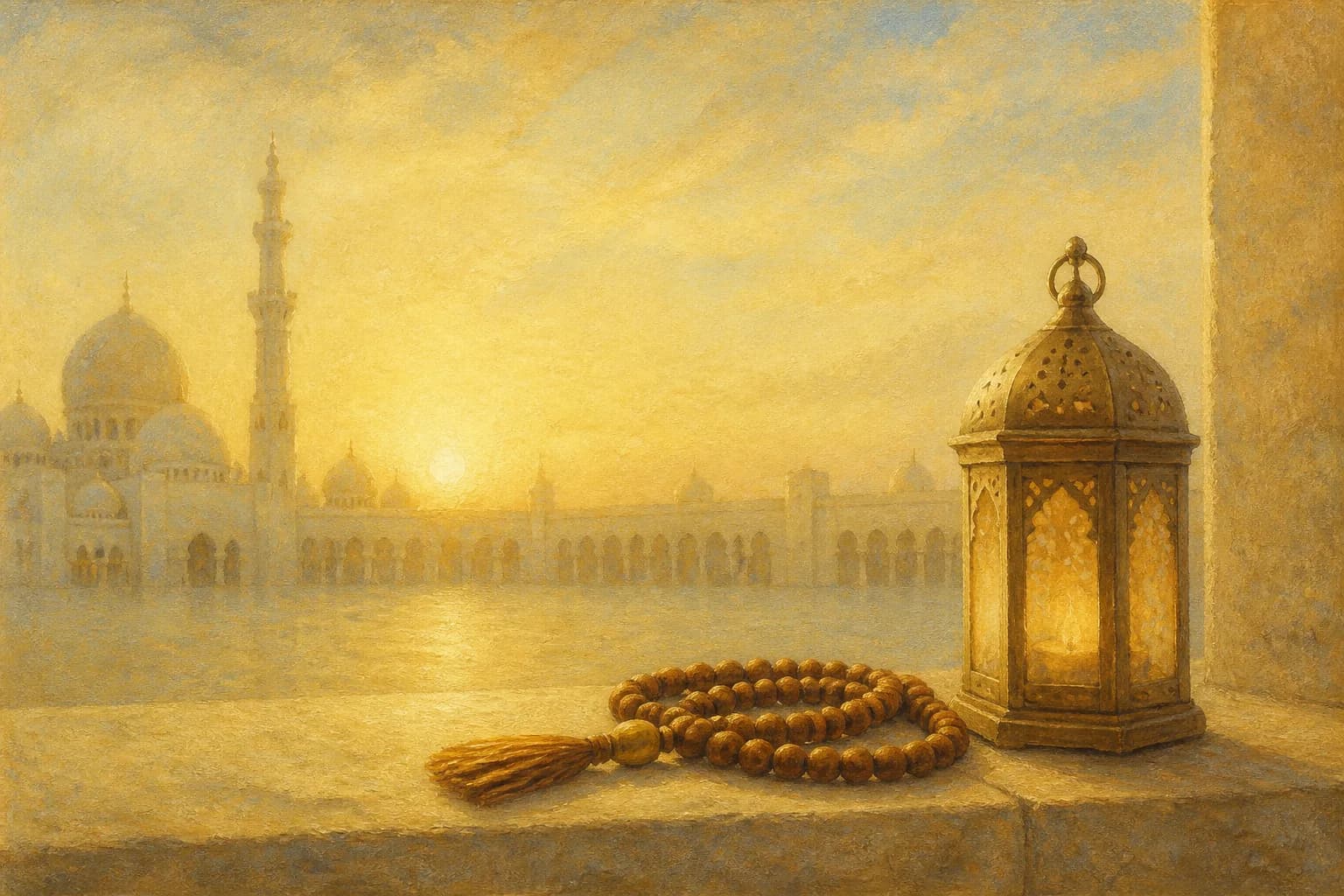

Why the Evening Hours Are Too Important to Let Pass Unmarked
There is a window between Asr and Maghrib that most people let drift by in distraction — scrolling, responding to messages, filling the gap with noise. The Prophet ﷺ identified these same hours as among the most spiritually significant of the day: the time for the evening adhkar (الأذكار المسائية), the supplications that close the day in remembrance and open the night in divine protection.
The Quran calls on believers to engage in remembrance at these boundary times: "So exalt Allah when you reach the evening and when you reach the morning." (Surah Ar-Rum, 30:17) The evening adhkar are how that instruction becomes practical — specific, authenticated, and short enough to complete in under ten minutes.
What Are the Evening Adhkar?
The evening adhkar — al-adhkar al-masa'iyya (الأذكار المسائية) — are a collection of Quranic verses and prophetic supplications recited after the Asr prayer, ideally before Maghrib. They include Ayatul Kursi (Surah Al-Baqarah, 2:255), Surah Al-Ikhlas, Al-Falaq, and An-Nas three times each, Sayyid al-Istighfar, and specific phrases of tasbih and tahlil. Together they seal the afternoon with Allah's remembrance and provide a comprehensive protective covering through the night, as confirmed across Sahih Bukhari, Sahih Muslim, and Abu Dawud.
What Adhkar Actually Means — and Why This Particular Set Matters
The word adhkar (أذكار) is the plural of dhikr — remembrance, mention, recollection. Dhikr in Islam is not merely repetition of words; it is a conscious act of orienting the heart toward Allah. The Prophet ﷺ said: "The example of the one who remembers his Lord and the one who does not is like the living and the dead." (Sahih Bukhari 6407)
The evening adhkar specifically address what the Quran calls the transition between nahar (day) and layl (night) — a time when the state of the day is being closed and the vulnerability of night begins. The duas within the evening set ask Allah for protection of health, wealth, family, and faith across the night hours, while the tasbih and istighfar clear the spiritual account before the day ends.
Think of the evening adhkar as a spiritual closing routine — the equivalent of locking the doors and securing the house, but for your soul.
Why Evening Adhkar Matter More Than Ever for Modern Muslims
The evening window — roughly 4 pm to sunset depending on the season — is also when many people are most mentally exhausted. Attention is at its lowest; distraction is at its highest. This is precisely when the adhkar are designed to be a reset, not a demand.
Modern life presents a specific challenge the Prophet's companions did not face: constant digital stimulation through the afternoon hours. Research on attention aside, the Islamic concern is simpler — if the evening passes without remembrance, the night begins spiritually unprotected and the day ends without being closed properly.
The morning adhkar in Islam open the day. The evening adhkar close it. Both are part of the same prophetic system — morning adhkar are incomplete without the evening set, and vice versa. Many Muslims find that building the evening adhkar in Islam into a fixed after-Asr routine makes them easier to maintain than treating them as an optional add-on.
How to Practice the Evening Adhkar Daily
Below is the complete core set with Arabic, transliteration, and source. All are authenticated in the major hadith collections.
1. Opening Evening Supplication
اللَّهُمَّ بِكَ أَمْسَيْنَا وَبِكَ أَصْبَحْنَا، وَبِكَ نَحْيَا وَبِكَ نَمُوتُ، وَإِلَيْكَ الْمَصِيرُ
Allāhumma bika amsaynā wa bika aṣbaḥnā, wa bika naḥyā wa bika namūtu, wa ilayka al-maṣīr
"O Allah, by Your leave we have reached the evening, and by Your leave we have reached the morning. By You we live and by You we die, and unto You is the return." — (Abu Dawud 5068; Tirmidhi 3391)
Recite once. This is the evening equivalent of the morning supplication — a simple, complete act of handing the day back to Allah.
2. Ayatul Kursi
اللَّهُ لَا إِلَٰهَ إِلَّا هُوَ الْحَيُّ الْقَيُّومُ...
(Surah Al-Baqarah, 2:255 — full verse)
Recite once. The Prophet ﷺ said: "Whoever recites Ayatul Kursi in the evening is protected by Allah until morning." (Sahih Bukhari 5010) This single verse contains the most comprehensive declaration of divine sovereignty in the Quran — its evening recitation has been consistently practiced by the companions and their successors.
3. Surah Al-Ikhlas, Al-Falaq, and An-Nas (Three Quls)
Recite each three times. The Prophet ﷺ said: "Reciting them three times in the morning and the evening will suffice you for all matters." (Abu Dawud 5082) These three surahs address tawhid (Al-Ikhlas), protection from external harm (Al-Falaq), and protection from internal whispering (An-Nas). Together they form the most complete protection package from the Quran itself.
4. Sayyid al-Istighfar
اللَّهُمَّ أَنْتَ رَبِّي لَا إِلَهَ إِلَّا أَنْتَ، خَلَقْتَنِي وَأَنَا عَبْدُكَ، وَأَنَا عَلَى عَهْدِكَ وَوَعْدِكَ مَا اسْتَطَعْتُ، أَعُوذُ بِكَ مِنْ شَرِّ مَا صَنَعْتُ، أَبُوءُ لَكَ بِنِعْمَتِكَ عَلَيَّ، وَأَبُوءُ بِذَنْبِي، فَاغْفِرْ لِي، فَإِنَّهُ لَا يَغْفِرُ الذُّنُوبَ إِلَّا أَنْتَ
Allāhumma anta rabbī, lā ilāha illā ant, khalaqtanī wa anā 'abduk, wa anā 'alā 'ahdika wa wa'dika mā-staṭa't, a'ūdhu bika min sharri mā ṣana't, abū'u laka bi-ni'matika 'alayya, wa abū'u bi-dhanbī, fa-ghfir lī, fa-innahu lā yaghfiru al-dhunūba illā ant
"O Allah, You are my Lord. There is no god but You. You created me and I am Your servant. I am upon Your covenant and promise as much as I can. I seek refuge in You from the evil of what I have done. I acknowledge Your blessing upon me, and I acknowledge my sin — so forgive me, for none forgives sins except You." — (Sahih Bukhari 6306)
Recite once. The Prophet ﷺ said: "Whoever says this in the evening with certainty and dies that night will enter Paradise." (Sahih Bukhari 6306). This is the most comprehensive evening supplication for forgiveness.
For a deeper exploration of the benefits of istighfar and how it functions in daily spiritual life, the deenup.app blog covers the full context.
5. Tasbih: Subhanallahi wa Bihamdihi
سُبْحَانَ اللهِ وَبِحَمْدِهِ
Subḥānallāhi wa biḥamdih
"Glory be to Allah and by His praise."
Recite 100 times. The Prophet ﷺ said: "Whoever says this in the morning and evening 100 times, no one will come on the Day of Resurrection with anything better than him, except one who said the same or said more." (Abu Dawud 5091) This is the single highest-volume dhikr in the evening set — use a tasbih (prayer beads) or count on your fingers.
For building the habit of daily duas for Muslim life, starting with this single phrase and counting consistently is a practical entry point.
Do you feel your duas are unanswered?
Have you read the dua properly? Learn authentic duas, understand their meanings, and call upon Allah with greater confidence through DeenUp.
Take the Dua Quiz
Evening Adhkar at a Glance
| Adhkar | Arabic Opening | Times | Source |
|---|---|---|---|
| Evening opening dua | اللَّهُمَّ بِكَ أَمْسَيْنَا | 1x | Abu Dawud 5068 |
| Ayatul Kursi | اللَّهُ لَا إِلَٰهَ إِلَّا هُوَ | 1x | Sahih Bukhari 5010 |
| Surah Al-Ikhlas | قُلْ هُوَ اللَّهُ أَحَدٌ | 3x | Abu Dawud 5082 |
| Surah Al-Falaq | قُلْ أَعُوذُ بِرَبِّ الْفَلَقِ | 3x | Abu Dawud 5082 |
| Surah An-Nas | قُلْ أَعُوذُ بِرَبِّ النَّاسِ | 3x | Abu Dawud 5082 |
| Sayyid al-Istighfar | اللَّهُمَّ أَنْتَ رَبِّي | 1x | Sahih Bukhari 6306 |
| Subhanallahi wa bihamdihi | سُبْحَانَ اللهِ وَبِحَمْدِهِ | 100x | Abu Dawud 5091 |
Signs That Your Evening Adhkar Practice Is Taking Root
The first sign is simply doing it — showing up after Asr on days you feel tired and distracted. That is the hardest part, and it is the whole game.
Over weeks, a more settled feeling at the transition from afternoon to evening is common — not because the adhkar work like a sedative, but because orienting yourself toward Allah interrupts the mental loop that comes from unexamined anxiety. The Prophet ﷺ directly connected dhikr to the heart's peace: "Verily, in the remembrance of Allah do hearts find rest." (Surah Ar-Ra'd, 13:28)
A third sign is the gradual internalization of the Arabic. The words begin to feel familiar rather than foreign, which deepens concentration during recitation. That shift — from mechanical reading to genuine remembrance — is the purpose of the practice.
Common Questions About the Evening Adhkar
Can I combine the evening adhkar with the post-Asr dhikr after prayer?
Yes — the post-prayer dhikr (33x Subhanallah, 33x Alhamdulillah, 33x Allahu Akbar) comes after the Asr salah itself, and the evening adhkar set follows as a separate practice. Many scholars and practitioners complete the post-prayer dhikr while still seated on the prayer mat, then continue with the full evening adhkar sequence.
What if I forget the Arabic pronunciation?
Begin reciting phonetically from transliteration while learning the Arabic simultaneously. The intention and effort matter. The Prophet ﷺ said that someone reciting Quran while struggling with it receives a double reward — the same principle of effort being valued applies to the adhkar. Use an audio source to learn the correct pronunciation over time.
Do the evening adhkar provide protection from the evil eye?
Yes — the three Quls (Al-Falaq and An-Nas) and Ayatul Kursi are among the primary protective adhkar against the evil eye. They are part of the same system as the dua for sleeping and the dua for protection and safety. All layers of the prophetic protection routine work together.
How are these different from the evening adhkar in other resources?
The core set is fixed in the major hadith collections and consistent across classical scholars. Variations exist in the extended versions (some add additional specific duas), but the set described here — opening supplication, Ayatul Kursi, three Quls, Sayyid al-Istighfar, and key tasbih — represents the widely agreed-upon core that every Muslim can rely on.
You can deepen your understanding of the broader adhkar tradition with the DeenBack guide to daily adhkar after prayer, which focuses on the post-salah dhikr that precedes the evening set. For a reflection on building consistent night routines as part of a meaningful Muslim life, DemiManifest on night prayer habits offers a practical perspective.
The Evening Is Already Waiting for You
The adhkar do not require a long block of uninterrupted time. They require ten minutes of genuine presence, every evening, after Asr. That is all.
The Prophet ﷺ did not make the evening adhkar optional for the companions — he made them part of what it means to take the day seriously before Allah. The protection of Ayatul Kursi, the forgiveness of Sayyid al-Istighfar, the accumulated weight of a hundred subhanallahi wa bihamdihi — all of this is available to you every single afternoon.
Begin today. If the words are unfamiliar, use a reference. If the time is short, start with just Ayatul Kursi and the three Quls. The practice will grow.
Do you feel your duas are unanswered?
Have you read the dua properly? Learn authentic duas, understand their meanings, and call upon Allah with greater confidence through DeenUp.
Take the Dua QuizFrequently Asked Questions
What are the evening adhkar in Islam?
The evening adhkar are a set of Quranic verses and prophetic supplications recited after Asr prayer — including Ayatul Kursi, Surah Al-Ikhlas, Al-Falaq, and An-Nas (three times each), Sayyid al-Istighfar, and various tasbih. They seal the day in remembrance and provide spiritual protection through the night.
When should the evening adhkar be recited?
The evening adhkar are ideally recited after the Asr prayer, before Maghrib. This is the window the Prophet ﷺ referred to as the evening remembrance — scholars describe it as 'the afternoon until the night begins.' If Asr is missed, most scholars allow reciting them until Maghrib or shortly after without the full reward.
What is the most important evening adhkar?
Scholars often cite Ayatul Kursi (Surah Al-Baqarah, 2:255) as the most important single adhkar, as its recitation once in the evening provides comprehensive divine protection until morning. The Mu'awwidhatayn — Surah Al-Falaq and Surah An-Nas — recited three times each are equally described in hadith as sufficient for all protection needs.
How long does it take to complete the evening adhkar?
A focused recitation of the core evening adhkar — Ayatul Kursi, the three Quls, Sayyid al-Istighfar, and key tasbih phrases — takes approximately 7 to 10 minutes. The extended version including the full tasbih count of Subhanallahi wa bihamdihi a hundred times extends to around 15 minutes. Consistency at a shorter length outweighs occasional long sessions.
Can I recite evening adhkar at night if I missed them after Asr?
Most scholars permit reciting the evening adhkar after Maghrib if Asr was missed, though the timing reward applies to recitation within the prescribed window. The key principle is not to abandon the adhkar entirely — recite them whenever you can. Consistency across months matters more than perfect timing on any single day.
What is the reward for consistent evening adhkar?
The Prophet ﷺ taught that reciting Ayatul Kursi each evening provides divine protection until morning (authenticated via Sahih Bukhari 5010). Reciting Subhanallahi wa bihamdihi a hundred times in the evening erases sins even if they were like the foam of the sea (Abu Dawud 5091). The cumulative spiritual benefit of consistent adhkar is among the highest-yield daily practices.
Is there a difference between evening adhkar and Isha night prayers?
Yes — the evening adhkar are verbal supplications and dhikr recited as remembrance, distinct from the formal prayer of Isha. Adhkar do not require a prayer position or wudu, though reciting in a state of wudu is preferred. The night prayer (Tahajjud or Witr) is an additional voluntary salah performed separately after Isha.