

- Authors

- Name
- Ahmad
- Role
- Senior Marketing Manager, Islamic education • DeenUp
بِسْمِ اللهِ الرَّحْمٰنِ الرَّحِيْمِ
In the name of God, the Most Gracious, the Most Merciful.
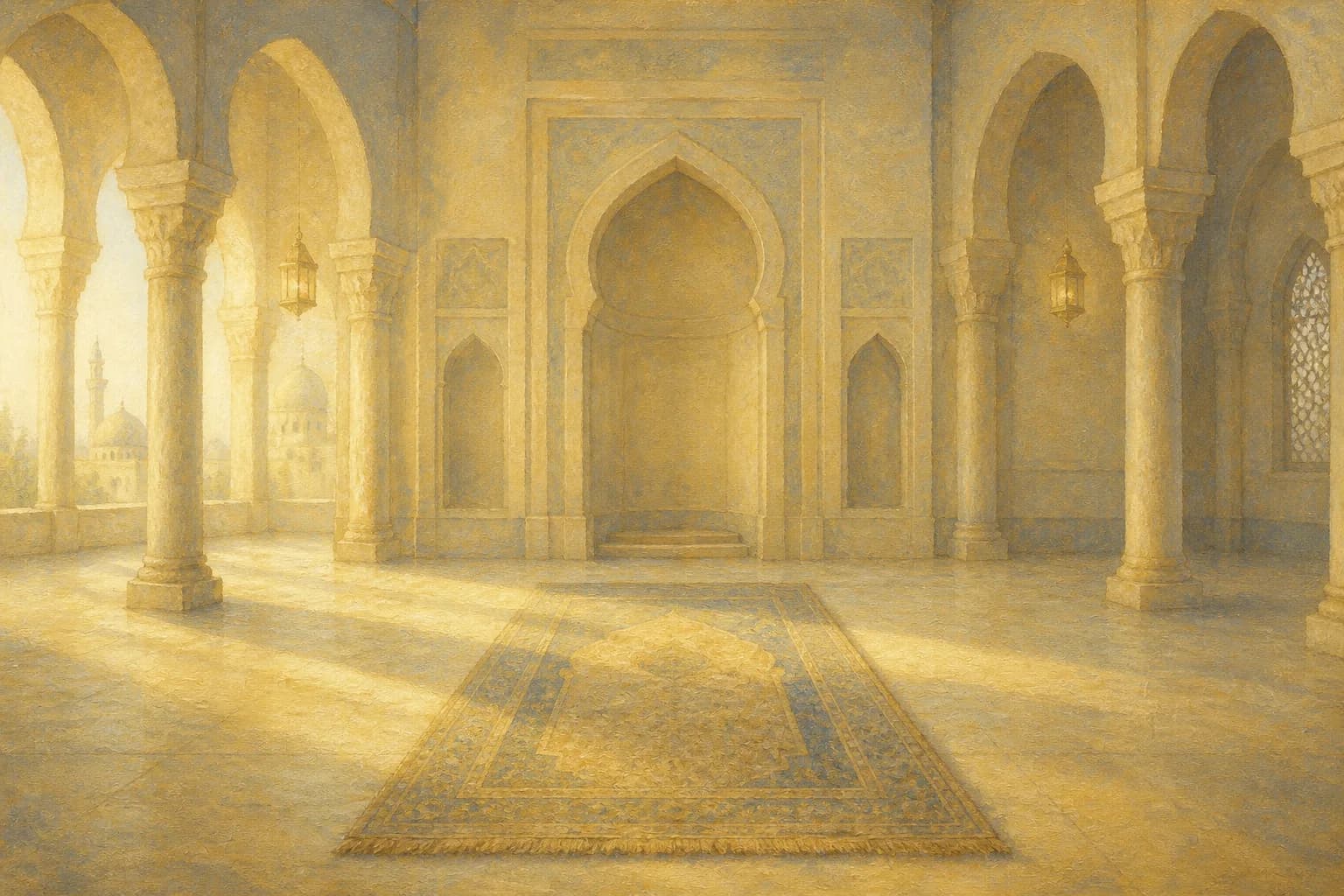

There is something quietly extraordinary about the Islamic morning prayer. The world is still dark. Most people are asleep. And you rise — not because of an alarm telling you to be productive, but because Allah is calling you before the day begins. Fajr is not just a prayer. It is a choice made at the hardest possible time, which is precisely what makes it so spiritually significant.
If you have ever wondered exactly what the Islamic morning prayer is, when to pray it, how to pray it correctly, or how to finally make it a consistent habit — this guide covers all of it.
What Is the Islamic Morning Prayer?
The Islamic morning prayer is called صلاة الفجر (Salat al-Fajr, the Dawn Prayer). It is the first of the five daily obligatory prayers (salawat) and consists of 2 sunnah rakahs followed by 2 fard (obligatory) rakahs. Fajr begins at the break of true dawn and must be completed before sunrise. The Quran singles it out by name: "Establish prayer at the decline of the sun until the darkness of the night and also the Quran of dawn — indeed, the recitation of dawn is ever witnessed" (Surah Al-Isra, 17:78).
Fajr Prayer at a Glance
| Aspect | Detail |
|---|---|
| Arabic name | صلاة الفجر (Salat al-Fajr) |
| Meaning | The Dawn Prayer |
| Sunnah rakahs | 2 (before the fard; highly recommended) |
| Fard rakahs | 2 (obligatory) |
| Time begins | True dawn (subh sadiq — horizontal light on horizon) |
| Time ends | Sunrise — must be completed before the sun appears |
| Key Quranic mention | Surah Al-Isra (17:78) — "the Quran of dawn is ever witnessed" |
| Hadith on sunnah | "The two rakahs at dawn are dearer to me than the whole world" — (Sahih Muslim 725) |
What the Quran and Hadith Say About Fajr
Fajr holds a unique status among the five prayers — it is mentioned specifically in the Quran and receives more hadith emphasis than any other prayer except Asr.
Allah says in Surah Al-Isra (17:78-79):
"Establish prayer at the decline of the sun until the darkness of the night and also the Quran of dawn — indeed, the recitation of dawn is ever witnessed. And from part of the night, pray tahajjud as an additional prayer for you; it is expected that your Lord will raise you to a praiseworthy station."
The scholars explain that "the Quran of dawn" refers to the Fajr prayer — and "ever witnessed" means it is attended by the angels of both night and day, who meet during the Fajr prayer and report it to Allah. This is confirmed in a hadith narrated by Abu Hurayrah (رضي الله عنه):
"The angels of the night and the angels of the day gather together at the time of Fajr prayer and at the time of Asr prayer." — (Sahih al-Bukhari 7429)
The Prophet ﷺ also promised a remarkable reward for those who pray Fajr consistently:
"Whoever prays Fajr is under the protection of Allah." — (Sahih Muslim 657)
This protection — dhimmat Allah — is one of the most significant assurances in the prophetic tradition. It is not just about spiritual reward. It is about entering the day under divine care.
For more on how to pray Fajr step by step, including the specific recitations and movements, see our detailed guide on how to pray Fajr and how to perform Fajr salah.
How to Pray the Islamic Morning Prayer
Here is a practical overview of the Fajr prayer structure:
Step 1: Make wudu (ablution). Fajr cannot be prayed without ritual purity. If you wake up very close to sunrise, make wudu quickly — even a partial one is better than missing the prayer.
Step 2: Pray the 2 sunnah rakahs first. These are prayed before the obligatory portion. They are short — the Prophet recommended reciting Al-Kafirun in the first rakah and Al-Ikhlas in the second. He said these two rakahs are "dearer to me than the whole world" (Sahih Muslim 725).
Step 3: Make the intention (niyyah) for 2 fard rakahs of Fajr. The intention is in the heart — you do not need to say it aloud, though some scholars permit doing so.
Step 4: Pray 2 fard rakahs. In each rakah, recite Surah Al-Fatihah followed by another surah. The Prophet used to recite longer surahs in Fajr — such as Surah Al-Muzzammil, Al-Insan, or Al-Waqi'ah. Do not rush.
Step 5: Give the tasleem. End both sides of the salam: Assalamu alaikum wa rahmatullah.
Step 6: Recite the morning adhkar. After Fajr is the most recommended time for Adhkar al-Sabah (أذكار الصباح, the morning remembrances). These typically take 10–15 minutes and include Ayat al-Kursi, the three Quls (Al-Ikhlas, Al-Falaq, An-Nas), and specific duas for protection. Our guide on morning adhkar in Islam covers the full set with Arabic, transliteration, and translation.
Still struggling to perform salah properly?
Learn each prayer step by step, understand what you are saying, and build a consistent salah habit with clear, scholar-approved lessons in DeenUp.
Take the Salah Quiz
Why Fajr Is the Hardest — and the Most Rewarding — Prayer
The Islamic morning prayer is widely acknowledged as the most difficult of the five daily prayers to maintain consistently. The reason is simple: it requires you to interrupt sleep at the moment your body most wants to continue. This is also precisely why its reward is so high.
The Prophet ﷺ understood this dynamic. He said:
"The most burdensome prayers for the hypocrites are Isha and Fajr. If they only knew the reward in them, they would come to them even if they had to crawl." — (Sahih al-Bukhari 657)
This hadith does not shame anyone. It describes a spiritual reality: the prayers that cost the most are the ones that mean the most. Fajr is a daily act of prioritizing Allah before comfort — and that choice, repeated consistently, reshapes the character.
Scholars and Muslim practitioners alike note that those who maintain Fajr tend to find the rest of the day more structured, more intentional, and more spiritually alive. When your first act of the day is standing before Allah, the remaining hours carry a different weight.
For practical strategies to wake up consistently for Fajr, including sleep scheduling and the role of the evening adhkar, see our article on how to wake up for Fajr and the benefits of Fajr prayer.
The Fajr Morning Routine article at DeenBack explores how to build a complete morning around the prayer, and Islamic Morning Routine at DemiManifest covers the spiritual habits that make Fajr sustainable.
Building the Fajr Habit: Practical Steps
Knowing Fajr's importance is one thing. Waking for it consistently is another. Here is a realistic approach:
Start with sleep hygiene. The biggest obstacle to Fajr is not willpower — it is going to bed too late. If Fajr is at 4:30 AM and you go to sleep at 1:00 AM, you are fighting biology. Try sleeping by 10:00–11:00 PM. Recite the evening dua before sleep and the sleeping adhkar to settle the mind.
Use multiple alarms strategically. Set an alarm 15 minutes before Fajr time, not at Fajr time. This gives you time to wake, make wudu, and pray the sunnah before the obligatory prayer window opens.
Pray Fajr before anything else. The temptation to check your phone first is real. Resist it. Stand in prayer before you look at a screen. The Prophet said the angels witness the Fajr prayer — let that be your first interaction of the day.
Make the morning adhkar your anchor. The 10–15 minutes of remembrance after Fajr are not optional extras. They are a protective shield for the day. When you sit after Fajr and recite the morning adhkar:
اللَّهُمَّ بِكَ أَصْبَحْنَا، وَبِكَ أَمْسَيْنَا
"O Allah, by You we enter the morning, and by You we enter the evening." — (Abu Dawud 5068)
This dua is a declaration of complete dependence — a reminder that the day you are about to enter belongs to Allah first.
For the complete set of morning supplications, see morning dua and the Quran's own guidance on dawn recitation at quran.com/17/78. The full hadith collection on Fajr prayer is available at sunnah.com/muslim:657.
Signs You Are Making Fajr a Real Habit
You are building a genuine Fajr habit when:
- Waking for Fajr starts to feel less like an interruption and more like a moment you look forward to
- You notice the quality of the rest of your day shifts when you start it with prayer
- Missing Fajr genuinely troubles you — not out of guilt, but because you feel the absence of that connection
- The morning adhkar become automatic: you sit after Fajr and your tongue begins without being told
The Prophet ﷺ said the most beloved deeds to Allah are those done consistently, even if they are small (Sahih al-Bukhari 6465). Two rakahs of Fajr prayed every day without fail are more beloved to Allah than an occasional burst of night prayers followed by weeks of absence.
Still struggling to perform salah properly?
Learn each prayer step by step, understand what you are saying, and build a consistent salah habit with clear, scholar-approved lessons in DeenUp.
Take the Salah QuizCommon Questions About the Islamic Morning Prayer
Can you pray Fajr after sunrise if you overslept? Yes — pray it immediately when you wake. Oversleeping is not sinful, and the missed prayer must still be made up. The Prophet said to pray any missed prayer as soon as you remember it (Sahih al-Bukhari 597).
Do you have to pray the 2 sunnah rakahs? The 2 pre-Fajr sunnah rakahs are among the most emphasized voluntary prayers in Islam. The Prophet said they are "dearer to him than the whole world" (Sahih Muslim 725). They are not obligatory but are very strongly recommended.
Is Fajr different for men and women? No — the prayer is the same in structure, rakahs, and timing. The ruling on praying in congregation at the masjid differs: it is highly recommended (some say obligatory) for men and a personal choice for women, though praying at home is valid and rewarded for both.
What should I recite after Fajr? The morning adhkar — including Ayat al-Kursi, the three Quls, and specific duas for protection — are the recommended remembrances. See our complete guide to morning adhkar in Islam for the full set with Arabic script and translations.
Frequently Asked Questions
What is the Islamic morning prayer called?
The Islamic morning prayer is called Fajr (صلاة الفجر, Salat al-Fajr), meaning the dawn prayer. It consists of 2 sunnah rakahs followed by 2 fard (obligatory) rakahs. Fajr is the first of the five daily prayers and is one of the most emphasized prayers in the Quran and authentic hadith.
How many rakahs is the Fajr morning prayer?
The Fajr prayer consists of 4 rakahs in total: 2 sunnah rakahs prayed before the obligatory portion, and 2 fard (obligatory) rakahs. The 2 pre-Fajr sunnah rakahs are among the most recommended sunnah prayers — the Prophet said they are dearer to him than the whole world (Sahih Muslim 725).
What time is the Islamic morning prayer?
Fajr begins at true dawn (subh sadiq, when a horizontal light appears on the horizon) and ends at sunrise. The exact times vary by location and season, but it typically falls between 4 and 6 AM. The prayer must be completed before the sun rises — praying it after sunrise makes it a missed (qada) prayer.
Is it a major sin to miss the Fajr prayer?
Missing Fajr intentionally is a serious matter in Islamic teaching. The Prophet said: "Whoever misses the Asr prayer is as if he has lost his family and wealth" (Sahih al-Bukhari 552), and scholars apply this gravity to any missed obligatory prayer. However, oversleeping is not sinful — the Prophet said to pray it as soon as you wake.
What do you recite in the Islamic morning prayer?
In each rakah of Fajr, you recite Surah Al-Fatihah followed by another surah or verses from the Quran. The Prophet often recited longer surahs in Fajr compared to other prayers. After the prayer, it is sunnah to recite the morning adhkar — a set of remembrances that take 10 to 15 minutes and offer comprehensive protection and gratitude.
What are the morning adhkar after Fajr?
The morning adhkar (أذكار الصباح, Adhkar al-Sabah) are a collection of authentic supplications and remembrances recited after Fajr. They include Ayat al-Kursi (2:255), the last two verses of Surah Al-Baqarah, Surah Al-Ikhlas, Al-Falaq, and An-Nas, along with specific duas for protection, gratitude, and beginning the day in the remembrance of Allah.
Can you make up a missed Fajr prayer?
Yes. A missed Fajr prayer must be made up (qada) as soon as possible — pray it whenever you wake or remember it, even if the sun has risen. The Prophet said: "Whoever forgets a prayer, let him pray it when he remembers it — there is no expiation for it other than that" (Sahih al-Bukhari 597). There is no sin for genuine oversleeping.