

- Authors

- Name
- Ahmad
- Role
- Senior Marketing Manager, Islamic education • DeenUp
بِسْمِ اللهِ الرَّحْمٰنِ الرَّحِيْمِ
In the name of God, the Most Gracious, the Most Merciful.
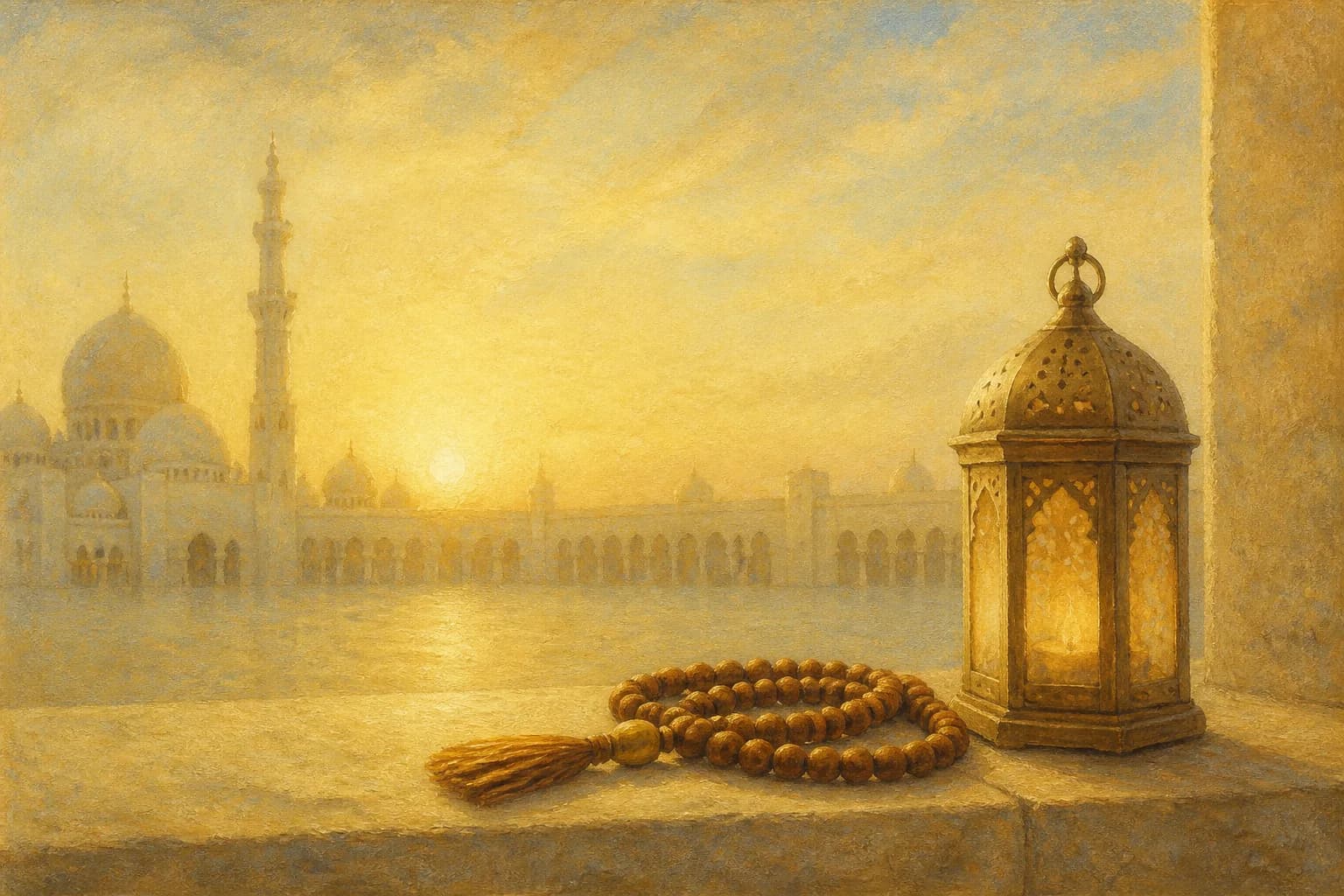

Every morning carries a specific invitation — a protected window of time that the Prophet Muhammad ﷺ described as the best part of the day. After Fajr, before the sun rises and the day's demands begin, there is a set of prayers and remembrances that form a spiritual armor: the morning adhkar (أَذْكَارُ الصَّبَاحِ).
This guide goes beyond the concept of morning remembrance. It focuses on the actual texts — the Arabic words, their transliterations, their meanings, and the hadith that authenticate them — so that you can recite each one with understanding, not just habit.
What Are the Morning Adhkar?
Morning adhkar (أَذْكَارُ الصَّبَاحِ) are a structured set of authenticated supplications and remembrances that Muslims recite after Fajr prayer. They include Quranic verses for protection, phrases of gratitude and trust in Allah, specific formulas of remembrance (tasbīḥ, taḥmīd, takbīr), and supplications (duʿāʾ) seeking forgiveness and safety. Drawn from authentic hadith in collections including Sahih al-Bukhari, Abu Dawud, and Tirmidhi, each formula carries a specific spiritual function reported from the Prophet ﷺ himself.
The Core Morning Adhkar: Text, Source, and Purpose
These are the key authenticated morning remembrances — presented with Arabic, transliteration, translation, and hadith source.
1. Ayatul Kursi — Protection Until Evening
اللَّهُ لَا إِلَهَ إِلَّا هُوَ الْحَيُّ الْقَيُّومُ...
"Allah — there is no deity except Him, the Ever-Living, the Sustainer of existence..." — (Surah Al-Baqarah, 2:255)
The Prophet ﷺ said: "Whoever recites Ayatul Kursi after every obligatory prayer, nothing prevents him from entering Jannah except death." (Nasai, authenticated by Ibn Hibban). Reciting it in the morning places the believer under divine protection until evening.
2. Sayyidul Istighfar — The Master of Forgiveness
اللَّهُمَّ أَنْتَ رَبِّي لَا إِلَهَ إِلَّا أَنْتَ خَلَقْتَنِي وَأَنَا عَبْدُكَ وَأَنَا عَلَى عَهْدِكَ وَوَعْدِكَ مَا اسْتَطَعْتُ...
Allāhumma anta rabbī lā ilāha illā anta khalaqtanī wa-anā ʿabduka wa-anā ʿalā ʿahdika wa-waʿdika mastaṭaʿtu...
"O Allah, You are my Lord. There is no god but You. You created me and I am Your servant, and I am upon Your covenant and promise as best I can..." — (Sahih al-Bukhari 6306)
The Prophet ﷺ said: "Whoever says it during the day with certainty and dies before evening, he will be among the people of Jannah." It is the most complete acknowledgment of one's relationship with Allah.
3. The Three Quls — Refuge and Monotheism
Reciting Surah Al-Ikhlas (قُلْ هُوَ اللَّهُ أَحَدٌ), Surah Al-Falaq, and Surah An-Nas three times each in the morning is reported to suffice as protection for the day. (Abu Dawud 5082, graded authentic).
The Prophet ﷺ told Uqbah ibn Amir to recite them each morning and evening, calling them "the chapters of refuge" — protection from envy, magic, and unseen harm.
4. Morning Opening Supplication
أَصْبَحْنَا وَأَصْبَحَ الْمُلْكُ لِلَّهِ وَالْحَمْدُ لِلَّهِ لَا إِلَهَ إِلَّا اللَّهُ وَحْدَهُ لَا شَرِيكَ لَهُ
Aṣbaḥnā wa-aṣbaḥa al-mulku lillāh, wa-al-ḥamdu lillāh, lā ilāha illā Allāh waḥdahu lā sharīka lah
"We have entered the morning and the dominion belongs to Allah. All praise belongs to Allah. There is no deity but Allah, alone, with no partner." — (Abu Dawud 5078)
This supplication orients the beginning of the day: not my plans, not my ambitions — but Allah's dominion. It is a grounding statement before anything else is said or done.
5. Supplication for Health and Faith
اللَّهُمَّ بِكَ أَصْبَحْنَا وَبِكَ أَمْسَيْنَا وَبِكَ نَحْيَا وَبِكَ نَمُوتُ وَإِلَيْكَ النُّشُورُ
Allāhumma bika aṣbaḥnā wa-bika amsaynā wa-bika naḥyā wa-bika namūtu wa-ilayka al-nushūr
"O Allah, by You we enter the morning and by You we enter the evening. By You we live and by You we die, and to You is the return." — (Abu Dawud 5068)
This adhkar frames life itself as belonging entirely to Allah — waking, sleeping, living, and dying.
Quick Reference: Morning Adhkar at a Glance
| Adhkar | When | Times | Source |
|---|---|---|---|
| Ayatul Kursi | After each fardh prayer | 1x | Nasai / Ibn Hibban |
| Sayyidul Istighfar | Morning (after Fajr) | 1x | Sahih al-Bukhari 6306 |
| Three Quls (Al-Ikhlas, Al-Falaq, An-Nas) | Morning & evening | 3x each | Abu Dawud 5082 |
| Morning opening (Asbahna) | Immediately after Fajr | 1x | Abu Dawud 5078 |
| Bika Asbahna | Morning | 1x | Abu Dawud 5068 |
| Tasbih (SubhanAllah) | Morning & evening | 33x | Sahih Muslim 595 |
| Alhamdulillah | Morning & evening | 33x | Sahih Muslim 595 |
| Allahu Akbar | Morning & evening | 34x | Sahih Muslim 595 |
The Spiritual Function of Morning Adhkar
The Prophet ﷺ said: "Shall I tell you the best of your deeds, the most pleasing to your King, those that most raise your degrees, and are better for you than spending gold and silver...? The remembrance of Allah." (Sahih Ibn Majah 3790).
Morning adhkar serve multiple functions simultaneously:
They establish gratitude first. Before checking your phone, before worrying about the day, you acknowledge that Allah gave you another morning. The Prophet ﷺ would say upon waking: "All praise is for Allah who gave us life after having taken it from us, and unto Him is the resurrection." (Sahih al-Bukhari 6312).
They establish protection. The three Quls, Ayatul Kursi, and the specific protection supplications form what scholars describe as a wird (وِرْد) — a daily spiritual practice that guards the believer from unseen harm.
They orient the ego correctly. Before ambition takes over, morning adhkar remind you who you are (ʿabd — a servant of Allah) and who He is (Al-Ḥayy al-Qayyūm — the Ever-Living Sustainer). This is the correct starting frame for any productive day.
For a broader perspective on how these remembrances connect to an Islamic approach to mental wellbeing, the article on how to deal with anxiety in Islam explores the relationship between dhikr and psychological peace.
Making Morning Adhkar a Consistent Practice
The Prophet ﷺ loved deeds that were consistent: "The most beloved of deeds to Allah are those that are most consistent, even if they are small." (Sahih al-Bukhari 6464).
Start with three pieces, not all of them. Pick Sayyidul Istighfar, Ayatul Kursi, and the three Quls. These three cover protection, forgiveness, and divine acknowledgment — a complete minimum set. Add more as the habit stabilizes.
Keep your adhkar card or phone open from the night before. Friction is the enemy of habit. If you have to search for the text in a morning fog, you will skip it. DeenUp's daily duas feature puts the morning adhkar in your hand the moment you open the app.
Pair it with a physical cue. After you pray Fajr and complete your sunnah prayers, stay on the prayer mat. That physical location becomes the cue. Fajr ends — adhkar begins. The transition becomes automatic over weeks.
Do not rush. The goal is not to complete a checklist. The Prophet ﷺ recited each formula with presence. Recite each phrase meaningfully rather than racing through them.
Do you feel your duas are unanswered?
Have you read the dua properly? Learn authentic duas, understand their meanings, and call upon Allah with greater confidence through DeenUp.
Take the Dua Quiz
For the complementary evening practice, evening adhkar in Islam covers the adhkar al-masāʾ with the same detail. And for what to recite directly after your salah, duas to read after salah is a practical companion guide.
The broader habit of daily dhikr — morning, midday, and evening — is explored in daily duas for Muslim life, which gives an overview of how these practices fit together into a complete daily routine.
Morning Adhkar and the Fajr Connection
Morning adhkar are inseparable from Fajr prayer. Allah says: "Establish prayer at the decline of the sun until the darkness of the night and the Quran of dawn (fajr). Indeed, the recitation of dawn is ever witnessed." (Surah Al-Isra, 17:78).
The "witnessed" quality of Fajr — confirmed by both the angels of night and the angels of day — applies to everything done in that sacred window, including the adhkar that follow it. This is why the morning adhkar carry such weight: they are performed at the most spiritually significant time of day.
If you are building the Fajr habit alongside your morning adhkar, fajr prayer benefits and how to pray Fajr offer the practical grounding to make both practices consistent.
For additional scholarly context on morning adhkar and the wird tradition, SeekersGuidance has detailed courses taught by qualified scholars. The DeenBack article on morning dua routines and Demimanifest's piece on the Islamic morning routine are also worth reading alongside this guide.
Common Questions About Morning Adhkar
Do I need to recite the adhkar in order? There is no strictly mandated sequence. Ayatul Kursi is traditionally read immediately after the fardh prayers. Beyond that, scholars generally recommend consistency in your own routine rather than stressing over exact order. What matters most is that you recite them with presence.
What if I do not understand Arabic well? Read an English translation of each adhkar alongside the Arabic. Understanding what you are saying deepens the impact. Over time, the Arabic meanings will embed themselves naturally. The goal is sincere remembrance — Allah knows your intention.
Are there morning adhkar specific to certain days? Yes — on Fridays, adding salawat (prayers upon the Prophet ﷺ) is especially emphasized: "Whoever sends blessings upon me 80 times on Friday, his sins of 80 years are forgiven." (Tabarani, authenticated by Al-Albani). The core morning adhkar remain the same every day.
Can I listen to adhkar recordings instead of reciting them? Listening to recordings can help you learn the correct pronunciation and melody, but the reward of dhikr comes from active recitation — your tongue moving, your heart engaged. Use recordings to learn, then recite yourself.
How do the morning adhkar relate to mental health? Research increasingly validates what Islamic tradition has long held: structured mindfulness practices reduce cortisol and anxiety. Morning adhkar function as precisely this — a structured, intention-driven practice that shifts attention from worries to gratitude and trust in Allah. For deeper reading on this, the article on how to deal with anxiety in Islam connects Islamic dhikr to broader wellbeing.
Begin Tomorrow Morning
You do not need to memorize all the morning adhkar at once. You need to begin. Pick one — Sayyidul Istighfar, Ayatul Kursi, or the three Quls — and recite it tomorrow morning after Fajr. Do it the day after. And the day after that.
The Prophet ﷺ described the person who remembers Allah in the morning versus the one who does not as: "like the living and the dead." (Sahih al-Bukhari 6407). Every morning is an invitation to be among the living — spiritually awake, connected, and protected by the words He taught us to say. You can read the full chain of this and other morning adhkar narrations at sunnah.com.
اللَّهُمَّ أَنْتَ رَبِّي لَا إِلَهَ إِلَّا أَنْتَ
"O Allah, You are my Lord. There is no god but You." — (Sahih al-Bukhari 6306)
Do you feel your duas are unanswered?
Have you read the dua properly? Learn authentic duas, understand their meanings, and call upon Allah with greater confidence through DeenUp.
Take the Dua QuizFrequently Asked Questions
What are the morning adhkar in Islam?
Morning adhkar (أذكار الصباح) are a set of authenticated supplications and remembrances taught by the Prophet Muhammad that Muslims recite after Fajr prayer. They include specific phrases for protection, gratitude, and seeking Allah's mercy — each drawn from authentic hadith collections.
When should I recite the morning adhkar?
The morning adhkar are best recited directly after Fajr prayer, before sunrise. If missed, scholars permit reciting them until midday. Reciting them promptly after Fajr takes advantage of the sacred early morning time the Prophet regularly praised in authentic hadith.
Are the morning adhkar from the Quran or Sunnah?
Some morning adhkar include Quranic verses — particularly Ayatul Kursi (2:255) and the three Quls — while others are prophetic supplications recorded in hadith collections like Abu Dawud, Tirmidhi, and Sahih al-Bukhari. Both carry immense spiritual weight and are authenticated.
How long do the morning adhkar take to complete?
The core set of authenticated morning adhkar — including Ayatul Kursi, the three Quls, sayyidul istighfar, and the key opening supplications — takes approximately 10 to 15 minutes recited with focus and reflection. Beginners can start with just three to five pieces and build gradually.
What is the most important morning dhikr?
Sayyidul Istighfar is considered the master of all supplications for forgiveness and is explicitly recommended for morning recitation. Ayatul Kursi recited after each fardh prayer provides protection until the next prayer. Both carry specific promises in authentic hadith and are highly prioritized.
Can I say the morning adhkar in English?
The exact Arabic wording of prophetic adhkar should be preserved in Arabic as transmitted. Reading an English translation alongside deepens your understanding and connection, but the Arabic preserves the precise remembrance the Prophet Muhammad taught. Learn the Arabic even phonetically.
What if I miss the morning adhkar?
If you miss the morning adhkar after Fajr, you can still recite them before midday — scholars consider this within the morning window. If the window passes entirely, do not be discouraged. Make intention to be consistent tomorrow and use evening adhkar tonight. Consistency over perfectionism.