

- Authors

- Name
- Ahmad
- Role
- Senior Marketing Manager, Islamic education • DeenUp
بِسْمِ اللهِ الرَّحْمٰنِ الرَّحِيْمِ
In the name of God, the Most Gracious, the Most Merciful.
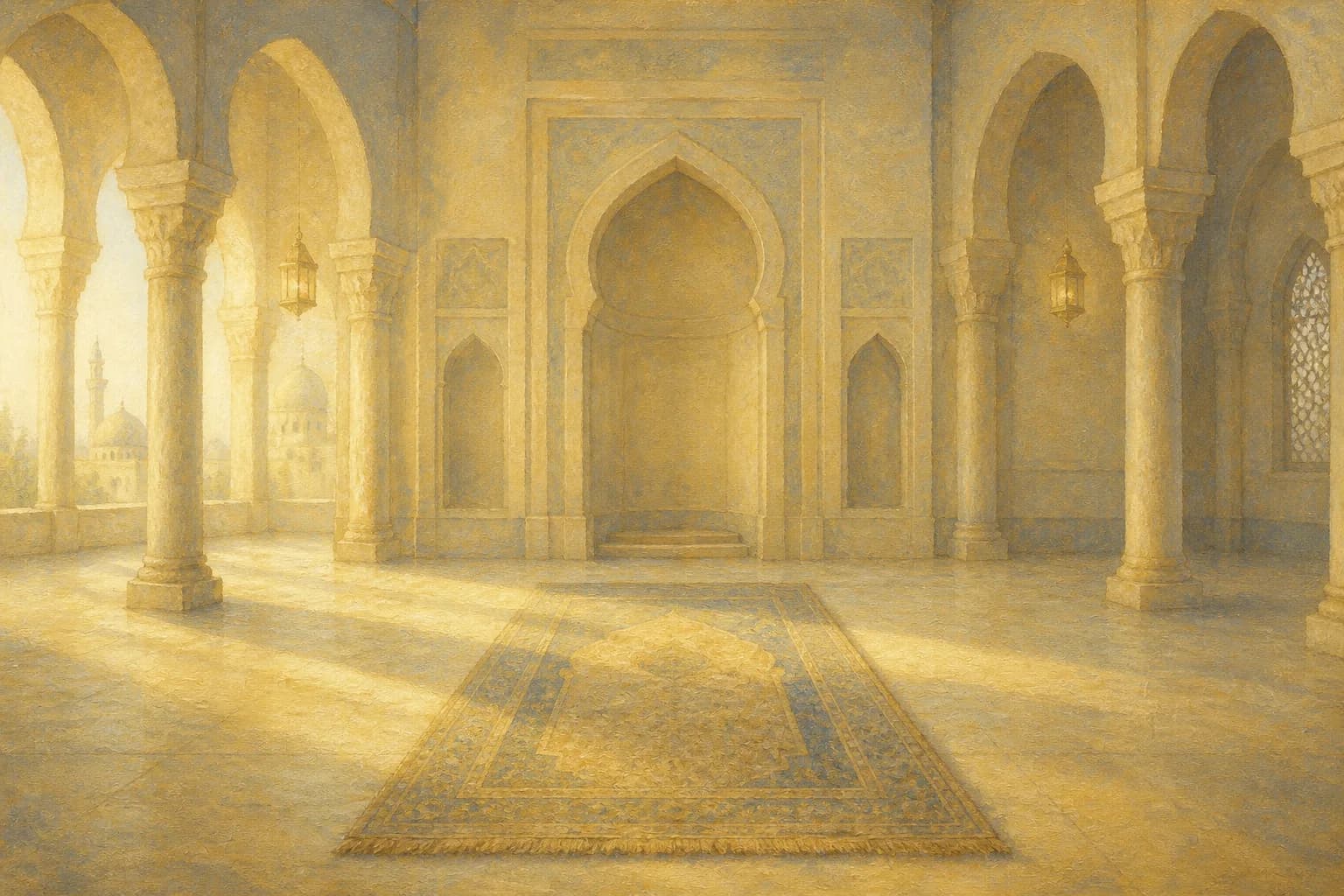

The Power of Starting the Day With Allah
There is a moment each morning — before your phone, before the news, before the demands of the day begin — when the world is completely still. Muslims know this moment well. It is the time of Fajr, the dawn prayer, and the Prophet Muhammad ﷺ described its recitation as one that is witnessed by the angels of the night and the angels of the day, both present at that threshold hour.
The Muslim morning prayer is not simply a religious obligation. It is a daily decision about who you are and where your priorities lie. Millions of Muslims around the world begin every single day by turning to Allah ﷻ before anything else — and that choice shapes everything that follows.
What Is the Muslim Morning Prayer (Fajr)?
The Muslim morning prayer is called Salat al-Fajr (صَلَاةُ الْفَجْر), meaning the prayer of dawn. It is the first of Islam's five obligatory daily prayers and must be performed between the onset of true dawn and the moment the sun crests the horizon. It consists of 2 highly recommended sunnah rakahs followed by 2 obligatory fard rakahs. Allah directly references it in the Quran (Surah Al-Isra, 17:78), describing its recitation as witnessed — a distinction given to no other prayer in such explicit terms.
Fajr Prayer at a Glance
| Aspect | Detail |
|---|---|
| Arabic Name | صَلَاةُ الْفَجْر (Salat al-Fajr) |
| English Name | Dawn Prayer / Morning Prayer |
| Prayer Window | From true dawn (Fajr Sadiq) until just before sunrise |
| Sunnah Rakahs | 2 sunnah mu'akkadah (before the obligatory prayer) |
| Obligatory Rakahs | 2 fard rakahs |
| Congregation | Imam recites aloud; congregation listens |
| Unique Adhan Call | Al-salatu khayrun min al-nawm (Prayer is better than sleep) |
Why Only Fajr Has a Special Adhan Call
If you have ever heard the Fajr adhan, you may have noticed an addition not present in any other call to prayer:
الصَّلَاةُ خَيْرٌ مِنَ النَّوْمِ
"Al-salatu khayrun min al-nawm" — "Prayer is better than sleep."
This phrase, added twice in the Fajr adhan, is a direct reminder from the sunnah that the morning prayer deserves something worth trading your sleep for. The Prophet ﷺ confirmed this practice when Bilal رضي الله عنه reported it to him (Abu Dawud 500).
What Does the Quran Say About Fajr Prayer?
The Quran speaks of the morning prayer with notable emphasis. Allah ﷻ says:
أَقِمِ الصَّلَاةَ لِدُلُوكِ الشَّمْسِ إِلَىٰ غَسَقِ اللَّيْلِ وَقُرْآنَ الْفَجْرِ ۖ إِنَّ قُرْآنَ الْفَجْرِ كَانَ مَشْهُودًا
"Establish prayer at the decline of the sun until the darkness of the night and [also] the Quran of dawn. Indeed, the recitation of dawn is ever witnessed." — (Surah Al-Isra, 17:78)
The scholars of tafsir explain that Fajr is "witnessed" because the angels of the night and the angels of the day both attend — the departing night shift and the arriving day shift both present at dawn. Your morning prayer is witnessed by angels at a transition point between realms.
The Prophet ﷺ also said:
"The two rakahs of the dawn [Sunnah of Fajr] are better than this world and all that it contains." — (Sahih Muslim 725)
And:
"The angels take turns among you by night and by day, and they all assemble at the Fajr prayer and the Asr prayer." — (Sahih al-Bukhari 555)
These are not minor encouragements. They are declarations of the weight and honor of this particular prayer.
How to Perform the Muslim Morning Prayer
Fajr prayer follows the same structure as all salah, with two sets of rakahs. Here is a step-by-step overview:
Before You Pray
- Make wudu — ritual purification is required before prayer. See our detailed guide on how to perform wudu if you need a refresher.
- Face the qibla — orient yourself toward the Kaaba in Mecca.
- Set your intention (niyyah) — in your heart, intend to pray the 2 Sunnah rakahs of Fajr, then the 2 fard rakahs.
The 2 Sunnah Rakahs
These are highly recommended (sunnah mu'akkadah) — so strongly encouraged that the Prophet ﷺ rarely left them even while traveling. They are prayed quietly (you do not recite aloud).
- Begin with takbir: Allahu Akbar, hands raised
- Recite Al-Fatihah + a short surah (Al-Kafirun is recommended for the first rakah, Al-Ikhlas for the second)
- Complete bowing (ruku), prostration (sujud), and the second rakah in the same manner
- End with tashahhud and tasleem (the salaam)
The 2 Fard (Obligatory) Rakahs
These are identical in structure to the sunnah rakahs. In congregation, the imam recites both Al-Fatihah and the following surah aloud — this is the Quran al-Fajr referenced in 17:78.
For a complete step-by-step walkthrough with Arabic recitations, see how to pray Fajr and how to perform Fajr salah.

Keep learning your deen with short, sourced lessons in DeenUp.
Why Is the Muslim Morning Prayer So Hard to Maintain?
Many Muslims describe Fajr as the most spiritually rewarding prayer — and the hardest to maintain consistently. The reason is simple: it requires something genuinely difficult. Waking before the world is easy to defer, especially on cold mornings or late nights.
The Prophet ﷺ acknowledged this. He described Shaytan placing knots on the back of the head of the sleeping person, and each knot loosens as the person wakes, makes wudu, and prays (Sahih al-Bukhari 1142). The very difficulty is part of its weight.
Practical strategies that help:
- Sleep early enough that Fajr feels natural, not brutal
- Put your alarm across the room — removing the temptation to dismiss it without getting up
- Make wudu before bed on nights you anticipate difficulty
- Read about the benefits of Fajr prayer regularly to keep motivation alive
- Use a phone reminder or app-based alert for the exact local time
For Muslims who struggle with waking, our full guide on how to wake up for Fajr covers both practical and spiritual strategies.
What to Do After the Muslim Morning Prayer
The moments after Fajr are among the most blessed in the Islamic day. The Prophet ﷺ said that sitting in the place of prayer after Fajr, engaged in the remembrance of Allah until sunrise, then praying two rakahs, carries the reward of a complete Hajj and Umrah (Tirmidhi 586).
Post-Fajr practice includes:
- Reciting the morning adhkar — specific remembrances prescribed in the sunnah
- Reading from the Quran
- Reciting Ayat al-Kursi, the three Quls (Al-Ikhlas, Al-Falaq, An-Nas), and durood
- Reflecting on a single verse or concept before the day begins
The dua for waking up is part of the morning routine that begins even before wudu. And if you want to build a complete structure of daily duas, morning through night, that guide has you covered.
For additional morning routines grounded in sunnah, the DeenBack morning dua routine guide is an excellent companion. And for how to structure your Islamic morning as a complete spiritual practice, Demi Manifest's Islamic morning routine offers a practical framework.
For primary Quranic references on Fajr prayer, see Surah Al-Isra, verse 78 at Quran.com. For hadith on Fajr, Sunnah.com's collection on Fajr prayer provides authenticated narrations with full chains.
Signs You Are Building a Real Fajr Habit
- You wake before the alarm some mornings — your body begins to anticipate it
- Missing Fajr creates a noticeable unsettledness in your day
- You look forward to the quiet of that hour rather than dreading it
- The post-Fajr adhkar feel less like a duty and more like a conversation
- Your day has a different quality — calmer, more focused, more intentional
Common Questions About the Muslim Morning Prayer
Does Fajr count if I pray alone at home? Yes — Fajr prayed alone at home is fully valid and obligatory. Praying in congregation at the masjid carries additional reward (27 times, according to Sahih al-Bukhari 645), but the obligation is fulfilled either way.
Can I combine Fajr with another prayer if I miss it? No — Fajr cannot be combined with any other prayer. It stands alone. If you miss it, pray it as soon as you remember or wake. Missing it intentionally without a valid excuse is considered a serious matter in Islamic jurisprudence.
What if I only have time for the 2 fard rakahs and not the sunnah? Pray the 2 fard rakahs within the prayer window. You can pray the 2 sunnah rakahs after sunrise if you missed them before — scholars permit making up the Fajr sunnah until midday (Dhuhr time), based on hadith evidence.
Is Fajr the same as tahajjud? No — tahajjud is a voluntary night prayer prayed in the final third of the night, before Fajr begins. Fajr is the obligatory dawn prayer that follows it. Both are deeply recommended, and many who pray tahajjud find Fajr easier to maintain because they are already awake.
Keep learning your deen with short, sourced lessons in DeenUp.
Frequently Asked Questions
What is the Muslim morning prayer called?
The Muslim morning prayer is called Salat al-Fajr, meaning the dawn prayer. It is the first of Islam's five obligatory daily prayers, performed between true dawn and sunrise. It consists of 2 sunnah rakahs followed by 2 obligatory fard rakahs, making 4 rakahs total.
What time is the Muslim morning prayer?
The Muslim morning prayer begins at true dawn, known as Fajr Sadiq — when a horizontal band of light appears along the horizon — and ends just before sunrise. The precise time shifts daily by location and season. Most mosques and prayer apps calculate it accurately for your area.
How many rakahs is the Muslim morning prayer?
The Muslim morning prayer consists of 4 rakahs: 2 sunnah mu'akkadah rakahs prayed before the obligatory prayer, and 2 fard (obligatory) rakahs. The Prophet Muhammad said the 2 Sunnah rakahs of Fajr are better than this world and all it contains (Sahih Muslim 725).
What do Muslims recite during the morning prayer?
During Fajr prayer, Muslims recite Surah Al-Fatihah in every rakah, followed by another passage from the Quran. In congregation the imam recites aloud. The Prophet Muhammad often recited longer surahs in Fajr, and the Quran describes the Fajr recitation as witnessed by the angels (Al-Isra, 17:78).
Why is Fajr prayer so important in Islam?
Fajr prayer holds a special rank because Allah describes its recitation as witnessed by the angels (Surah Al-Isra, 17:78). Performing it sets the spiritual tone for the entire day, places you under divine protection, and distinguishes the believer from one who forgets Allah at the most quiet hour.
Can I pray the morning prayer after sunrise?
If you miss Fajr due to sleep or forgetfulness, the majority scholarly view is to pray it as soon as you wake or remember — it does not simply expire. The Prophet Muhammad taught that whoever forgets or sleeps through a prayer should pray it when they remember (Sahih Muslim 684).
What should I do right after the Muslim morning prayer?
After Fajr, Muslims are encouraged to remain seated and recite morning adhkar — including tasbih, tahmid, and Ayat al-Kursi — until sunrise. The Prophet described sitting in remembrance after Fajr until sunrise as earning the reward equivalent to a complete Hajj and Umrah (Tirmidhi 586).