

- Authors

- Name
- Ahmad
- Role
- Senior Marketing Manager, Islamic education • DeenUp
بِسْمِ اللهِ الرَّحْمٰنِ الرَّحِيْمِ
In the name of God, the Most Gracious, the Most Merciful.

When you first begin reading the Quran seriously, something may catch you off guard: it asks you things. Not just one or two polite requests, but hundreds of challenges, invitations, and provocations spread across all 114 surahs. The Quran does not simply address you as a passive recipient of information — it engages you, questions you, and waits for your response.
This rhetorical technique is called استفهام (istifham) in Arabic, and it is one of the Quran's most powerful literary tools. Recognizing it transforms how you read. What once felt like text to recite becomes a conversation to engage with.
If you have ever read Surah Ar-Rahman and been moved by the rhythm of a question that repeats thirty-one times — or found yourself pausing mid-verse as though someone had called your name — you already know what this feels like.
What Are the Questions from the Quran?
The Quran contains hundreds of rhetorical questions addressed to believers, non-believers, and all of humanity. Called استفهام (istifham) in Arabic, they are not requests for information but divine invitations to reflect, reason, and reckon with reality. The most repeated is "So which of the favors of your Lord would you deny?" — appearing exactly 31 times in Surah Ar-Rahman (55:13).
What Makes a Quranic Question Different?
Classical Islamic scholars categorized Quranic questions by their rhetorical function. Unlike questions in human conversation, divine questions in the Quran serve a specific purpose: to shift the reader from passive reception to active engagement. Allah (سبحانه وتعالى) is not seeking information — He is asking you to look at yourself.
The Arabic term استفهام (istifham) refers to any interrogative structure used for effect rather than inquiry. Islamic literary scholars identified several types: questions of rebuke, questions of gratitude, questions of accountability, and questions of gentle reminder. Each is designed to do something specific in the reader's heart.
The Quran asks questions of different audiences. Some are directed at those who reject the evidence around them: "And will you not see?" (Surah Al-Baqarah 2:50). Others are addressed to believers who may be falling short: "Has the time not come for the hearts of those who believe to submit?" (أَلَمْ يَأْنِ لِلَّذِينَ آمَنُوا أَن تَخْشَعَ قُلُوبُهُمْ, Surah Al-Hadid 57:16). And some are directed inward, inviting anyone reading to examine their relationship with Allah.
This is one of the reasons the Quran never feels like an ancient document. Its questions are addressed to you, now, in this moment. For more on the depth and beauty of Quranic language, see our collection of beautiful Quran verses and explore the remarkable scope of the Quran in our Quran trivia guide.
The Quran itself asks: "Will they not then reflect upon the Quran?" (أَفَلَا يَتَدَبَّرُونَ الْقُرْآنَ, Surah Muhammad 47:24). The question is not rhetorical in the dismissive sense — it is an instruction to do exactly what the verse asks.
Why These Questions Still Strike at the Heart of Modern Life
The Quran asks "So where are you going?" (فَأَيْنَ تَذْهَبُونَ, Surah At-Takwir 81:26) in a way that is not dated by time. For a Muslim navigating career pressure, digital distractions, and an endless stream of demands on attention, this question is more urgent than ever.
What makes these questions powerful is not that they are unanswerable — it is that they are entirely answerable, and that is exactly what makes them unsettling. When Allah asks "Does man think that he will be left without purpose?" (أَيَحْسَبُ الْإِنسَانُ أَن يُتْرَكَ سُدًى, Surah Al-Qiyamah 75:36), the answer is obvious. But how often do we live as though the answer were yes?
Engaging with these questions changes how you inhabit your day. When you internalize "أَفَلَا تَعْقِلُونَ" — "Will you not reason?" — before making a hasty decision, you are using the Quran as it was intended: not as a text to recite over but as a living guide to live through.
Understanding the benefits of reading the Quran daily starts with understanding what kind of reading is actually meant — not speed, but depth. And a daily Quran verse practice is one of the most accessible ways to begin.
How to Engage with Quranic Questions Every Day
The classical scholars — particularly those trained in the Meccan Quranic tradition — taught that when a believer encounters a question in the Quran, they should pause and answer it in their heart. This is not a minor practice: it is how the companions of the Prophet ﷺ approached the Quran's direct challenges to the soul.
Here is a reference of the most significant categories of Quranic questions and what each calls you to reflect on:
| Type | Arabic | English | Surah |
|---|---|---|---|
| Reason | أَفَلَا تَعْقِلُونَ | "Will you not reason?" | Al-Baqarah 2:44 and others |
| Gratitude | فَبِأَيِّ آلَاءِ رَبِّكُمَا تُكَذِّبَانِ | "Which of your Lord's favors would you deny?" | Ar-Rahman 55:13 |
| Purpose | أَيَحْسَبُ الْإِنسَانُ أَن يُتْرَكَ سُدًى | "Does man think he will be left without purpose?" | Al-Qiyamah 75:36 |
| Direction | فَأَيْنَ تَذْهَبُونَ | "So where are you going?" | At-Takwir 81:26 |
| Heart | أَلَمْ يَأْنِ | "Has the time not come?" | Al-Hadid 57:16 |
| Reminder | أَلَمْ نَشْرَحْ لَكَ صَدْرَكَ | "Did We not expand your chest?" | Ash-Sharh 94:1 |
Three practices help you engage with these questions rather than pass them by:
1. Slow down at question marks. When reciting or reading, pause at any interrogative sentence. Surah Ar-Rahman can be turned from a 5-minute recitation into a 30-minute meditation simply by pausing after each question and sitting with it. The Prophet ﷺ said: "Read the Quran, for it will come as an intercessor for its reciters on the Day of Resurrection." (Sahih Muslim 804) — and intercessors require real relationship, not rushing.
2. Keep one question in mind during the week. Pick one question — "So which of the favors of your Lord would you deny?" — and return to it throughout the week. Keep it in your morning dhikr, let it reshape how you see your meals, your health, your safety. The cumulative effect of a week spent with one Quranic question is profound.
3. Build your Quran reading toward reflection, not speed. If you are still learning how to establish a Quran reading routine, our guide on how to read the Quran for beginners lays out a sustainable approach. For deeper engagement with specific surahs, our study of Surah Al-Kahf and its benefits shows how a single surah becomes an ongoing conversation with Allah. And exploring a central verse like Ayat al-Kursi demonstrates how much meaning a few lines can hold when you pause to engage.
Your personal 28-Day Deen Plan
Learn your deen in 28 days, 5 minutes a day
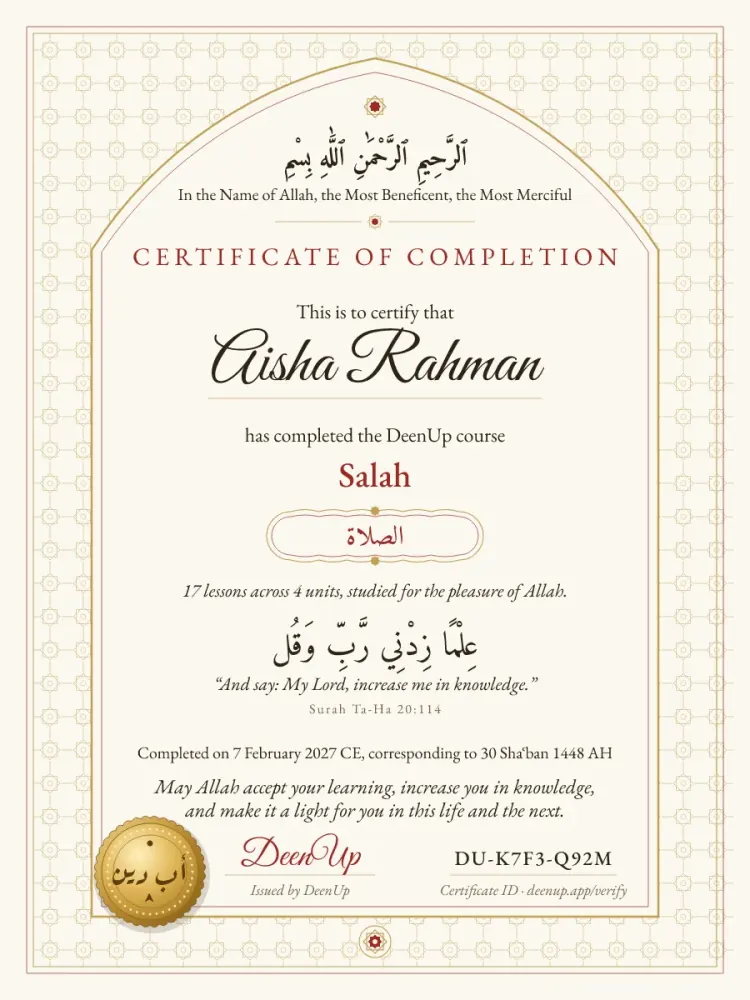
The essentials of salah, fiqh and faith, step by step from authentic sources. Finish all 28 days and earn a verifiable Certificate of Completion.
Take the free quizAnswer a few questions and get your personal plan.
For further reading on building a Quran routine and understanding the depth of its language, DeenBack's daily Quran routine guide and DemiManifest's approach to building daily Quran habits offer practical frameworks that complement what this article covers.
Signs That Quranic Questions Are Working in You
Growth in this area is quiet but unmistakable. You begin to notice when you are not being asked anything — when a surah simply declares, without pressing. You feel something when the question comes: a gentle weight, a kind of pause that is not uncomfortable but clarifying.
You start to answer. Not aloud, necessarily — but in your heart. When "أَفَلَا تَتَفَكَّرُونَ" ("Will you not reflect?", Surah Al-Anam 6:50) appears in your recitation, you catch yourself thinking: Yes. I will reflect. Right now.
This is taqwa developing. This is what the Quran intends. And it shows up in the daily reading — which is why a consistent practice of reading and reflecting, even one verse at a time, is worth building carefully and intentionally.
A Feed Worth Scrolling
Swipe through short, scholar-approved Islamic lessons instead of mindless doom-scrolling.
Learn Through Play
Bite-sized lessons, quizzes, levels, and daily streaks make growing your Deen a habit.
Scholar-Approved
Every lesson is rooted in the Quran and authentic Sunnah and reviewed by qualified scholars.
The Invitation Has Been Extended
The Quran's questions are not rhetorical in the dismissive sense — they are not meant to be brushed past. They are the most serious kind of question there is: one that comes from the One who knows the answer, addressed to the one who most needs to look at it.
The next time you open the Quran, notice when it asks something of you. Pause. Answer. That pause — that moment of "I am here, I am listening" — is exactly what it was designed to produce. The Quran and its resources guide us on this journey of reading and understanding, one question at a time.
Your personal 28-Day Deen Plan
Learn your deen in 28 days, 5 minutes a day
The essentials of salah, fiqh and faith, step by step from authentic sources. Finish all 28 days and earn a verifiable Certificate of Completion.
Take the free quizAnswer a few questions and get your personal plan.
Sources and further reading:
Frequently Asked Questions
What kinds of questions does the Quran ask?
The Quran asks hundreds of rhetorical questions across four main categories — questions about reason, questions about gratitude, questions about purpose and accountability, and questions that call the heart to soften. Over a thousand distinct question forms appear across all 114 surahs, transforming passive reading into active reflection.
Why does Allah ask questions in the Quran?
Allah asks questions in the Quran not to gather information but to invite reflection. These rhetorical questions challenge assumptions, stir the conscience, and prompt sincere self-examination. The goal is to draw the believer from passive listening to active engagement with divine guidance, turning recitation into a living conversation.
What is the most repeated question in the Quran?
The most repeated question in the Quran is "So which of the favors of your Lord would you deny?" (Surah Ar-Rahman 55:13), appearing exactly 31 times in that chapter alone. Each repetition follows a description of a divine blessing, pressing the reader to pause and acknowledge what Allah has given.
What does the Quranic phrase afala taqiloon mean?
Afala taqiloon (أَفَلَا تَعْقِلُونَ) translates as "Will you not reason?" or "Will you not use your intellect?" It appears across multiple surahs including Al-Baqarah and Al-Anam. It is a divine challenge to apply rational thought to faith — Islam does not ask for blind acceptance but for reasoned, conscious belief.
How should a Muslim respond when reading a question in the Quran?
Classical scholars taught that readers should pause at rhetorical questions in the Quran and respond internally. For the repeated question in Surah Ar-Rahman, the pious response is an acknowledgment of divine blessings. This transforms Quran reading from recitation into a living dialogue with Allah — a form of active worship.
Which surah has the most questions?
Surah Ar-Rahman (Surah 55) is most associated with Quranic questioning, containing 31 repetitions of the same question about divine blessings. Surah Al-Ghashiyah (88) and Surah Al-Qiyamah (75) also contain dense sequences of rhetorical questions about the Day of Judgment and human accountability.
Do Quranic questions strengthen faith?
Yes — engaging with Quranic questions is one of the most effective ways to deepen faith. Each question invites the reader to examine their relationship with Allah, their use of reason, and their gratitude. Scholars note that reflective reading of these questions builds taqwa (God-consciousness) more effectively than passive recitation.