

- Authors

- Name
- Ahmad
- Role
- Senior Marketing Manager, Islamic education • DeenUp
بِسْمِ اللهِ الرَّحْمٰنِ الرَّحِيْمِ
In the name of God, the Most Gracious, the Most Merciful.
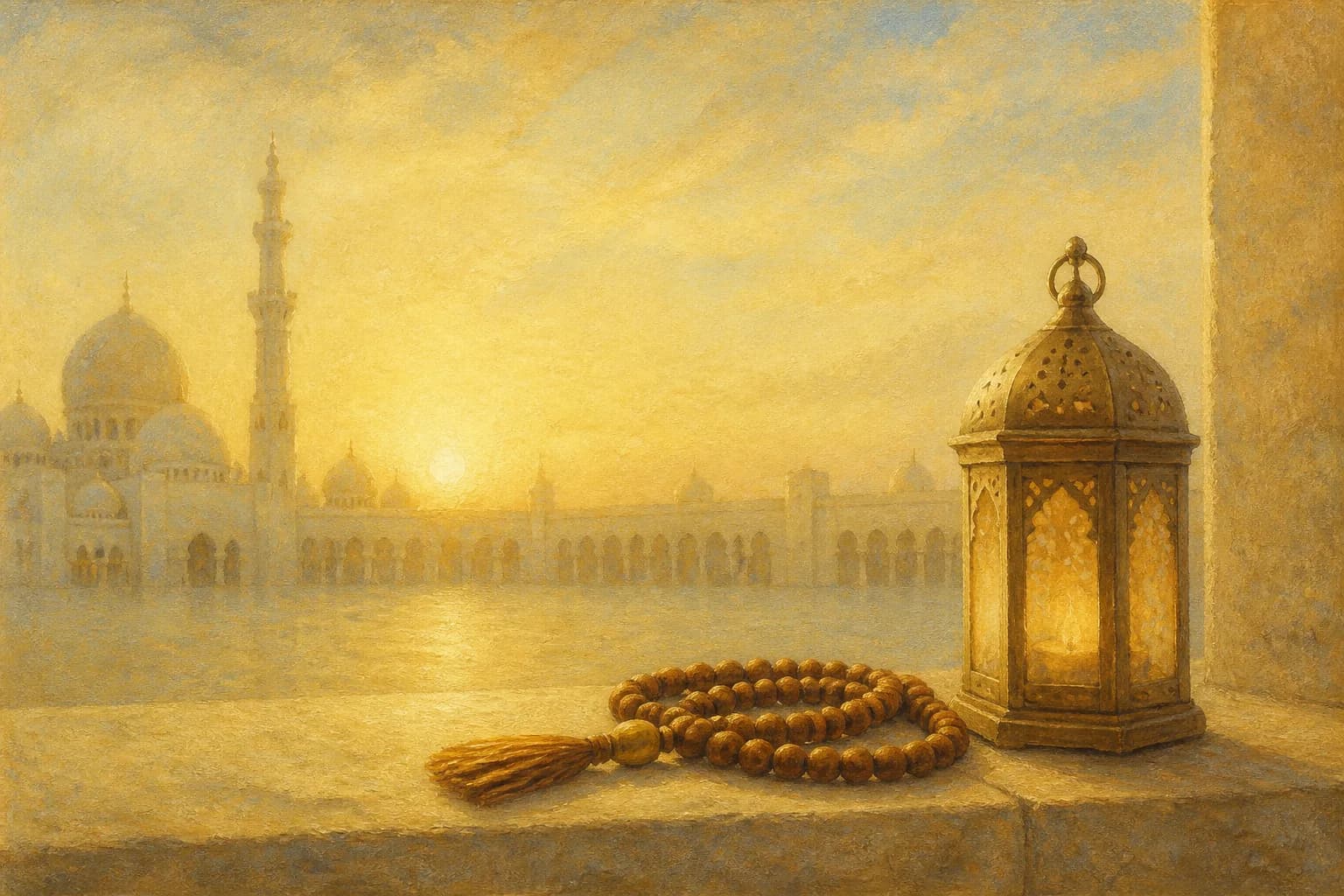
Three words changed everything for Bilal ibn Rabah رضي الله عنه — when he declared Ahad, Ahad (One, One) under persecution, he was expressing the same truth this short dua captures: I am content with my Lord, my religion, and my Prophet. That same contentment is available to you every morning and evening through one of the most underused gems in the Islamic adhkar tradition.
What Is the Raditu Billahi Rabban Dua?
The Raditu billahi rabban dua is a morning and evening supplication in which a Muslim declares complete contentment with Allah as Lord, Islam as religion, and Muhammad ﷺ as Prophet. Authentic hadith in Sunan Abu Dawud and Jami al-Tirmidhi report that reciting it three times each morning and evening earns a divine covenant: Allah pledges to make that person truly pleased on the Day of Resurrection. It is one of the most concise and powerful statements in the entire adhkar tradition.

The Full Arabic Text, Transliteration, and Translation
Here is the dua in its complete form as recorded in the authentic hadith collections:
رَضِيتُ بِاللَّهِ رَبًّا، وَبِالإِسْلَامِ دِينًا، وَبِمُحَمَّدٍ نَبِيًّا
Radītu billāhi rabbā, wa bil-Islāmi dīnā, wa bi-Muḥammadin nabiyyā
"I am pleased with Allah as my Lord, with Islam as my religion, and with Muhammad as my Prophet."
— Recite three times each morning and each evening. (Sunan Abu Dawud; Jami al-Tirmidhi, graded hasan)
The Prophet ﷺ said: "Whoever says: Radītu billāhi rabbā, wa bil-Islāmi dīnā, wa bi-Muḥammadin nabiyyā three times in the morning and three times in the evening, it is a right upon Allah to please him on the Day of Resurrection." (Sunan Abu Dawud, chapter on morning and evening adhkar)
There is also a related adhan version recorded in Sahih Muslim 386: whoever hears the muadhdhin and responds with Radītu billāhi rabbā wa bil-Islāmi dīnā wa bi-Muḥammadin rasūlā will have their sins forgiven. Both versions affirm the same core declaration.
Why Three Repetitions?
Three repetitions in Islamic practice signal emphasis and completeness. The Prophet ﷺ would repeat important statements three times when teaching so that the meaning could fully settle. Each of the three daily recitations of this dhikr is not mechanical — it is a fresh act of declaring where your ultimate satisfaction lies, a renewal of your covenant with the Creator before the day begins.
The Spiritual Depth of "Rida" — Contentment with Allah
Rida (رِضَا) — contentment or pleasure — is one of the highest stations of the heart in Islamic spirituality. It is not passive resignation but an active, conscious satisfaction with Allah's decree, His attributes, and His arrangements for your life.
The Quran connects this contentment directly to the perfection of Islam. When Allah declared:
"This day I have perfected your religion for you, completed My favor upon you, and approved Islam as your religion." (Surah Al-Maidah, 5:3)
…He was affirming that what He gave you is complete. When you say Raditu billahi rabbā, you are responding: "And I accept it, fully and with gratitude."
Ibn al-Qayyim describes rida as the fruit of true iman: when a person genuinely knows Allah — His mercy, His wisdom, His power — they cannot help but be pleased with His arrangements, even in difficulty. This dua, recited regularly, trains your heart toward that station.
The Mirror with Al-Fatiha
Each morning when you say rabbā (as my Lord), you echo the opening of Al-Fatiha: al-hamdu lillāhi rabb al-'ālamīn — "Praise to Allah, Lord of all worlds." Declaring contentment with that Lord is not a separate act; it is a living continuation of the Quran's opening prayer, personalized into your own mouth.
How to Build This Into Your Daily Routine
The most powerful adhkar are the ones you actually do. Here is how to embed Raditu billahi rabbā into your day so it becomes automatic.
After Fajr Prayer
Before you check your phone or leave your prayer mat, recite this dua three times. The window right after Fajr is the traditional time for morning adhkar. This particular dhikr takes under thirty seconds. Starting with this small act anchors your morning in rida before the noise of the day begins.
The full morning adhkar in Islam include a set of supplications the Prophet ﷺ specifically designated for this time, and Raditu billahi rabbā fits naturally alongside them. For a structured guide to the entire morning adhkar sequence, see the Adhkar al-Sabah complete guide.
After Maghrib Prayer
Maghrib marks the pivot from day to evening. After the prayer, add this dua to your evening adhkar set. If you already recite Subhan Allah, Alhamdulillah, Allahu Akbar after salah, add Raditu billahi rabbā immediately before or after that sequence.
The evening connection also matters for sleep: the adhkar before sleeping includes related supplications that extend the spirit of contentment through the night.
Building these habits is easier with a structured reminder system. DeenUp sends personalized dhikr notifications timed to your prayer schedule — including morning and evening adhkar reminders — so your Raditu billahi rabbā never gets lost in the rush of the day.
Do you feel your duas are unanswered?
Have you read the dua properly? Learn authentic duas, understand their meanings, and call upon Allah with greater confidence through DeenUp.
Take the Dua Quiz
Linking It to the Adhan
When you hear the Fajr or Maghrib adhan, try reciting Raditu billāhi rabbā wa bil-Islāmi dīnā wa bi-Muḥammadin rasūlā right after the muadhdhin finishes. This is the version in Sahih Muslim 386. Over five daily prayers, this small habit builds a quiet, constant renewal of your declaration of contentment throughout the day.
The tradition of structured morning dhikr is explored in depth at DeenBack's daily adhkar after prayer guide, which covers how the post-prayer remembrances build a day-long spiritual rhythm.
For a broader perspective on how the Prophet ﷺ structured the hours after Fajr as a blueprint for spiritual productivity, see DemiManifest's piece on the prophetic morning routine.
Related Morning and Evening Duas
These three supplications complement Raditu billahi rabbā and together form a complete morning/evening dhikr set:
| Dua | When to Recite | Source |
|---|---|---|
| رَضِيتُ بِاللَّهِ رَبًّا (Raditu billahi rabba) | 3× each morning and evening | Sunan Abu Dawud; Tirmidhi |
| سُبْحَانَ اللَّهِ وَبِحَمْدِهِ (Subhan Allahi wa bihamdihi) | 100× in the morning — erases sins | Sahih al-Bukhari 6405 |
| اللَّهُمَّ أَنْتَ رَبِّي لَا إِلَهَ إِلَّا أَنْتَ (Sayyidul Istighfar) | Once each morning and evening | Sahih al-Bukhari 6306 |
These three together take under three minutes. The first declares your contentment with your Creator; the second glorifies Him; the third asks for His forgiveness. That is a complete morning orientation.
For a broader understanding of how these individual supplications fit into an integrated daily practice, the daily duas for Muslim life guide shows how to build from a handful of authentic duas into a full daily worship structure.
Frequently Asked Questions
Can children recite Raditu billahi rabban?
Teaching children this dua is one of the best ways to instill the concept of rida early. The dua is short enough for a five-year-old to memorize, the meaning is concrete and accessible, and morning/evening dhikr habits formed in childhood typically last a lifetime. Many scholars specifically recommend introducing the morning adhkar to children from around age seven.
Does Raditu billahi rabban replace the other morning adhkar?
No — Raditu billahi rabbā is one item within the full morning adhkar, not a substitute for the others. The complete Adhkar al-Sabah includes multiple supplications covering protection, reliance on Allah, seeking forgiveness, and specific Quranic recitations. This dua is typically positioned in the middle of that sequence. Think of it as one jewel in a necklace, not the whole necklace.
What if I forget to recite it in the morning?
Make it up when you remember — but treat the missed session as a missed opportunity to revisit, not a sin to dwell on. Consistency over months matters more than daily perfection. Some scholars note that the "morning" window extends until the sun has fully risen, so if you remember shortly after Fajr, you are still within the preferred time.
Is there a difference between saying nabiyyan and rasulan?
Both appear in authentic narrations. The morning/evening version typically uses nabiyyā (Prophet), while the adhan-response version in Sahih Muslim uses rasūlā (Messenger). Both carry the same meaning — declaring your acceptance of the Prophet ﷺ in his role — and both are fully valid. These are different authentic narrations of the same supplication, not contradictory texts.
How do I know my pronunciation is correct?
The key vowels: ra-DI-tu (short "i" like "ee"), bil-LA-hi (long "a"), RAB-ban (doubled "b"), nab-IY-yan (long "i" with doubled "y"). The meaning matters more than perfect articulation for this dhikr, but listening to any authentic morning adhkar audio — widely available from reputable Islamic channels — will give you the right rhythm within minutes.
Do you feel your duas are unanswered?
Have you read the dua properly? Learn authentic duas, understand their meanings, and call upon Allah with greater confidence through DeenUp.
Take the Dua QuizReciting Raditu billahi rabbā three times takes less than twenty seconds. Yet in those twenty seconds, you are renewing a covenant with the Creator of the universe — declaring that no matter what today brings, your foundation is unshakeable. That is the kind of contentment no circumstance can take from you.
Frequently Asked Questions
What is the meaning of Raditu billahi rabban?
Raditu billahi rabban means I am pleased with Allah as my Lord, with Islam as my religion, and with Muhammad as my Prophet. This short declaration expresses complete contentment with one's faith and is backed by a prophetic promise: Allah pledges to please that person on the Day of Resurrection.
When should I recite Raditu billahi rabban?
Recite Raditu billahi rabban three times each morning and three times each evening, ideally after Fajr and after Maghrib. It is also recited as a response after hearing the adhan in some authentic narrations. Three repetitions at each of these two daily sessions is the most well-established practice.
How many times is Raditu billahi rabban said?
Raditu billahi rabban is recited three times in the morning and three times in the evening, totaling six recitations daily. The hadith specifies three repetitions at each session, and classical scholars note that consistency matters more than perfection — even beginning with one session daily builds the habit.
Is Raditu billahi rabban part of the morning adhkar?
Yes, Raditu billahi rabban is part of the authentic morning and evening adhkar. Classical compilations such as Hisnul Muslim (Fortress of the Muslim) include it in the chapter on morning and evening remembrances, grounding it firmly in the Prophetic practice of structured daily dhikr.
What reward does reciting Raditu billahi rabban bring?
According to a hadith in Sunan Abu Dawud and Jami al-Tirmidhi, whoever recites Raditu billahi rabban three times each morning and evening has a right from Allah to be pleased on the Day of Resurrection. Scholars including al-Albani have graded this narration as hasan, meaning good and reliable.
Can I say Raditu billahi rabban after salah?
Yes, many Muslims include Raditu billahi rabban in their post-salah adhkar routine, especially after Fajr and Maghrib. While the most cited narrations specify morning and evening timing, reciting it after any prayer reinforces your contentment and trust in Allah and fits naturally into any dhikr sequence.
Does Raditu billahi rabban appear in Sahih Muslim?
A closely related version appears in Sahih Muslim (386) specifically as a response after hearing the adhan — whoever says Raditu billahi rabban wa bil-Islami dinan wa bi-Muhammadin rasulan will have their sins forgiven. The morning and evening three-times version is recorded in Sunan Abu Dawud and Tirmidhi.