

- Authors

- Name
- Ahmad
- Role
- Senior Marketing Manager, Islamic education • DeenUp
بِسْمِ اللهِ الرَّحْمٰنِ الرَّحِيْمِ
In the name of God, the Most Gracious, the Most Merciful.
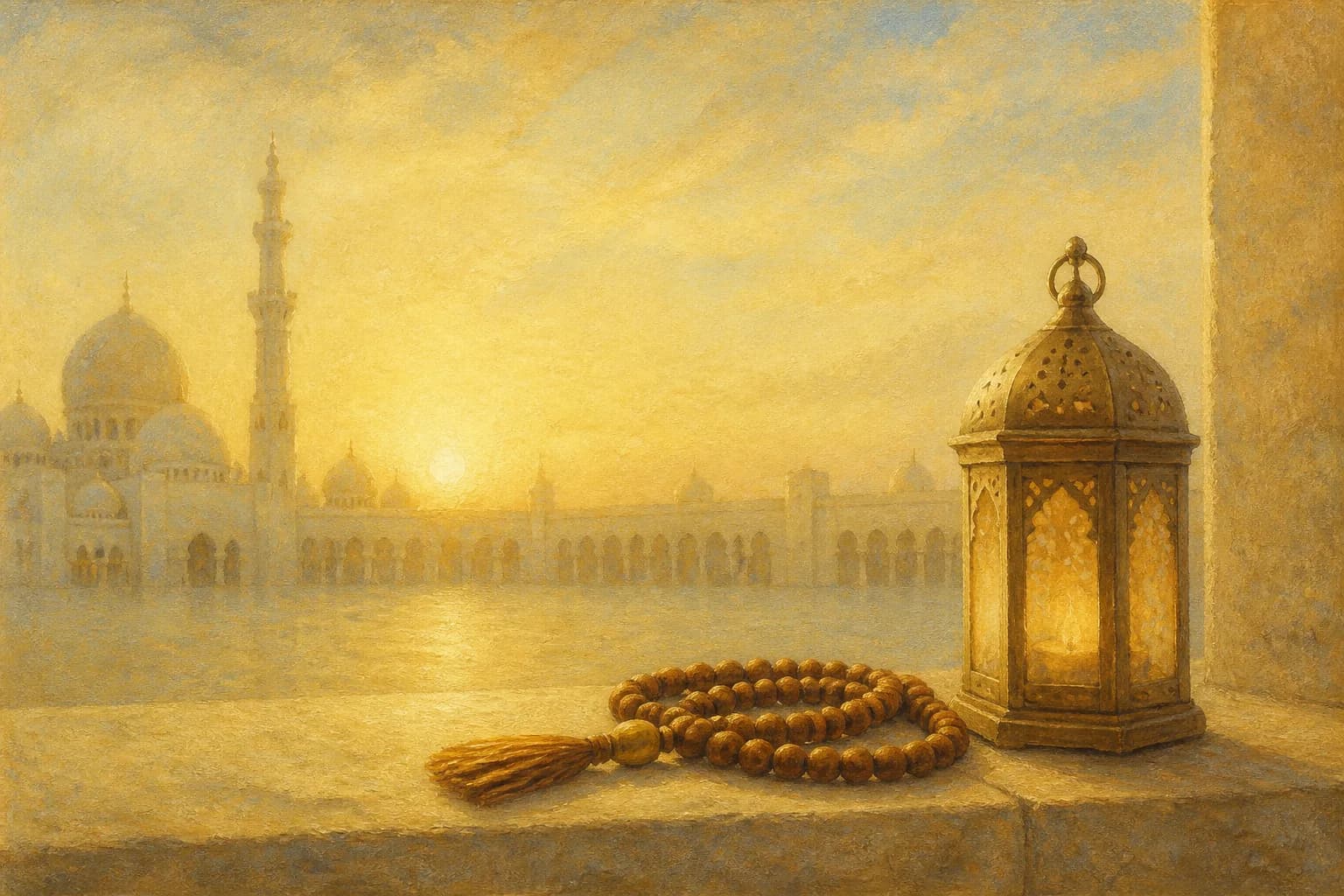
A wedding in Islam is not just a social contract — it is an act of worship. The Prophet ﷺ called marriage "half of the religion," and the duas said at a nikah ceremony carry the weight of that understanding. Yet many Muslims at weddings rely on informal wishes or generic congratulations, unaware that the Prophet ﷺ left a specific, authenticated dua for exactly this moment.
What Is the Islamic Wedding Dua in Arabic?
The primary Islamic wedding dua is Bārakallāhu lakumā wa bāraka ʿalaykumā wa jamaʿa baynakumā fī khayr — "May Allah bless you both, shower His blessings upon you both, and unite you in goodness." This supplication is recorded in Sunan Abu Dawud and is the Prophetically authenticated way to congratulate a newlywed couple. It replaces the pre-Islamic congratulations that contained problematic phrases, replacing them with a sincere, Allah-centred blessing.

The Main Wedding Congratulations Dua
This is the supplication the Prophet ﷺ taught Muslims to say when congratulating a newlywed couple:
بَارَكَ اللَّهُ لَكُمَا وَبَارَكَ عَلَيْكُمَا وَجَمَعَ بَيْنَكُمَا فِي خَيْرٍ
Bārakallāhu lakumā, wa bāraka ʿalaykumā, wa jamaʿa baynakumā fī khayr
"May Allah bless you both, shower His blessings upon you both, and unite you in goodness."
— (Sunan Abu Dawud; Ibn Majah — narrated through multiple chains)
The Prophet ﷺ used to say these words when a man got married. Before Islam, Arabs would congratulate with phrases that had no religious foundation. The Prophet ﷺ replaced those phrases with this dua — which is not just a wish but an actual supplication to Allah asking Him to place barakah (divine blessing) into the marriage.
How to use it: Say it directly to the groom, then to the bride separately (adjusting to singular: Bārakallāhu laka). You can also say the full form to both together. There is no prescribed timing — the dua is said whenever you greet the couple.
The Meaning Word by Word
- بَارَكَ اللَّهُ لَكُمَا — May Allah bless for you both (blessings directed toward you)
- وَبَارَكَ عَلَيْكُمَا — And may He bless upon you both (blessings descending on you)
- وَجَمَعَ بَيْنَكُمَا فِي خَيْرٍ — And may He unite you in goodness
The double expression of blessing — "for you" and "upon you" — reflects the complete nature of barakah: it should fill your circumstances and your persons. The third phrase asks specifically that the bond between you be one of goodness, not merely longevity.
The Groom's Dua on the Wedding Night
The Prophet ﷺ also prescribed a specific dua for the groom to recite when he first meets his new wife. This is a private supplication, not one said publicly at the wedding:
اللَّهُمَّ إِنِّي أَسْأَلُكَ خَيْرَهَا وَخَيْرَ مَا جَبَلْتَهَا عَلَيْهِ، وَأَعُوذُ بِكَ مِنْ شَرِّهَا وَشَرِّ مَا جَبَلْتَهَا عَلَيْهِ
Allāhumma innī asʾaluka khayraha wa khayra mā jabaltahā ʿalayhi, wa aʿūdhu bika min sharrihā wa sharri mā jabaltahā ʿalayhi
"O Allah, I ask You for her goodness and the goodness of her nature, and I seek refuge in You from her evil and the evil of her nature."
— (Sunan Abu Dawud 2160; Ibn Majah 1918)
This dua is remarkable for its honesty. Rather than assuming everything will be perfect, it acknowledges that every human has both good and challenging qualities, and places the outcome entirely in Allah's hands. It is also said that a similar dua is made by the bride, adapted to the masculine form.
The groom also places his hand on his wife's head and recites: اللَّهُمَّ بَارِكْ لِي فِيهَا وَبَارِكْ لَهَا فِيَّ (Allāhumma bārik lī fīhā wa bārik lahā fiyya) — "O Allah, bless her for me and bless me for her."
Quranic Foundation for Marriage Duas
Marriage in Islam is rooted in divine design, not human convention. The Quran articulates this clearly:
"And of His signs is that He created for you from yourselves mates that you may find tranquility in them; and He placed between you affection and mercy. Indeed in that are signs for a people who give thought." (Surah Al-Rum, 30:21)
Mawaddah (affection) and rahmah (mercy) are the two spiritual foundations of an Islamic marriage. These are not feelings you generate — they are gifts Allah places between spouses. The wedding duas are a direct request for Allah to activate these gifts from the very beginning of the marriage.
The dua in Surah Al-Furqan (25:74) is also widely used to pray for a righteous home:
رَبَّنَا هَبْ لَنَا مِنْ أَزْوَاجِنَا وَذُرِّيَّاتِنَا قُرَّةَ أَعْيُنٍ وَاجْعَلْنَا لِلْمُتَّقِينَ إِمَامًا
Rabbanā hab lanā min azwājinā wa dhurriyyātinā qurrata aʿyunin wajʿalnā lil-muttaqīna imāmā
"Our Lord, grant us from among our wives and offspring comfort to our eyes and make us an example for the righteous."
This dua from Surah Al-Furqan (25:74) asks not just for a happy marriage but for a marriage that raises righteous children and becomes a model for others — a beautifully high aspiration for a new couple.
Practical Guide: When and How to Use Each Wedding Dua
| Dua | When to Use | Who Recites It |
|---|---|---|
| Bārakallāhu lakumā wa bāraka ʿalaykumā... | At wedding, when greeting newlyweds | Guests, family, friends |
| Allāhumma innī asʾaluka khayraha... | First meeting between spouses | Groom (and reciprocal version for bride) |
| Allāhumma bārik lī fīhā... | First meeting, private | Groom placing hand on wife's head |
| Rabbanā hab lanā min azwājinā... | Regular prayer for a blessed home | Both spouses, ongoing |
Do you feel your duas are unanswered?
Have you read the dua properly? Learn authentic duas, understand their meanings, and call upon Allah with greater confidence through DeenUp.
Take the Dua Quiz
Building a Dua Practice Around Your Marriage
The wedding day is the beginning, not the end, of Islamic marital duas. The Prophet ﷺ modeled a daily habit of supplication within marriage.
Daily prayer for your spouse: Include your spouse by name in your morning and evening duas. The broader practice of daily duas in Muslim life shows how to build individual supplications into a structured daily rhythm.
Dua for harmony between spouses: Alongside the wedding duas, the dua for love and harmony between spouses covers the specific supplications for maintaining the mawaddah and rahmah that Allah places between married couples. Returning to those duas when difficulties arise is one of the most underused tools in an Islamic marriage.
Sharing Islamic traditions: Understanding the Islamic wedding wishes and messages helps you support couples in your community with words that are both meaningful and rooted in the Prophetic tradition, going beyond generic congratulations.
For a deeper understanding of the Islamic framework of marriage, including the nikah ceremony, its conditions, and its spiritual significance, see Muslim wedding traditions and practices.
The Islamic approach to marriage as a form of worship is also beautifully explored in DeenBack's guide on dua for family, which covers how supplications strengthen family bonds over the long term.
For a perspective on how Islamic teachings on intention and dua apply at life's major turning points, see DemiManifest's piece on dua for parents in Islam, which extends the framework of relational duas beyond the wedding.
Frequently Asked Questions
Can the wedding dua be said in English?
Yes. While Arabic is the ideal for supplications because it preserves the exact prophetic wording, you can also make sincere duas in any language. However, for the authenticated Sunnah congratulations — Bārakallāhu lakumā — learning the Arabic is worth the effort. It is a short phrase that most people can memorize in minutes, and the meaning lands with more impact when you understand each word.
Is the walimah (wedding feast) an obligation?
The walimah is a confirmed Sunnah (Sunnah mu'akkadah), not a strict obligation, according to the majority of scholars. The Prophet ﷺ commanded his companions to arrange a walimah, even if only with one sheep. Making dua for the couple at the walimah and accepting the invitation to attend are both encouraged acts in Islam.
What if a non-Muslim is getting married — can I still make this dua?
The dua Bārakallāhu lakumā is specifically an Islamic supplication to Allah and is appropriate when a Muslim couple marries. For non-Muslims, a sincere, general good wish is fine. The Islamic wedding duas carry their power through their connection to authentic hadith and the Islamic understanding of marriage as a covenant witnessed by Allah.
What duas are said during the nikah contract itself?
The nikah ceremony includes a short khutbah (sermon) that typically recites Surah Al-Nisa (4:1), Surah Al-Ahzab (33:70-71), and Surah Al-Imran (3:102). These are followed by the ijab (offer) and qabul (acceptance) — the verbal contract between the parties. After the akad, attendees say Alf mabrook (a thousand congratulations) or the Sunnah dua Bārakallāhu lakumā.
How soon after the wedding should the couple make dua together?
Scholars recommend that the couple pray two rakahs together on the first night — a voluntary prayer of gratitude and blessing. This is a well-known Sunnah narrated from early Muslims. Praying together as a couple regularly after that strengthens the spiritual foundation of the marriage far more than any other single practice.
Do you feel your duas are unanswered?
Have you read the dua properly? Learn authentic duas, understand their meanings, and call upon Allah with greater confidence through DeenUp.
Take the Dua QuizA wedding in Islam begins with the name of Allah and is sealed with His blessing. Every dua said at a nikah — from the congratulations of guests to the private supplication of the groom — is an acknowledgment that this union exists in His sight and asks for His barakah to sustain it. That is a more powerful beginning than any worldly celebration alone.
Frequently Asked Questions
What is the Islamic dua for a wedding in Arabic?
The primary Islamic wedding dua is Barakallahu lakuma wa baraka alaykuma wa jama'a baynakuma fi khayr — May Allah bless you both, shower His blessings upon you both, and unite you in goodness. This dua is recorded in Sunan Abu Dawud and is the Prophetically authenticated way to congratulate a newlywed couple.
What dua does the groom recite on the wedding night?
The groom recites Allahumma inni as-aluka khayraha wa khayra ma jabaltaha alayhi wa a-udhu bika min sharriha wa sharri ma jabaltaha alayhi — O Allah, I ask You for her goodness and the goodness of her nature, and I seek refuge in You from her evil and the evil of her nature. This is narrated in Sunan Abu Dawud (2160) and Ibn Majah.
What Quranic verse is recited at a nikah ceremony?
Surah Al-Ahzab (33:70-71) is commonly recited during the nikah khutbah — O you who believe, fear Allah and speak a word of truth. The sermon also typically includes Surah Al-Nisa (4:1) and Surah Al-Baqarah (2:102). Surah Al-Rum (30:21) is often quoted as the Quranic foundation for the marriage bond itself.
How do you say wedding congratulations in Arabic Islamic way?
Say Barakallahu lakuma — May Allah bless you both — when congratulating the groom, or Barakallahu laka — May Allah bless you — to each spouse individually. The full prophetic form adds wa baraka alaykuma wa jama'a baynakuma fi khayr and is recorded in Sunan Abu Dawud as the supplication taught by the Prophet himself.
Is there a special dua before the nikah contract?
Before the nikah contract, the imam recites a short khutbah (sermon) that opens with praise of Allah, the three verses commonly known as Khutbat al-Hajah, and Salawat on the Prophet. The actual akad (contract) then follows with the ijab (offer) and qabul (acceptance). There is no single mandatory dua before signing, but abundant Salawat and Istighfar are recommended.
Can I make dua for someone getting married?
Yes, making dua for a couple getting married is a recommended Sunnah. The authenticated supplication is Barakallahu lakuma wa baraka alaykuma wa jama'a baynakuma fi khayr. You can recite it at the wedding, in your own prayers, or whenever you think of them — it is not restricted to the ceremony itself and can be said anytime as a sincere blessing.
What does Barakallahu lakuma mean in English?
Barakallahu lakuma means May Allah bless you both. The full wedding dua Barakallahu lakuma wa baraka alaykuma wa jama'a baynakuma fi khayr translates as: May Allah bless you both, shower His blessings upon you both, and unite you in goodness. It is the only wedding congratulations supplication with clear prophetic authentication.